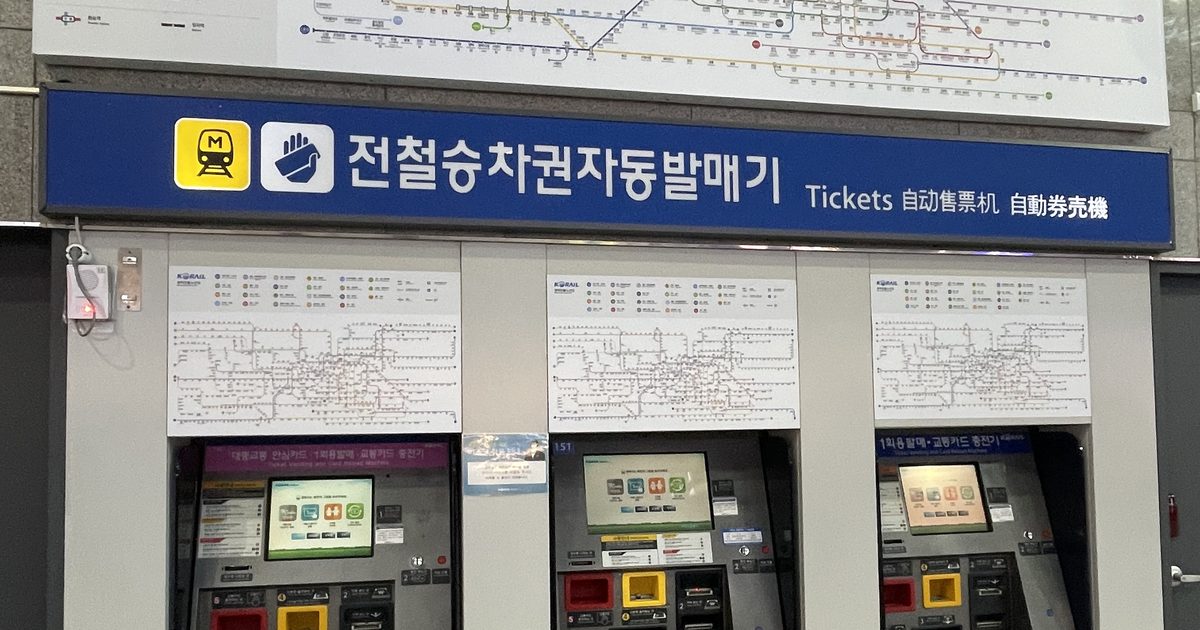
As of November 2026, a physical T-money card still only takes Korean won in cash, whether you top it up at a subway machine or a convenience store counter. Since March 17, 2026, Seoul’s new subway ticket machines at 273 stations do accept foreign Visa and Mastercard cards, which is where the confusion comes from: they’ll sell you a Climate Card or a single ticket, but they won’t put money on a T-money. If you don’t want to hunt for cash, you have three real options: the MobileTmoney app on an iPhone (which doesn’t take Visa), a WOWPASS card, or a Climate Card short-term pass. Tapping your own card on a bus starts in 2027 at the earliest. T-money is Korea’s stored-value transit card; you load money on it and each ride is deducted as you tap.
- Physical T-money: cash only. Machines and convenience stores alike; your credit card won’t work.
- Subway machines take foreign cards, but not for T-money. Only Climate Card passes and single tickets, with a service charge of about 3.7%.
- iPhone XS or newer is the easiest route. MobileTmoney tops up through Apple Pay with Mastercard, Amex, UnionPay or JCB. Not Visa.
- WOWPASS has a T-money balance you fill in the app, but it’s separate from the spending balance.
- On a physical card, load ₩10,000 at a time. Leftovers cost ₩500 to refund.
- Tap-your-own-card starts on Seoul city buses in 2027; no launch date yet.
Contents
- Who this is for
- Can I top up a T-money card with a credit card?
- What the new subway machines accept
- Ways to ride without cash
- MobileTmoney on iPhone
- WOWPASS and its T-money balance
- Buying and loading a physical T-money
- How much T-money saves
- Refunding your balance
- When can I tap my own card?
- Your situation
- Common mistakes
- FAQ
- If it were me
- Official sources
Who is this guide for?
Anyone heading to Seoul who would rather not carry much won, or who only has a card from home.
It suits you if:
- You have an iPhone and want to ride with your phone.
- You read that Seoul’s subway machines now take foreign cards and want to know what that covers.
- You carry only a Visa card and wonder which options still work.
- You’re deciding between a plain T-money and WOWPASS.
You can skip it if:
- You’ll change some won anyway and are happy with a cash-loaded card.
- Your whole trip is in Jeju, where buses already take Visa; see how to pay on Jeju buses.
Can I top up a T-money card with a credit card?
No. A physical T-money card only takes cash top-ups, at subway machines and at convenience store counters alike. Seoul Metro’s own notice on the new machines says prepaid card top-ups stay cash only. At a convenience store, you hand the card and won notes to the cashier.
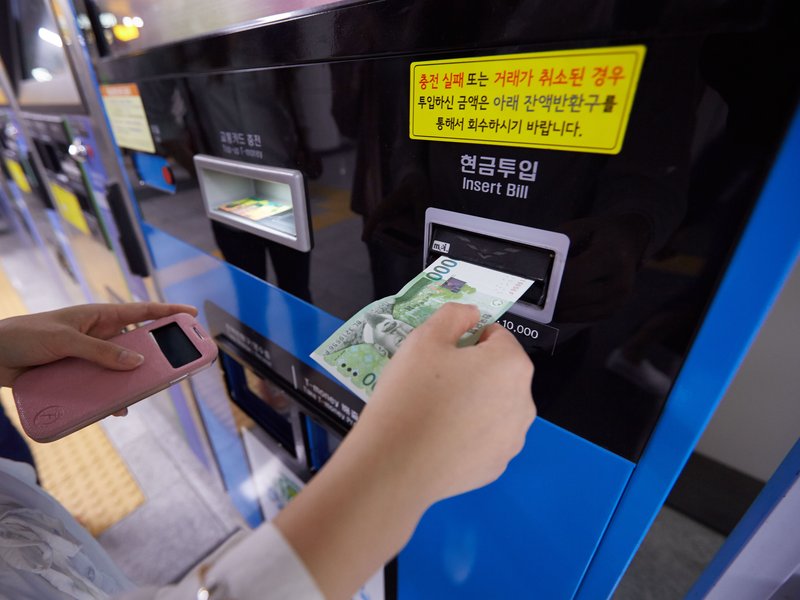
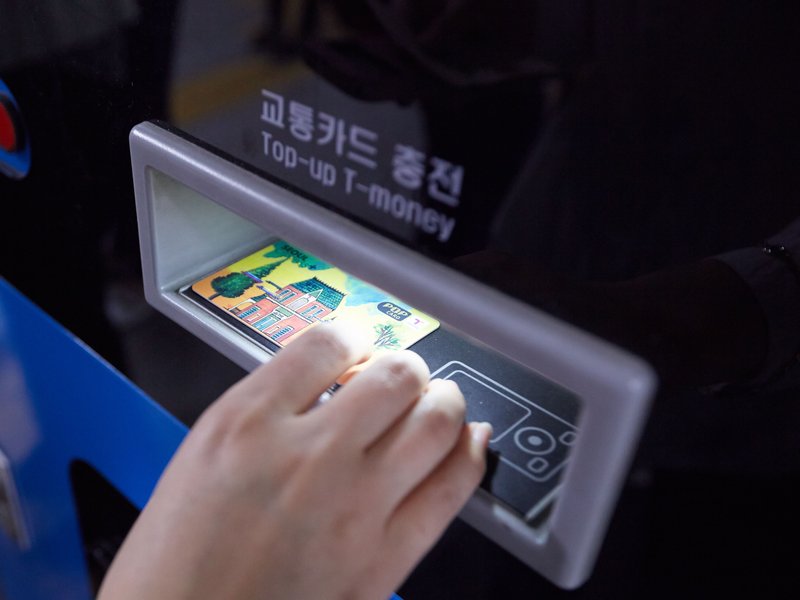
| Subway machine top-up | Cash only |
|---|---|
| Convenience store top-up | Give the card and won notes to the cashier |
| Top-up amount | In ₩1,000 steps, ₩1,000–90,000 at a time; up to ₩500,000 on the card |
What can I buy with a foreign card at Seoul’s subway machines?
A Climate Card and its short-term passes, and single journey tickets. Nothing else. Since March 17, 2026, the 440 new ticket machines across all 273 stations on Seoul Lines 1–8 accept foreign-issued Visa, Mastercard and other credit and debit cards. The Climate Card (기후동행카드) is Seoul’s unlimited-ride pass, a different card from T-money.
| Start date | March 17, 2026 |
|---|---|
| Where | New ticket machines at 273 stations on Seoul Lines 1–8 (440 machines) |
| Foreign card buys | A Climate Card, Climate Card short-term passes (1, 2, 3, 5 and 7 days), single journey tickets |
| Foreign card doesn’t | Top up T-money |
| Service charge | About 3.7% on average for foreign cards |
How can I ride without carrying cash?
Three ways: MobileTmoney on an iPhone, WOWPASS, or Climate Card short-term passes on your heavy Seoul days. Single tickets also take foreign cards, but you queue at a machine for every ride and pay a deposit each time, so I’d keep them as a fallback only.
| Option | No cash needed for | Catch |
|---|---|---|
| MobileTmoney (iPhone) | Top-ups in the app via Apple Pay | iPhone XS/XR or newer; no Visa |
| WOWPASS | Transit balance, moved over in the app | Two separate balances; ₩500 per transfer |
| Climate Card short-term pass | Buying and loading at the new machines | Seoul only, by the day; service charge |
| Single ticket (fallback) | Each ride at the new machines | ₩100 more per ride than a card, plus a ₩500 deposit |
Can I use my iPhone as a T-money card?
Yes, with the MobileTmoney app on an iPhone XS/XR or newer, as long as your Apple Pay wallet holds a Mastercard, American Express, UnionPay or JCB card. The app is open to international users, with no sign-up. You create a mobile T-money in the app, top it up through Apple Pay, and then hold the phone to the reader at the gate or on the bus. You don’t need to open the app or wake the screen.
The card network is the catch. MobileTmoney tops up through Apple Pay with Mastercard, American Express, UnionPay or JCB. Visa isn’t supported, and Tmoney says so in its replies to App Store reviews. Many US travelers carry only Visa, so check which networks are in your Wallet before you fly. If it’s Visa only, go with WOWPASS or a physical card and cash. On first launch, tap Foreigner under 시작하기 (Get Started).
| App name | MobileTmoney (모바일티머니), by Tmoney Co., Ltd |
|---|---|
| Sign-up | None |
| Top-up | In the app with Apple Pay |
| Cards accepted | Mastercard, American Express, UnionPay, JCB; not Visa |
| iPhone | XS/XR or later, iOS 17.2 or later |
| Apple Watch | Series 6 / SE (2nd gen) or later, watchOS 10.2 or later |
| Help line | +82-1644-0088, weekdays 09:00–18:00 Korea time |
Paying in shops with Apple Pay is a different system; see where Apple Pay works in Korea.
How does WOWPASS work for transit?
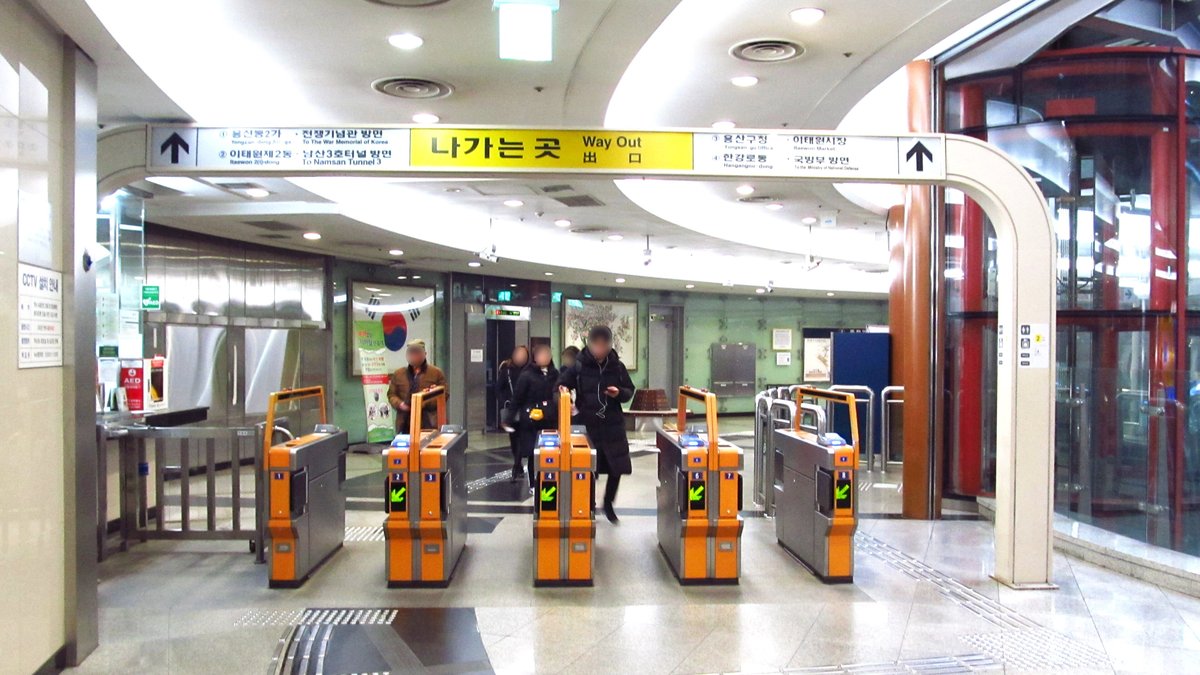
WOWPASS is a prepaid card for foreign visitors with a T-money transit function built in, but its transit balance is separate from its spending balance. Money you load to spend in shops doesn’t pay your fares. You move it across in the app by holding the card to your phone (NFC), for ₩500 per transfer since December 1, 2025, so move a larger amount once rather than a little at a time. Money in the transit balance can’t go back to the spending balance. At the machines, you can also load the transit balance with won in cash.
If your phone isn’t a recent iPhone, or your only card is Visa, this is the option I’d pick. The spending balance loads at the machines with cash in 16 foreign currencies, or in the app with Mastercard or JCB; Visa goes through PayPal.
| What it is | A prepaid card for foreign visitors, with T-money built in |
|---|---|
| Two balances | WOWPASS spending balance and T-money transit balance, loaded separately |
| Filling the transit balance | Transfer from the spending balance in the app, ₩500 each time; or won cash at a machine |
| Transit back to spending | Not possible |
| Card fee | Issued at a machine ₩6,000; app pre-booking code or airport CU pickup ₩5,500 (since March 4, 2026) |
| Machines | 446 across Korea |
| Official name of the combined card | Tmoney Travel Card Plus (TTC+) |
Buying a voucher before you fly means you pick the card up at a machine or an airport CU store on arrival. Both listings below are non-refundable once bought, and what you get is the card; the transit balance still has to be filled. The KKday voucher needs your original passport at the machine.
| Where to buy | Worth knowing |
|---|---|
| Klook WOWPASS card | Machine code or pickup at an Incheon or Gimhae airport CU; valid 90 days; no cancellation |
| KKday WOWPASS voucher code | Redeem at a machine with your original passport; no refund after purchase |
Where do I buy a physical T-money, and how much should I load?
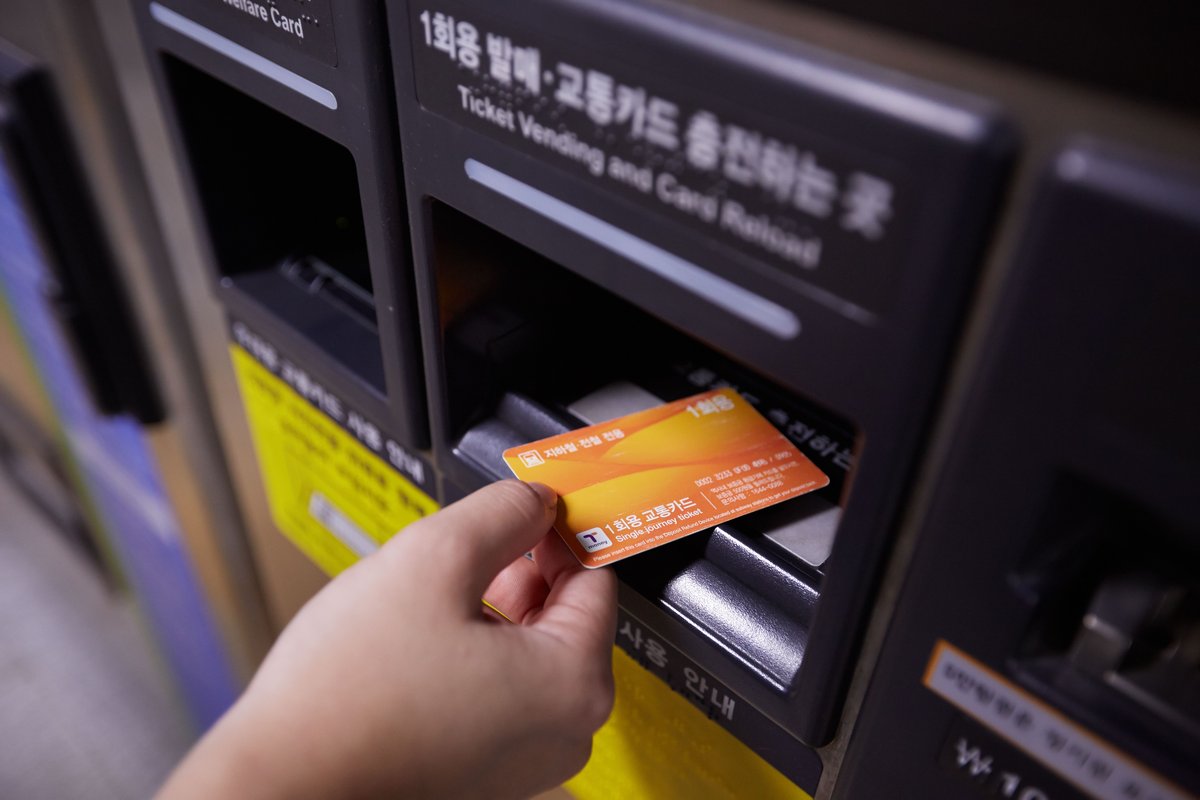
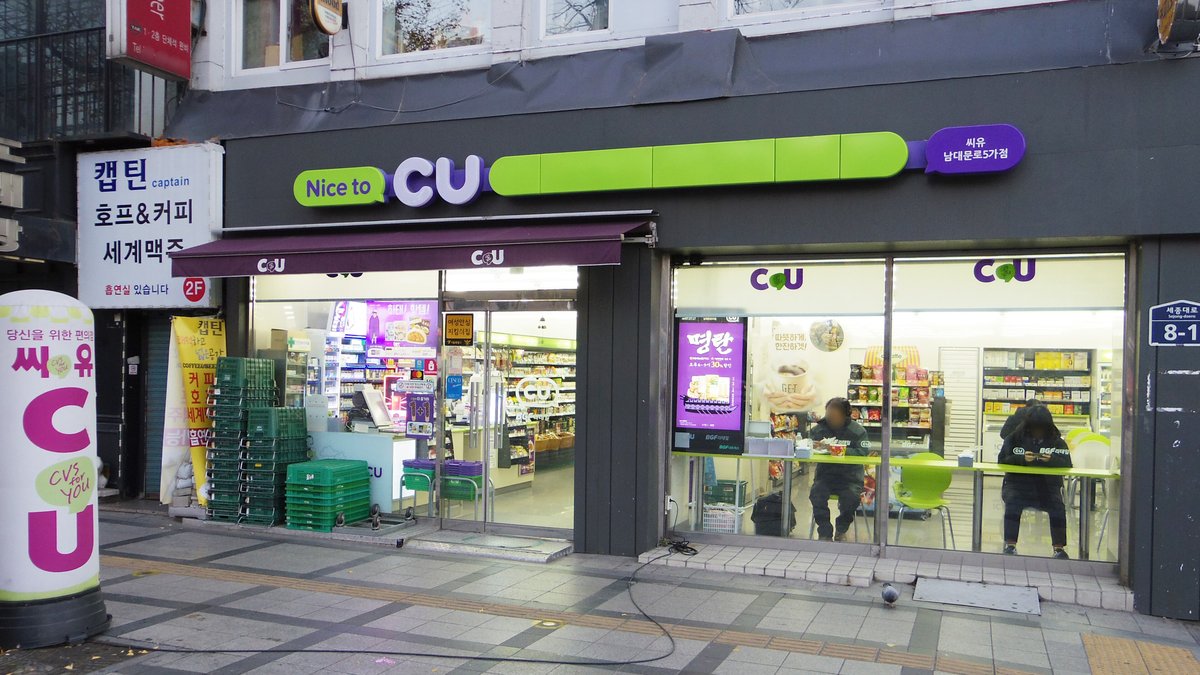
At any convenience store, or at the new machines on Seoul Lines 1–8; bring won in cash either way. The card fee depends on the design, usually a few thousand won; the CU+ eco card at CU stores, for example, has a suggested price of ₩4,000. Seoul says physical cards can be bought by card at the new machines, but its foreign-card notice lists only the Climate Card and single tickets, so carry cash for this to be safe.
| Convenience stores | GS25, CU, 7-Eleven, emart24 and others |
|---|---|
| Subway | New ticket machines on Seoul Lines 1–8 |
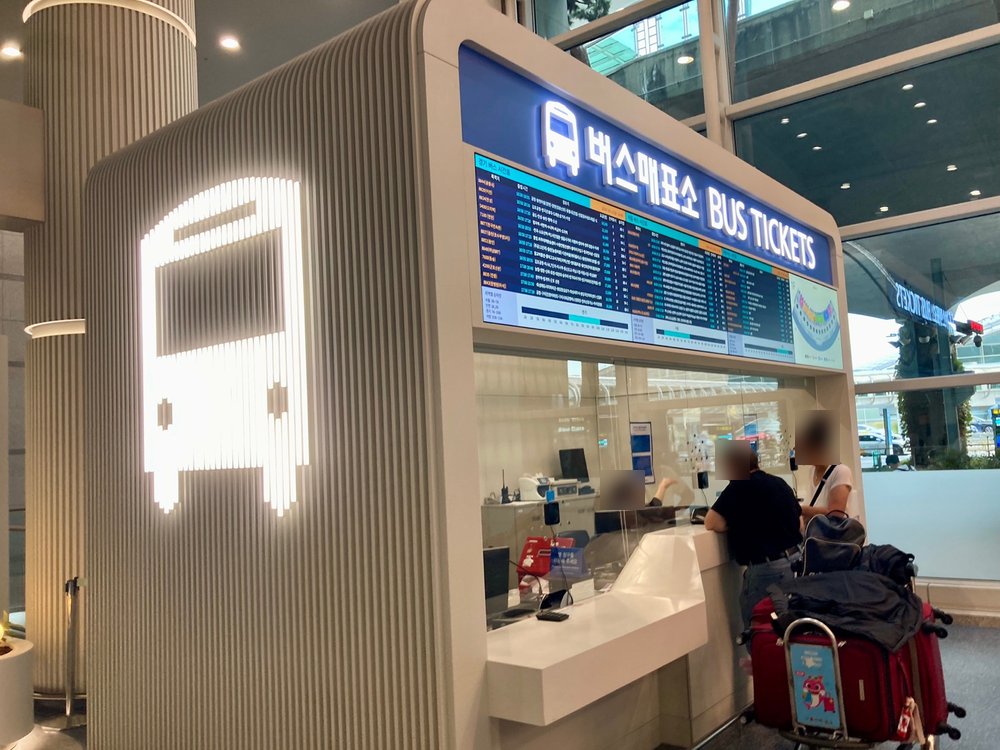
| Visitor version | Tmoney Travel Card, at convenience stores and the staffed bus ticket counters inside Incheon Airport |
| Card fee | Varies by design; not refunded |
| Top-up | ₩1,000 steps, ₩1,000–90,000 at a time, ₩500,000 maximum on the card |
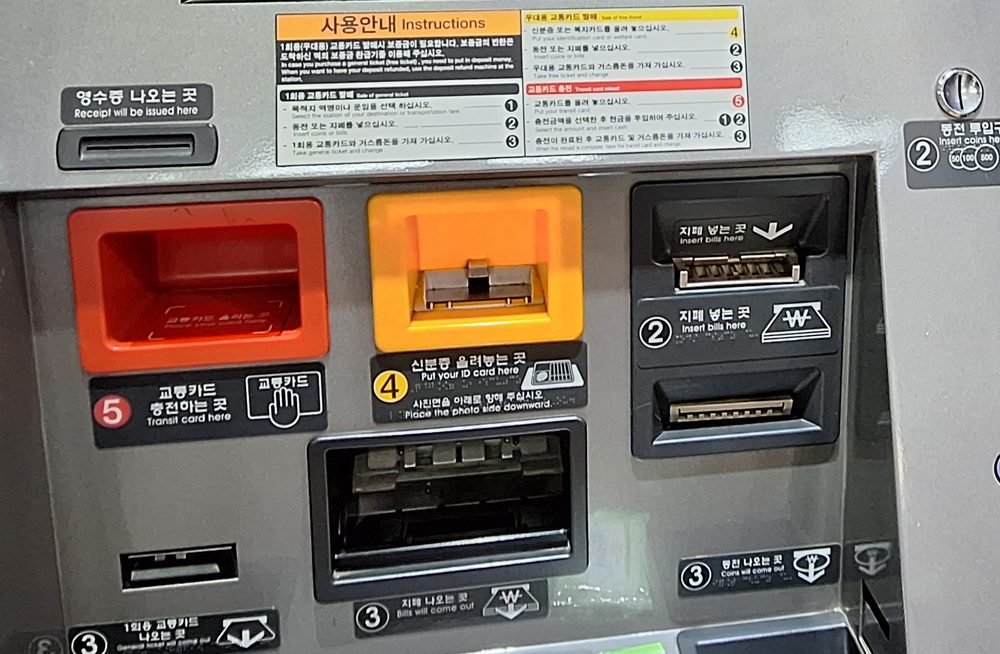
How much to load: three subway rides a day within Seoul come to under ₩5,000 at the card fare, so I’d put on ₩10,000 at a time and top up again when it runs low. Traveling with children? Check kids’ fares on Korean transit before you buy their cards.
How much does T-money save over single tickets?
₩100 per subway ride within 10 km, and free transfers that single tickets don’t give you. Board the next bus or train within 30 minutes of getting off (60 minutes between 21:00 and 07:00) and the trips are charged as one journey. That only works if you tap when you get off the bus too.
| Subway, transit card (adult, up to 10 km) | ₩1,550 |
|---|---|
| Subway, single ticket (adult, up to 10 km) | ₩1,650, plus a ₩500 deposit returned after you exit |
| Transfers | Within 30 minutes of getting off (60 minutes 21:00–07:00); no tap-off, no transfer |
Can I get my leftover balance back?
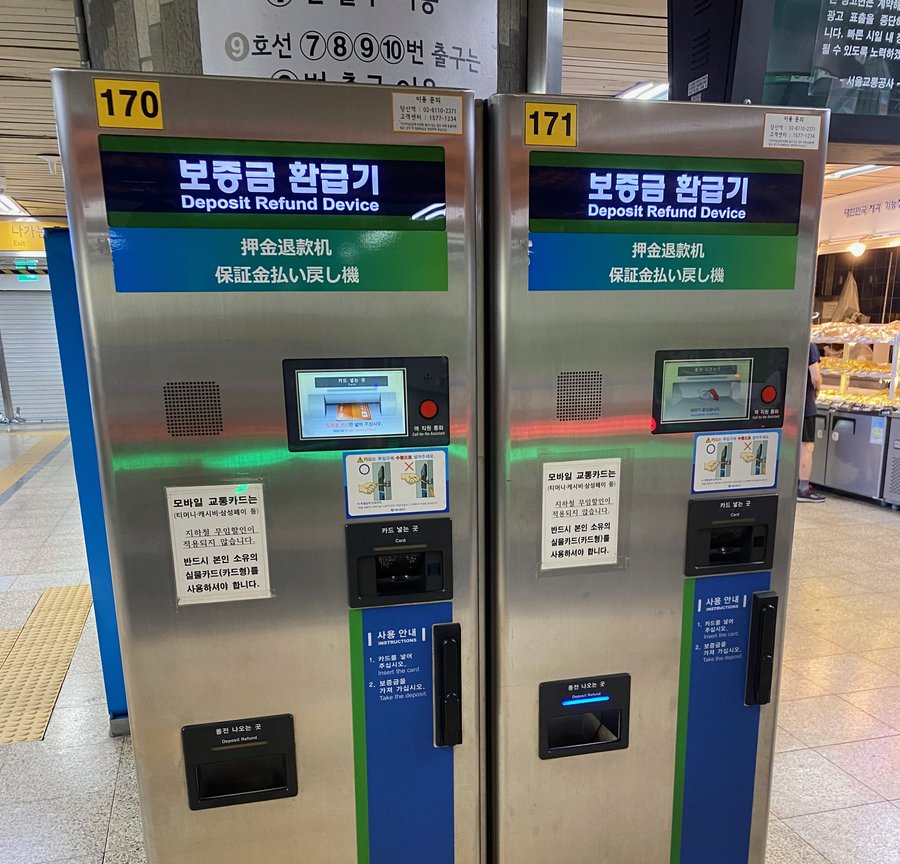
Yes, but I wouldn’t bother for a few thousand won; keep it for your next trip. A full refund at a convenience store costs ₩500 and the card fee isn’t returned.
| Full refund | At convenience stores and other T-money sales points |
|---|---|
| Fee | ₩500 |
| Card fee | Not refunded |
| Partial refund | Only at T-money Town or a T-money service center in a subway station; ₩10,000–50,000 in ₩10,000 steps |
When can I just tap my own card on the bus or subway?
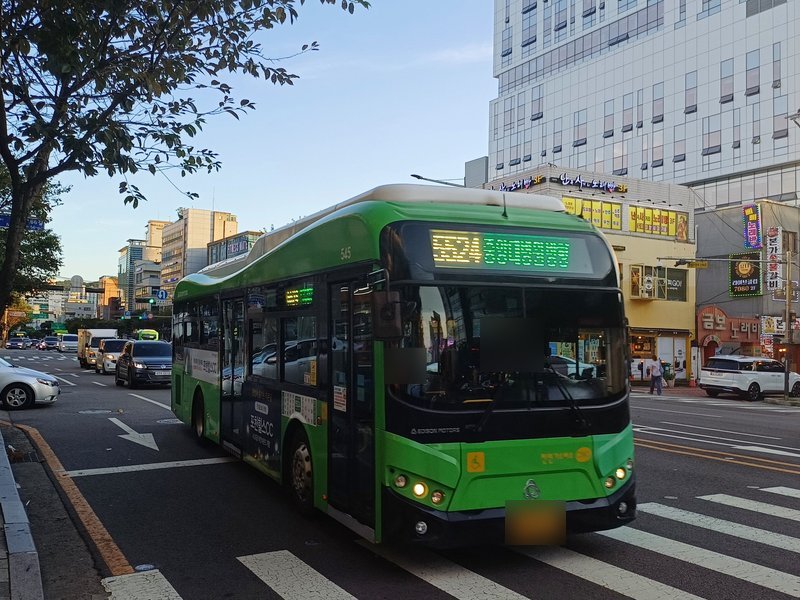
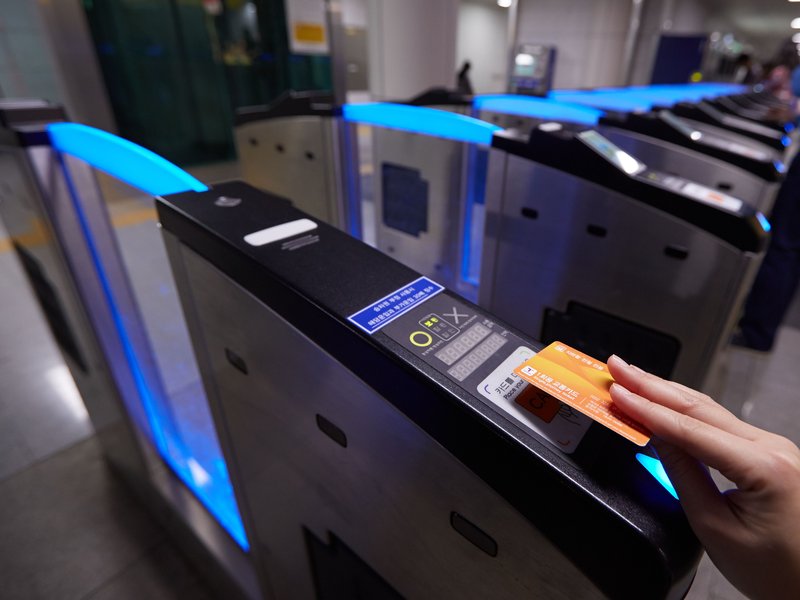
2027 at the earliest, starting with Seoul city buses; no launch date has been announced. Today the readers on Seoul’s buses and subway gates don’t take foreign cards. Tmoney, working with Visa, Mastercard, UnionPay and JCB, plans to finish development and testing by the end of 2026, then roll out from Seoul city buses in 2027 to Incheon buses and airport buses.
| Now | No foreign cards at Seoul bus or subway readers |
|---|---|
| Seoul city buses | First in line, 2027 |
| Seoul airport buses | Card (EMV) and QR payment targeted for the first quarter of 2027, under a deal Tmoney signed on November 12, 2026 with three airport bus companies (about 400 buses) |
| Subway Lines 1–8 | Readers to be replaced in 2027 under Seoul’s phased plan |
| Launch date | Not announced |
| Exception | Jeju buses already take Visa |
A “target” isn’t a date. If your trip is in early 2027, plan on T-money and treat a working card reader on the airport bus as a bonus.
Your situation
If you have an iPhone XS or newer and a Mastercard or Amex
Install MobileTmoney before you fly and check the card is in Apple Pay. After landing, tap Foreigner, create the card, top it up, and ride with the phone. Keep ₩10,000–20,000 in cash so that if a top-up fails you can buy a physical card at a convenience store.
If you only have Visa, or an Android phone
Get WOWPASS: buy a voucher before the trip or issue the card at a machine on arrival. Load the spending balance, then move one larger amount to the T-money balance in the app so you pay the ₩500 transfer fee once. Before you fly, also sort out the Korea e-Arrival Card.
If you’ll change some won anyway
Buy a T-money or Tmoney Travel Card at a convenience store or the Incheon Airport bus ticket counter and load ₩10,000 at a time. On days you’ll ride all day around Seoul, a Climate Card short-term pass bought by card at the new machines may beat paying per ride.
Common mistakes
- Tapping a credit card at the machine to top up T-money. Foreign cards there buy only Climate Card passes and single tickets.
- Counting on Visa in MobileTmoney. It isn’t accepted; check your Wallet before you fly.
- Assuming WOWPASS spending money pays fares. Fill the T-money balance separately.
- Moving ₩5,000 at a time in WOWPASS. Each transfer costs ₩500.
- Not tapping off the bus. You lose the transfer discount on the next ride.
- Walking off with a single ticket. The ₩500 deposit only comes back at a refund machine.
- Loading too much. Refunds cost ₩500 and the card fee isn’t returned.
FAQ
- Q1: Can I top up T-money with a credit card?
- Not a physical T-money card. Subway machines and convenience stores take Korean won in cash only. On an iPhone, the MobileTmoney app tops up through Apple Pay with Mastercard, American Express, UnionPay or JCB, but not Visa.
- Q2: Do Seoul subway ticket machines accept foreign credit cards?
- Yes, the new machines on Lines 1–8 do, but only for the Climate Card and single journey tickets. They won’t top up T-money with a card, and foreign cards pay a service charge of about 3.7% on average.
- Q3: Does MobileTmoney accept Visa?
- No. The app lists Mastercard, American Express, UnionPay and JCB for Apple Pay top-ups, and Tmoney has told App Store reviewers that Visa isn’t supported. With only Visa, use WOWPASS or a physical card and cash.
- Q4: How much does a T-money card cost?
- It depends on the design; there’s no single price. As an example, the CU+ eco T-money card sold at CU stores has a suggested price of ₩4,000. The card fee isn’t refunded when you cash out the balance.
- Q5: Can I get my leftover T-money balance back?
- Yes, at a convenience store or other T-money sales point, for a ₩500 fee. The card fee isn’t refunded. Partial refunds are only done at T-money Town or a T-money service center in a subway station.
- Q6: Can I use my WOWPASS balance to ride the subway?
- Not directly. WOWPASS has a spending balance and a separate T-money transit balance. You move money across in the app for ₩500 per transfer, and it can’t go back the other way.
- Q7: Can I tap my own credit card on Seoul buses or the subway?
- Not yet. Tmoney plans to start with Seoul city buses in 2027, with airport buses targeted for the first quarter of 2027; no launch date has been given. Jeju’s buses already take Visa.
If it were me
With an iPhone XS or newer and a Mastercard or Amex in Apple Pay, I’d use MobileTmoney and carry ₩10,000–20,000 as backup; no plastic card needed.
With only Visa or an Android phone, I’d get WOWPASS and move one decent amount to the transit balance at the start of the trip.
If I were changing won anyway, I’d just buy a plain T-money at a convenience store and load ₩10,000 at a time. For a trip in 2027, I’d still plan around T-money until Seoul actually announces a start date for tapping foreign cards.
Official sources
- Seoul: card-payment ticket machines; prepaid top-ups stay cash (Korean)
- Seoul: foreign cards for the Climate Card and single tickets (Korean)
- Seoul Metro: fares (Korean)
- MobileTmoney on the App Store
- WOWPASS guide
- Tmoney: foreign card tap-to-ride plan (Korean)
- Tmoney: airport bus card and QR payment deal (Korean)
- Tmoney help line: +82-1644-0088
Prices and times follow the latest official announcement.
Read next
Verified
 Current
Can You Use Apple Pay in Korea? 2026 Shops, Subway and Bus
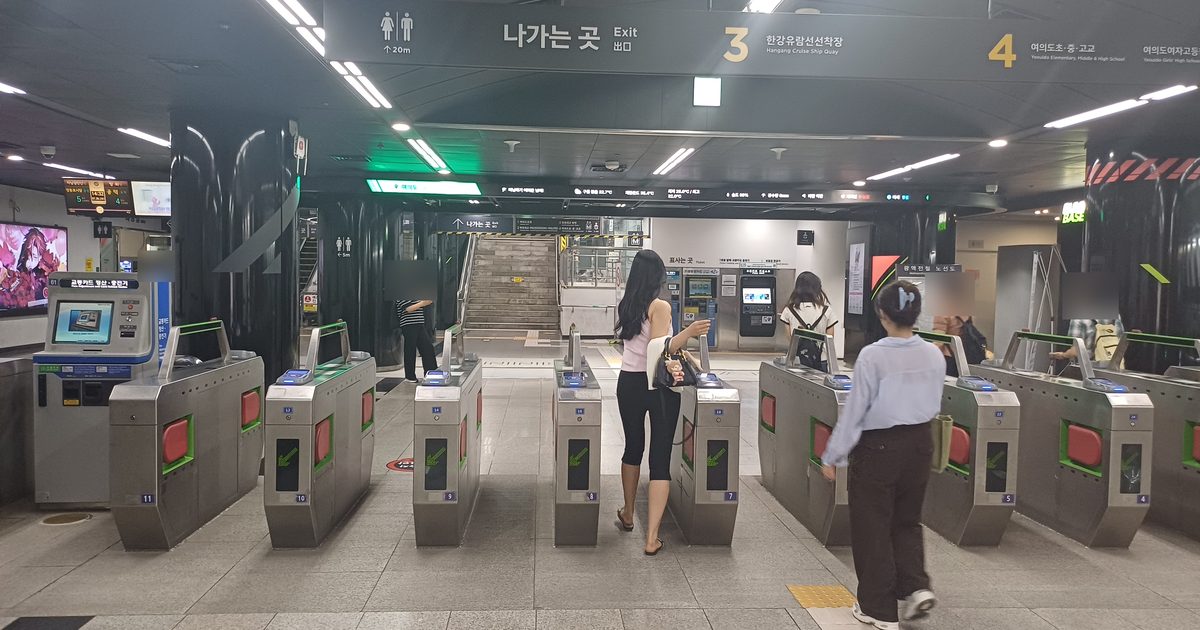
Yes, with a foreign card, where the shop’s terminal has NFC contactless switched on and accepts your card network; a symbol on the reader isn’t a guarantee. Subway gates and bus readers don’t take foreign cards directly in 2026. On iPhone, use MobileTmoney, topped up with Apple Pay using Mastercard, American Express, UnionPay or JCB; Visa isn’t accepted. Carry a physical card and some won.
Verified
 Current
Jeju Bus Payment 2027: Visa Tap, T-money, No Cash
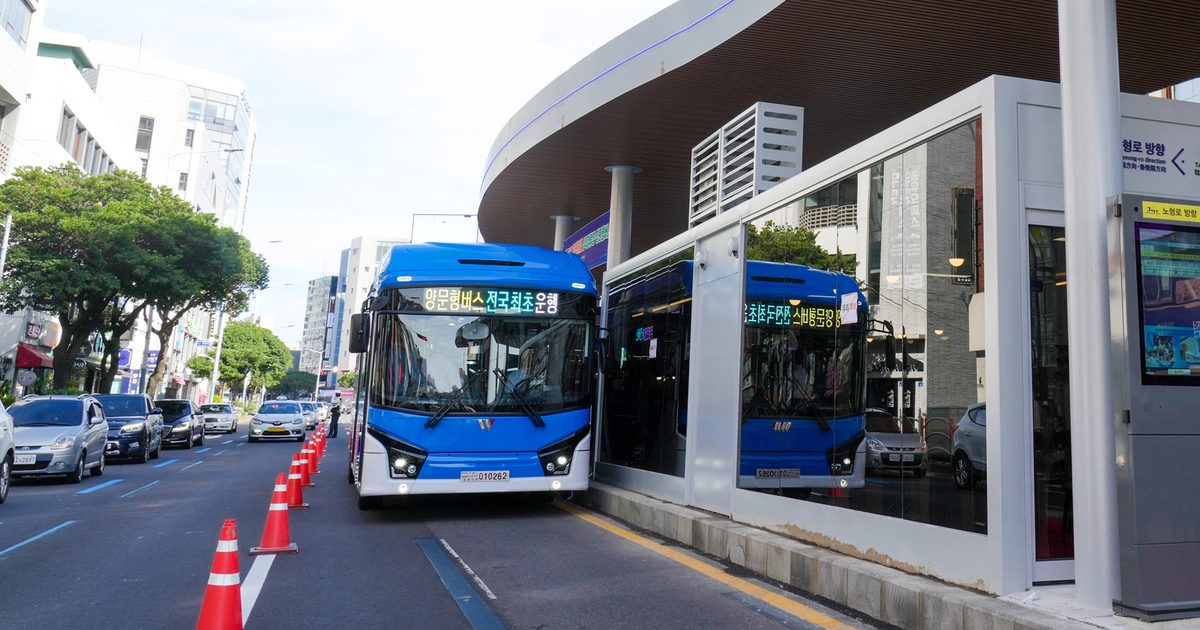
Jeju route buses have taken no cash since October 1, 2024. Since August 1, 2025, a second terminal for foreign visitors (ON나라페이) takes contactless Visa and QR payments; Jeju names no other card network. Otherwise use T-money or another nationwide transit card, including one bought in Seoul. The Seoul Climate Card doesn’t work.
Verified
 Current
Seoul Subway Child Fare 2026: Under-6s Free, T-money for Kids
On Korean transit, under 6 is an infant, 6–12 a child and 13–18 a youth, by actual age, and foreign children count the same way. On the Seoul subway and buses, under-6s ride free with an adult, up to three per adult; children and youths pay reduced fares only on a T-money registered with their birth date. In Busan, 6–12 year olds ride free on a registered card. On the KTX, children pay 50% of the adult fare and 13 and up pay the adult fare.