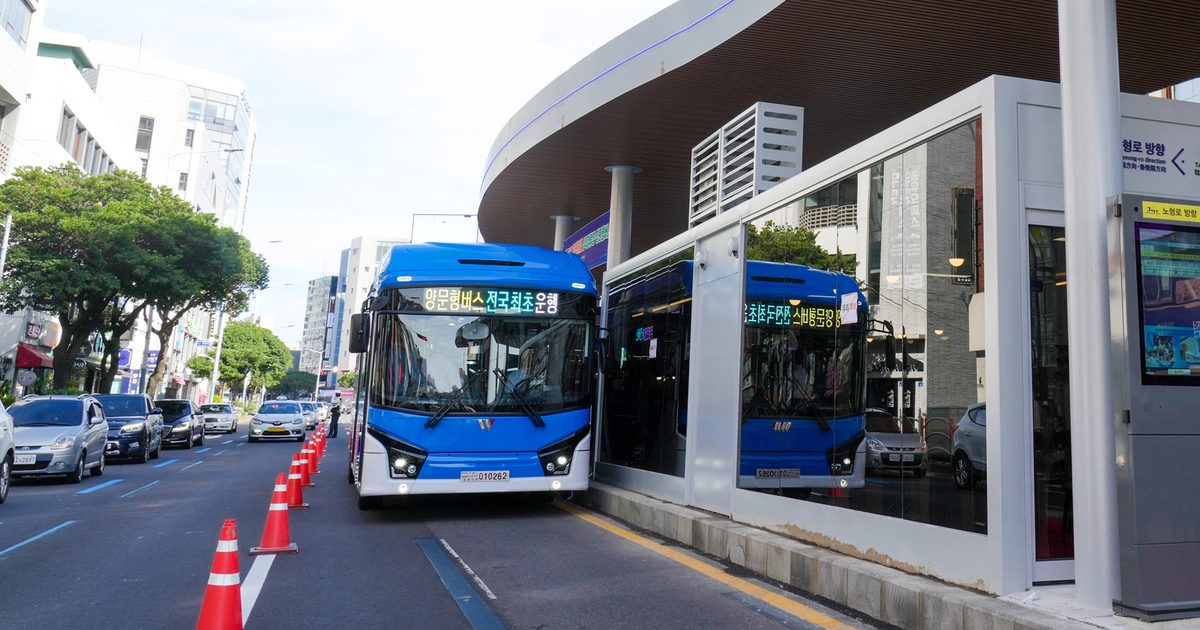
Jeju buses haven’t taken cash since October 1, 2024. The fare box is gone, so coins and notes are useless on board. Since August 1, 2025, every route bus has a second terminal for foreign visitors, and a contactless Visa card works on it. So the question before you land is simply which card network you carry. With Visa, you can board with nothing else. With Mastercard, Amex or JCB, you need T-money: on an iPhone that can be the MobileTmoney app, topped up through Apple Pay; otherwise a plastic card loaded with won. A T-money card bought in Seoul or Busan works in Jeju too. T-money (티머니) is Korea’s rechargeable transit card, and the foreign-visitor terminal’s Korean name is ON나라페이; I call it the blue-topped terminal below.
- No cash on any Jeju route bus since October 1, 2024.
- Visa: tap a contactless Visa on the blue-topped terminal, not the round T-money reader. The physical card is the safe bet.
- Mastercard, Amex, JCB or UnionPay on an iPhone: set up MobileTmoney before the flight. Its Apple Pay top-up takes those four networks, not Visa.
- Android without Visa: buy a plastic T-money at a convenience store and load it with won.
- Changing buses a lot: use T-money. The published transfer discount is for transit cards.
- The Seoul Climate Card doesn’t work in Jeju.
Contents
- Who this is for
- Can I pay cash?
- Can I tap my own Visa?
- Mastercard, Amex or JCB: what now?
- Does a T-money from Seoul or Busan work?
- Visa, MobileTmoney or plastic T-money
- How much is the fare?
- Tapping off and transfers
- Can two people share one card?
- QR payment apps
- Your situation
- Common mistakes
- What I would do
- FAQ
- If it were me
- Official sources
Who this is for
Travelers who plan to get around Jeju by bus and haven’t sorted out how to pay.
- You’re flying into Jeju and want to know if your card will get you onto the airport bus.
- You’re coming from Seoul or Busan with a T-money card already in your pocket.
- Your card isn’t a Visa and you’re not sure what to set up.
You can skip it if:
- You’re renting a car for the whole stay, or using taxis and a private driver.
- You’re only joining day tours with hotel pickup.
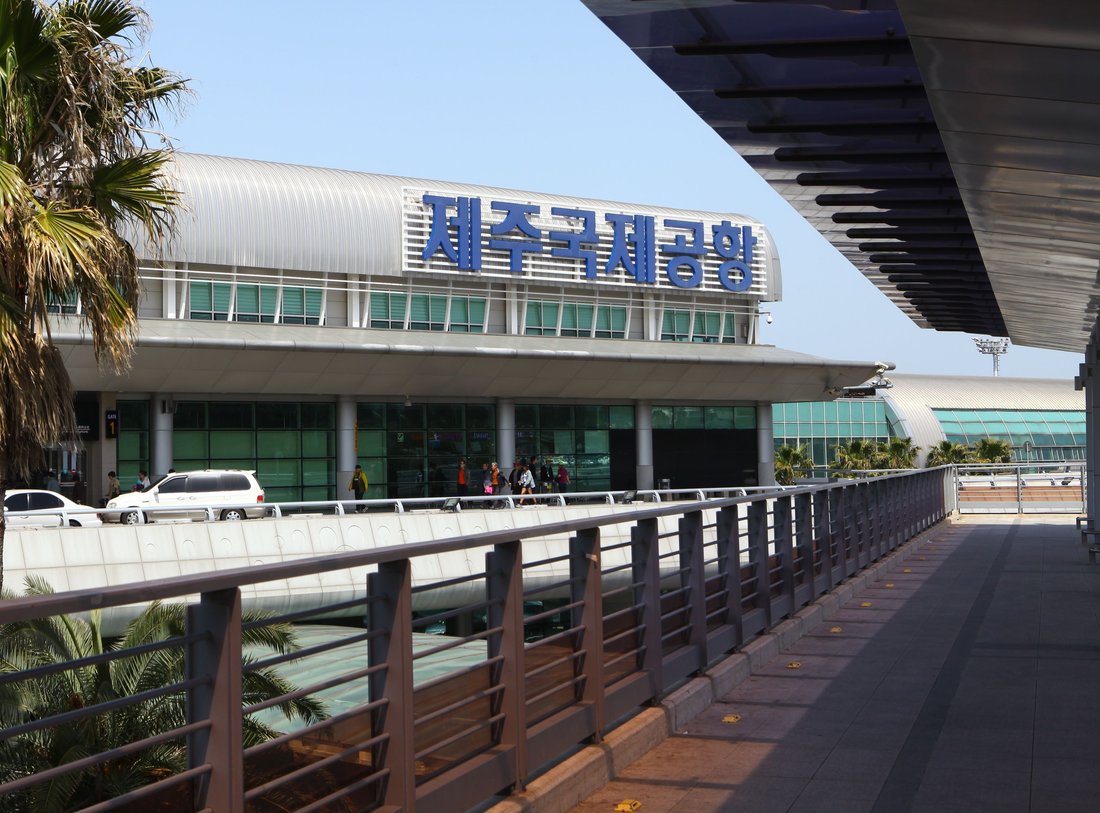
Can I pay cash on a Jeju bus?
No. Jeju Province made all route buses cashless on October 1, 2024 and removed the fare boxes. For a few months, passengers without a card could pay by bank transfer instead; that stopgap ended on December 31, 2024, and has been gone since January 1, 2025.
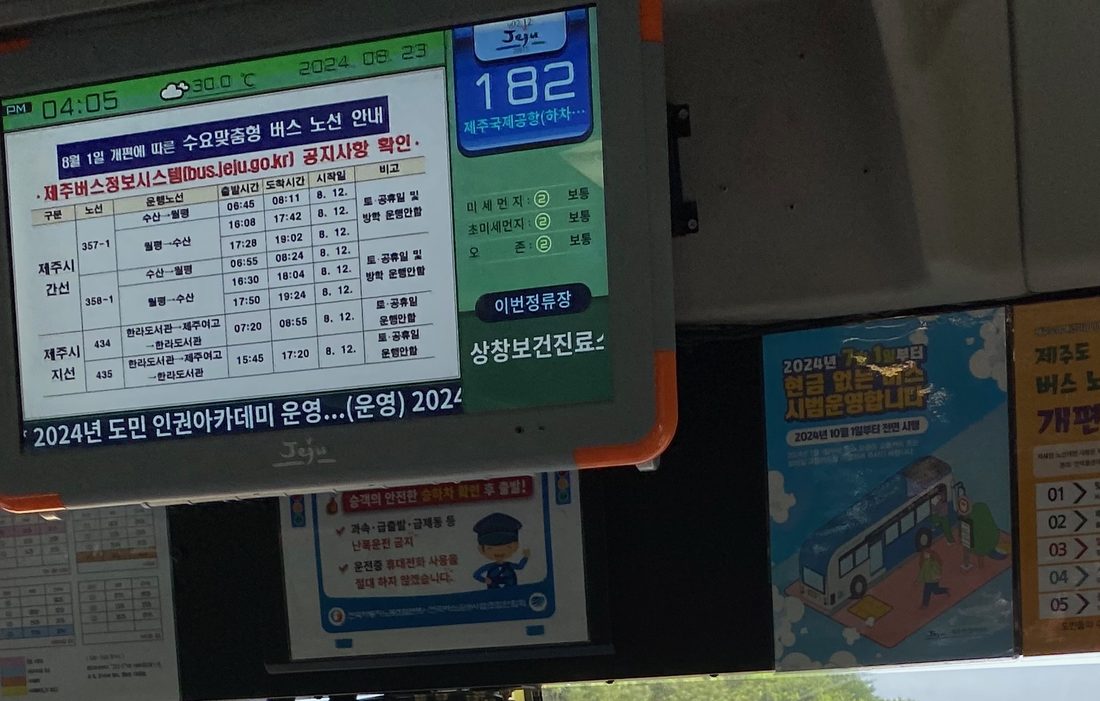
You may still find two things online that suggest otherwise. The fare table on Jeju’s own bus information site still has a “현금” (cash) column; that column is left over from before the switch. And an older Visit Jeju English transport page says “1,200 won will take you anywhere,” which dates from 2017. Neither reflects how you pay today.
| Cash on board | Not accepted (since October 1, 2024) |
|---|---|
| Bank transfer instead of a card | Ended December 31, 2024 |
| What works now | T-money and other transit cards, a contactless Visa on the foreign-visitor terminal, QR payment apps |
Can I tap my own Visa card on a Jeju bus?
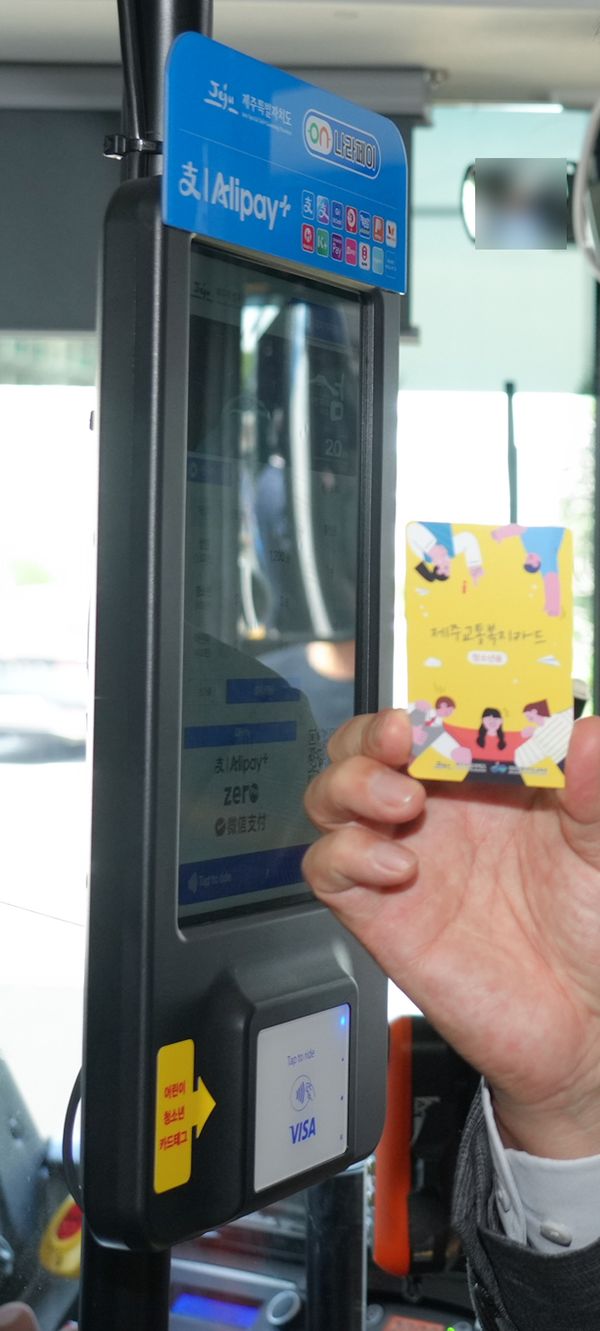
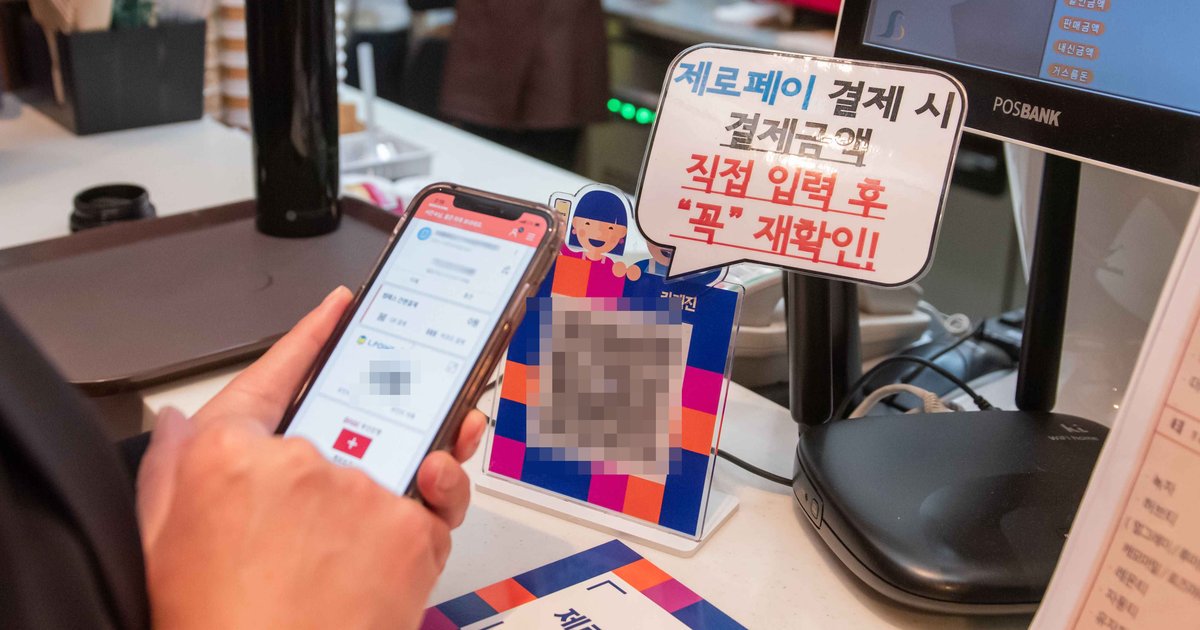
Yes, if it’s a contactless Visa, and you tap it on the blue-topped terminal, not the round T-money reader. Since August 1, 2025, Jeju route buses have carried a second payment terminal meant for foreign visitors. Jeju Province describes it as taking “Visa, Alipay, WeChat Pay and other overseas simple payments (EMV)” plus QR codes, so you can ride with the payment method you already use at home. Jeju doesn’t limit it to cards issued in particular countries.
Two things to know before you rely on it. First, there are two machines at the front door, and the province itself admits that having both side by side confuses people. The T-money reader is round and black with an orange T; the one you want has a blue sign on top and a white tap area at the bottom printed with “Tap to ride” and “VISA.” Second, Jeju names the card network, not phone wallets such as Apple Pay or Google Pay, so carry the physical card and treat it as the one that counts.
| Since | August 1, 2025 |
|---|---|
| Card network named by Jeju | Visa |
| Safest way to pay | The physical contactless Visa card |
| Which machine | The blue-topped terminal (ON나라페이), not the round T-money reader |
| Card issuing country | Not restricted by Jeju |
| Possible change | Jeju is considering replacing both machines with one nationwide terminal; no date (as of June 12, 2026) |
This is a Jeju arrangement. In Seoul, city buses only start taking foreign cards directly in 2027, and the subway later than that; how that rollout looks is in when foreign cards will work at Korean subway gates and on buses.
My card is Mastercard, Amex or JCB. What now?
Use T-money: on an iPhone, the MobileTmoney app topped up through Apple Pay; otherwise a plastic T-money loaded with won. Jeju’s announcement only names Visa. It doesn’t say Mastercard, Amex or JCB are refused either, so treat the blue-topped terminal as Visa-only and don’t plan around testing it at the bus door.
The useful coincidence is that MobileTmoney covers exactly the gap. T-money’s own app now has a version for international users, with no sign-up, and it tops up through Apple Pay. Its App Store release notes list the accepted networks as “Mastercard, American Express, UnionPay, JCB.” Visa isn’t on that list. So Visa holders tap the card, and everyone else on an iPhone uses MobileTmoney. T-money describes the app as a transit card “for buses and subways across Korea,” and Jeju accepts T-money.
| App | MobileTmoney (T-money’s own app), international version, no sign-up |
|---|---|
| Top-up | In the app, through Apple Pay |
| Top-up cards accepted | Mastercard, American Express, UnionPay, JCB; not Visa |
| iPhone | iPhone XS / XR or later, iOS 17.2 or later |
| Apple Watch | Series 6 / SE (2nd gen) or later, watchOS 10.2 or later |
| Android | Not covered here; plan on a plastic T-money |
Set it up at home, not at the airport bus stop. The step-by-step for creating the card and choosing Foreigner at the start is in setting up MobileTmoney on iPhone.
Does a T-money card from Seoul or Busan work in Jeju?
Yes. Jeju’s transport bureau lists “T-money, Cashbee and other nationwide transit cards” as accepted, so the card from the mainland goes straight into your pocket for Jeju. If you don’t have one yet, the bureau says to buy and top up at “nearby convenience stores and the like.” Top-ups are in Korean won cash.
The same fare table has a line for “credit card (post-paid).” That means Korean credit cards with a built-in post-paid transit function, not foreign credit cards.
| T-money bought in Seoul or Busan | Works |
|---|---|
| Buying a card in Jeju | Convenience stores and similar shops |
| Topping up a plastic card | Won cash |
| “Credit card (post-paid)” on the fare table | Korean cards with a transit function, not yours |
| Seoul Climate Card | Doesn’t work; Seoul excludes buses licensed by other regions |
| Youth and child fares | Only on a T-money registered as a youth or child card first |
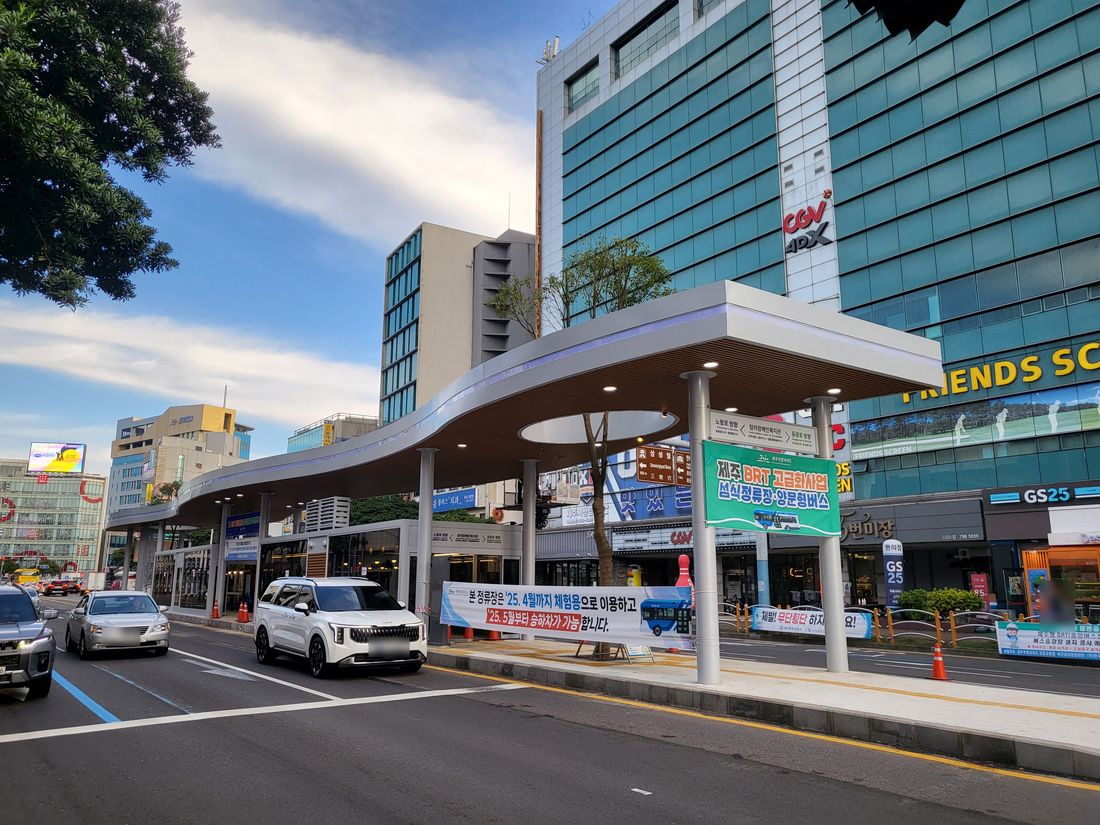
Visa, MobileTmoney or a plastic T-money: which should I use?
Sort it by card network, not by nationality. All three get you on the bus. The differences are what you need to set up and whether the published transfer rules apply.
| Contactless Visa | MobileTmoney (iPhone) | Plastic T-money | |
|---|---|---|---|
| Setup | None | App and Apple Pay top-up before the trip | Buy at a convenience store, load with won |
| Cards it needs | Visa | Mastercard, Amex, UnionPay or JCB | Won cash |
| Machine on the bus | Blue-topped terminal | T-money reader | T-money reader |
| Published fare and transfer rules | Not on the fare page | Yes | Yes |
How much is a bus in Jeju?
An adult with a transit card pays ₩1,150 on any trunk or branch bus, the same fare whatever the distance. Express buses charge a base fare when you board and add a distance charge when you tap off. The fares below are the transit-card fares on Jeju’s bus information site; that table doesn’t list what a Visa tap on the blue-topped terminal is charged.
| Route type | Adult fare (transit card) |
|---|---|
| Trunk and branch buses (including the tourist circular bus) | ₩1,150, flat fare |
| Express buses | ₩2,000 on boarding (up to 20 km), more by distance when you tap off, up to ₩3,000 over 40 km |
| Airport bus 600 | By section; airport to the Jungmun resort hotels ₩4,500, to the KAL Hotel in Seogwipo ₩5,500 |
| Airport bus 800 (800-1) | By section; airport to the New Seogwipo bus terminal ₩5,000 |
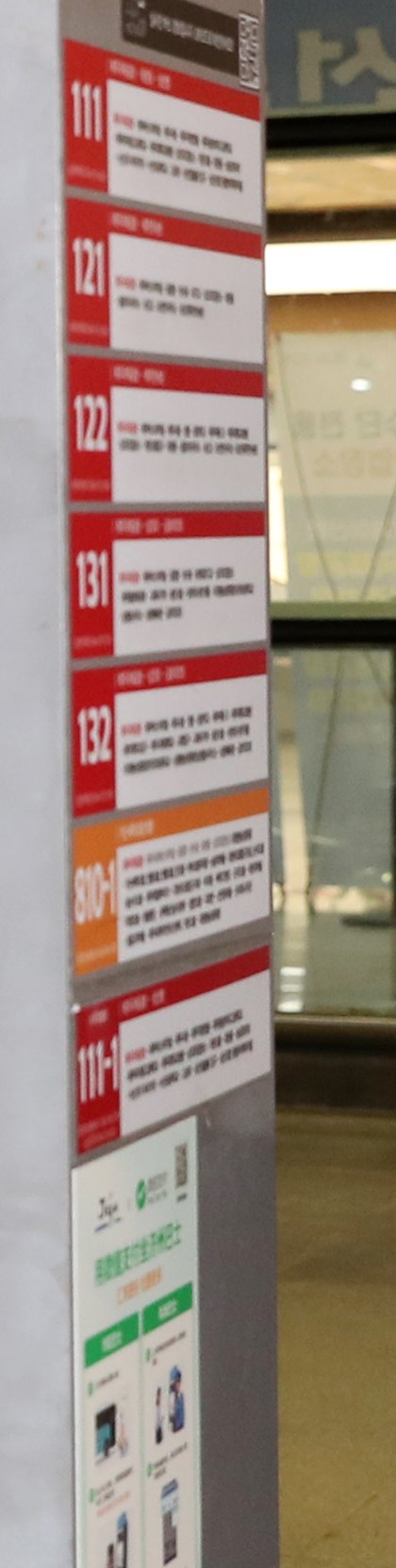
Do I tap when getting off, and how do transfers work?
With a transit card, yes: tap off every time. Express buses take the distance charge at the tap-off, and the transfer window starts from it. These are the transport bureau’s rules for transit cards. The fare page says nothing about the blue-topped terminal, so if you change buses a lot, a T-money is the only option with a published transfer discount.
| Transfer window | Within 40 minutes of tapping off, up to 2 transfers |
|---|---|
| Doesn’t count as a transfer | Changing to the same route number, either direction: 111 to 111 doesn’t count, 111 to 112 does |
| Next bus costs the same or less | Free |
| Next bus costs more | You pay the difference; trunk bus to an express or airport bus costs ₩850 more |
| Between express and airport buses | Only ₩1,150 is credited (adult) |
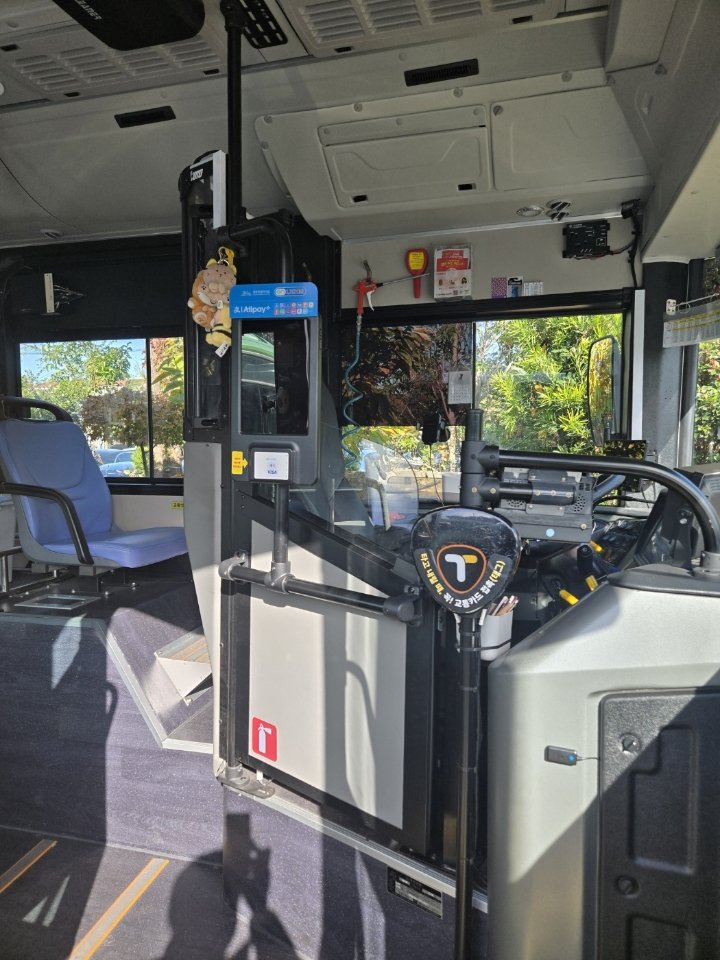
Can two people share one card on a Jeju bus?
Yes, you can both board on one transit card, but only one of you gets the transfer discount. The bureau allows multi-person boarding and then gives the transfer discount to one person only, counted at the highest fare type in the group. For a couple riding a single bus to a beach and back, one card is fine. For a day of hops between routes, one card each saves money. Jeju doesn’t say whether one Visa can pay for two people on the blue-topped terminal, so give everyone their own way to pay.
Can I pay with a QR app like Alipay?
Yes, Jeju names Alipay and WeChat Pay, and the QR option has worked with apps from nine places since it launched in 2024. Those nine are mainland China, Hong Kong, the Philippines, Macau, Italy, Thailand, Malaysia, Mongolia and Singapore, covering 14 apps. If you use a wallet from one of those places, it may be worth trying, but Jeju doesn’t publish the full app list, so keep a card as the main plan.
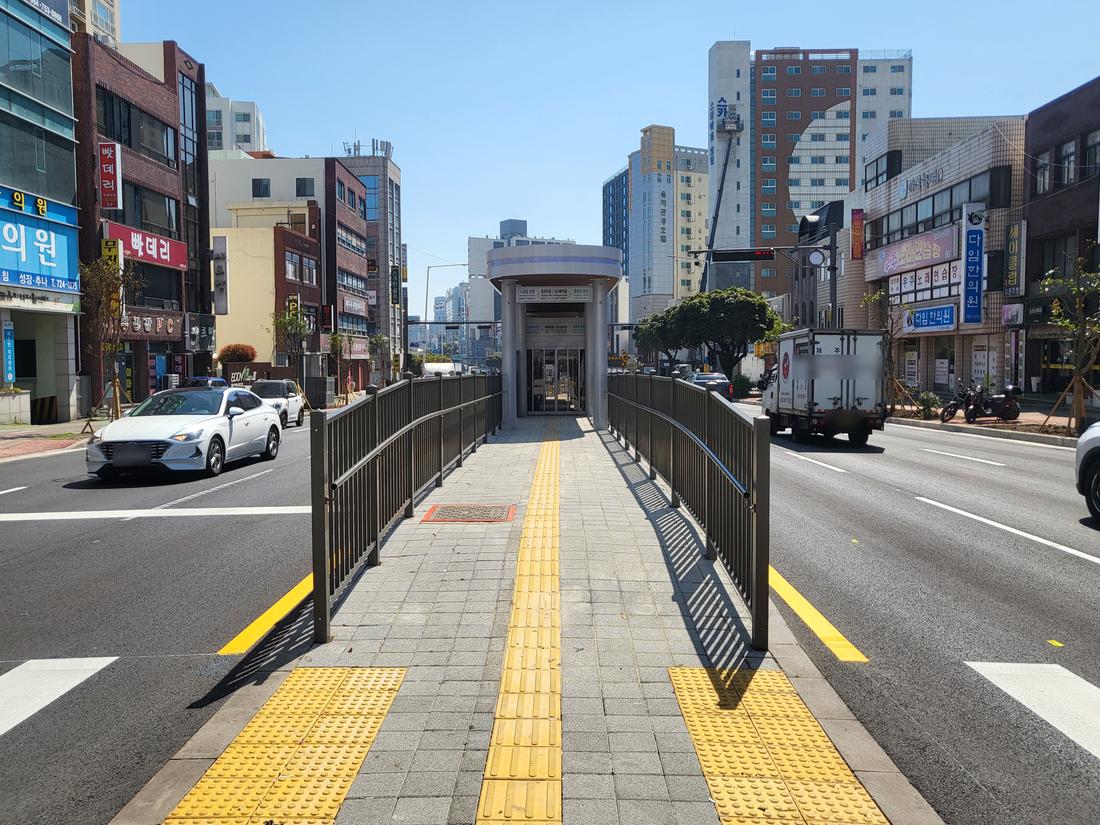
Your situation
If you’re coming from Seoul or Busan with a T-money
Bring the same card. Top it up before the flight so the airport bus is covered, then top up again at a Jeju convenience store with won when it runs low. Check-in cut-offs and liquids on the domestic flight are in Korea’s domestic flight rules for foreigners.
If you’re flying into Jeju with a contactless Visa
You don’t need to prepare anything. Board, tap the physical Visa on the blue-topped terminal, and go. If your days involve many transfers, or two or three of you are riding a lot together, buy a T-money at a convenience store after you land and use the transfer rules.
If you’re flying in with Mastercard, Amex or JCB and an iPhone
Install MobileTmoney at home, choose the international option, and add your card to Apple Pay. Top up a first amount before you leave the airport building and tap the iPhone on the T-money reader. Keep some won as a fallback; if a top-up fails, a convenience store sells a plastic card.
If you’re on Android and don’t have a Visa
Get some won before the first bus, buy a plastic T-money at a convenience store, and load it there. The first ride from the airport already needs a card, so don’t leave this until you’re at the bus door.
Common mistakes
- Boarding with cash. There’s no fare box. Any fare table that still shows a cash price is from before October 2024.
- Tapping the Visa on the wrong machine. Visa goes on the blue-topped terminal, not the round T-money reader.
- Assuming Apple Pay with a Visa inside is the same as the card. Jeju names Visa, not phone wallets. Carry the physical card.
- Trying to top up MobileTmoney with Visa. The accepted list is Mastercard, Amex, UnionPay and JCB.
- Skipping the tap-off on an express bus. The distance fare and the transfer window both start there.
- Sharing one T-money on a day of transfers. Only one of you gets the discount.
- Bringing the Seoul Climate Card. It doesn’t work on Jeju buses.
What I would do
Before the trip I’d check the network on every card I’m bringing. With a contactless Visa, that card goes in my wallet for Jeju and I’d stop there. Without one, on an iPhone, I’d install MobileTmoney and do a small Apple Pay top-up at home to make sure the card goes through. On Android, I’d plan a convenience-store stop at the airport with some won. If I were coming from Seoul, I’d keep using the same T-money: the transfer rules are spelled out, and I wouldn’t have to think about which machine to tap. For bus routes to specific places, the guides to the bus to 1100 Highland in winter and getting to Dongmun Market from the airport have the route numbers. For a late return from a hike, check whether Kakao T takes a foreign card.
FAQ
- Q1: Can I pay cash on Jeju buses?
- No. Every Jeju route bus has been cashless since October 1, 2024, and the fare boxes are gone. Board with a transit card, a contactless Visa, or a QR payment app.
- Q2: Can I use my Visa card on a Jeju bus?
- Yes. Since August 1, 2025, every route bus has a second terminal for overseas payments; tap a contactless Visa on that blue-topped one, not on the round T-money reader. The physical card is the safe bet.
- Q3: Does Mastercard work on Jeju buses?
- Jeju only names Visa. Its announcement doesn’t mention Mastercard, Amex or JCB either way. With one of those cards and an iPhone, set up MobileTmoney, which tops up with Mastercard, Amex, UnionPay or JCB through Apple Pay; otherwise carry a plastic T-money.
- Q4: Does a T-money card from Seoul work in Jeju?
- Yes. Jeju’s transport bureau accepts T-money, Cashbee and the other nationwide transit cards, so the card you used in Seoul or Busan works as is. In Jeju, convenience stores sell and top up T-money for cash.
- Q5: How much is a bus in Jeju?
- ₩1,150 for an adult on a regular trunk or branch bus with a transit card. Express buses start at ₩2,000 and go up to ₩3,000 by distance; airport buses 600 and 800 are priced by section.
- Q6: Do I tap when getting off a Jeju bus?
- Yes, with a transit card. Express buses charge the distance fare when you tap off, and the 40-minute transfer window starts from your tap-off.
- Q7: Can two people share one T-money on a Jeju bus?
- Yes, but only one of you gets the transfer discount. If you change buses a lot, carry one card each.
- Q8: Does the Seoul Climate Card work in Jeju?
- No. Seoul excludes buses licensed by other regions, and Jeju buses are among them.
If it were me
With a contactless Visa, I wouldn’t buy anything for Jeju buses; I’d tap the card and only pick up a T-money if the itinerary turned into lots of transfers. With Mastercard, Amex or JCB on an iPhone, MobileTmoney is the cleanest setup, because it’s free, it’s done before the flight and it uses the published transfer rules. On Android without Visa, a plastic T-money and a little won is still the reliable answer. And if I already had a T-money from Seoul, I’d just keep using it.
Official sources
- Jeju bus information system: timetables and fares (Korean; transit-card fares, transfers, multi-person boarding)
- Jeju Province: the foreign-visitor payment terminal (ON나라페이) in operation (Korean; Visa and QR payments)
- Jeju Province: cashless buses on all routes from October 1, 2024 (Korean)
- App Store: MobileTmoney (top-up cards and supported devices)
Prices and times follow the latest official announcement.
Read next
Verified
 Current
Can You Use Apple Pay in Korea? 2026 Shops, Subway and Bus
Yes, with a foreign card, where the shop’s terminal has NFC contactless switched on and accepts your card network; a symbol on the reader isn’t a guarantee. Subway gates and bus readers don’t take foreign cards directly in 2026. On iPhone, use MobileTmoney, topped up with Apple Pay using Mastercard, American Express, UnionPay or JCB; Visa isn’t accepted. Carry a physical card and some won.
Verified
 Not announced
1100 Highland Jeju in Snow 2026–27: Buses and Road Closures
The 2026–27 winter snow buses (routes 1100 and 1100-1) have not been announced; last season ran December 13, 2025 to March 2, 2026. Route 240 passes 1100 Highland every day, but detours along Pyeonghwa-ro when the 1100 Road is closed to large vehicles. Check the Jeju police traffic control table (large-vehicle cell) and the Hallasan National Park 1100 Road camera before going.
Verified
 Current
Can Foreigners Use Kakao T Taxi? Foreign Cards and Cash 2026
Kakao T accepts Visa, Mastercard, JCB and AMEX cards issued outside Korea if the name matches your account, though some issuers still block them; Kakao Pay takes Korean cards only. Without a card, request a Regular taxi, choose to pay the driver, and pay by card or cash at the end. Blue Partners and Booster calls need an in-app card. k.ride calls the same cars but adds 10% to the fare and takes no cash. The iPhone app needs iOS 17.0 or later.