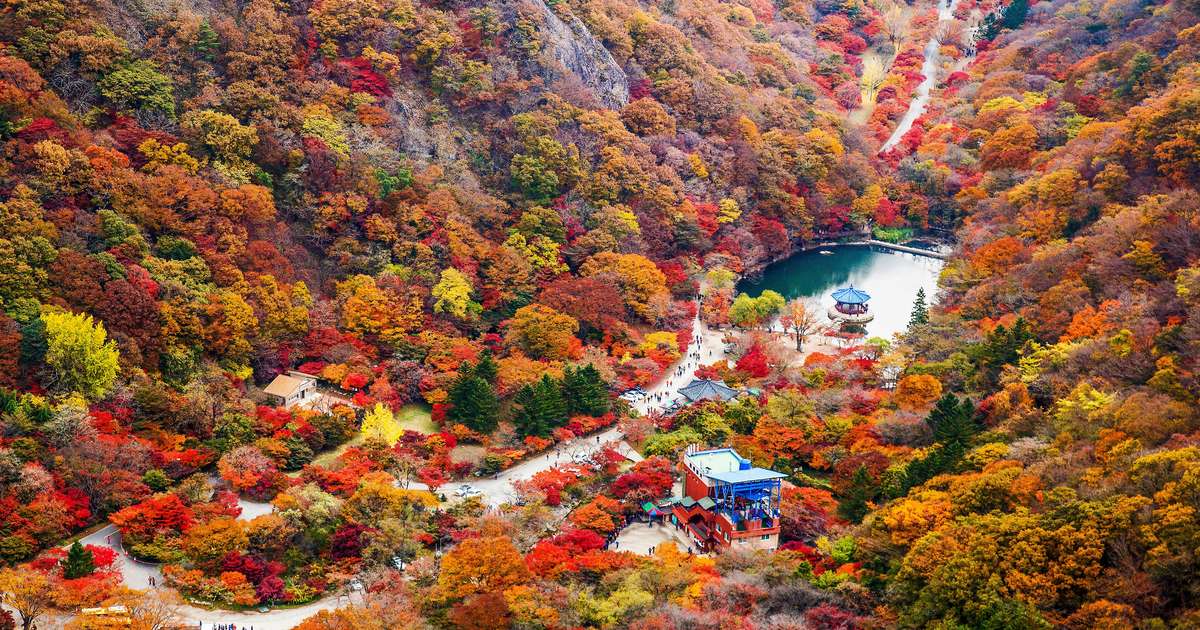
Every year from 2016 to 2025, the fall foliage on Bukhansan, the mountain inside Seoul, peaked between October 27 and November 4, a nine-day window. Seoraksan in Gangwon runs about two weeks earlier, Naejangsan in North Jeolla about a week later. The 2027 forecasts won’t come out until early September 2027, too late if you’re booking flights now. What you can book on is the Korea Meteorological Administration’s (KMA) observed peak date for each of its 21 mountains, laid out below against the 2027 calendar. Two terms recur: “first foliage” is when about 20% of a mountain has turned, and “peak” is about 80%.
- 2027 forecast: not out. Weather i publishes in early September (September 4 in 2026); the Korea Forest Service in late September or early October. The KMA reports observations, not forecasts.
- Peak range 2016–2025: Bukhansan (Seoul) October 27–November 4; Seoraksan October 12–29; Naejangsan October 29–November 11.
- A 7-day trip from Seoul: Wednesday, October 27 to Tuesday, November 2, 2027 caught Bukhansan’s peak in 9 of 10 years and Naejangsan’s in 6.
- Cities turn later: Seoul’s street trees peak 1–2 weeks after Bukhansan; Busan’s mostly in mid to late November.
- Forecasts drift: in 2026 all 14 forecast mountains peaked 2–14 days earlier than forecast.
- Forest Service “peak” means 50%, not 80%; don’t compare its dates with the KMA’s.
Contents
Is the 2027 Korea fall foliage forecast out?
No. The first one is due in early September 2027. Two bodies publish foliage forecasts; the KMA only reports what it observes.
| Source | 2027 | When it usually comes out |
|---|---|---|
| Weather i (웨더아이), a private forecaster | Not out | Early September; September 4–7 every year 2021–2026 (September 4 in 2026) |
| Korea Forest Service | Not out | Late September to early October (September 22, 2026; October 1, 2025; September 23, 2024) |
| Korea Meteorological Administration (KMA) | No forecast | Reports first foliage and peak for each mountain on the day it’s observed |
If you’re booking autumn 2027 flights between now and August, none of these will exist yet. Everything below uses the KMA’s observed records.
Who this is for
Travelers planning Korea between mid-October and mid-November who have to choose a week now.
- You haven’t booked flights and want to know which 2027 dates to aim for.
- You’ve booked and want to know which mountains or cities usually peak during your dates.
- You’re flying into Seoul or Busan and weighing a day trip to Seoraksan or Naejangsan.
You can skip it if:
- You’re booking after mid-September 2027. By then you can go straight to that year’s forecast and the KMA’s live photos.
- You’ve already chosen a mountain and only need transport. For Seoraksan, see how to do a Seoraksan day trip from Seoul.
What do “first foliage” and “peak” mean, and why do dates disagree?
For the KMA, first foliage is when about 20% of the mountain, from the summit down, has changed color; peak is about 80%. The Korea Forest Service calls 50% its peak. That’s why the same mountain can have two “peak” dates a week or more apart.
| KMA first foliage | About 20% of the mountain changed, from the summit down |
|---|---|
| KMA peak | About 80% changed |
| Weather i | Same 20% and 80% as the KMA, so its forecasts can be checked against KMA observations |
| Korea Forest Service and Korea National Arboretum peak | 50% or more changed |
| KMA mountains | 21 |
| Normal | The 1991–2020 average |
On the day of first foliage, only the area near the summit has turned. Across 221 records for the 21 mountains in 2016–2026, the gap from first foliage to peak had a median of 13 days, and 91% of the gaps were 7 to 21 days. If you see a “first foliage” headline, you usually have one to three weeks.
When does each mountain peak?
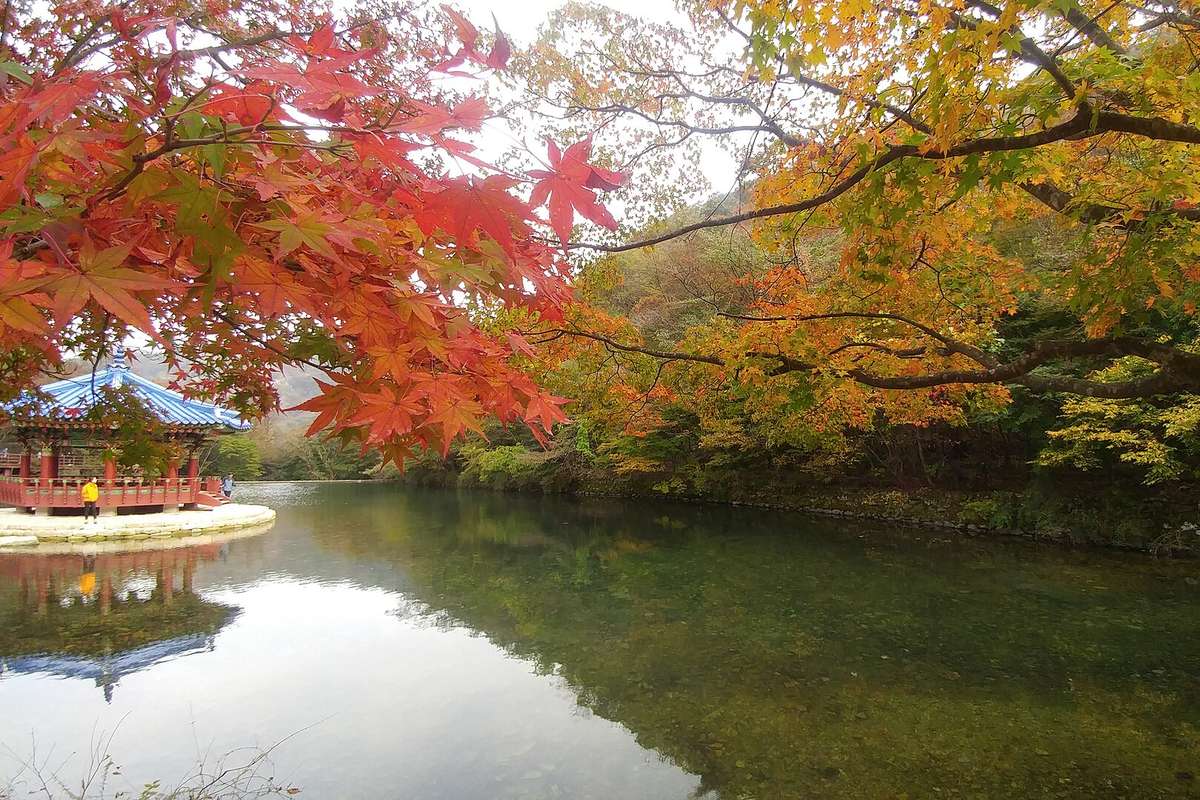
Bukhansan peaked October 27–November 4 in every year from 2016 to 2025; Seoraksan runs about two weeks earlier, Naejangsan about a week later. The table runs roughly from Gangwon in the north to the south coast.
| Mountain | Normal first / peak | Peak range 2016–2025 | 2026 first / peak |
|---|---|---|---|
| Seoraksan (northeast Gangwon) | Sep 28 / Oct 17 | Oct 12–Oct 29 | Sep 28 / Oct 16 |
| Odaesan (Gangwon) | Oct 1 / Oct 15 | Oct 8–Oct 20 | Oct 1 / Oct 14 |
| Chiaksan (Wonju, Gangwon) | Oct 7 / Oct 21 | Oct 17–Oct 31 | Oct 6 / Oct 19 |
| Sobaeksan (Yeongju, North Gyeongsang) | Oct 9 / Oct 20 | Oct 21–Oct 31 | Oct 15 / Oct 22 |
| Jirisan (Namwon side) | Oct 11 / Oct 23 | Oct 23–Nov 6 | Oct 14 / Oct 22 |
| Woraksan (North Chungcheong) | Oct 12 / Oct 24 | Oct 20–Nov 5 | Oct 15 / Oct 28 |
| Hallasan (Jeju) | Oct 14 / Oct 28 | Oct 24–Nov 13 | Oct 14 / Nov 6 |
| Songnisan (North Chungcheong) | Oct 14 / Oct 26 | Oct 23–Nov 5 | Oct 19 / Nov 2 |
| Gayasan (Hapcheon, South Gyeongsang) | Oct 14 / Oct 28 | Oct 26–Nov 5 | Oct 19 / Nov 3 |
| Bukhansan (Seoul) | Oct 15 / Oct 28 | Oct 27–Nov 4 | Oct 14 / Oct 26 |
| Gyeryongsan (South Chungcheong) | Oct 16 / Oct 27 | Oct 25–Nov 7 | Oct 16 / Oct 30 |
| Juwangsan (Cheongsong, North Gyeongsang) | Oct 16 / Oct 27 | Oct 24–Nov 11 | Oct 16 / Nov 4 |
| Palgongsan (Daegu) | Oct 17 / Oct 28 | Oct 25–Nov 12 | Oct 16 / Nov 6 |
| Deogyusan (observed at Jeoksangsan) | Oct 19 / Oct 31 | Oct 19–Nov 3 | Oct 12 / Oct 20 |
| Geumosan (Gumi, North Gyeongsang) | Oct 19 / Oct 28 | Oct 25–Nov 12 | Oct 16 / Nov 6 |
| Gajisan (Ulsan) | Oct 20 / Oct 31 | Oct 27–Nov 10 | Oct 21 / Nov 6 |
| Naejangsan (Jeongeup, North Jeolla) | Oct 20 / Nov 4 | Oct 29–Nov 11 | Nov 2 / Nov 6 |
| Mudeungsan (Gwangju) | Oct 21 / Nov 4 | Oct 29–Nov 8 | Oct 21 / Nov 3 |
| Wolchulsan (South Jeolla) | Oct 23 / Nov 6 | Nov 2–Nov 12 | Oct 22 / Nov 2 |
| Duryunsan (Haenam, South Jeolla) | Oct 28 / Nov 10 | Nov 2–Nov 12 | Oct 27 / Nov 9 |
| Jogyesan (Suncheon, South Jeolla) | No normal | Oct 30–Nov 6 | Oct 22 / Nov 3 |
2026 ran early in the north and late in the south. Seoraksan peaked a day ahead of normal, while Naejangsan didn’t start turning until November 2, 13 days late, then peaked just four days later. News about one mountain tells you little about another. Bukhansan is the only one of the 21 inside Seoul; for routes to the top, see how to hike Bukhansan’s Baegundae.
When did Seoraksan, Bukhansan and Naejangsan peak each year?
Bukhansan stays within nine days; Seoraksan’s earliest and latest peaks are 17 days apart, Hallasan’s 20. KMA observed peak dates:
| Year | Seoraksan | Bukhansan | Naejangsan | Hallasan | Jirisan |
|---|---|---|---|---|---|
| 2016 | Oct 19 | Oct 27 | Nov 1 | Oct 26 | Oct 31 |
| 2017 | Oct 17 | Oct 30 | Oct 30 | Oct 25 | Oct 27 |
| 2018 | Oct 12 | Oct 29 | Oct 29 | Oct 29 | Oct 24 |
| 2019 | Oct 16 | Nov 1 | Nov 8 | Oct 28 | Oct 31 |
| 2020 | Oct 16 | Oct 30 | Nov 2 | Oct 26 | Oct 23 |
| 2021 | Oct 26 | Nov 1 | Nov 3 | Nov 2 | Nov 1 |
| 2022 | Oct 21 | Oct 28 | Oct 31 | Oct 24 | Oct 24 |
| 2023 | Oct 23 | Oct 27 | Oct 31 | Oct 26 | Oct 23 |
| 2024 | Oct 29 | Nov 4 | Nov 11 | Nov 13 | Oct 31 |
| 2025 | Oct 24 | Oct 30 | Nov 10 | Nov 11 | Nov 6 |
| 2026 | Oct 16 | Oct 26 | Nov 6 | Nov 6 | Oct 22 |
| Normal | Oct 17 | Oct 28 | Nov 4 | Oct 28 | Oct 23 |
Hallasan has peaked late three years running, about one to two weeks after its normal October 28. If you’re flying into Jeju, early November has been the safer bet recently.
When do the leaves change in Seoul and Busan city?
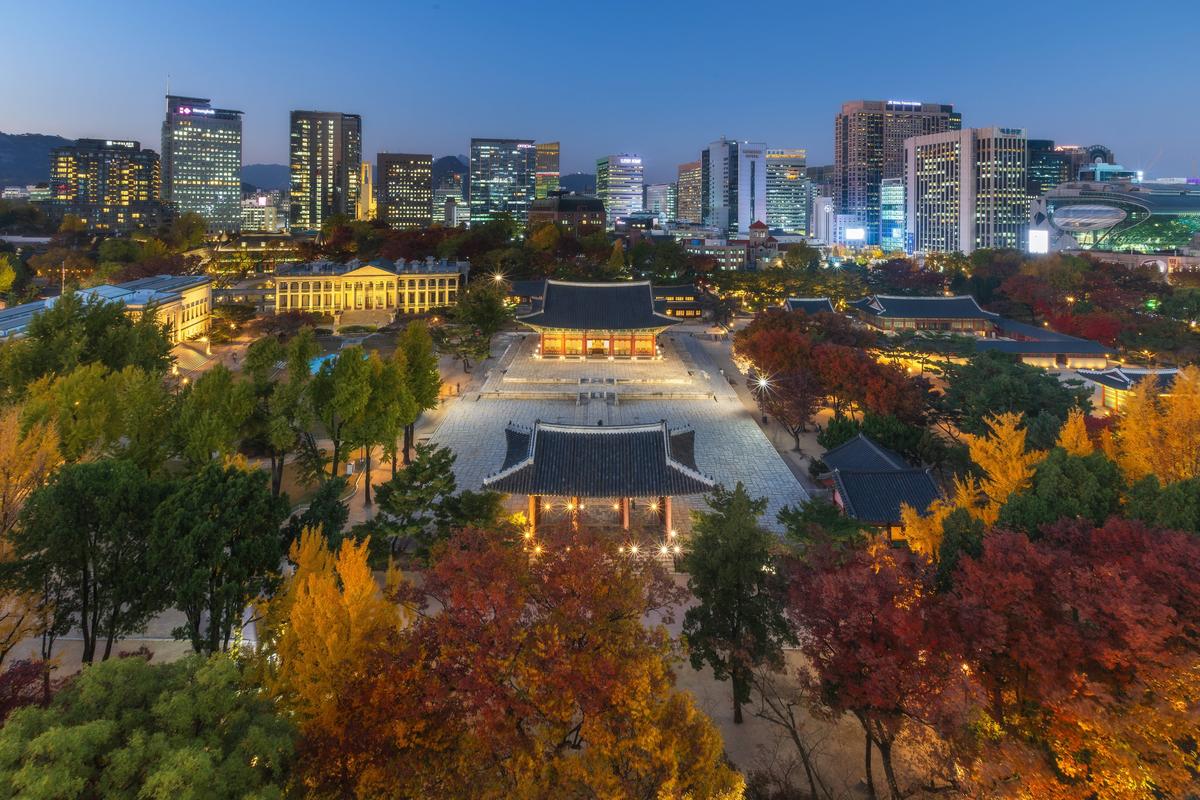
Later than the mountains: Seoul’s city maples normally peak November 8 and its ginkgo November 3, one to two weeks after Bukhansan; Busan’s mostly peak in mid to late November. These are the KMA’s designated observation trees at each weather station. Seoul’s are at the Seoul weather station in Jongno-gu, not on Bukhansan.
| Station | Maple normal start / peak | Maple peak 2016–2025 | Ginkgo normal start / peak | Ginkgo peak 2016–2025 |
|---|---|---|---|---|
| Seoul | Oct 28 / Nov 8 | Nov 2–Nov 16 | Oct 26 / Nov 3 | Oct 30–Nov 21 |
| Busan | Nov 2 / Nov 17 | Nov 15–Dec 8 | Nov 1 / Nov 13 | Nov 14–Dec 8 |
| Pohang | Oct 22 / Nov 5 | Nov 1–Nov 22 | Oct 25 / Nov 6 | Nov 1–Nov 17 |
| Daegu | Oct 26 / Nov 5 | Nov 1–Nov 29 | Oct 25 / Nov 3 | Oct 27–Nov 12 |
- Seoul’s ginkgo has run late: peaks from 2021 to 2025 were all November 14–21, well after the normal November 3.
- Gyeongju has no KMA station. Use nearby Pohang as a guide.
For autumn color inside a palace, Changdeokgung’s Secret Garden tour is the one that needs booking ahead.
Which week should you book for fall foliage in 2027?
From Seoul, Wednesday, October 27 to Tuesday, November 2, 2027: Bukhansan’s peak fell inside that window in 9 of the 10 years, Naejangsan’s in 6. The table puts each year’s observed peak on the 2027 calendar and counts the hits. It’s history, not a forecast.
| 7-day trip, 2027 | Bukhansan (Seoul) | Naejangsan | Seoraksan |
|---|---|---|---|
| Sat Oct 16 – Fri Oct 22 | 0 / 10 years | 0 / 10 years | 5 / 10 years |
| Sat Oct 23 – Fri Oct 29 | 4 / 10 years | 1 / 10 years | 4 / 10 years |
| Wed Oct 27 – Tue Nov 2 | 9 / 10 years | 6 / 10 years | 1 / 10 years |
| Fri Oct 29 – Thu Nov 4 | 7 / 10 years | 7 / 10 years | 1 / 10 years |
| Sat Oct 30 – Fri Nov 5 | 6 / 10 years | 6 / 10 years | 0 / 10 years |
| Sat Nov 6 – Fri Nov 12 | 0 / 10 years | 3 / 10 years | 0 / 10 years |
In the October 27–November 2 row, the one year Bukhansan missed was 2024 (November 4); in 2026 it peaked on October 26, earlier than any of the ten years, so that would have missed too. Shift two days later, October 29–November 4, and Naejangsan goes up to 7 while Bukhansan drops to 7. Seoraksan can’t be pinned: no 7-day window catches it in more than 5 of 10 years, so if it’s your main goal, book a changeable fare. Hallasan is best matched by October 23–29 (7 of 10 years), though its last three years ran later.
While you’re booking, check whether your passport needs a K-ETA for Korea in 2027.
Where should you go: mid-October, late October or November?
Mid-October: Gangwon. Late October into the first days of November: Bukhansan and the central mountains. First two weeks of November: Naejangsan, the South Jeolla mountains and Seoul’s streets. Mid to late November: Busan and Gyeongju. Seoraksan and Naejangsan are awkward by public transport from Seoul or Busan, so a day tour is the low-effort option. The tours below are seasonal; their 2027 departure dates aren’t open yet.
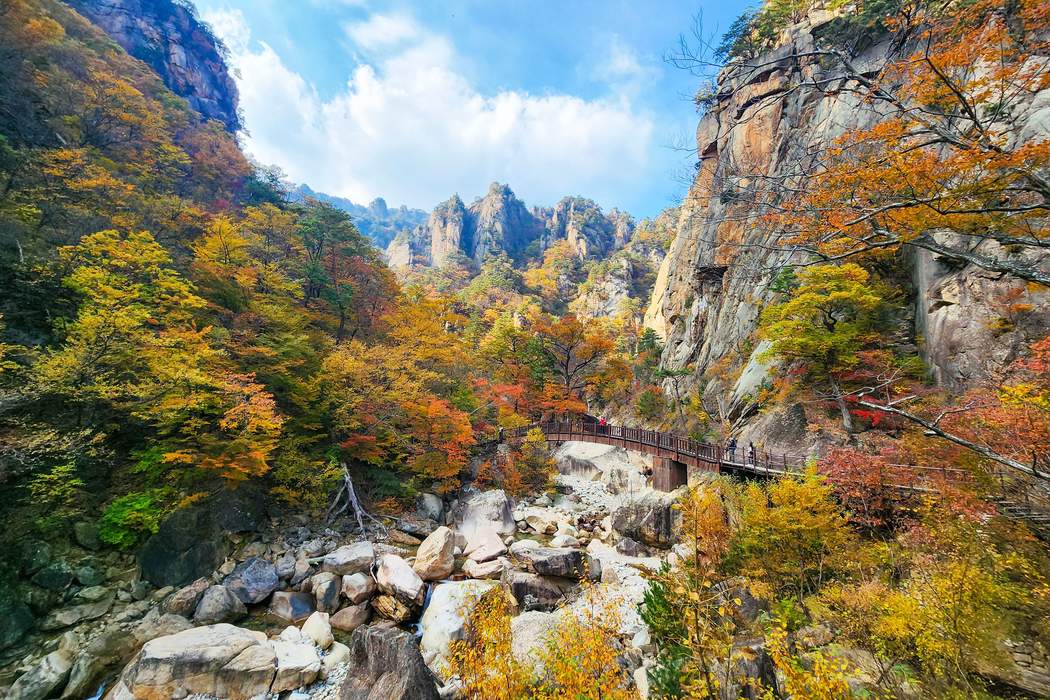
Mid-October: Seoraksan and Odaesan
Seoraksan peaked October 12–29 and Odaesan October 8–20 over 2016–2025, while Bukhansan in Seoul is usually still at first foliage. For buses, the cable car and trails on your own, see Seoraksan by tour or on your own. To go with a group, Klook’s Seoraksan autumn foliage day tour from Seoul is the mid-October option; 2027 dates will appear on the product page when they open.
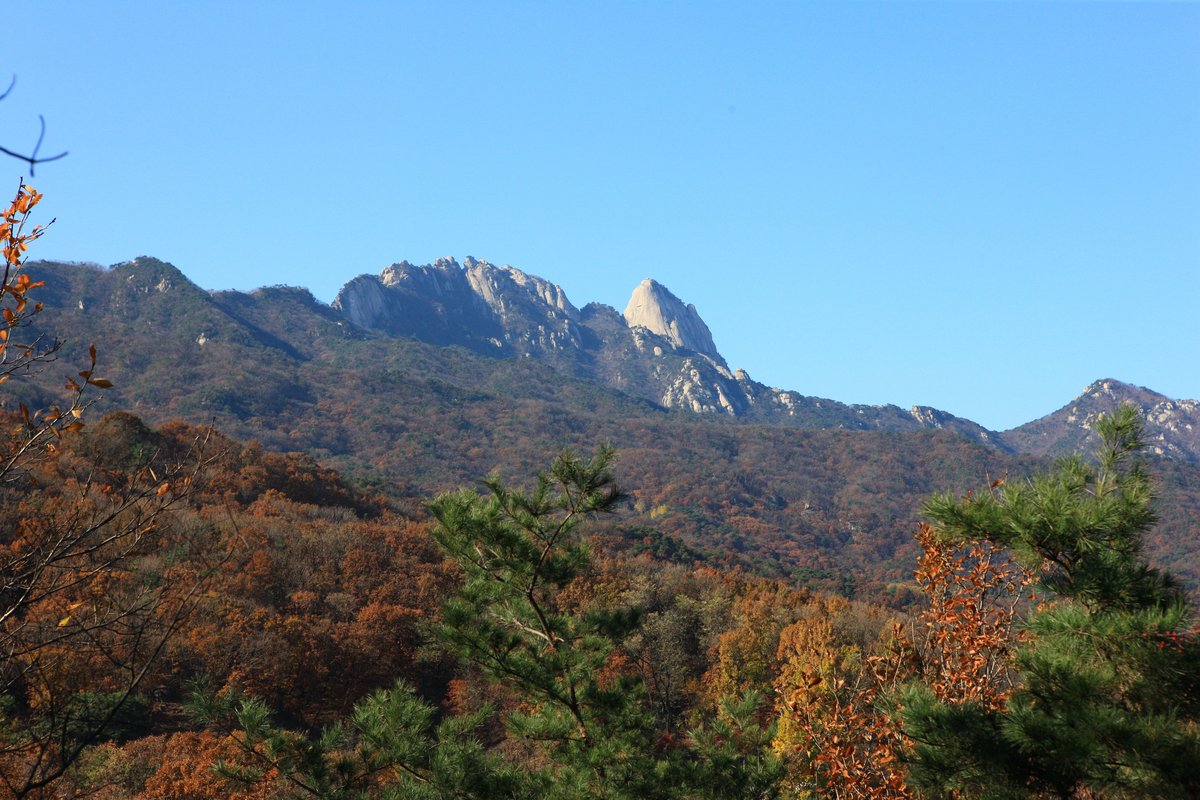
Last week of October to the first days of November: Bukhansan and the central mountains
Bukhansan peaked October 27–November 4 in all ten years, and Songnisan, Gayasan and Gyeryongsan usually fall in this stretch too. Flying into Seoul, you can see mountain color this week without a long day on a bus. Hwadam Forest near Seoul is another option, with timed tickets.
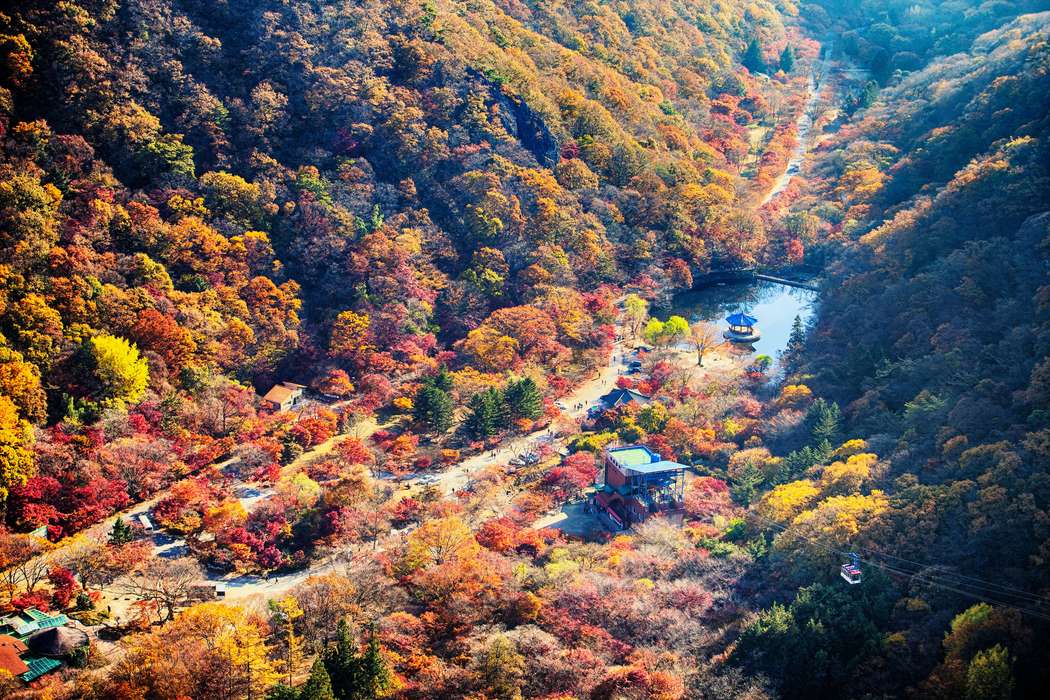
First two weeks of November: Naejangsan, South Jeolla and Seoul’s streets
Naejangsan peaked October 29–November 11 over 2016–2025, and Wolchulsan and Duryunsan November 2–12. At the same time, Seoul’s city maples (November 2–16) and ginkgo (October 30–November 21) reach their peak. Naejangsan is in Jeongeup, North Jeolla, a long way from either city; Klook’s Naejangsan autumn foliage day tour runs as a day trip from either Seoul or Busan.
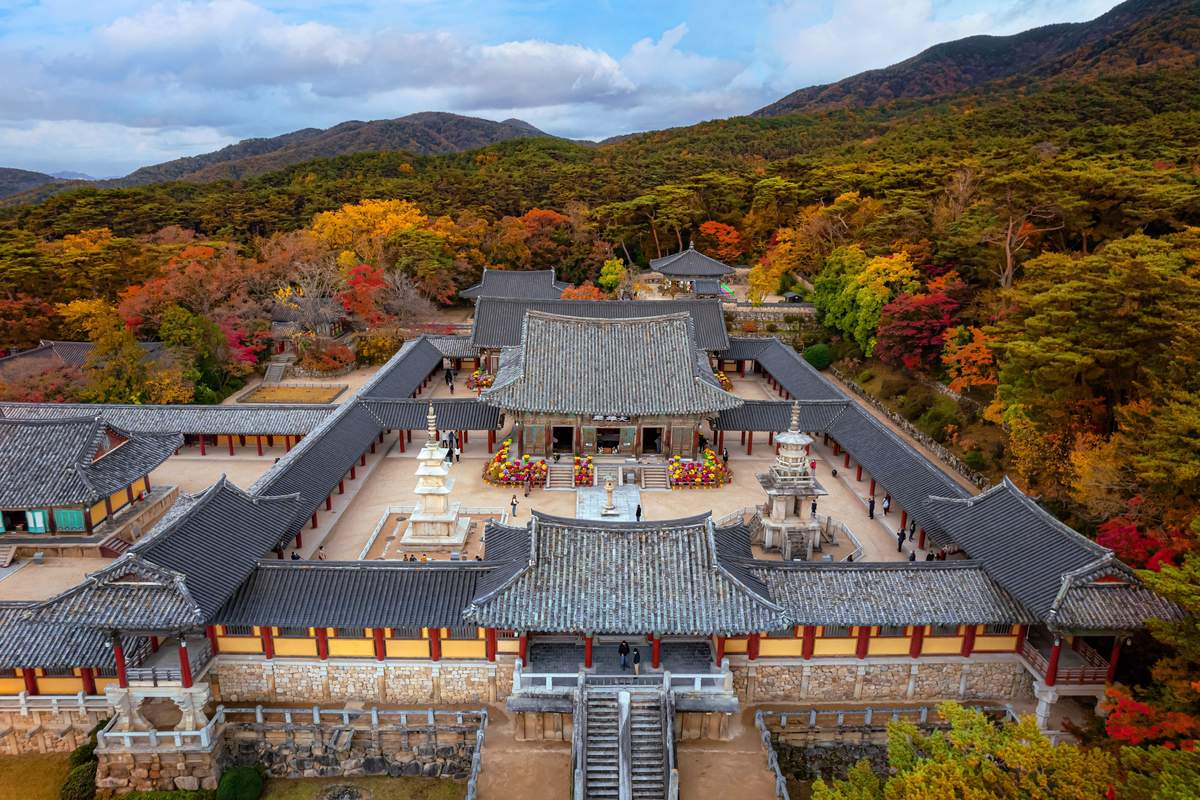
Mid to late November: Busan and Gyeongju
Busan’s city maples peaked November 15–December 8 and its ginkgo November 14–December 8 over 2016–2025. Gyeongju has no KMA station; nearby Pohang’s maples peaked November 1–22, so Gyeongju normally turns earlier than Busan. From Busan, there’s Klook’s Gyeongju autumn foliage day tour from Busan. To go on your own, see Busan to Gyeongju by train or bus.
How accurate is the early-September forecast?
Not enough to book on. In 2026, all 14 mountains Weather i forecast peaked earlier than forecast, by 2 to 14 days, 6.1 days on average. Use the September forecast to decide whether to shift a trip, not to choose a week months ahead.
| Mountain (2026) | Peak forecast / observed |
|---|---|
| Seoraksan | Oct 25 / Oct 16, 9 days early |
| Odaesan | Oct 16 / Oct 14, 2 days early |
| Bukhansan | Nov 4 / Oct 26, 9 days early |
| Chiaksan | Oct 31 / Oct 19, 12 days early |
| Woraksan | Nov 5 / Oct 28, 8 days early |
| Songnisan | Nov 4 / Nov 2, 2 days early |
| Gyeryongsan | Nov 4 / Oct 30, 5 days early |
| Palgongsan | Nov 12 / Nov 6, 6 days early |
| Gayasan | Nov 5 / Nov 3, 2 days early |
| Naejangsan | Nov 11 / Nov 6, 5 days early |
| Jirisan | Nov 5 / Oct 22, 14 days early |
| Mudeungsan | Nov 6 / Nov 3, 3 days early |
| Duryunsan | Nov 11 / Nov 9, 2 days early |
| Hallasan | Nov 13 / Nov 6, 7 days early |
First foliage came 2 to 17 days earlier than forecast too, 7.5 days on average. Over 2019–2025, only Seoraksan and Naejangsan can be compared year by year, and the misses there ran 0 to 9 days in both directions. When the 2027 forecast arrives, I wouldn’t move flights if the forecast peak is within a week of my dates.
How do you check the foliage before you go?
Use the KMA’s mountain foliage photo page (유명산 단풍현황) and the KMA’s same-day press releases. The photo page is in Korean only, but the dates and photos are easy to read.
| KMA Weather Nuri, 유명산 단풍현황 | Three photos for each of the 21 mountains (before turning, first foliage, peak), each with the date taken; in 2026 photos started in mid-September |
|---|---|
| KMA regional press releases | Issued on the day first foliage or peak is observed at a mountain |
Once a mountain’s first-foliage photo is up, peak is usually one to three weeks away. If your target mountain has no first-foliage photo a week before you leave, move it to the end of your trip.
Your situation
If you’re flying into Seoul and haven’t booked
Book October 27 to November 2, 2027. Put Bukhansan or a Seoul-area mountain in the first half and keep one day in the second half for a Naejangsan day tour; when Weather i’s forecast comes out in early September, pick the Naejangsan day. Seoul’s street trees are usually not yet at peak then, so treat the palaces as a bonus.
If you can only go in mid-October
Make Seoraksan or Odaesan the focus; Seoul’s mountains will mostly be at first foliage. Seoraksan varies a lot, so a week before you leave, check whether its peak photo is up on the KMA page, and put the tour day early or late in the trip accordingly.
If you’re flying into Busan in mid to late November
Busan’s own maples and ginkgo are peaking, so you don’t need to travel for color. For a day in Gyeongju, go early in the trip, since Pohang’s record suggests Gyeongju may be past peak by late November. Skip Naejangsan: its latest peak in ten years was November 11.
Common mistakes
- Leaving as soon as “first foliage” is announced. Only the summit has turned; the median wait to peak is 13 days.
- Comparing Korea Forest Service dates with KMA dates. One is 50%, the other 80%; they measure different things.
- Booking Seoraksan on its normal date. Normal is October 17, but 2016–2025 peaks ran from October 12 to 29.
- Moving flights the day the September forecast appears. In 2026 it was up to two weeks off, and every mountain peaked earlier than forecast.
- Expecting Seoul’s streets to peak with Bukhansan. City trees run one to two weeks later.
FAQ
- Q1: When is the Korea fall foliage forecast for 2027 released?
- Early September 2027. Weather i (웨더아이), a private forecaster, published between September 4 and 7 every year from 2021 to 2026; the Korea Forest Service follows in late September or early October. The Korea Meteorological Administration doesn’t forecast; it reports observed dates.
- Q2: When is peak fall foliage in Seoul?
- On Bukhansan, between October 27 and November 4 in every year from 2016 to 2025. The city’s own maple and ginkgo trees come later: the normal peak is November 8 for maples and November 3 for ginkgo, and Seoul’s ginkgo peaked November 14–21 from 2021 to 2025.
- Q3: When is peak fall foliage at Seoraksan?
- Normally October 17, but anywhere from October 12 to 29 over 2016–2025. In 2026 it peaked on Oct 16. Seoraksan is the hardest mountain to time.
- Q4: When do the leaves change in Busan?
- Mid to late November in the city. Busan’s observation maple peaked between November 15 and December 8 over 2016–2025, and its ginkgo between November 14 and December 8.
- Q5: How long after first foliage is peak foliage?
- Usually one to three weeks. Across 221 records for the 21 KMA mountains in 2016–2026, the median gap was 13 days, and 91% fell between 7 and 21 days.
- Q6: How accurate is the Korea fall foliage forecast?
- Off by up to two weeks in 2026. All 14 mountains Weather i forecast peaked earlier than forecast, by 2 to 14 days (6.1 days on average). Use it to decide whether to shift a trip, not to pick a week months ahead.
- Q7: When is fall foliage on Jeju (Hallasan)?
- Normally October 28 on Hallasan, but late three years running: November 13 in 2024, November 11 in 2025 and Nov 6 in 2026.
If it were me
Flying into Seoul without flights booked, I’d book October 27 to November 2, 2027 on a changeable fare, make Bukhansan the core and treat Naejangsan as the extra. When the September forecast comes out I’d only look at Naejangsan: if its forecast peak falls inside my dates, I’d book a day tour around it; if not, I’d spend that day in Seoul instead. I wouldn’t build a trip around Seoraksan; with peaks 17 days apart, hitting it is luck. Flying into Busan, I’d go in mid to late November and enjoy the color in the city without heading north.
Official sources
- KMA Weather Nuri: 유명산 단풍현황 (photos for the 21 mountains, Korean)
- KMA open data portal: seasonal observations (historic first foliage and peak dates, Korean)
- Weather i: 2026 foliage forecast (Korean)
- Korea Forest Service press releases (Korean)
Dates follow the latest official announcement.
Read next
Verified
 Current
Seoraksan Day Trip from Seoul 2026–27: Bus, Cable Car, Trails
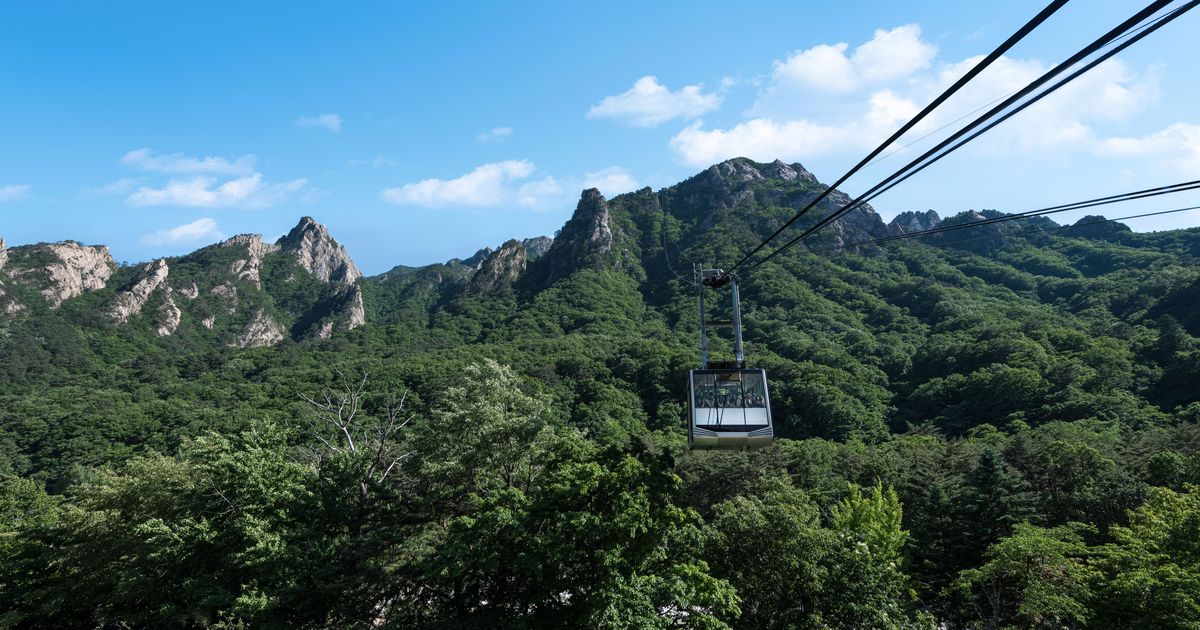
A day trip from Seoul works: intercity buses leave Dong Seoul from 06:05, about every 30 minutes in the daytime, taking about 2 hours 10 minutes to Sokcho, and the last bus back is around 21:00. City bus 7 or 7-1 runs to Seoraksan Sogongwon, last bus 20:35. The Seorak Cable Car takes no reservations and stops in strong wind; wildfire-season closures shut the high routes toward Daecheongbong, not the Sogongwon walks.
Verified
 Current
Bukhansan Hike 2026–27: Baegundae Peak Trail, Cutoff Times, Crampons
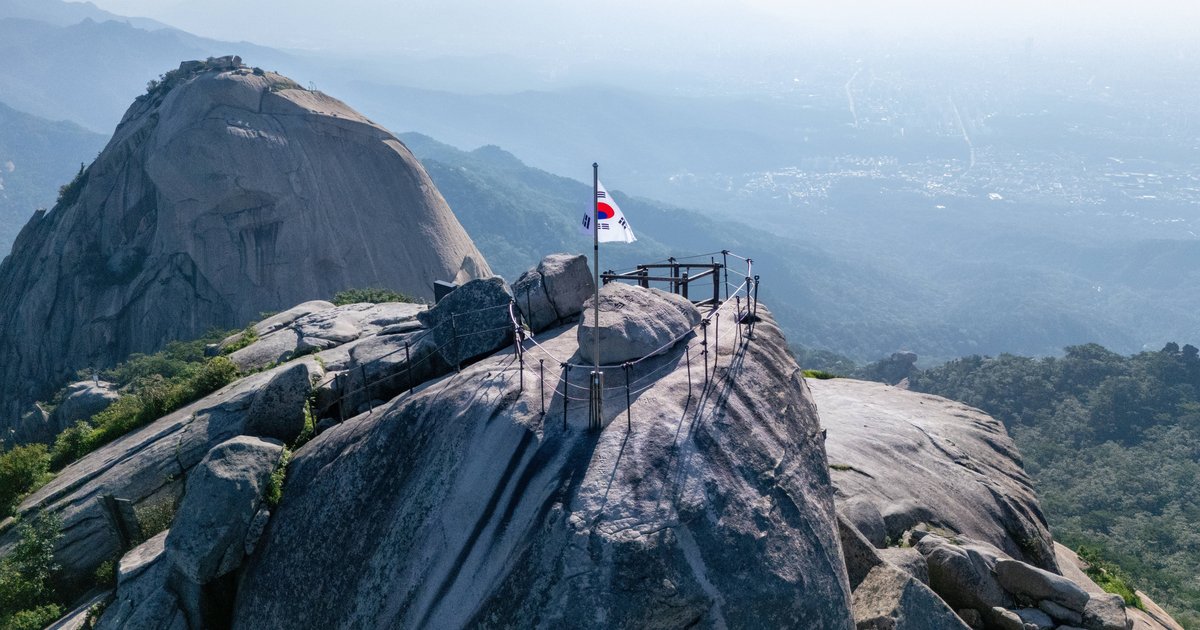
The shortest route to Baegundae Peak is the Baegundae Course from the Ui side: 1.9 km and about 1 hour 30 minutes one way from Baegundae Visitor Center, no fee or reservation. You can’t start up after 16:00 from December to February or after 17:00 from March to November, and crampons are required in winter. The November 15 – December 15, 2026 wildfire closure doesn’t include this route.
Verified
 Not announced
Hwadam Forest Tickets 2027: How Foreigners Book, Monorail
The 2027 opening and booking dates haven’t been announced. The garden opened on Fridays in late March in 2023, 2025 and 2026 (March 31, 28 and 27), and 2026 booking opened March 10 at 13:00 KST. Foreigners book on NOL World via the official site’s English Booking button; admission isn’t sold on site.