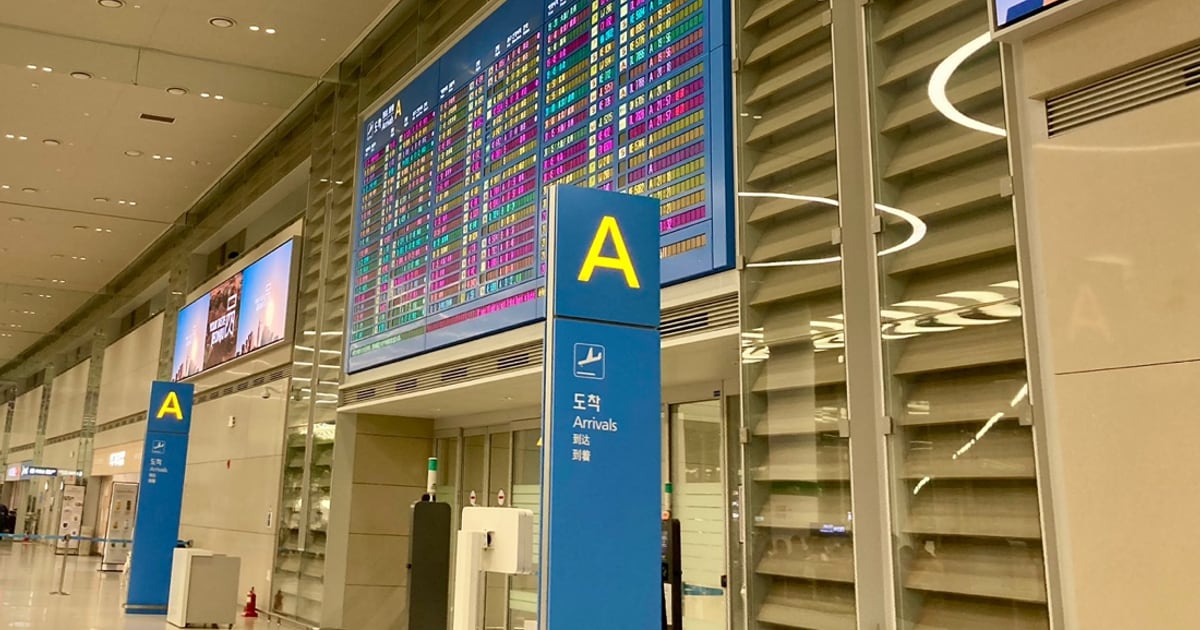
Travelers holding one of 22 passports, including the US, UK, Australia, Canada, Singapore and New Zealand, can enter Korea without a K-ETA until December 31, 2026, Korea time. What happens on January 1, 2027 is the open question: as of November 14, 2026, Korea has not announced an extension or an end, while the US State Department already tells Americans they will need a K-ETA from that date. Before any of that matters, check which of three groups your passport is in, because for Malaysians, Thais and Filipinos the December 31 date changes nothing. K-ETA (Korea Electronic Travel Authorization, 전자여행허가) is the online pre-approval that visa-free visitors get before boarding; the e-Arrival Card is a separate, free arrival form.
- US, UK, Australia, Canada, Singapore, New Zealand, Hong Kong and 15 others: no K-ETA needed if you enter by December 31, 2026 (KST). Fill in an arrival card instead.
- 2027 is not announced. Korea's last two extensions were posted on December 11, 2024 and December 23, 2025, so the answer may only come in December.
- Malaysia, Thailand, Ireland and other K-ETA countries outside the 22: you need a K-ETA now. The December 31 date is not about you.
- Philippines, Indonesia, Vietnam: not on the K-ETA list. K-ETA does not apply; ask the Korean embassy about a visa.
- Children 17 and under and adults 65 and over never need a K-ETA, whatever the year.
- Apply only at www.k-eta.go.kr or the official K-ETA app: ₩10,000 per person, usually within 72 hours, no rush service.
Which group is your passport in?
Your passport's nationality decides it, not where you live or where you fly from. A Filipino working in Singapore is still judged as a Filipino; a British citizen flying from Bangkok is still in the exempt group.
| Group | Passports | What you need now (to December 31, 2026 KST) |
|---|---|---|
| 1. Temporarily exempt (22) | United States (including Guam), United Kingdom, Australia, Canada, Singapore, New Zealand, Hong Kong, Japan, Austria, Belgium, Denmark, Finland, France, Germany, Italy, Macao, Netherlands, Norway, Poland, Spain, Sweden, Taiwan | No K-ETA. Submit an e-Arrival Card or a paper arrival card |
| 2. K-ETA country, not exempt | Malaysia, Thailand, Ireland and the rest of the official K-ETA list | K-ETA before boarding, today and after December 31 |
| 3. Not on the K-ETA list | Philippines, Indonesia, Vietnam and others | K-ETA does not apply. A regular tourist visit needs a visa; check with the Korean embassy in your country |
The full list of K-ETA countries is the "Eligible Countries / Applicants" page on the K-ETA website. If you are unsure whether you are in group 1, start an application there: when you scan your passport photo page, exempt passports get a pop-up message saying so.
For Filipino passport holders, a regular tourist trip means a tourist visa; the Korean embassy in the Philippines handles the C-3-9 tourist visa. For Indonesian and Vietnamese passports, the only thing to take from this page is that K-ETA is not your route; the Korean embassy or consulate where you live sets out the visa rules.
Who needs to read the rest
Group 1 travelers with a trip after December 31 get the most out of this page. Everyone else can stop at the parts that apply.
Read on if:
- Your passport is in group 1 and you land in Korea on or after January 1, 2027.
- Your flight leaves on December 30 or 31 and lands close to midnight Korea time.
- You are traveling with children or parents and want to know who needs what.
- You hold a group 2 passport and need the application steps, fee and timing.
You can skip most of it if:
- You are in group 1 and land by December 31, 2026 (KST): fill in the free e-Arrival Card within 3 days of arrival and you are done.
- You hold a group 3 passport: K-ETA is not your process, and visa rules are outside this page.
- You already have a valid K-ETA: it stays valid until its own expiry date whatever Korea announces.
K-ETA key facts
| Official name | Korea Electronic Travel Authorization (K-ETA), run by the Korea Immigration Service, Ministry of Justice |
|---|---|
| Where to apply | www.k-eta.go.kr or the official "K-ETA" app, nowhere else |
| Fee | ₩10,000 per person, plus an online card processing fee of about 3% (the site lists the total as roughly US$7–8). Not refunded, whatever the result |
| Cards accepted | VISA, MASTER, JCB, AMEX, Diners Club, DISCOVER, UnionPay, Alipay+. Overseas payments must be enabled on the card |
| Processing time | Usually 72 hours or less, sometimes longer. First come, first served; no expedited service |
| Deadline | Approved before you board the plane or ship to Korea |
| Validity | 3 years, or until your passport expires if that is sooner. Multiple entries |
| Who is always exempt | Anyone 17 or younger or 65 or older on the day of entry |
| Temporary exemption | 22 countries and regions, January 1 to December 31, 2026 (KST) |
| Is it a visa? | No. An approved K-ETA does not guarantee entry |
K-ETA's 3-year validity is not your length of stay. Each visit is still capped by the "Allowed Period of Stay" on the official country table:
| Passport | Allowed stay per visit |
|---|---|
| United States | 90 days |
| United Kingdom, British Citizen (GBR) | 90 days (the other five UK passport types, GBD, GBN, GBO, GBP and GBS, are 30 days each) |
| Australia | 90 days |
| Canada | 6 months |
| Singapore | 90 days |
| New Zealand | 3 months |
| Hong Kong | 90 days |
| Malaysia | 3 months |
| Thailand | 90 days |
The Canadian government's travel page says 180 days; Korea's own table says 6 months, and this page follows Korea's table.
Is the K-ETA exemption extended past December 31, 2026?
Not announced. As of November 14, 2026 (KST), the notice board on the official K-ETA website has nothing new since the December 23, 2025 notice that set the current period, January 1 to December 31, 2026 (KST). There is no extension and no notice that applications are coming back.
Two foreign governments describe the same situation in different words:
- US State Department (South Korea travel advisory page): "Starting January 1, 2027, you will need a K-ETA before traveling to South Korea." This is the US government's reading of an exemption that ends without an extension. It is not a Korean announcement, and it would change if Korea extends again.
- UK Foreign Office (South Korea entry requirements): British nationals are exempt until December 31, 2026. Nothing about 2027.
Korea has extended this exemption before, and both times the notice came late in December:
| Notice posted | Exemption covered | Days before the old period ended |
|---|---|---|
| December 11, 2024 | January 1 to December 31, 2025 | 20 |
| December 23, 2025 | January 1 to December 31, 2026 | 8 |
| 2026 | Not posted as of November 14, 2026 | — |
"Not yet announced" does not mean "ending", and it does not mean "will be extended". The practical rule for a January trip: check the K-ETA notice board a week before you fly. If there is still no extension notice, apply. The cost is the same whether you apply in November or the week before, and the week-before check keeps the 72-hour processing window safe.
Landing around New Year: which side of the date are you on?
Go by your landing time in Korea time (KST). Land on December 31 or earlier and the current notice covers you; land on January 1 or later and it does not, so plan as if you need a K-ETA.
The notice gives the period in KST and says nothing about whether boarding date or entry date counts. What the system does say is that a K-ETA has to be approved before boarding, and that airlines do not let a traveler who needs one board without it. Reading those together, a flight landing after midnight KST on January 1 is outside the current notice, and that is the case to prepare for. This is a reading of the rules, not an official ruling on overnight flights.
Korea has no daylight saving time. In December and January, Korea is:
| Departure city | Korea time compared with local time |
|---|---|
| Los Angeles | 17 hours ahead |
| New York | 14 hours ahead |
| London | 9 hours ahead |
| Singapore, Kuala Lumpur, Manila | 1 hour ahead |
| Sydney | 2 hours behind |
The trap is on the long eastbound flights. A transpacific flight that leaves Los Angeles on the evening of December 30, with roughly 13 hours in the air, lands in Korea in the early morning of January 1. Your calendar says you left two days before New Year; Korea's calendar says you arrived in 2027.
Do children and seniors need a K-ETA?
No. Anyone 17 or younger or 65 or older on the day of entry is exempt from K-ETA, for every K-ETA nationality, with no end date. This is a standing rule, separate from the temporary exemption that ends on December 31, and it covers Malaysian and Thai families too.
- Age is counted on the day you enter Korea. A teenager who turns 18 on arrival day needs a K-ETA if their nationality requires one.
- Exempt children and seniors still submit an arrival card. A parent's K-ETA does not cover them.
- For a family of four in January with two kids under 18, only the two adults need to decide whether to apply.
Should you get a K-ETA while you are exempt?
Only if you are going after December 31 or plan more trips within three years. Exempt travelers may apply and pay the normal fee, and the official benefit is that K-ETA holders do not submit an arrival card.
For a single trip that lands by December 31, I would not pay ₩10,000 to skip an arrival card that is free. For a January trip, or if Korea is likely to see you again within three years, applying settles the 2027 question and covers the next visits too. Anyone who already holds a K-ETA keeps using it until it expires; what was paid is not refunded.
How to apply for a K-ETA
Apply on www.k-eta.go.kr or in the official K-ETA app, at least 72 hours before your flight. Have ready a valid passport, an email address, a credit or debit card that allows overseas payments, and, if you apply on a computer, a photo of your face.
- Terms and Conditions Agreement: no account is needed.
- Email Verification: verify your email address.
- Enter Passport Information: scan or type the photo page. Group 1 passports get the exemption pop-up here.
- Enter Application Information: trip details.
- Check Information: passport details cannot be changed after you submit. A typo means a new application and a new fee.
- Make Payment: ₩10,000 plus about 3%.
- Application Complete: the result comes after review, usually within 72 hours.
After approval:
- New passport: apply again. The K-ETA is tied to the passport you used.
- Changed travel plans: update them under [Update Travel Information] on the K-ETA site. No new application.
- Refused: the reason is not given. To travel, apply for a visa at the nearest Korean embassy or consulate.
- Transit without leaving the airport: no K-ETA. If you pass immigration to collect bags and check in again, you need one.
- Flying straight to Jeju from abroad: K-ETA nationalities still need one.
Do you still need the e-Arrival Card?
Yes, unless you hold a valid K-ETA. The e-Arrival Card (전자입국신고) is a separate system from K-ETA, and it is free.
| Who submits one | Group 1 travelers entering without a K-ETA; children 17 and under and adults 65 and over from K-ETA countries; visa holders |
|---|---|
| Who does not | Valid K-ETA holders (unless they enter on a visa instead) |
| Website | www.e-arrivalcard.go.kr |
| Cost | Free |
| When | From 3 days before arrival (KST), up to the moment you reach immigration, even after landing |
| Paper option | A paper card has the same effect; submit one or the other, not both |
| Group submission | Up to 1,000 people on a computer, up to 9 on a phone browser |
| Corrections | Editable until immigration; the entry date can be changed only within 3 days of the first submission |
| Expiry | 72 hours after submitting, or once you clear immigration. Each new trip needs a new card |
| From May 6, 2026 (announced) | The official site announced a verification-code step on submission |
The verification code step is new this year, so an old walkthrough may skip it. A family of up to 9 can be submitted together from one phone.
Which website is the real one?
K-ETA: www.k-eta.go.kr or the official K-ETA app. e-Arrival Card: www.e-arrivalcard.go.kr. Both end in .go.kr.
- The K-ETA homepage warns about sites that charge high fees for "agency" or "expedited" applications. The Korean government has not designated any agency, and there is no expedited service to buy.
- The UK Foreign Office says other sites offering K-ETA applications "are generally scams".
- Korea Immigration Service warned in March 2026 about fake e-Arrival Card sites: any site asking for payment details is not the official one.
Three common trips
If you are American, British or Australian and land on December 28
No K-ETA. Submit the e-Arrival Card from December 25 (KST), or fill in the paper card on arrival. Nothing to pay. If you also plan a trip in 2027, that is a separate decision you can make later.
If you are Canadian or Singaporean and fly in mid-January 2027
Do nothing in November. In the week of your departure, open the K-ETA notice board. An extension notice means you only need the arrival card. No notice means you apply that day, which leaves the 72 hours the system asks for. If you fly in the first days of January, check every few days from mid-December and apply by December 28 at the latest if nothing has appeared, so a review longer than 72 hours does not cost you the flight.
If you are a Malaysian family of four with two children under 18
The two parents apply for K-ETA now, whatever month you travel; December 31 has nothing to do with you. The children skip K-ETA and each get an e-Arrival Card, which one parent can submit for both from a phone within 3 days of landing.
Common mistakes
- Paying a third-party site. The government has designated no agency, and Korea warns that such sites charge more than the official fee. The only official sites are www.k-eta.go.kr and the app.
- Counting your departure date instead of Korea's landing date. Leaving the US on December 30 can mean landing on January 1 KST.
- Assuming Malaysia or Thailand is on the exemption list. They are not. Both need a K-ETA now.
- Applying for K-ETA with a Philippine, Indonesian or Vietnamese passport. These countries are not on the list. Those travelers need to look at visas.
- Typing a passport number wrong. It cannot be fixed after submitting; you pay again.
- Renewing your passport and forgetting the K-ETA. A new passport needs a new K-ETA.
- Leaving it to the airport. Approval has to come before boarding, usually within 72 hours, with no rush option.
- Treating K-ETA approval as permission to enter. The immigration officer still decides at the border.
FAQ
- Q1: Is the K-ETA exemption extended to 2027?
- Not announced yet. As of November 14, 2026 (KST), the official K-ETA website has posted nothing about 2027, neither an extension nor a return to applications. The last two extensions were posted on December 11, 2024 and December 23, 2025.
- Q2: Do US citizens need a K-ETA in 2027?
- The US State Department says yes, from January 1, 2027; Korea has not said either way. The State Department line follows from the exemption ending on December 31, 2026, and it would change if Korea announces another extension in December. If nothing is announced a week before you fly, apply.
- Q3: Which countries are exempt from K-ETA in 2026?
- 22 countries and regions: Australia, Austria, Belgium, Canada, Denmark, Finland, France, Germany, Hong Kong, Italy, Japan, Macao, the Netherlands, New Zealand, Norway, Poland, Singapore, Spain, Sweden, Taiwan, the United Kingdom and the United States (including Guam). The exemption runs until December 31, 2026 (KST).
- Q4: Do Malaysians need a K-ETA?
- Yes, right now. Malaysia is on the K-ETA list but not on the 22-country exemption list, so the December 31 date does not apply. The same goes for Thailand and Ireland.
- Q5: Do Filipinos need a K-ETA?
- No, because K-ETA does not apply to Philippine passports. The Philippines is not on the K-ETA list, so a regular tourist trip needs a visa from the Korean embassy. Indonesia and Vietnam are not on the list either; check with the Korean embassy or consulate where you live.
- Q6: How long does K-ETA approval take and how much does it cost?
- Usually within 72 hours, sometimes longer, for ₩10,000 per person plus a card processing fee of about 3%. There is no expedited service, and the fee is not refunded if you are refused.
- Q7: Do I need the e-Arrival Card if I have a K-ETA?
- No. A valid K-ETA exempts you from the arrival card. Travelers who skip K-ETA under the exemption, children 17 and under, adults 65 and over, and visa holders still submit one.
- Q8: Do children need a K-ETA for Korea?
- No, if they are 17 or younger on the day they enter Korea. The same applies to anyone 65 or older, for every K-ETA nationality and with no end date. Someone who turns 18 on arrival day needs one.
What I would do
Group 1, landing by December 31 with no plans to return: skip K-ETA and do the free e-Arrival Card three days out. Group 1, landing in January or later: wait, and check the notice board a week before departure; no extension notice means apply on the spot, and for the first days of January I would apply by December 28 if nothing has been posted. Group 1, likely to visit Korea again within three years: I would just apply, because one fee covers the January question and the next trips. Group 2: apply now, and only the adults between 18 and 64 on arrival day. Group 3: put K-ETA out of your mind and start with the Korean embassy's visa page.
Official sources
- Korea Electronic Travel Authorization (K-ETA), the only place to apply
- Notice on Extension of K-ETA Temporary Exemption (December 23, 2025)
- K-ETA: Eligible Countries / Applicants
- K-ETA: Application Fee Guide
- e-Arrival Card
- US State Department: South Korea
- UK Foreign Office: South Korea entry requirements
- Government of Canada: South Korea travel advice
Fees and dates follow the latest official announcement.