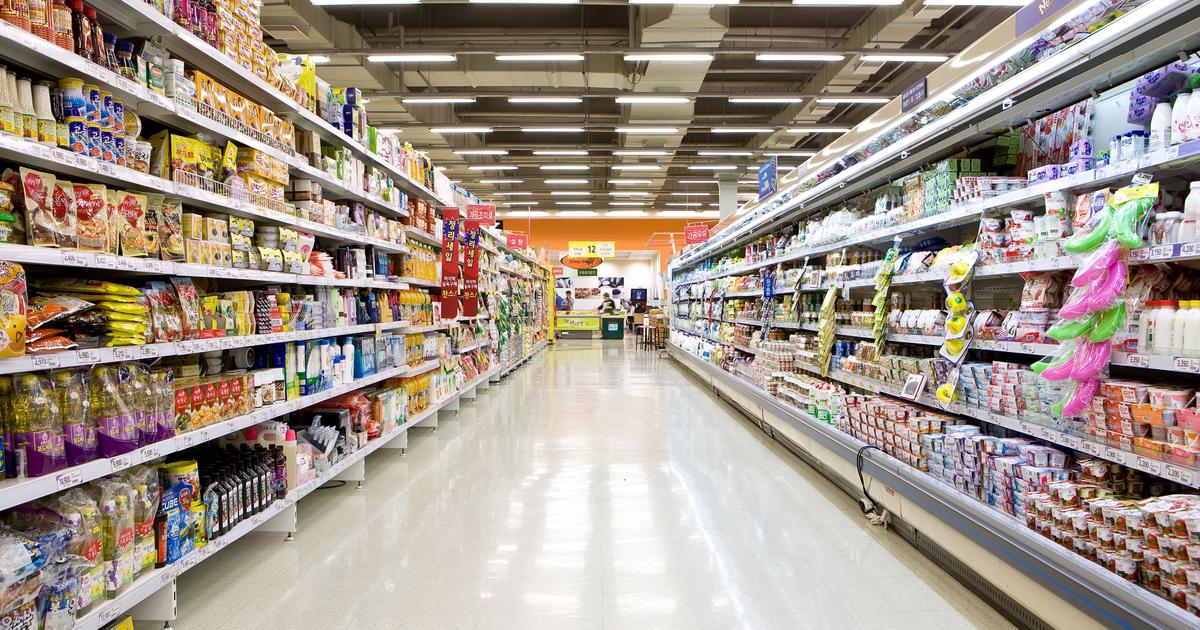
Korean dates always run year, month, day. A six-digit date like 26.11.30 means November 30, 2026, not the 26th of anything. The quickest way to tell what kind of date you’re looking at: if the word 까지 (“until”) follows it, it’s a deadline. If there’s no 까지, read the word in front of it; 제조 means it was made that day, and 품질유지기한 means best before. Since January 1, 2023, food in Korea carries a use-by date called 소비기한, and Korea’s food safety ministry says not to eat anything past it. The one place you’ll still see the old sell-by date, 유통기한, is a carton of plain white milk. Cosmetics show either an expiry date or an open-jar icon such as 12M. A few Korean words come up again and again below: 소비기한 is the use-by date, 유통기한 the old sell-by date, 품질유지기한 the best-before date, 제조 “manufactured,” and 사용기한 the expiry date on cosmetics. They stay in Korean here because that’s what is printed on the pack.
- Order: year, month, day. 26.11.30 = November 30, 2026.
- 까지 after the date: it’s the deadline (use-by on food, expiry on cosmetics).
- No 까지: a manufacturing date (제조, MFG) or a best-before date (품질유지기한, BBE).
- 소비기한 (use-by): on most food since January 1, 2023. Past it, don’t eat it.
- 유통기한 (sell-by): now mostly on plain refrigerated milk only; banana milk uses 소비기한.
- Cosmetics: a 사용기한 date, or an open-jar icon (12M = 12 months after opening) plus a manufacturing date.
Contents
- Who this is for
- The words on the pack
- Expiry date or manufacturing date?
- What order is the date in?
- 소비기한 vs 유통기한
- Why milk is different
- Ramyeon, kimchi, soju: which date?
- The hour on a triangle kimbap
- Discounted near-date food
- Korean skincare and the 12M icon
- Taking it home
- Your situation
- Common mistakes
- What I would do
- FAQ
- If it were me
- Official sources
Who this is for
Anyone standing in a Korean supermarket, convenience store or Olive Young looking at a string of numbers and wondering what it means.
- You’re buying snacks, ramyeon or banana milk and want to know how long they last.
- You’ve bought Korean skincare and the box only shows a manufacturing date.
- You’re eyeing a discount sticker on a dosirak or a tray of banchan.
- You’re packing food to take home and want to know how many days are left.
You can skip it if:
- Your question is whether your own country lets you bring Korean food in. The date on the pack doesn’t decide that; your customs and agriculture rules do.
- You want to know how many months a product “usually” lasts. Korean rules don’t set that; each maker sets its own date per product, so read the pack.
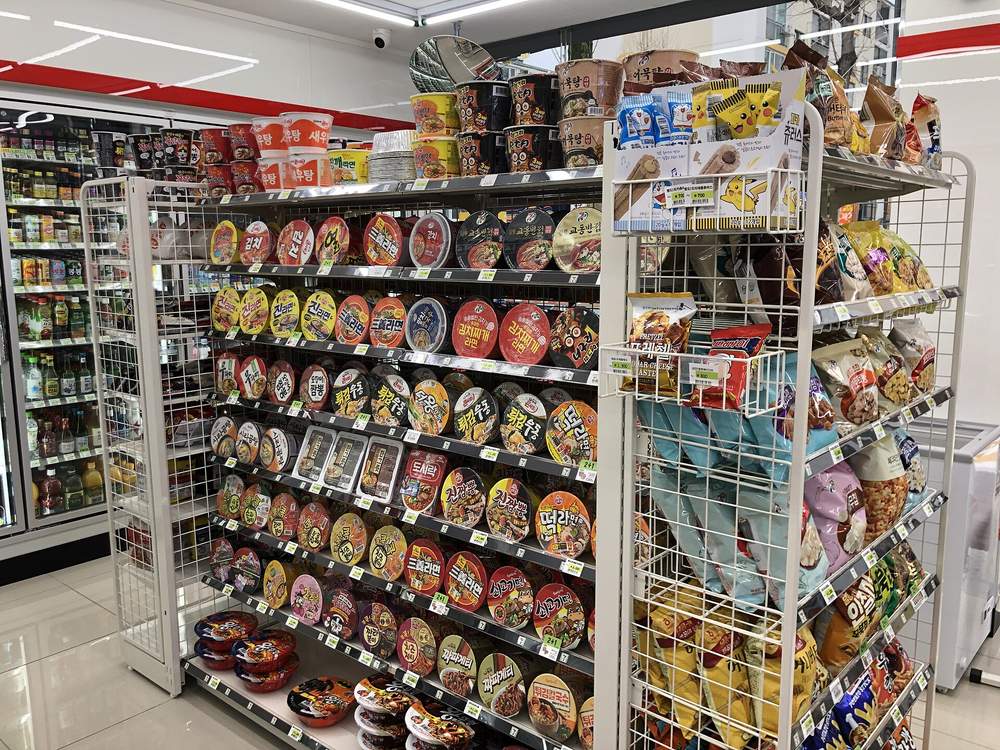
What words will I see next to the date?
Four kinds of date, plus the word 까지. Korea’s food labeling standard also lists English names and abbreviations for each, so if a pack shows EXP or MFG instead of the Korean, this table still applies.
| On the pack | What it is | English forms Korea’s standard lists |
|---|---|---|
| 소비기한 | Use-by date: the last day it’s safe to eat if stored as the label says | Use by date, Expiration date, EXP, E |
| 유통기한 | Sell-by date (old system): the last day it may be sold | — |
| 품질유지기한 | Best-before date: how long the original quality lasts if stored properly | Best before date, Date of Minimum Durability, Best before, BBE, BE |
| 제조연월일 / 제조일 | Manufacturing date | Date of Manufacture, Manufacturing Date, MFG, M, PRO(P), PROD, PRD |
| 까지 | “Until”; follows a deadline date | — |
The abbreviation to watch is MFG (or PROD, PRD). A date next to it is when the product was made, not when it runs out.
Is that number the expiry date or the manufacturing date?
If 까지 follows the date, it’s a deadline. If there’s no 까지, look at the word in front of it. Korea’s rules write the use-by date with 까지 or with the label “소비기한:” in front; manufacturing and best-before dates use the same number shapes without 까지.
| You see | It means |
|---|---|
| 26.11.30까지 | Use by November 30, 2026 |
| 2026년 11월 30일까지 | Use by November 30, 2026 |
| 소비기한: 2026년 11월 30일 | Use by November 30, 2026 |
| 제조일로부터 90일까지 + a separate 제조 date | Use within 90 days of the manufacturing date printed elsewhere |
| 제조 26.11.01 (or MFG) | Made on November 1, 2026 |
| 품질유지기한 2027.05.31 (no 까지) | Best before May 31, 2027 |
If you can’t find a date on the front, turn the pack over. When the date is printed somewhere else, such as on the lid or the bottom, the label has to say where.
What order is the date in?
Year, month, day, always. A six-digit date is the last two digits of the year, then month, then day. Four-digit years are also allowed (2026.11.30).
| 26.11.30 | November 30, 2026 |
|---|---|
| 2026.11.30 | November 30, 2026 |
| Imported food | If the origin country uses a different order, the Korean label must state the order |
| Only year and month printed (imports) | Korea’s rule treats it as the 1st of that month |
| Canned meat only | The year may be one digit; October to December may be O, N, D; days 1–9 have a leading 0 |
If you’re used to day-month-year, the trap is a date like 26.05.12. It’s May 12, 2026, not December 5.
What’s the difference between 소비기한 and 유통기한? Can I eat food after the date?
No, not after the 소비기한. The old 유통기한 was for shops: the last day they could sell it. The 소비기한, used since January 1, 2023, is for you: the last day it’s safe to eat if stored as labeled. The Ministry of Food and Drug Safety (MFDS, 식품의약품안전처) says plainly not to eat food past its 소비기한.
| How the old sell-by was set | Usually at 60–70% of the product’s quality-safety limit |
|---|---|
| How the use-by is set | At 80–90% of that limit |
| Past the 소비기한 | MFDS: don’t eat it |
| Past an old 유통기한 | MFDS: food is often still edible for a while, but it can’t judge individual products, so avoid eating it |
| Once opened | Neither date covers an opened pack; finish it quickly |
Because the use-by already sits closer to the safety limit than the old sell-by did, a “few days past is fine” habit doesn’t carry over. And the new date isn’t always later than the old one: many products simply relabeled their old sell-by date as the use-by date, which the ministry allows.
Will I still see 유통기한? Why is milk different?
Mostly on cartons of plain white milk. General food made (or, for imports, shipped) from January 1, 2023 carries a 소비기한, and the grace period for old packaging ended on December 31, 2023. Refrigerated plain milk (우유, 환원유) has an exception: it may keep the 유통기한 until products made from January 1, 2031.
| Plain refrigerated milk | May still show 유통기한 (until products made from January 1, 2031) |
|---|---|
| Banana or strawberry milk (flavored, 가공유) | 소비기한 since 2023 |
| Fortified milk (강화우유) | 소비기한 since 2023 |
| Both dates on one pack | MFDS calls this inappropriate, so a pack usually shows one or the other |
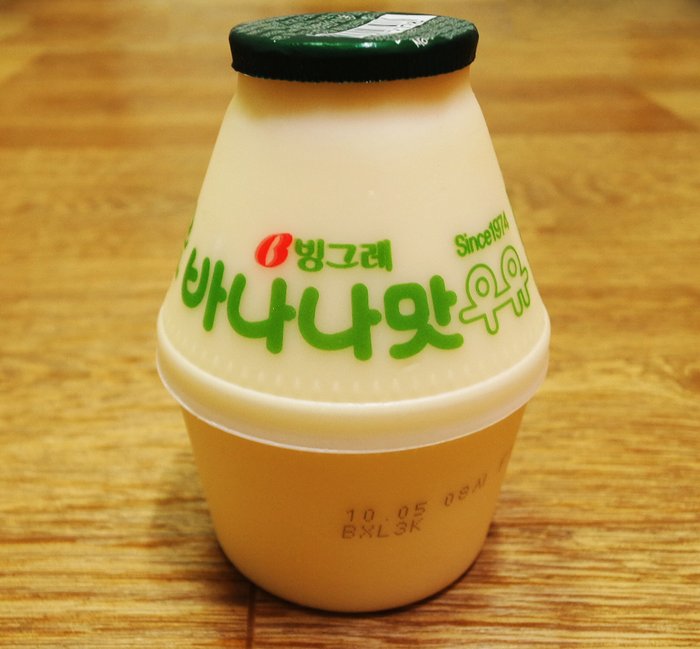
Banana milk sits in the same fridge as white milk but follows the other rule. Its date is a use-by, so treat it as a hard stop.
Which date is on ramyeon, kimchi, soju and other common buys?
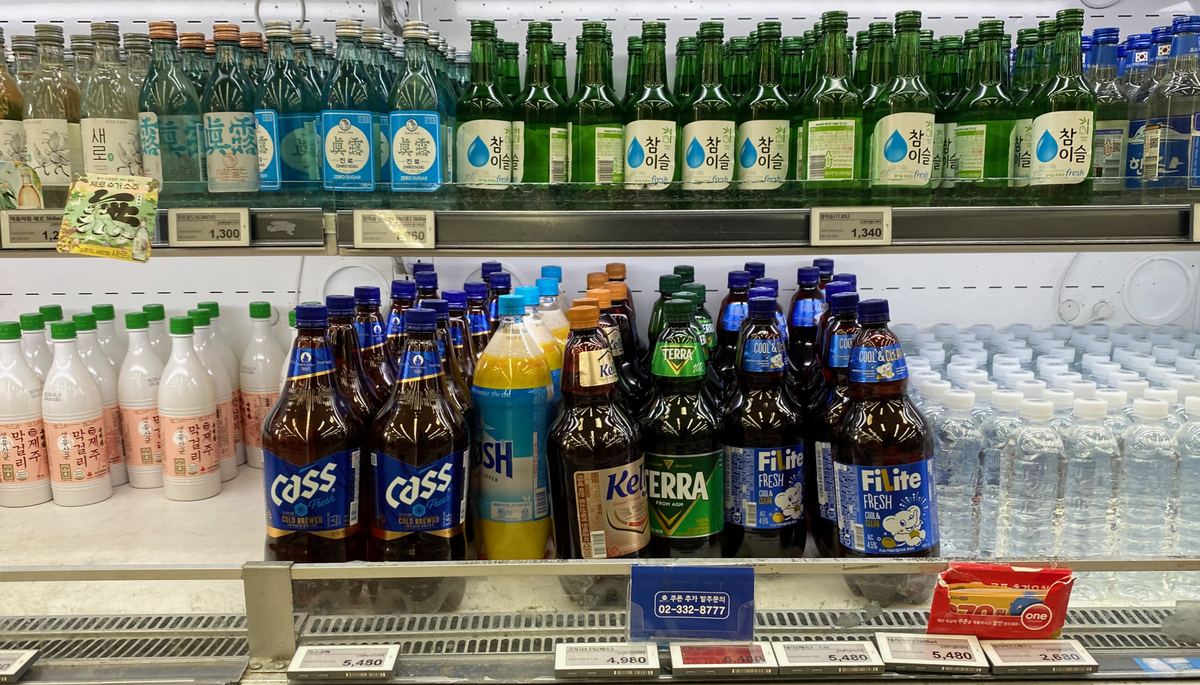
Most packaged food shows a 소비기한; kimchi, sauces, coffee and beer may show a best-before instead; soju only has to show when it was made.
| Item | Labeled with |
|---|---|
| Snacks, cookies, candy, bread | 소비기한 |
| Ramyeon (fried noodles), dried noodles | 소비기한 |
| Seasoned gim, fish cake | 소비기한 |
| Banana milk, yogurt | 소비기한 (plain refrigerated milk: see above) |
| Triangle kimbap, gimbap, dosirak, sandwiches | 소비기한 plus manufacturing date and time |
| Kimchi | 소비기한 or 품질유지기한 |
| Gochujang, doenjang, soy sauce | 소비기한 or 품질유지기한 (meju: 소비기한 only) |
| Instant coffee, powdered tea | 소비기한 or 품질유지기한 |
| Soju | Manufacturing date (a batch number or bottling date may replace it) |
| Makgeolli, yakju | 소비기한 |
| Beer | 소비기한 or 품질유지기한 |
| Red ginseng and other health functional foods | 소비기한 |
Kimchi and gochujang are where the 까지 rule saves you a wrong guess. A best-before date on them has no 까지, and it’s about quality, not a safety cutoff. A date with no label on a bottle of soju is almost certainly when it was made.
Why does a convenience-store triangle kimbap show a time?
Because the use-by on ready-to-eat food runs to the hour, and that hour is the cutoff. Dosirak, gimbap, burgers, sandwiches and sushi in the ready-to-eat category must print the manufacturing date with the time, and the use-by in a form like “○○월○○일○○시까지” or “26.11.30 18:00까지.”
| Applies to | Dosirak, gimbap, burgers, sandwiches, sushi (ready-to-eat) |
|---|---|
| Manufacturing date | Must include the time |
| Use-by | Month, day and hour, followed by 까지 |
Two times on one label is normal. The one with 까지 is the one that matters; the other is when it was made.
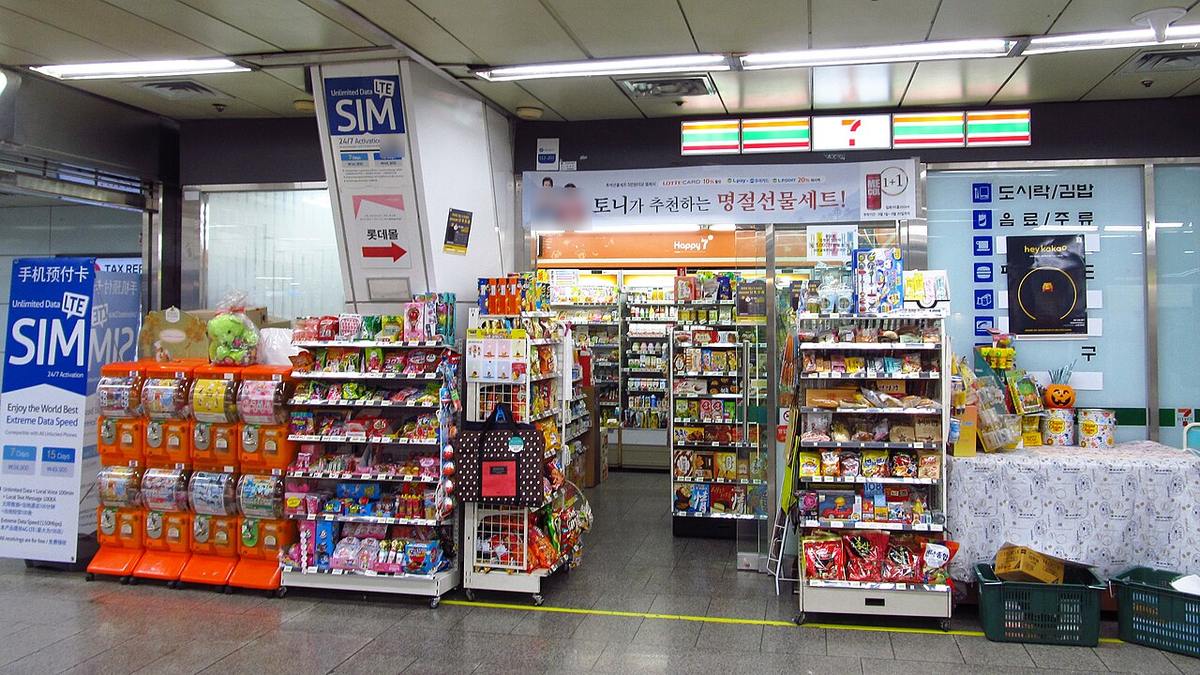
Is discounted near-date food OK to buy?
Yes, if you’ll eat it before the date. A shop may sell food right up to the 소비기한 on the pack. How and when a store marks down or pulls near-date food is up to each retailer, MFDS says, so there’s no fixed discount hour to plan around.
For anything you’ll eat in Korea the same day or the next, a markdown is a good deal. For anything going in your suitcase, count the days left after you land, not the days left today.
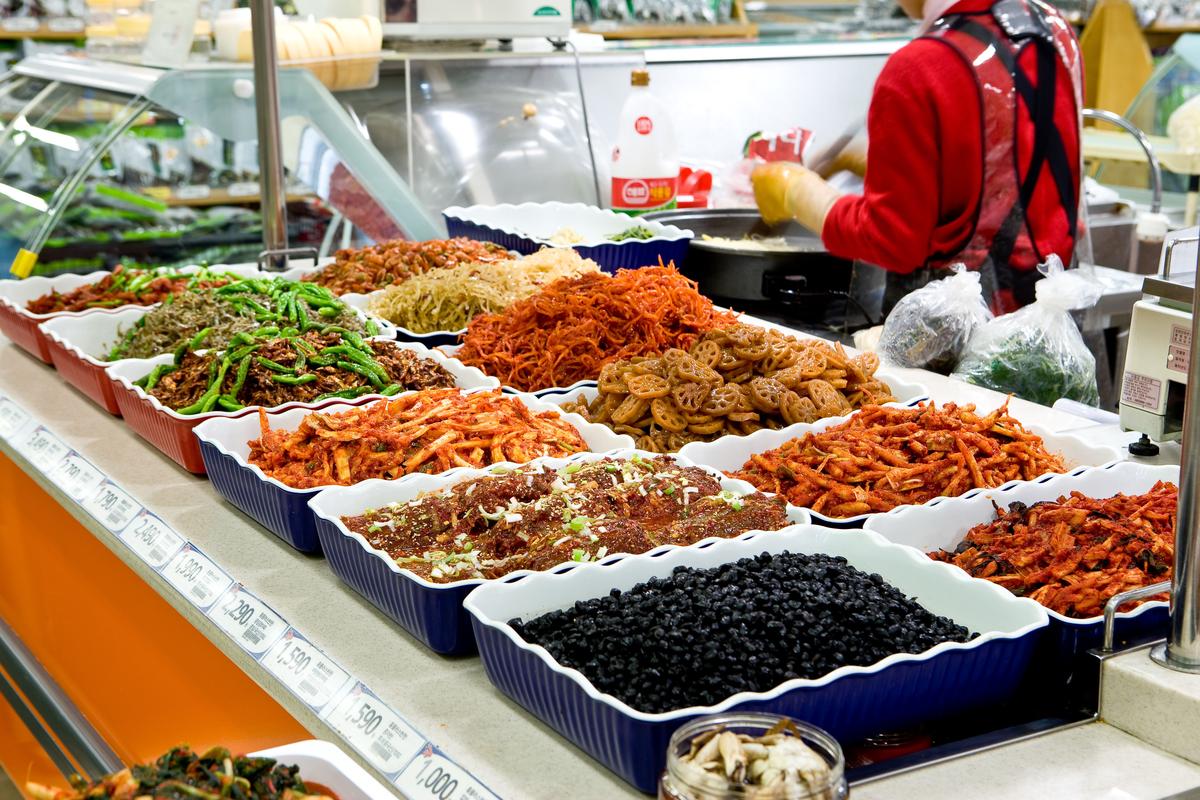
My Korean skincare only shows a manufacturing date. What’s the 12M jar icon?
It’s the period after opening: 12M means use within 12 months of opening. Korean cosmetics must show one of two things on the outer box and the container: an expiry date (사용기한) or a period after opening (개봉 후 사용기간). If the maker uses the period after opening, it must also print the manufacturing date. So a box with only 제조 on it should have a 6M or 12M jar nearby.
| You see | It means |
|---|---|
| 사용기한 2028.05.31까지 | Use by May 31, 2028 |
| Open-jar icon + 12M | Use within 12 months of opening |
| 개봉 후 사용기간 12개월 | Same: 12 months after opening |
| 제조 or a date with no label, next to the jar icon | Manufacturing date |
| 제조번호 | Batch number, printed so it can’t be confused with a date |
The expiry date can be year-month only, as long as it doesn’t run past the real expiry. Minis of 10 ml or 10 g or less may drop many label items, but the batch number and the date (or the after-opening period plus manufacturing date) stay.
One catch: the jar icon only covers time after opening. A product labeled that way doesn’t print an unopened shelf-life date at all. Korean law defines 사용기한 as the shortest period, counted from manufacture, that the product keeps its properties under proper storage.
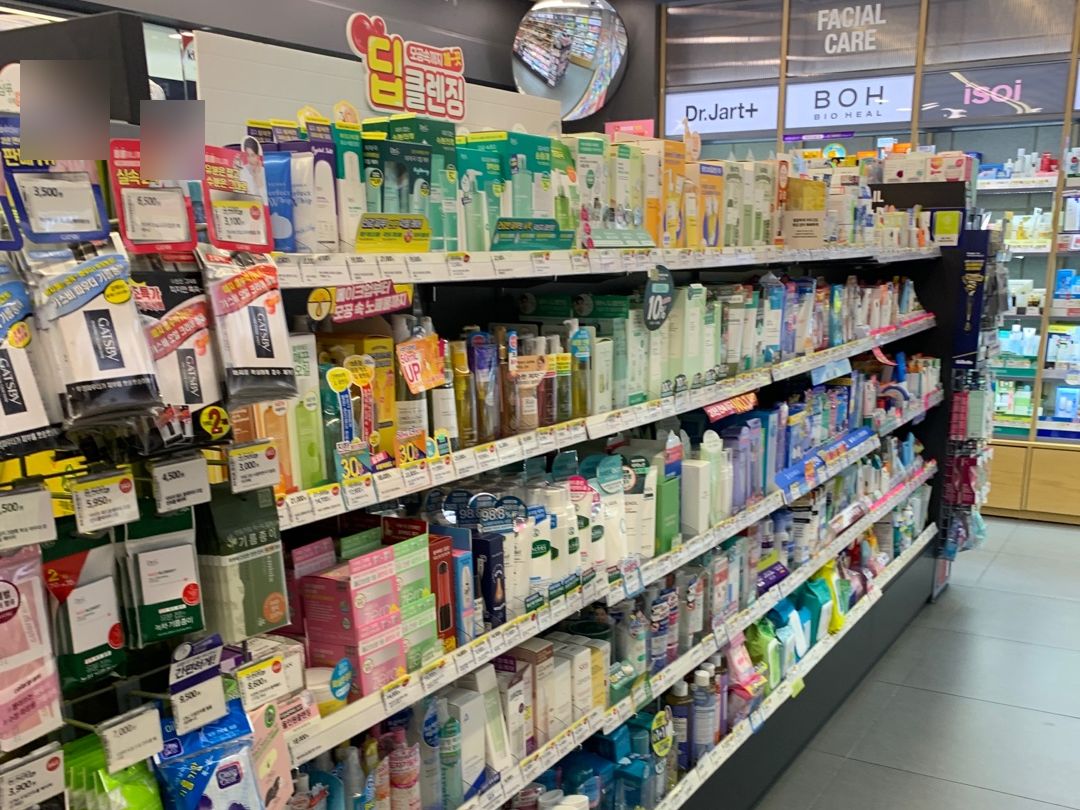
Can I take Korean food and cosmetics home?
That’s decided by your own country’s customs and agriculture rules, not by the date on the pack. Check your country’s official import page before you buy food to take home. What the date does decide is whether it’s still good when you open it at home, so leave yourself margin. For the flight itself, sauces, kimchi and liquid skincare in your carry-on fall under the liquids limit; see Korea’s liquids rules for flights. If you’re shipping a box instead, sending parcels home from Korea by EMS covers rates and packing.
Your situation
If you’re buying snacks and ramyeon to take home
Find the line ending in 까지 on each pack and compare packs of the same product. Pick the latest date, then work out how many days will be left when you land. Gim, snacks and ramyeon all carry a 소비기한, so treat that date as the last day to eat it.
If you’re grabbing dinner at a convenience store
On a triangle kimbap or dosirak, read the time with 까지. If it runs out tonight and you’ll eat it within the hour, it’s fine. If you want it for breakfast, pick one with a later cutoff.
If you’ve bought skincare that only shows a manufacturing date
Look for the open-jar icon and its number. Write the day you open it on the bottom with a marker; the period runs from opening, not from purchase.
Common mistakes
- Reading a manufacturing date as an expiry date. No 까지 and a 제조 or MFG next to it means it was made that day.
- Reading the date as day-month-year. 26.05.12 is May 12, 2026.
- Eating food a few days past the 소비기한. The use-by already sits closer to the safety limit than the old sell-by; MFDS says not to.
- Treating banana milk like white milk. Banana milk carries a use-by; only plain refrigerated milk may still show the old sell-by.
- Treating a best-before date on kimchi or gochujang as a safety cutoff. A 품질유지기한 is about quality.
- Counting a 12M icon from the purchase date. It counts from the day you open it.
- Buying discounted food for the suitcase. Near-date food is a deal for tonight, not for the trip home.
What I would do
On the last evening, at a supermarket with a basket of snacks, ramyeon, gim and a few sheet masks:
| Step | What to do |
|---|---|
| 1 | On each food pack, find the line with 까지 and read it year-month-day |
| 2 | For the same product, take the pack with the latest date |
| 3 | Skip anything discounted unless I’ll eat it that night |
| 4 | For skincare, check for a 사용기한 date or the jar icon; note the manufacturing date |
| 5 | At the hotel, write the purchase date on anything with only a jar icon, and the opening date once I open it |
The one rule I’d keep in my head is the 까지 rule. It sorts most food labels before I have to read any other Korean word.
FAQ
- Q1: What order are Korean expiration dates in?
- Year, month, day. With six digits it is the last two digits of the year, then month, then day, so 26.11.30 is November 30, 2026. Imported food from a country with a different order must say which order it uses on the Korean label.
- Q2: What does 까지 mean on a Korean package?
- “Until.” A date followed by 까지 is a deadline: the use-by date on food, or the expiry date on cosmetics. A date with no 까지 is usually a manufacturing date or a best-before date.
- Q3: What is the difference between 소비기한 and 유통기한?
- 소비기한 is the use-by date for the person eating it; 유통기한 was the old sell-by date for shops. Korea switched general food to 소비기한 on January 1, 2023. Korea’s food safety ministry says not to eat food past its 소비기한.
- Q4: Is Korean banana milk labeled with a use-by date?
- Yes. Banana and strawberry milk are flavored milk, which has carried a 소비기한 since 2023. Only plain refrigerated milk may keep a 유통기한 until products made from January 1, 2031.
- Q5: My Korean skincare only shows a manufacturing date. How long does it last?
- Look for the open-jar icon with a number like 12M, which means use within 12 months of opening. Korean rules require a manufacturing date whenever the after-opening period is used instead of an expiry date.
- Q6: Why does soju have no expiration date?
- Korean rules only require soju to show when it was made, and a batch number or bottling date can replace even that. Makgeolli and yakju are different and must show a use-by date.
- Q7: What does the time on a triangle kimbap mean?
- It is the cutoff. Ready-to-eat food such as gimbap, dosirak and sandwiches must print the use-by date down to the hour, plus the manufacturing date and time.
If it were me
In a store, I’d look for 까지 first and only read the word before the date when it isn’t there. I wouldn’t eat anything past its 소비기한, and I’d treat banana milk the same way. For kimchi or gochujang with a best-before date and no 까지, I’d read it as a quality date, not a hard stop. For skincare, I’d pick boxes with a 사용기한 date when the choice is equal, because a jar icon alone tells me nothing about how long it sat before I bought it. And anything going home with me, I’d buy with at least a few weeks of margin after landing.
Official sources
- MFDS: Q&A on the 소비기한 labeling system (Korean, Korea Policy Briefing) (sell-by vs use-by, milk exception, eating past the date)
- Korea’s National Law Information Center (Korean) (food labeling standard, cosmetics act)
Rules and dates follow the latest official announcement.
Read next
Verified
 Current
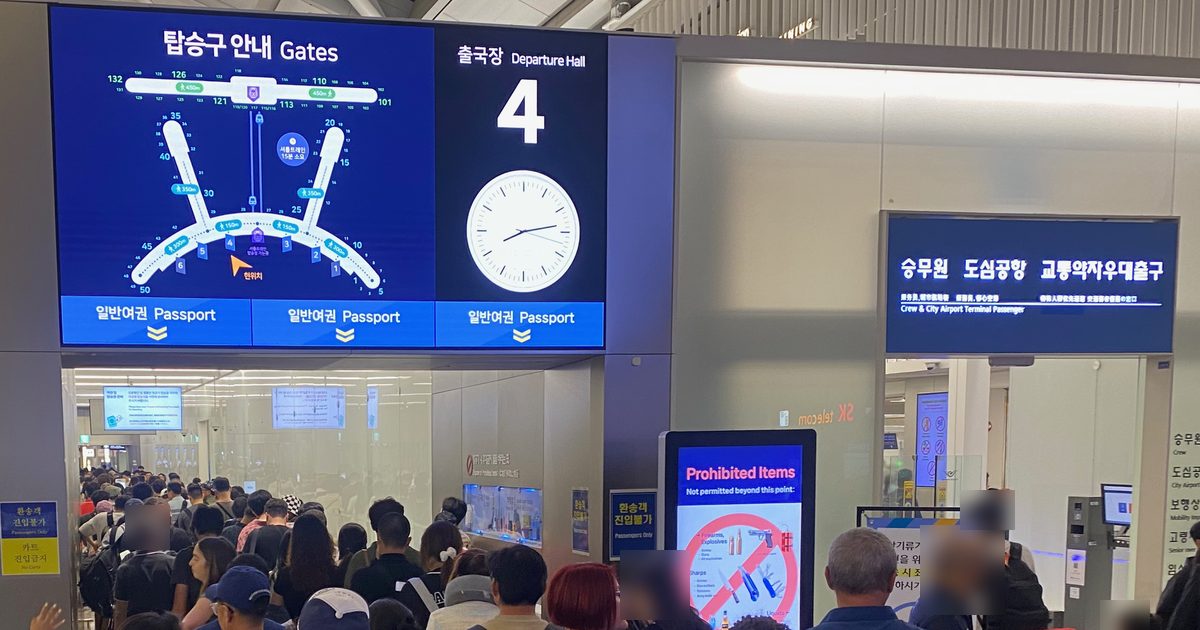
Incheon Airport Liquids Rule 2026: 100 ml, Kimchi and Soju
On international flights from any Korean airport, carry-on liquids must be in containers of 100 ml or less inside one 1-liter clear resealable bag, one bag per person; Incheon's Smart Security lanes do not relax this. Kimchi and gochujang go in checked bags with no capacity limit. Alcohol over 24% up to 70% is limited to 5 liters per person in checked bags, and over 70% cannot fly. Duty-free liquids can go in the cabin inside the sealed Duty Free Liquid Item Bag, unopened until the final flight.
Verified
 Current
Shipping Home From Korea by EMS 2026: Rates, US Duty Rules
EMS rates for goods are the full price at the counter (the surcharge was folded in on July 1, 2026), with a 30 kg limit (20 kg to Australia). Air parcels add a per-kg surcharge, new values from November 16, 2026. US-bound mail pays US duty at the counter for parcels up to US$2,500, and food and instant noodles are not accepted for the US. Lithium-battery devices and perfume can’t be mailed to any country.
Verified
 Not announced
Olive Young Sale Dates 2027: Not Out Yet, Here's the Pattern
Olive Young has not announced any 2027 O.Y SALE dates, and the December 2026 sale was not announced as of November 14, 2026 (last year: November 30 – December 6, 2025). The in-store sale runs a week in March, June, September and December; all nine editions on record since 2024 started between the 29th of the previous month and the 1st, announced 1–3 days ahead.