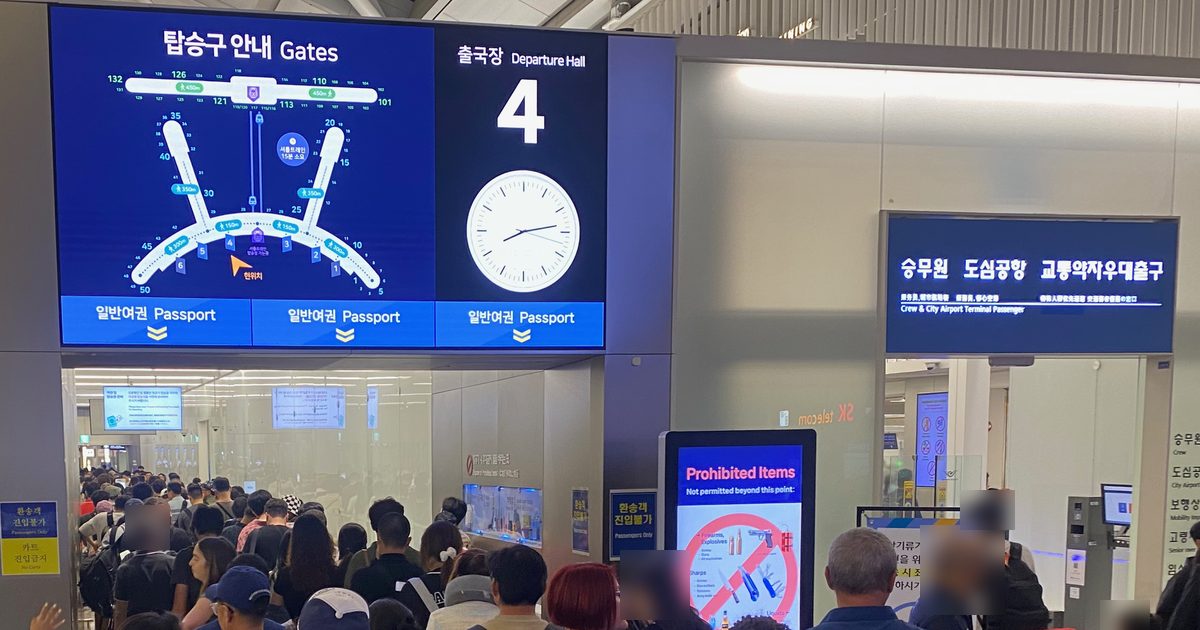
If you flew into Korea from an airport that now lets you keep liquids in your bag, or even allows bottles up to 2 liters, the flight home works differently. Every international departure from a Korean airport still uses the old rule: 100 ml per container, one 1-liter clear bag, one bag per person. That catches a lot of shopping. Kimchi, gochujang, soju and a bottle of toner all count as liquids, and anything over 100 ml in your carry-on gets left at security. The fix is simple once you know it: sauces, kimchi and most alcohol go in checked luggage, where the limits are generous. Duty-free liquids can ride in the cabin in a sealed bag, but a connection in a third country can undo that. Below are the numbers, what counts as a liquid, the alcohol tiers, duty-free and transfer rules, and how I would split a suitcase.
- Carry-on: containers of 100 ml or less, all in one 1-liter clear resealable bag, one bag per person. Same at Incheon, Gimpo, Gimhae and Jeju.
- Smart Security at Incheon: laptops and tablets can stay in your bag. Liquids still come out.
- Kimchi and gochujang: liquids in the cabin; no capacity limit in checked bags.
- Alcohol in checked bags: 24% or under, no limit; over 24% to 70%, 5 liters per person; over 70%, banned.
- Duty-free: any volume in the cabin inside the sealed Duty Free Liquid Item Bag, unopened until your final flight.
- Connecting abroad: rules at the transfer airport apply. For U.S. connections, TSA wants a receipt dated within 48 hours.
Contents
- Is the liquid limit in Korea still 100 ml?
- Who this is for
- Does kimchi count as a liquid?
- How much kimchi, soju or whisky can go in checked bags?
- Can duty-free alcohol and perfume go in the cabin?
- Connecting flight: will your liquids be taken?
- Baby food, medicine and drinks bought after security
- How to pack for your situation
- Common mistakes
- Packing in four steps
- What I would do
- FAQ
- Official sources
Is the liquid limit in Korea still 100 ml?
Yes, at every Korean airport, for every international flight. The rule comes from a single notice by the Ministry of Land, Infrastructure and Transport that covers all international departures from airports in Korea, including transfers and transits. Incheon publishes the details on its Restricted Items page.
The part that trips people up is coming from somewhere looser. The UK government notes that some UK airports now allow liquid containers of up to 2 liters through security without a separate bag. Korea has not followed. If you flew out under that kind of rule, repack for the return: small bottles, one clear bag, everything else in the hold. Incheon's Smart Security lanes are not a loophole either. They let you leave laptops and tablets in your bag, and the airport's description of them says nothing about liquids.
| Item | Rule |
|---|---|
| Each container | 100 ml or less, judged by the size printed on the container, not what is left inside |
| Bag | One transparent resealable plastic bag of 1 liter or less that closes fully (Incheon lists 20.5 × 20.5 cm or 15 × 25 cm) |
| Bags per person | 1 |
| Which flights | All international departures from Korean airports, including transfer and transit |
| Domestic flights | Not covered; Incheon says there are no restrictions on domestic flights |
| Which airports | Incheon, Gimpo, Gimhae, Jeju and every other Korean airport |
| Smart Security lanes | Laptops and tablets can stay in the bag; nothing is said about liquids |
| Items given up at security | Not returned |
Who this is for
Anyone flying an international flight out of Korea or connecting through Incheon, whatever passport you hold. These are airport security rules, and they apply the same way to everyone.
Read this closely if:
- You are flying home with only a carry-on and plan to buy skincare, sauces or alcohol in Korea.
- You want to bring kimchi, gochujang or soju back and are not sure whether it goes in the cabin or the hold.
- Your return trip connects in another country, especially the U.S. or the UK.
- You are traveling with a baby or need liquid medicine on board.
You can skip most of it if:
- You are only flying domestically inside Korea, for example Gimpo to Jeju. The 100 ml rule does not apply on domestic flights.
- You check a bag and buy nothing liquid. The standard 100 ml bag of toiletries is all you need to know.
One thing this page does not cover is what your own country lets you bring in. Kimchi, meat products and alcohol allowances at home are set by your country's customs and biosecurity rules, not Korea's. U.S. travelers can check CBP's Prohibited and Restricted Items page; everyone else, check your own customs authority before you pack food. Entry into Korea is a separate checklist too: see whether your passport needs a K-ETA in 2027.
Does kimchi count as a liquid?
Yes. So do gochujang, doenjang and anything in a gel or paste. Incheon's English page names "foods that contain liquids or are in gel form, such as gochujang or kimchi" outright, alongside sprays, gel cosmetics, toothpaste, shampoo and medicines. Its Korean FAQ gives a longer list.
| Type | Examples |
|---|---|
| Liquids | Kimchi, alcohol, water, drinks, juice, perfume, toner, lotion |
| Gels and pastes | Shampoo, conditioner, toothpaste, hair gel, sunscreen, lip gloss, gochujang, doenjang |
| Not liquids | Dry side dishes; Incheon's examples are dried shredded squid and dried anchovies |
| Red ginseng and herbal medicine | Tablets and powder are solids. Drinks and concentrates over 100 ml go in checked luggage |
A useful test: if it can be spread, squeezed, poured or sprayed, treat it as a liquid. A sealed jar of kimchi in your carry-on is the same as a full water bottle to the scanner.
How much kimchi, soju or whisky can go in checked bags?
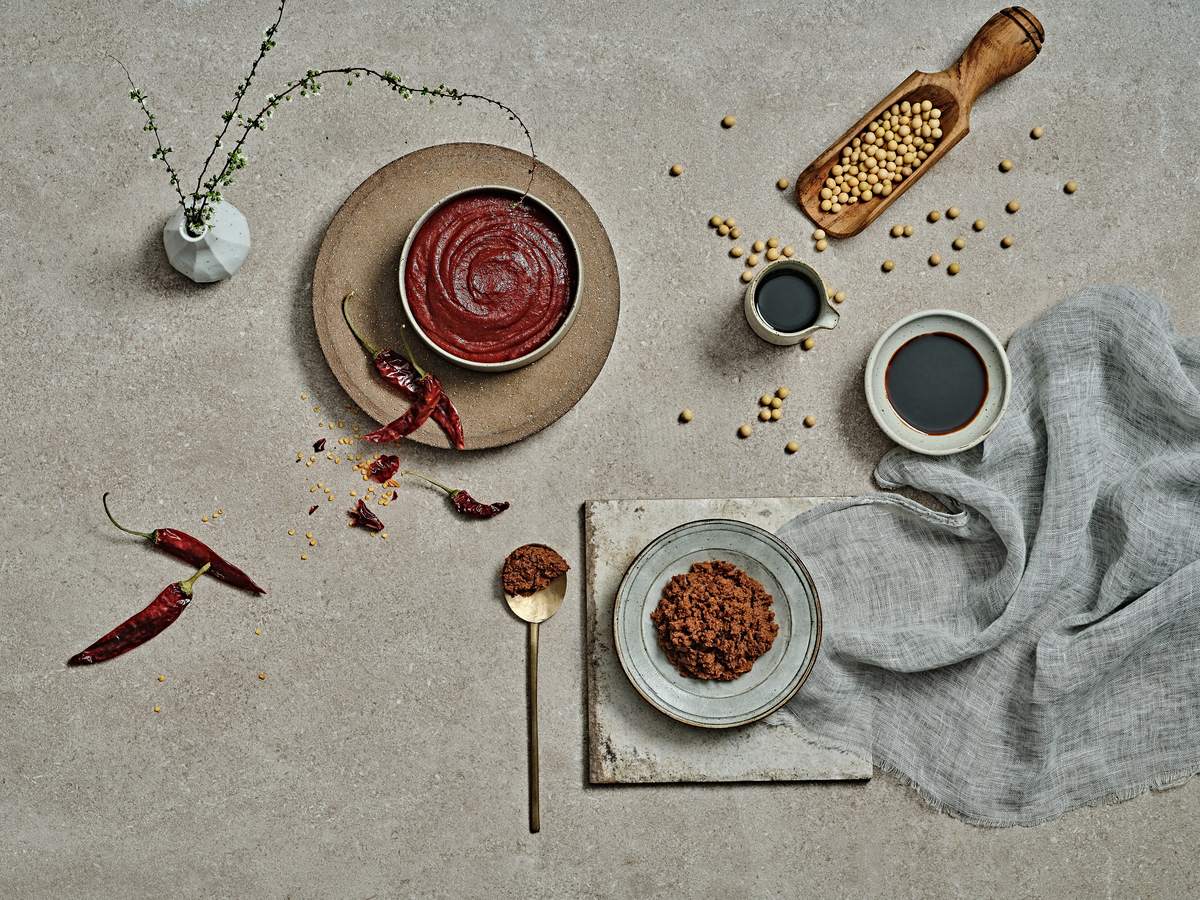
Kimchi and sauces have no capacity limit; alcohol depends on strength. Incheon's English page puts liquid and gel foods such as kimchi and gochujang down as "Allowed without capacity limits" in checked luggage. Alcohol is split into three tiers by alcohol content.
| Item | Checked bag | Cabin |
|---|---|---|
| Kimchi, gochujang and other liquid foods | No capacity limit | 100 ml rule |
| Cosmetics, skincare, toothpaste | Allowed | 100 ml rule |
| Non-flammable sprays (hairspray, perfume) | 500 ml (500 g) per item, 2 liters (2 kg) total per person | 100 ml rule |
| Alcohol 24% or under (soju, beer, makgeolli, most wine) | No limit | 100 ml rule, except sealed duty-free |
| Alcohol over 24% up to 70% (whisky, most spirits) | 5 liters per person | 100 ml rule, except sealed duty-free |
| Alcohol over 70% | Not allowed | Not allowed |
For alcohol, the airport counts the size on the label, not how much is left in the bottle, the same as in the cabin. A 750 ml bottle of 40% whisky that you have half finished still counts as 750 ml toward your 5 liters.
"No capacity limit" is about security, not about leaks. Airline packing requirements for kimchi are not covered by these rules, so check with your airline if you are carrying a large container, and seal it well: a burst jar of kimchi in a suitcase is a much bigger problem than a confiscated one.
Can duty-free alcohol and perfume go in the cabin?
Yes, at any volume, as long as it stays sealed in the Duty Free Liquid Item Bag. That is Incheon's name for the tamper-evident bag the duty-free shop seals your purchase in. Incheon's wording is that the bag "must remain sealed until boarding the final destination flight", so do not open it at the gate or on the first leg of a two-flight trip.
| Item | Rule |
|---|---|
| Cabin allowance | Any volume, only inside the sealed Duty Free Liquid Item Bag |
| When you can open it | After boarding your final flight |
| Receipt | Inside the bag and visible; if it cannot be seen, the bag may be opened |
| Downtown and online duty-free | Collected at the airport pickup counter after passport control; liquids are bagged there |
| Alcohol over 70% | Not allowed, even from duty-free |
Incheon says duty-free liquids are allowed "regardless of volume" and gives no liter cap for duty-free alcohol in the cabin. That is not the same as unlimited: your airline's cabin baggage allowance and your home country's duty-free allowance still apply.
Connecting flight: will your liquids be taken?
It depends on where you connect, and the Korean sealed bag does not guarantee anything abroad. There are three cases.
| Where you connect | What applies |
|---|---|
| At Incheon, arriving from abroad | Incheon's transfer security checks liquids: ordinary liquids under the 100 ml rule; duty-free only inside a Duty Free Liquid Item Bag |
| In a third country on the way home | Incheon warns that foreign airports' rules may differ and you may have to surrender liquids; it tells you to ask your airline or travel agent first |
| In the U.S., after landing from Korea | TSA lets duty-free liquids over 100 ml through connecting security if they are in a tamper-evident bag that has not been opened, the original receipt is present, and the purchase was made within 48 hours. They are still screened, and anything that alarms or cannot be cleared stays behind |
| At a UK airport | GOV.UK allows airport or in-flight duty-free liquids through security if sealed in a security bag with the receipt sealed inside and visible; do not open it until your final destination |
Two details matter for U.S. travelers. First, TSA itself recommends putting all liquids over 100 ml in checked baggage, sealed bag or not. Second, the 48-hour clock runs from the purchase on the receipt. If you buy at a downtown duty-free shop several days before your flight and collect at the airport, check the date printed on your receipt before you rely on the cabin.
Baby food, medicine and drinks bought after security
A few things are exempt from the bag, with conditions.
| Item | Rule |
|---|---|
| Milk, water, juice, baby food and wet wipes for a child aged 6 or under | No bag needed; the amount you need for the trip |
| Liquid medicine over 100 ml (insulin, for example) | Bring a doctor's note or prescription in Korean or English |
| Drinks with a lid bought after security | Allowed on board, except hot drinks such as coffee and tea |
| Forgot a resealable bag | Sold at the convenience store in the middle of the 3rd floor of the passenger terminal, or at airport bookshops |
The medicine rule is the one to sort out before you leave home. An English prescription from your own doctor is enough; you do not need anything translated into Korean.
How to pack for your situation
If you are flying carry-on only
Anything over 100 ml has to be bought at duty-free or left behind. Keep your toiletries in one 1-liter bag, buy travel sizes, and do your skincare shopping at the airport duty-free, where it is sealed for the cabin. Skip kimchi and sauces unless they come in 100 ml packs that fit the bag. If your trip home connects abroad, even duty-free is a gamble; see the next case.
If you connect in the U.S. or another country
Put every liquid over 100 ml, including alcohol, in your checked bag in Korea. If you do buy duty-free for the cabin, keep the bag sealed and the receipt visible, and for a U.S. connection check that the receipt date will be within 48 hours of when you go through TSA. For other transfer airports, ask your airline before you buy.
Common mistakes
- Assuming your home airport's new rules apply in Korea. Bigger containers or liquids left in the bag may be fine where you started. In Korea it is still 100 ml and one bag.
- Counting what is left in the bottle. A 200 ml bottle with 50 ml inside is a 200 ml bottle.
- Forgetting food is a liquid. Kimchi, gochujang, doenjang and liquid red ginseng all go through the liquids check.
- Opening the duty-free bag before the last flight. Incheon only exempts duty-free liquids while the bag stays sealed until your final flight.
- Buying downtown duty-free alcohol days ahead of a U.S. connection. Check the receipt date against TSA's 48-hour window.
- Expecting to get confiscated items back. Things you give up at security are not returned, so move them to checked luggage before you drop your bag.
Packing in four steps
- Sort everything liquid into two piles the night before: containers of 100 ml or less, and everything bigger. Check the size on each label.
- Put the small pile in one clear 1-liter resealable bag and make sure it closes. Anything that does not fit goes in the big pile.
- Pack the big pile in checked luggage: kimchi, sauces, soju, whisky up to 5 liters if over 24%, full-size skincare. Leave anything over 70% behind.
- At security, take the bag out and put it in a tray. Duty-free liquids stay in their sealed bag until your final flight.
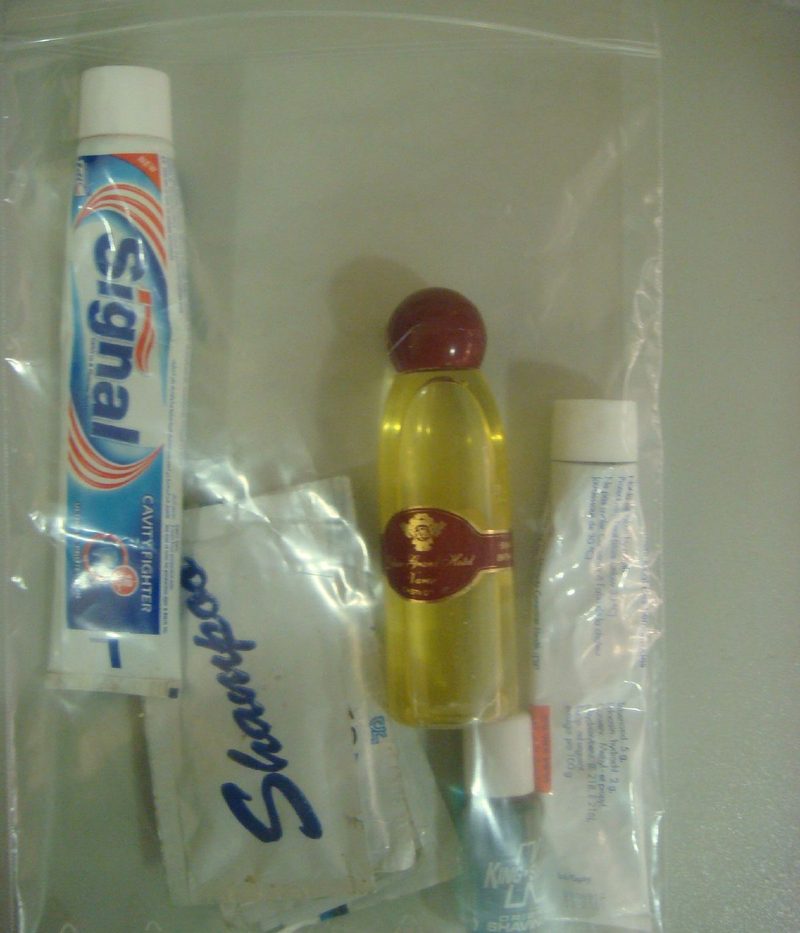
If your trip is mostly shopping, the toiletries side of this matters too: big Korean hotels no longer hand out free toothpaste and shampoo in small tubes, so read what Korean hotels still provide in the bathroom before deciding what goes in your 100 ml bag. And if your haul is mostly from Olive Young, the Olive Young sale calendar tells you which weeks prices drop.
FAQ
- Q1: Is the liquid limit at Incheon Airport still 100 ml?
- Yes. Each container in your carry-on must be 100 ml or less, all of them in one 1-liter clear resealable bag, one bag per person. Incheon's Smart Security lanes only let you leave laptops and tablets in your bag; they do not change the liquids rule.
- Q2: Can I bring kimchi on a plane from Korea?
- Yes, in checked luggage, with no quantity limit set by the airport. In your carry-on, kimchi and gochujang count as liquids, so anything over 100 ml is taken at security. What your home country lets in is a separate customs question.
- Q3: How much soju can I bring from Korea in checked luggage?
- No quantity limit, because soju is under 24%. Your airline's checked baggage weight allowance still applies. Above 24% and up to 70%, the limit is 5 liters per person in checked bags. Above 70%, nothing is allowed, in the cabin or in the hold.
- Q4: Can I carry duty-free alcohol or perfume onto the plane in Korea?
- Yes, regardless of volume, if it stays in the sealed Duty Free Liquid Item Bag with the receipt visible inside. Do not open the bag until you board your final flight. Alcohol over 70% is not allowed even from duty-free.
- Q5: Will my Korean duty-free liquids be confiscated when I connect in another country?
- They can be. Incheon warns that security rules at foreign transfer airports differ and liquids may be surrendered. For a U.S. connection, TSA accepts them only if the bag is untampered, the original receipt is there and the purchase was within 48 hours.
- Q6: Does a half-empty 150 ml bottle pass security in Korea?
- No. The limit is the size printed on the container, not how much is left inside. Decant into a container of 100 ml or less, or put the bottle in checked luggage.
- Q7: Can I bring baby milk or medicine over 100 ml through security in Korea?
- Yes, with conditions. Milk, water, juice and baby food for a child aged 6 or under do not need to be bagged, in the amount needed for the trip. Liquid medicine over 100 ml, such as insulin, needs a doctor's note or prescription in Korean or English.
What I would do
I would travel with one checked bag on the way home even if I flew in with carry-on only, because almost everything worth buying in Korea is a liquid. Small toiletries stay in one clear bag in my backpack; kimchi, sauces, soju and full-size skincare go in the suitcase, wrapped and bagged. I would skip duty-free liquids on any itinerary with a connection outside Korea, and buy them in town to check instead. On a direct flight home, duty-free perfume or whisky in the sealed bag is fine; I would just leave the bag closed until I land.
Official sources
- Incheon International Airport: Restricted Items (carry-on and checked limits, Duty Free Liquid Item Bag)
- Incheon International Airport: Transfer Security Screening Information
- Incheon International Airport: Smart Security Screening Zone
- Aviation Security 365 (item-by-item lookup, Korean only)
- TSA: Liquids, Aerosols, and Gels Rule
- GOV.UK: Hand luggage restrictions at UK airports
- CBP: Prohibited and Restricted Items (bringing food and alcohol into the U.S.)
- Incheon Airport customer center: 1577-2600 (07:00–22:00)
Rules and times follow the latest official announcement.
Read next
Verified
 Current
Do Korean Hotels Provide Toothbrushes? The 2026 50-Room Rule
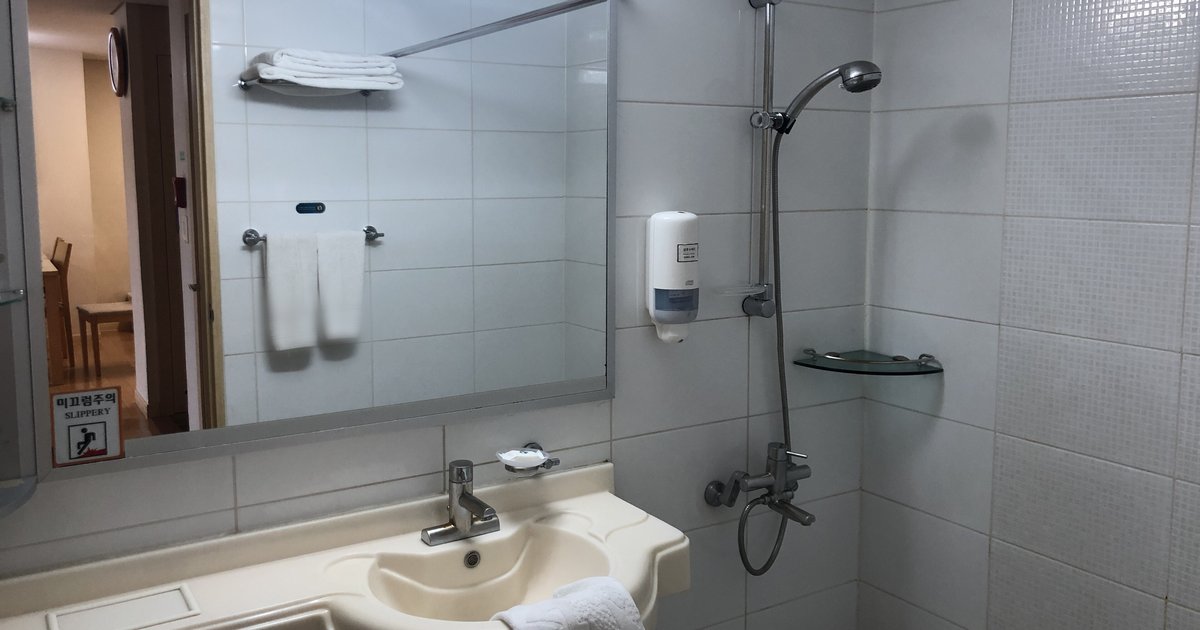
Since March 29, 2024, Korean lodging businesses with 50 or more guest rooms and all public bathhouses, including jjimjilbang, may not give out disposable toothbrushes, toothpaste, razors, shampoo or conditioner for free; selling them is allowed. Slippers, towels and body wash are not covered, and hotels under 50 rooms, homestays and hanok stays are not bound by the rule.
Verified
 Not announced
Olive Young Sale Dates 2027: Not Out Yet, Here's the Pattern
Olive Young has not announced any 2027 O.Y SALE dates, and the December 2026 sale was not announced as of November 14, 2026 (last year: November 30 – December 6, 2025). The in-store sale runs a week in March, June, September and December; all nine editions on record since 2024 started between the 29th of the previous month and the 1st, announced 1–3 days ahead.
Verified
 Current
K-ETA Exemption 2027: Extended? Who Needs One From January 1
22 passports, including the US, UK, Australia, Canada and Singapore, are exempt from K-ETA until December 31, 2026 (KST). Korea has not announced an extension or an end for 2027. Malaysia, Thailand and other K-ETA countries need one now.