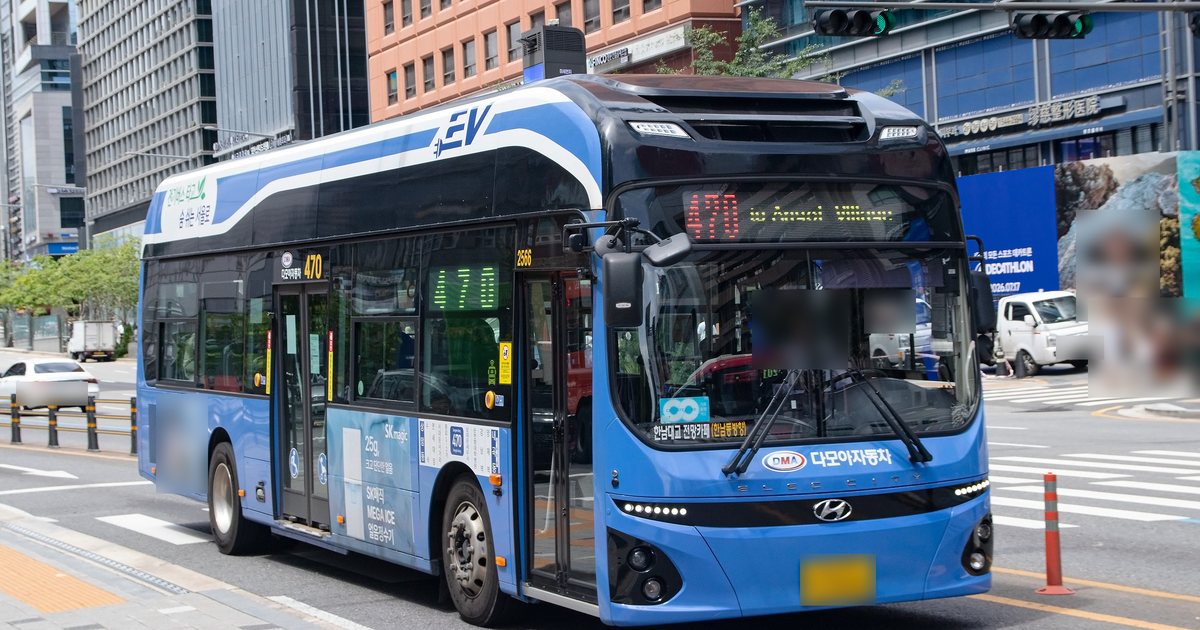
Korean city buses don’t ban drinks. What they do, in Seoul since 2018 and in Busan since 2024, is let the driver refuse anyone carrying a disposable takeout cup with food or drink in it, and a lid doesn’t change that. An iced Americano or a bubble tea in a plastic cup can get you turned away at the door. A capped bottle, a closed can or a sealed tumbler is fine. There’s no fine for passengers; the worst case is missing that bus. The subway is different: neither Seoul Metro nor Busan’s subway has a food-or-drink rule, so you can carry your coffee through the gates. Below: what counts, which cities do this, and what to do with the cup in your hand.
- Seoul, Busan, Incheon city buses: the driver can refuse you with a disposable takeout cup, lid or not.
- Fine: capped bottles, unopened cans, sealed tumblers and flasks, boxed pizza or chicken.
- No fine: the consequence is being refused or asked to get off.
- Eating on board: a Seoul driver can ask you to get off; Busan says no eating on the bus.
- Subway: no food-or-drink rule in Seoul or Busan; strong smells are the exception.
- Jeju: no takeout cup clause, but prepare as if there were.
Contents
Who is this for?
Anyone who’ll ride city buses in Korea with a coffee habit.
It suits you if:
- You tend to grab a takeout coffee on the way to the bus stop.
- You’ll carry market snacks, fruit or groceries back to your stay by bus.
- You want to know whether Busan, Incheon or Jeju work the same way as Seoul.
You can skip it if:
- You’ll only use the subway and taxis.
- You’re looking for how to pay the fare. In Jeju that’s covered in paying for Jeju buses with a foreign card.
Can you take a drink on a Seoul bus?
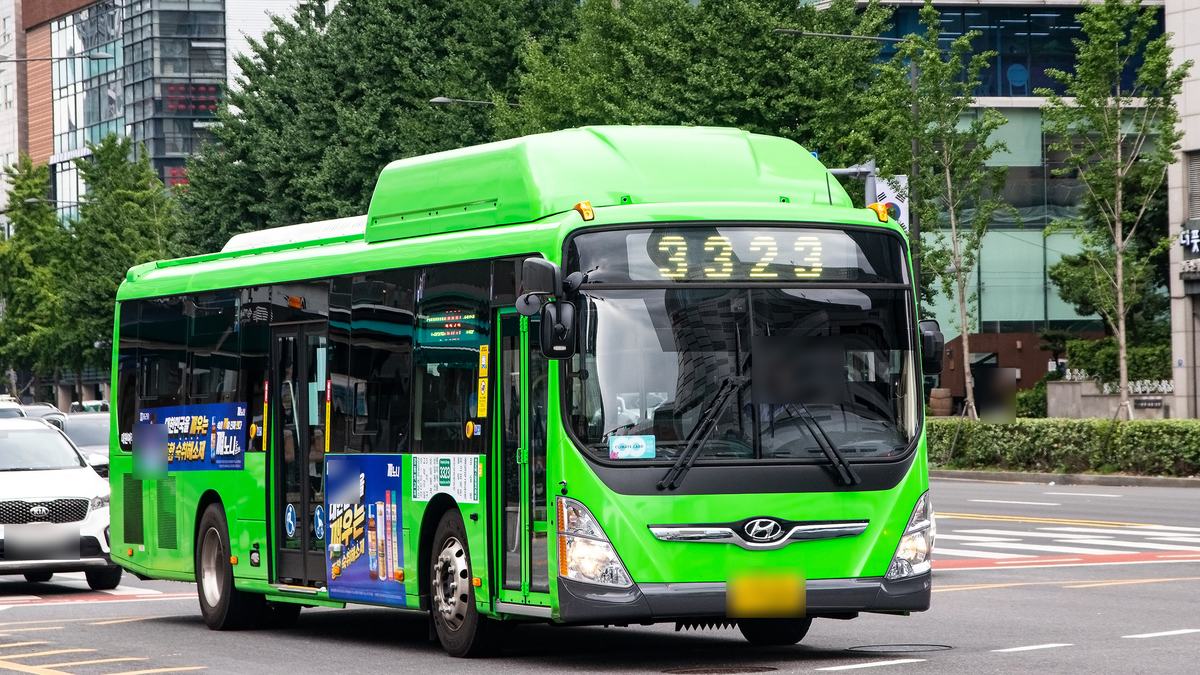
A capped bottle, yes; a takeout cup, the driver can refuse you. Since January 4, 2018, a Seoul city ordinance has let city bus drivers refuse passengers carrying a disposable takeout cup with food or drink in it, or anything else dirty or foul-smelling, when the driver judges it could endanger or bother other passengers. It covers city buses licensed by Seoul. The Seoul bus operators’ association notes that village buses (마을버스) and buses from Gyeonggi and Incheon may follow different standards.
Many visitors assume this is a ban on drinks. It isn’t: it’s a power the driver has, not a rule you can be fined under. In practice it means the decision is made at the front door, by the driver, every time.
What counts as a takeout cup? What can I bring?
Any disposable cup counts, with or without a lid; sealed containers are fine. Seoul set out the detail on April 2, 2018. The test is whether it would spill in a small bump, like being dropped, or whether it’s unwrapped food you could eat on the spot.
| Driver can refuse | Fine to bring |
|---|---|
| Drinks in disposable cups: hot, iced, or cups of ice | Plastic bottles with the cap on |
| Fried chicken, tteokbokki and similar in disposable cups | Unopened cans |
| Several cups in a carrier or bag | Sealed tumblers and vacuum flasks |
| Cans or bottles that are open or have a straw in them | Chicken or pizza in a closed box |
| Vegetables, fish, meat and small amounts of market groceries in plastic bags |
The lid catches people out. “No lid” only matters for cans and bottles; a takeout cup is refusable either way. Coffee shop cups and bubble tea cups are both disposable cups, so the same rule applies to both.
Can I eat or drink on a Seoul bus?
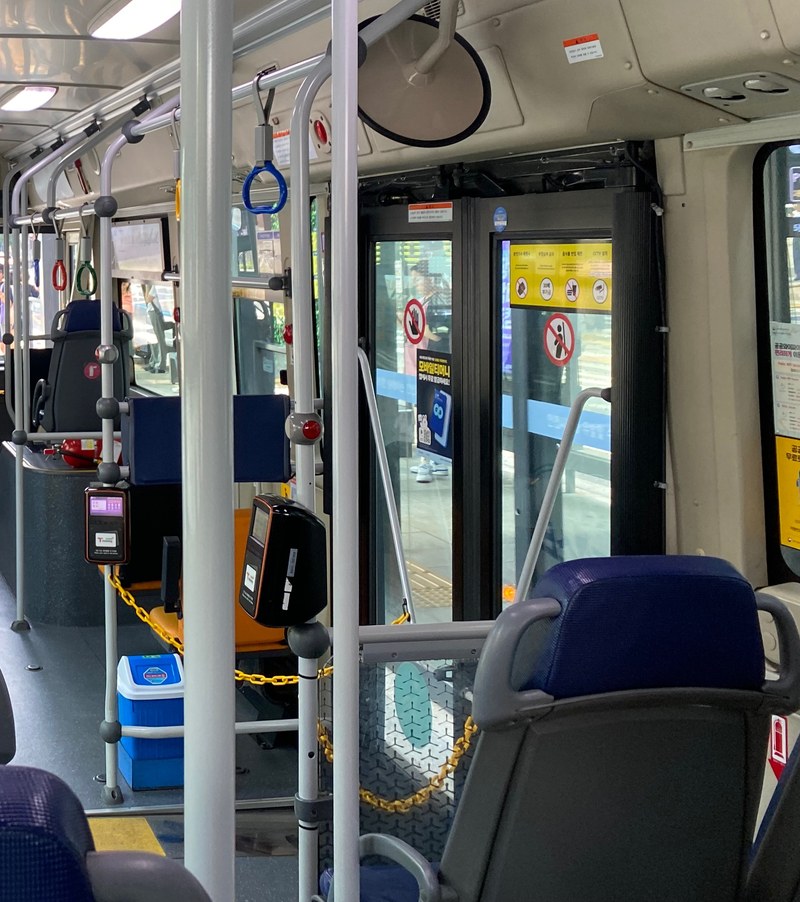
No eating: under Seoul’s 2018 standards, a driver can ask a passenger who eats on board to get off. A capped bottle is allowed on the bus; the standard is about eating, but I’d keep the bottle closed until I got off anyway. Seoul buses are narrow in the middle, and one hard brake spills an open drink on the person next to you.
Will I be fined?
No. None of the Seoul, Busan or Incheon bus ordinances fines passengers.
| Fine | None in the Seoul, Busan or Incheon bus ordinances |
|---|---|
| What happens | You’re not let on, or you’re asked to get off |
| Who decides | The driver |
The worst case isn’t a fine. It’s being turned away at the stop, and the next bus driver can do the same. The real cost is the minutes you lose at the stop.
Is it the same in Busan, Incheon and Jeju?
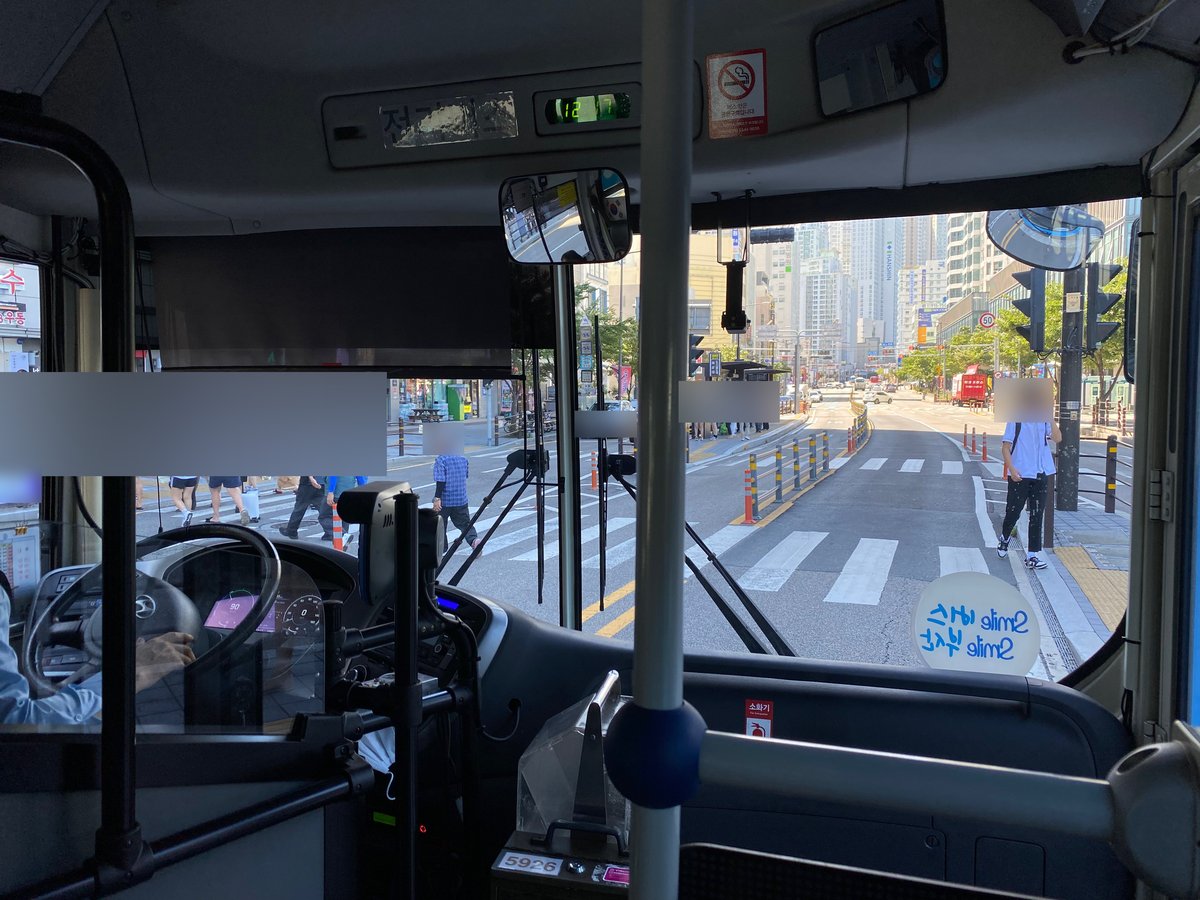
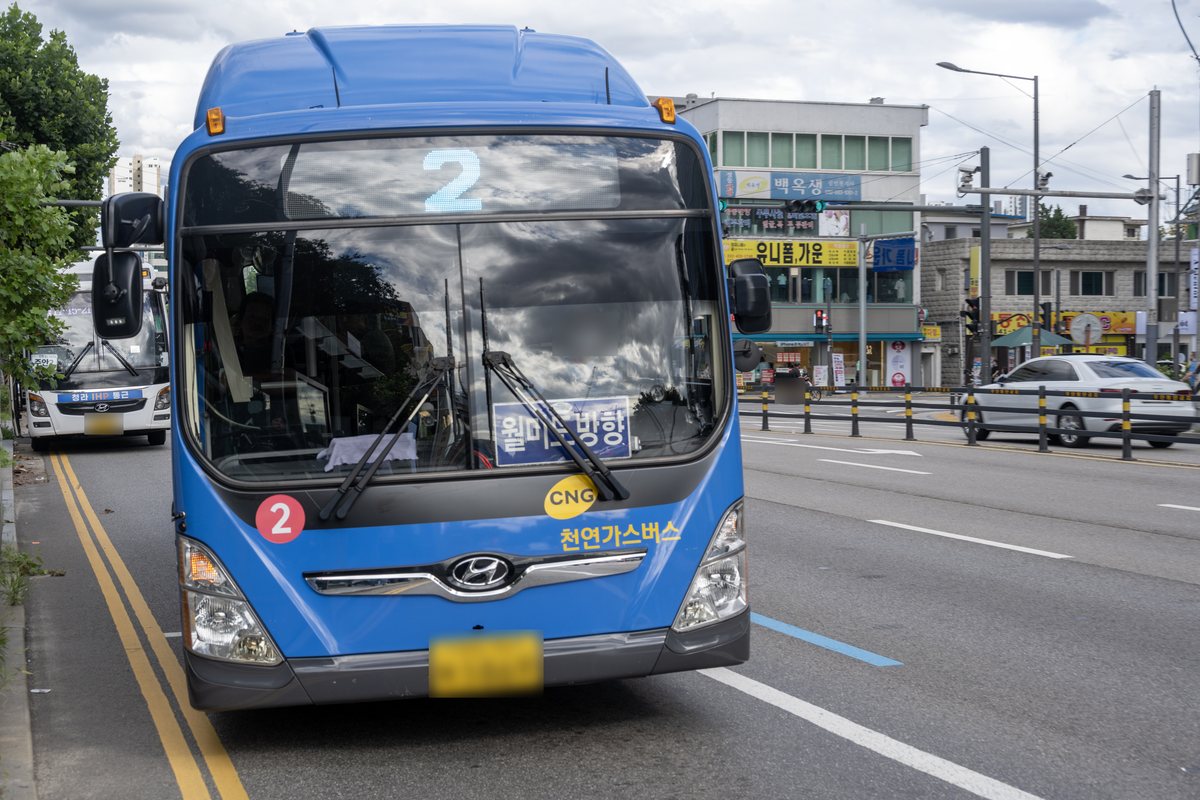
Busan and Incheon, yes; Jeju and Gyeonggi province have no such clause.
| Where | Takeout cup rule | Notes |
|---|---|---|
| Seoul city buses | Yes, since 2018 | Driver can also ask people eating on board to get off |
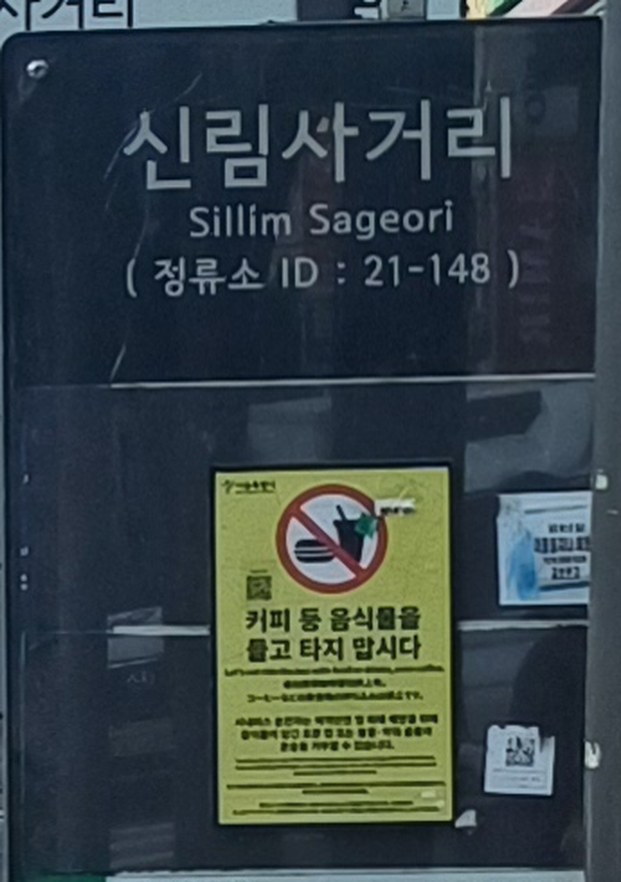
| Busan city buses | Yes, since January 2024 | Also lists fruit in disposable containers; Busan’s campaign poster says no eating on the bus |
| Incheon city buses | Yes | Same wording as Seoul: disposable takeout cups with food, dirty or foul-smelling items |
| Jeju | No clause in its bus ordinances | Not a promise that drivers won’t object |
| Gyeonggi province | No clause in the provincial bus ordinance | Bucheon city has its own clause |
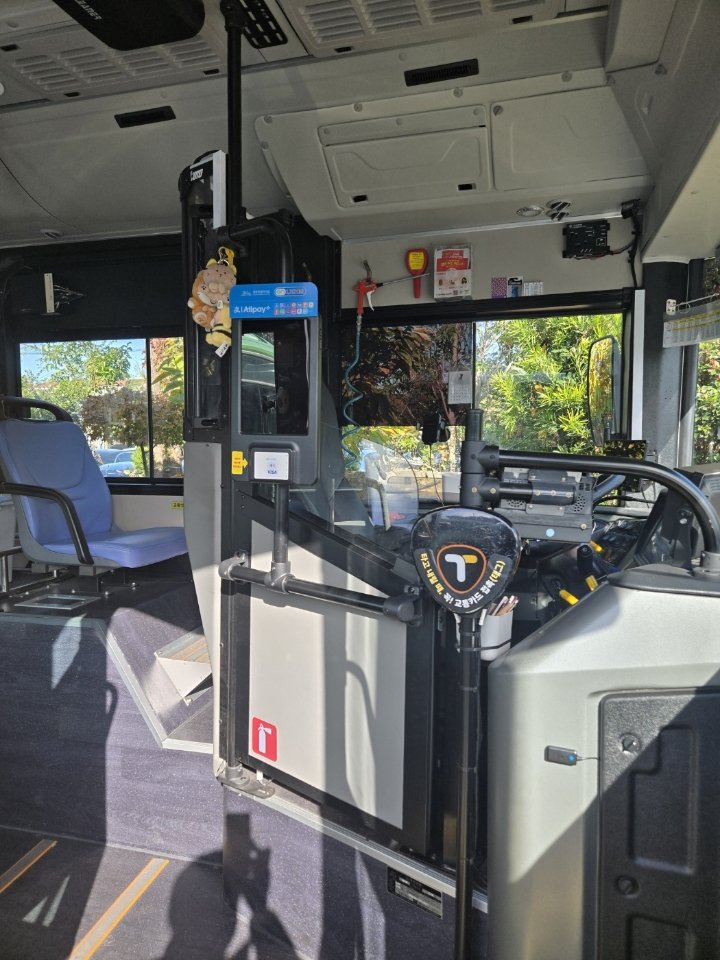
Busan’s version is a little stricter than Seoul’s because cut fruit in a cup is named. Jeju having no clause doesn’t make it a free-for-all; the door is still right beside the driver. Preparing to Seoul’s standard is the approach that never gets you stuck. For how Jeju’s buses take payment, see Jeju bus fares and cards.
Can you drink coffee on the subway in Korea?
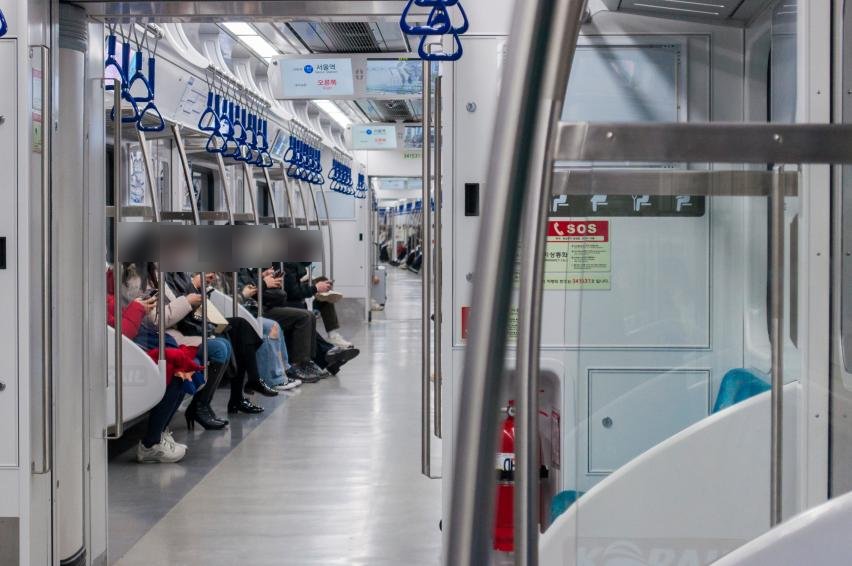
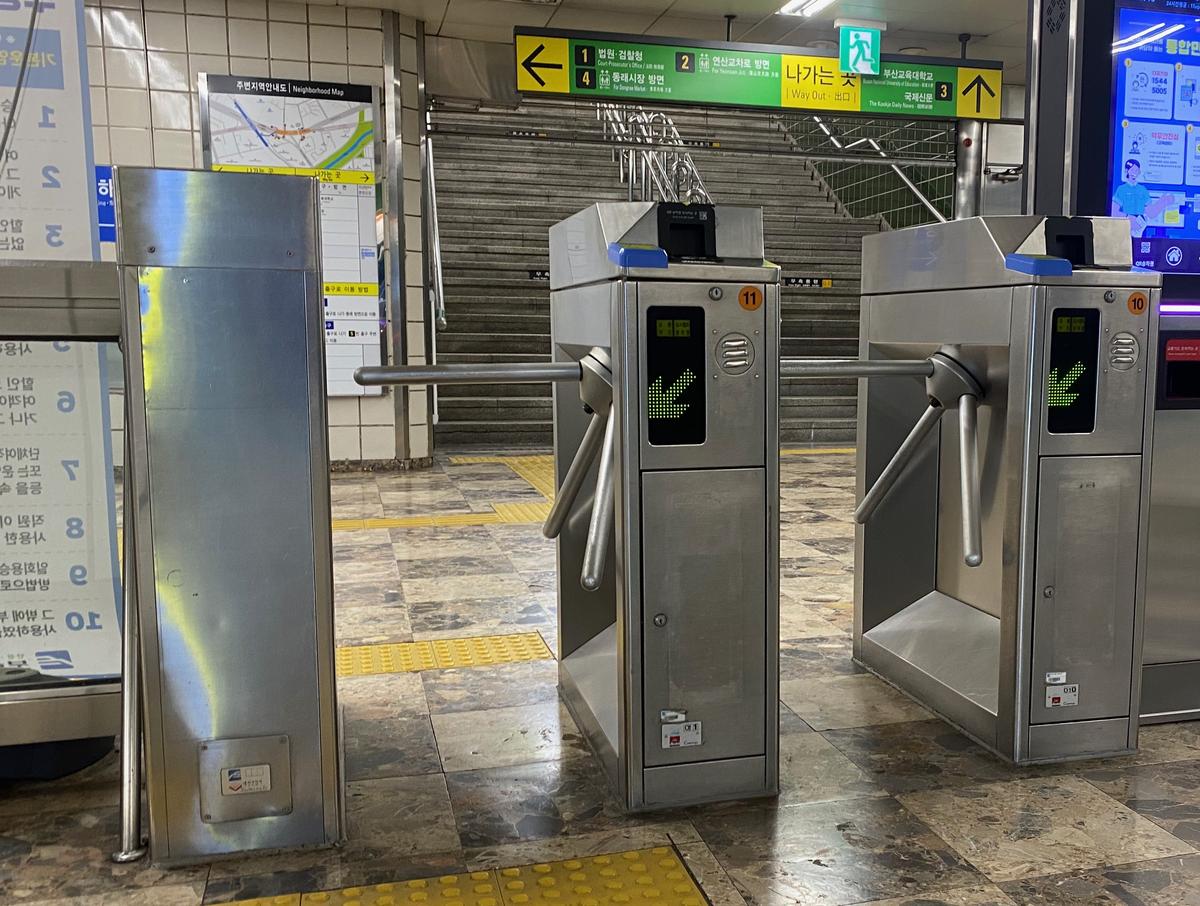
Yes. Seoul Metro (Lines 1–8) and Busan Transportation Corporation have no food-or-drink rule. Neither operator’s terms of carriage mention food or eating, and the Railroad Safety Act’s list of banned acts on trains doesn’t include it either. Carrying coffee through the gates and drinking it in the carriage breaks no rule. The one rule that can touch food is about dirty or foul-smelling items that could bother other passengers; very strong-smelling food falls under that.
| Seoul Metro, Lines 1–8 | Busan subway | |
|---|---|---|
| Food or drink rule | None | None |
| Related rule | No dirty or foul-smelling items that could bother others | Same |
| If staff apply it | Refused entry or asked to leave, plus a surcharge of ₩10,000 per prohibited item | Asked to leave at the next station, plus a surcharge of 10 times the one-zone base fare |
That surcharge is for carrying a prohibited item; food itself isn’t on the prohibited list, so “₩10,000 fine for eating on the subway” isn’t what the terms say. Rules aside, a hot coffee in a packed rush-hour carriage is easy to spill on someone; I’d wait until it thins out. Riding late? Check Busan subway last train times.
Can I eat on airport buses and the KTX?
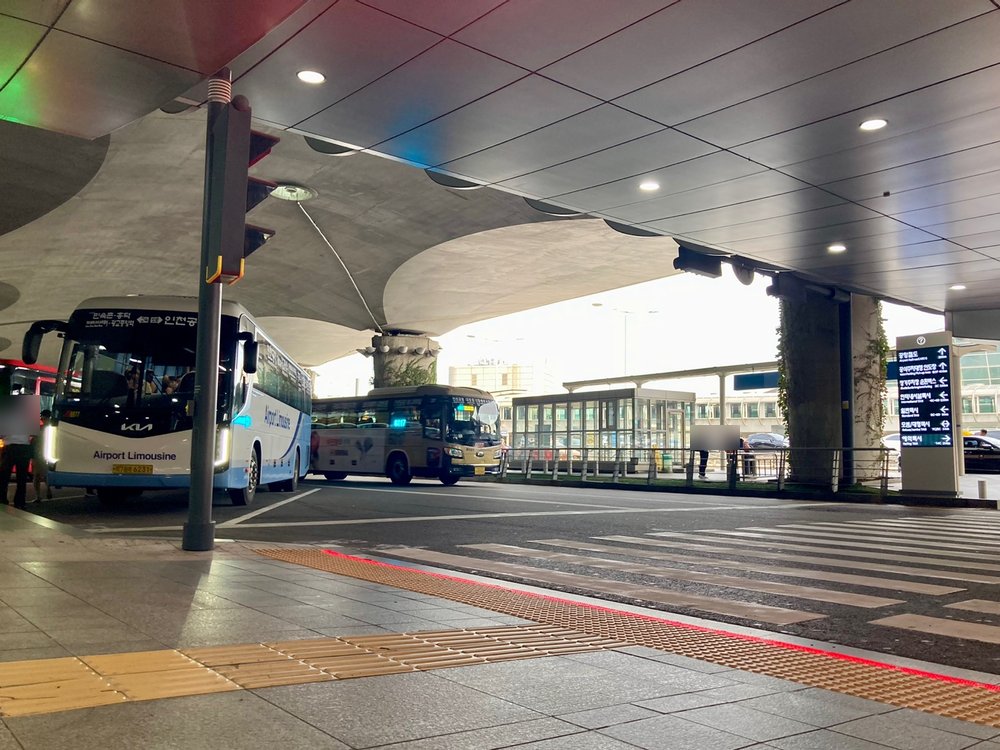
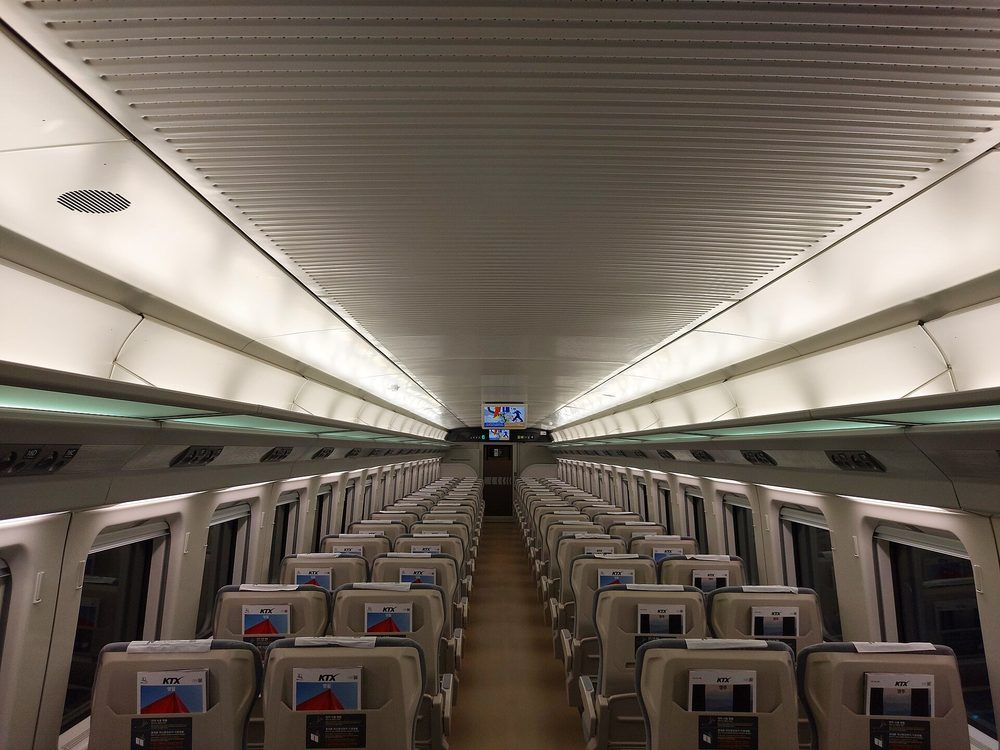
Airport Limousine’s terms don’t mention food or drink; on trains, the Railroad Safety Act doesn’t ban eating. Airport Limousine (공항리무진), which runs buses between Incheon Airport and Seoul, bans dirty, foul-smelling or bothersome items and can refuse passengers carrying them, but says nothing about food or drink. On other airport bus companies, follow that company’s own notices. The KTX falls under the same Railroad Safety Act as the subway, whose list of banned acts on board doesn’t include eating; follow any notices in the carriage. For booking the train itself, see how far ahead you can book the KTX.
Your situation
If you’ve just bought a takeout coffee and your next ride is a Seoul or Busan bus
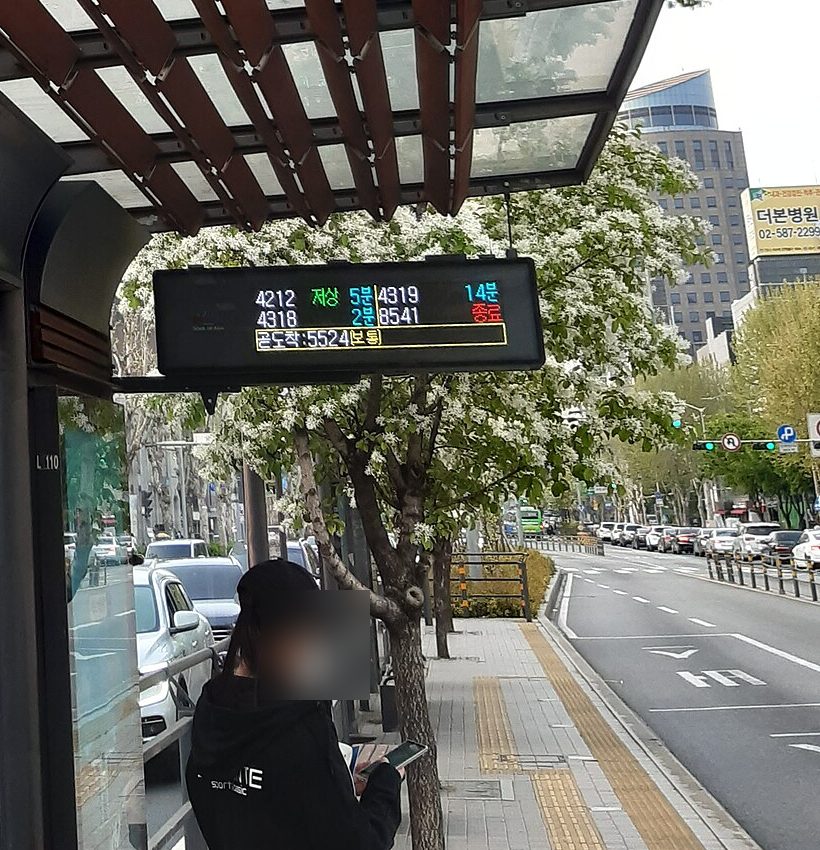
Finish it at the stop, or switch the trip to the subway if there’s a station nearby. Check the arrival board first to see how much time you have. Empty cups go in the street bins; where to throw away a cup in Korea covers how to sort it.
If you’re carrying market snacks and fruit back to your stay
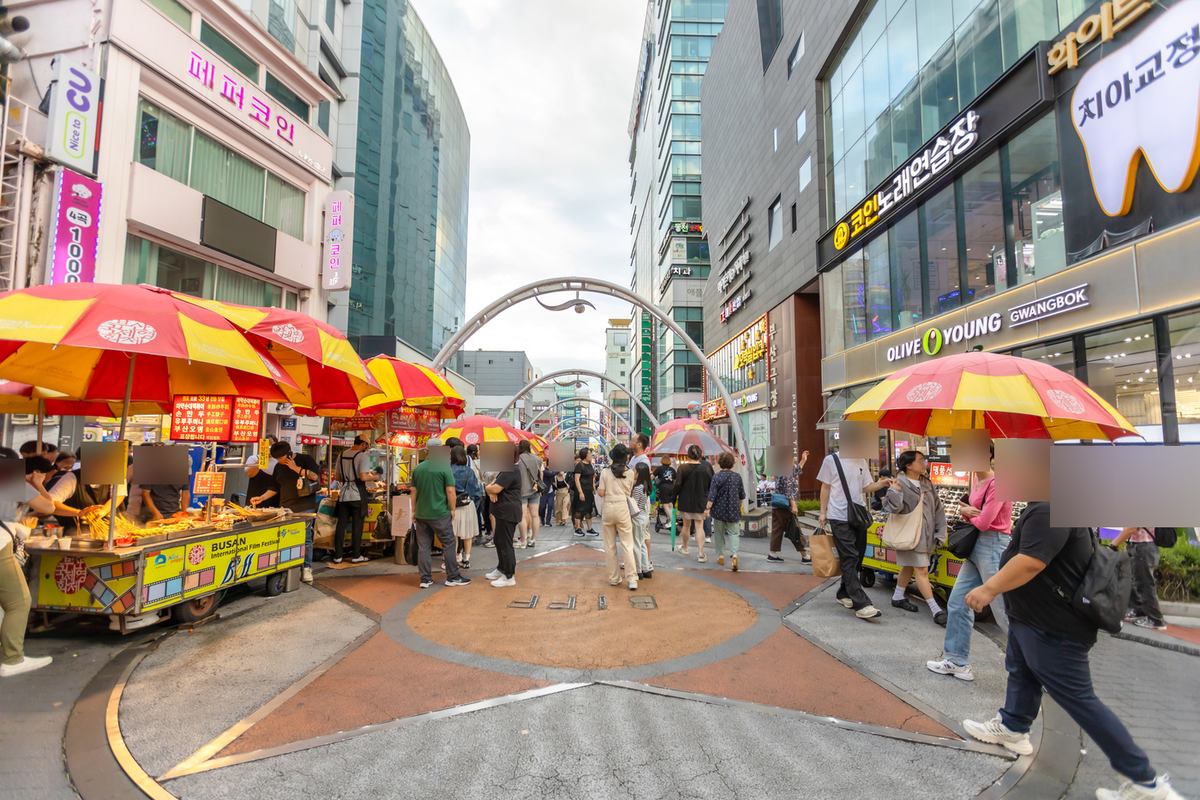
Anything in a cup, eat at the stall. Ask for food to be boxed or bagged instead; a closed box of chicken or pizza and groceries in bags are on the allowed list. In Busan, cut fruit in a cup counts as refusable too.
If you’re touring Jeju by bus
There’s no clause to cite, but long rides between towns are exactly when a drink tips over. Use a capped bottle or a tumbler, and keep the takeout cup for the café.
Common mistakes
- Thinking a lid makes a takeout cup OK. Lid or no lid, a disposable cup is refusable.
- Assuming bubble tea is different. It’s a disposable cup.
- Expecting a fine and thinking it’s worth the risk. There’s no fine, but there’s also no appeal: the driver decides.
- Treating the subway like the bus. The subway has no drink rule; you can carry the coffee in.
- Carrying a cup of cut fruit onto a Busan bus. Busan names it.
- Reading “no clause in Jeju” as “allowed in Jeju”. It means no written rule, not a guarantee.
What I would do
I’d bring a sealable tumbler and ask cafés to fill it; a sealed tumbler is on Seoul’s allowed list and saves the gulp at the stop. If I’d already bought a takeout cup and a bus was next, I’d drink it at the stop or take the subway instead, since the subway has no rule about it. For a day of buses, a capped bottle of water does the job.
FAQ
- Q1: Can you bring coffee on the bus in Seoul?
- Not in a disposable takeout cup: the driver can refuse to let you on, lid or no lid. Coffee in a sealed tumbler or a capped bottle is fine.
- Q2: Is there a fine for bringing a drink on a Korean bus?
- No. The Seoul, Busan and Incheon bus ordinances have no fine for passengers. The consequence is being refused at the door or asked to get off.
- Q3: Can I bring bubble tea on a bus in Korea?
- Not in Seoul, Busan or Incheon city buses, because a bubble tea cup is a disposable cup too. Finish it at the stop or take the subway.
- Q4: Can I bring a water bottle on a Seoul bus?
- Yes, if the cap is on. Bottles and cans only become a problem when they are open or have a straw in them.
- Q5: Can you eat or drink on the subway in Seoul?
- Yes. Neither Seoul Metro nor Busan’s subway operator has a food-or-drink rule. Strong-smelling food is the exception: staff can treat it as a foul-smelling item and ask you to leave.
- Q6: Is the takeout cup rule the same in Busan?
- Yes, since 2024, and Busan adds fruit in disposable containers. Busan’s campaign poster also says no eating on the bus. See Busan, Incheon and Jeju.
- Q7: Can I drink coffee on Jeju buses?
- Jeju’s bus ordinances have no takeout cup clause. That means no written rule, not a promise; prepare the same way as in Seoul.
If it were me
Short trip, mostly subway: I wouldn’t change anything. Carry the coffee, just avoid rush hour with it.
A day built around buses in Seoul or Busan: a tumbler or capped bottle, and no takeout cups after leaving the café. Being refused costs a bus, and on a route with 14-minute gaps that hurts more than the coffee is worth.
Jeju: I’d still prepare to the Seoul standard. No written rule isn’t a promise, and preparing costs one capped bottle.
Official sources
- Seoul Metropolitan Government: what you can bring on city buses (Korean, April 2, 2018)
- Seoul bus operators’ association FAQ (Korean)
- Busan Metropolitan City: city bus carriage terms campaign (Korean)
- Incheon city bus ordinance (Korean)
- Seoul Metro: terms of carriage, Lines 1–8 (Korean)
- Busan Transportation Corporation: terms of carriage (Korean)
- Airport Limousine: terms of carriage (Korean)
Rules follow the latest official announcement.
Read next
Verified
 Current
Jeju Bus Payment 2027: Visa Tap, T-money, No Cash
Jeju route buses have taken no cash since October 1, 2024. Since August 1, 2025, a second terminal for foreign visitors (ON나라페이) takes contactless Visa and QR payments; Jeju names no other card network. Otherwise use T-money or another nationwide transit card, including one bought in Seoul. The Seoul Climate Card doesn’t work.
Verified
 Current
Busan Subway Last Train 2026: Haeundae, Seomyeon, Nampo
Busan Metro Lines 1–4 have the same last trains on weekdays, Saturdays, Sundays and holidays, mostly leaving between 23:30 and 00:30; trains around midnight often end partway at Jeonpo, Sinpyeong, Hopo or Gwangan. Haeundae to Seomyeon is 23:29 and Seomyeon to Haeundae 00:00; trips that change lines at Seomyeon need a train by 23:14 to 23:33.
Verified
 Current
Korea Garbage Rules 2026: Trash Bags, Pickup Times, Fines
Each district sets its own rules. In an Airbnb, general waste goes in that district’s paid volume-based bag (sold at convenience stores and supermarkets) and out by your own door on the district’s evenings; in Jeju it goes to a neighborhood clean house, open 15:00–04:00. In a hotel you do not sort. Putting household trash out wrong is a KRW 100,000 fine.