In Seoul’s Mapo-gu, the district around Hongdae, general waste has to go out in the district’s own paid bag, ₩490 for 20 liters, on Sunday to Thursday evenings only. Use a supermarket bag, or put it out on a Friday night, and the fine is KRW 100,000. Korea has no single national schedule: each district sets its own days, hours and spots, and in some districts neighbors on the same street have different days. If you are in a hotel, none of this applies to you. If you are in an Airbnb or guesthouse with a kitchen, this is the order to work through: whether you sort at all, where to buy the bag, what goes where, when it goes out, and what the fines are. The bag is called a volume-based trash bag (종량제 봉투, jongnyangje bongtu); a “-gu” is a city district, and the district office is who sets the rules.
- Hotel: no sorting. Leave it in the room bin.
- Airbnb or guesthouse: follow your host’s instructions first; if there are none, follow your district’s rules.
- General waste goes only in that district’s paid bag, sold at nearby convenience stores and supermarkets.
- Seoul and Busan: bags go outside your own door in the evening, on set days. Wrong day and it gets left there.
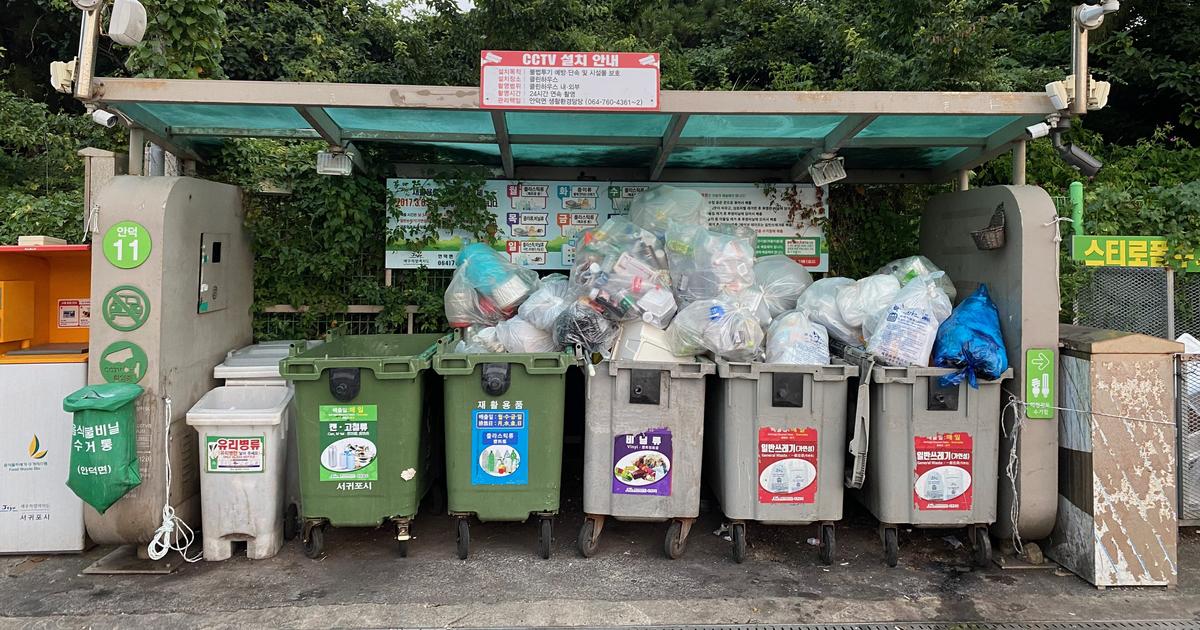
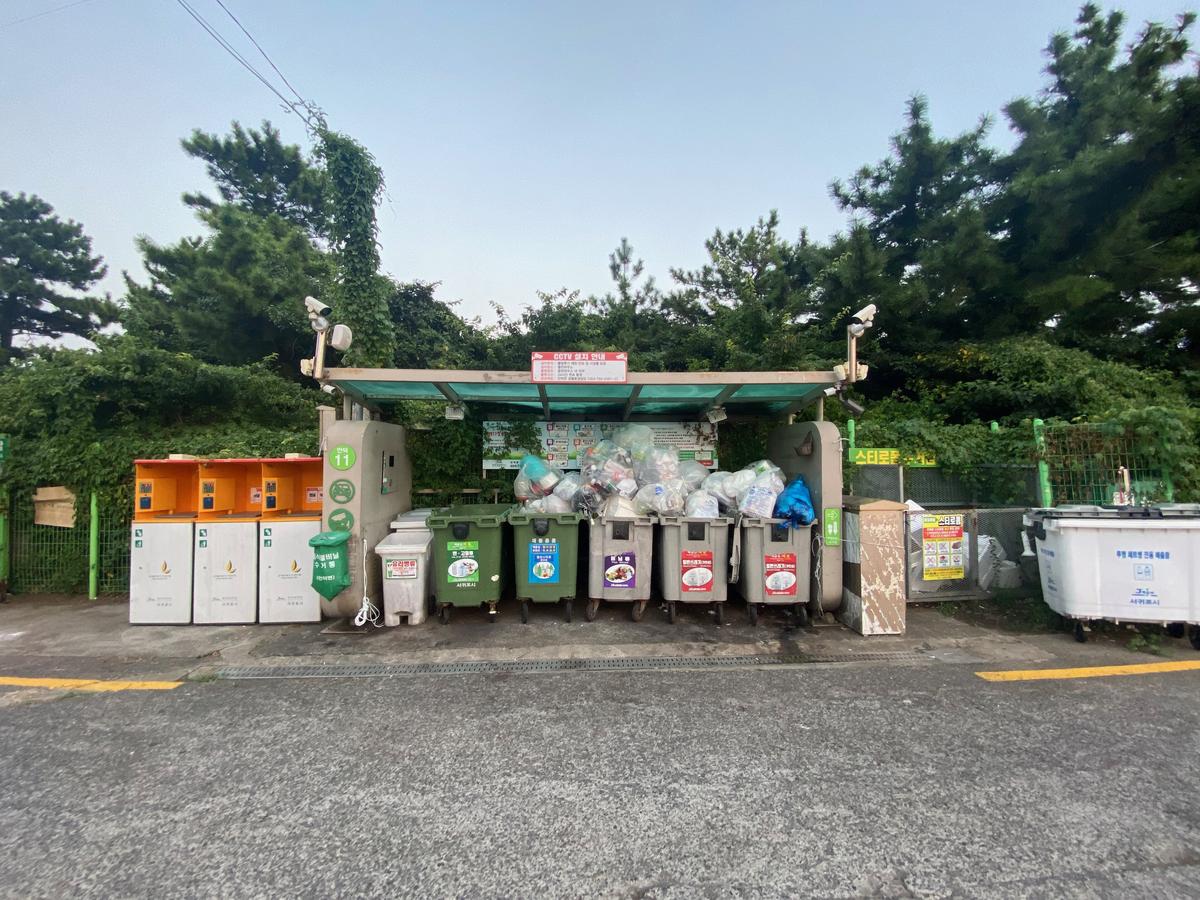
- Jeju: take it to the neighborhood clean house, 15:00 to 04:00; food waste any time.
- Bones, shells, eggshells and tea bags are not food waste. They go in general waste.
- Fines: KRW 100,000 for household trash put out wrong, KRW 50,000 for a dropped cigarette butt.
Contents
- Who this is for
- Key facts
- Do you sort trash in a hotel?
- Where to buy trash bags, and how much
- General waste, food waste or recycling?
- What day and time to put it out
- How it works in Jeju
- Fines
- Why are there no trash cans in Korea?
- Your situation
- Common mistakes
- What I would do
- FAQ
- If it were me
- Official sources
Who this is for
Anyone staying somewhere that makes you take out your own trash.
- You booked an Airbnb, guesthouse or hanok stay and the host says to put the trash out yourself.
- You plan to cook or order delivery, so there will be leftovers, bones and takeout boxes.
- You are staying in a Jeju guesthouse or rental house and need to find the clean house.
You can skip most of this if:
- You are in hotels the whole trip. The hotel section is one sentence.
- You only want to know where to throw away a coffee cup on the street. Jump to trash cans.
Key facts
| Who sets the rules | Each district (Mapo-gu, Jongno-gu, Haeundae-gu and so on), not the country |
|---|---|
| General waste | Only in the district’s volume-based bag, tied shut |
| Where to buy the bag | Convenience stores and supermarkets near where you are staying |
| Recycling | Rinsed, in a clear bag, put out separately |
| Seoul and Busan | Outside your own door in the evening, on the district’s days |
| Jeju | The neighborhood clean house (클린하우스), not your door |
| Apartment buildings | The building’s own rules; ask the management office |
| Fine for doing it wrong at home | KRW 100,000 (Mapo-gu) |
Do you sort trash in a hotel?
No. I would leave everything in the room’s bin and let the hotel handle it. That is a practical call rather than something a regulation spells out, but hotels have staff for it. Sorting and taking trash out yourself is for stays with a kitchen and no housekeeping: Airbnbs, guesthouses, hanok rentals. In those, read the host’s check-in notes first; most say where the trash goes and on which days. If they say nothing, use the district rules below. Hotels also have their own rule on what is in the room: see whether Korean hotels still give free toothbrushes.
Where to buy trash bags, and how much
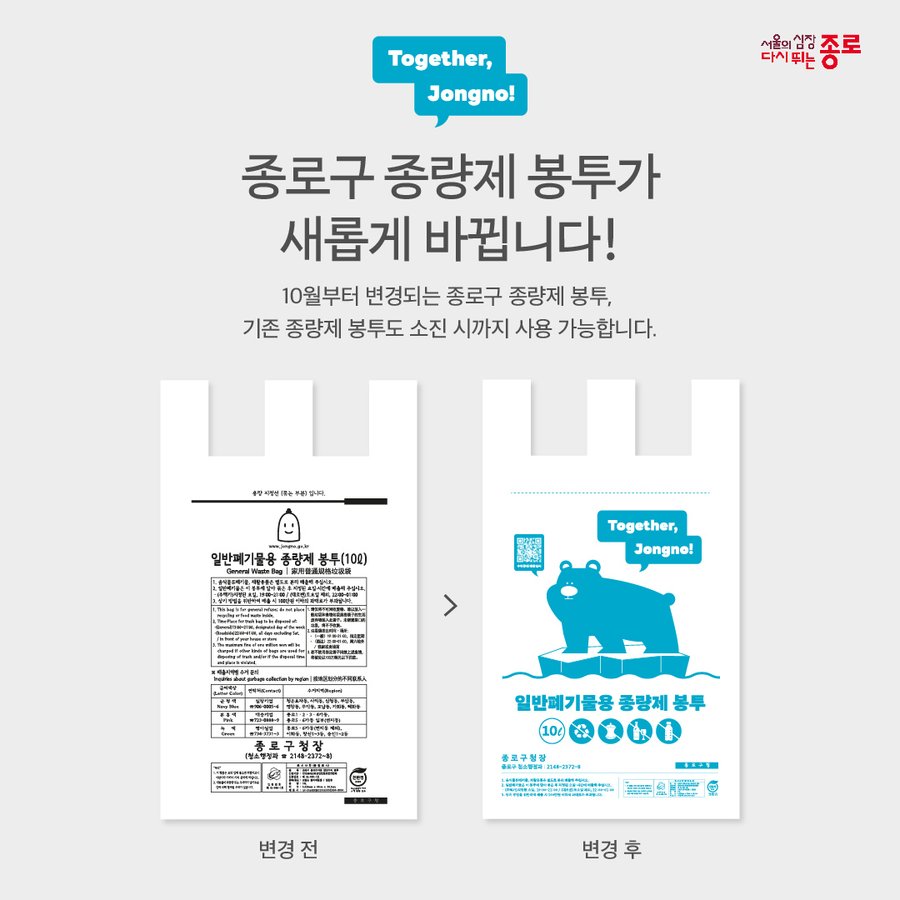
At a convenience store or supermarket near where you are staying, and it must be that district’s bag. Each district prints and sells its own. In Mapo-gu, shops that sell them have a “쓰레기봉투판매소” (trash bag seller) sign at the door. Trash in an ordinary plastic bag is treated as not using the official bag, and in Mapo-gu that is a KRW 100,000 fine.
| District | Price per bag |
|---|---|
| Seoul, Mapo-gu and Jongno-gu (general waste) | 5 L ₩130 / 10 L ₩250 / 20 L ₩490 / 50 L ₩1,250 / 75 L ₩1,880 |
| Seoul, Mapo-gu and Jongno-gu (food waste) | 1 L ₩100 / 2 L ₩190 / 3 L ₩300 / 5 L ₩500 |
| Busan, Haeundae-gu (general waste) | 10 L ₩430 / 20 L ₩850, as of the district’s February 2026 guide |
For four to seven days, one or two 10- or 20-liter bags is enough.
Can you use a bag from another district?
Don’t count on it; buy where you sleep. Each district decides. Seongdong-gu, which covers Seongsu, says on its website that it collects one to three household bags bought in other Seoul districts, that “reusable volume-based bags” (재사용 종량제봉투) work anywhere in Seoul, and that bags from outside Seoul are not accepted. Other districts may be stricter.
General waste, food waste or recycling?
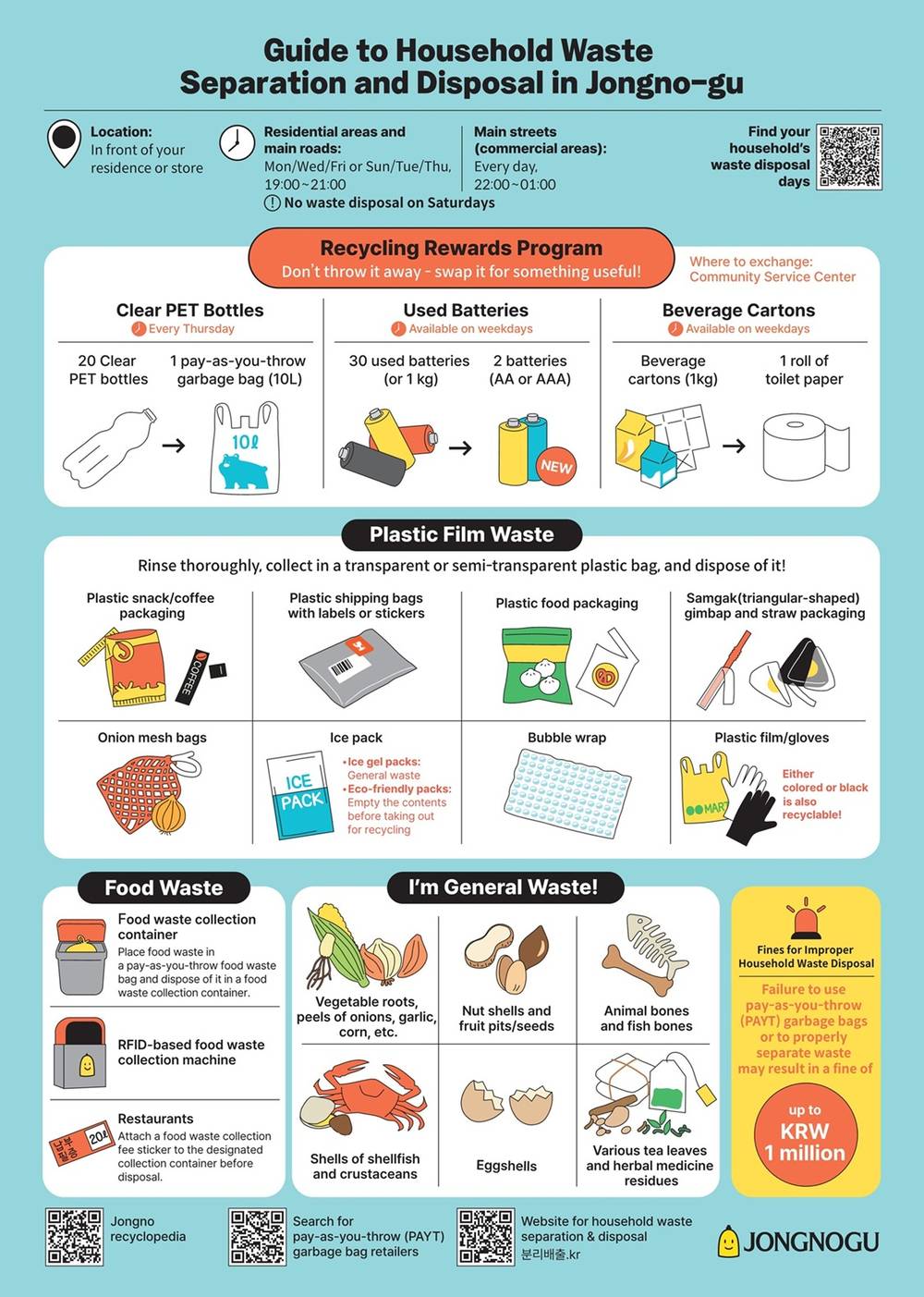
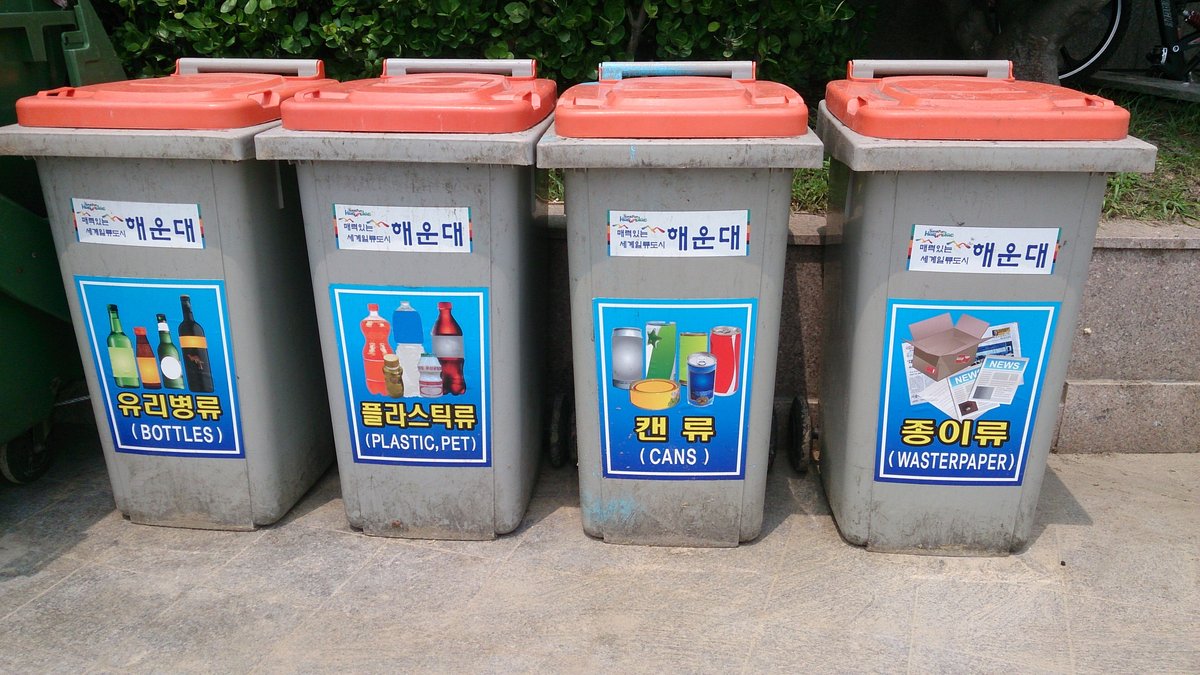
Three piles: general waste in the paid bag, food waste in a food waste bag or bin, recycling in a clear bag. The table follows the Mapo-gu and Jongno-gu rules; other districts are similar.
| Item | Where it goes |
|---|---|
| General waste | Volume-based bag, tied shut |
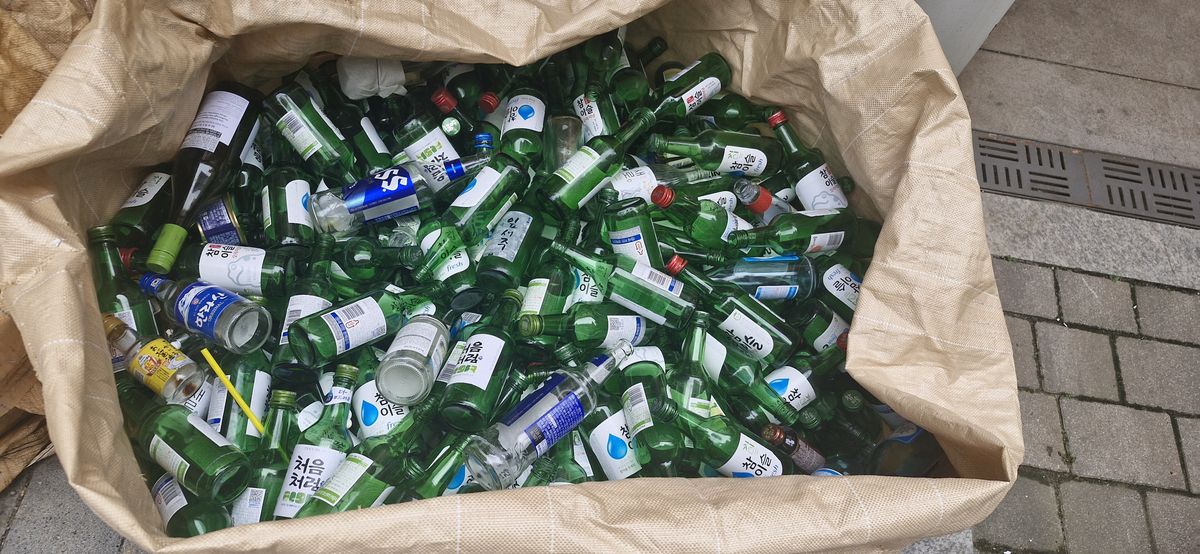
| Plastic bottles, cans, glass bottles, paper, plastic containers, plastic bags | Emptied and rinsed, in a clear bag as recycling; Mapo-gu bans black bags |
| Clear plastic bottles | Label off, kept apart from other bottles, in a bag of their own |
| Paper cups, milk cartons | Emptied, rinsed and flattened, as recycling |
| Styrofoam, instant noodle cups | Recycling if clean; general waste if the stain will not wash off |
| Leftover rice, meat, sauce | Food waste |
| Chicken, pork and beef bones | General waste |
| Clam shells, crab shells, fish bones | General waste |
| Eggshells, tea bags, coffee grounds | General waste |
| Onion and garlic skins, corn husks, big fruit pits like peach stones, hard nut shells | General waste |
Bones are where most people slip. With delivery fried chicken or jokbal, the bones go in the paid bag, and only the leftover meat and sauce go in food waste.
What day and time to put it out
In Seoul and Busan, it goes outside your own door in the evening, and the days depend on the district. The host’s notes beat any table. Here are the districts travelers stay in most:
| District | Days | Hours |
|---|---|---|
| Seoul, Mapo-gu (Hongdae, Yeonnam), general waste | Sun–Thu; none on Fri and Sat | Nov–Mar 18:00–24:00; Apr–Oct 19:00–24:00 |
| Seoul, Mapo-gu, recycling | Clear plastic bottles and plastic bags Wed only; other recycling Sun, Mon, Tue, Thu | Same as above |
| Seoul, Jongno-gu (Bukchon, Insadong) | Mon/Wed/Fri or Sun/Tue/Thu, by street address; none on Sat | 19:00–21:00 |
| Seoul, Seongdong-gu (Seongsu) | Mon/Wed/Fri or Tue/Thu/Sun, by neighborhood | 20:00–24:00 |
| Busan, Haeundae-gu | General and food waste Sun, Tue, Thu; recycling Mon, Wed; none on Fri and Sat | Out 18:00–21:00; collected 21:00–05:00 (district guide, February 2026) |
| Apartment and mixed-use buildings | The building’s own rules; ask the management office | |
Put it out on the wrong day and it gets left where it is, and you can be fined. Jongno-gu lets you look up your days by address on its website. Seongdong-gu also fines trash put in the wrong place KRW 100,000, so it goes outside your own door. If your district is not here, go by the host’s notes or the notice posted at the door or trash area. The one hour that works in all three Seoul districts above is 20:00 to 21:00, on a day your host confirms.
How it works in Jeju
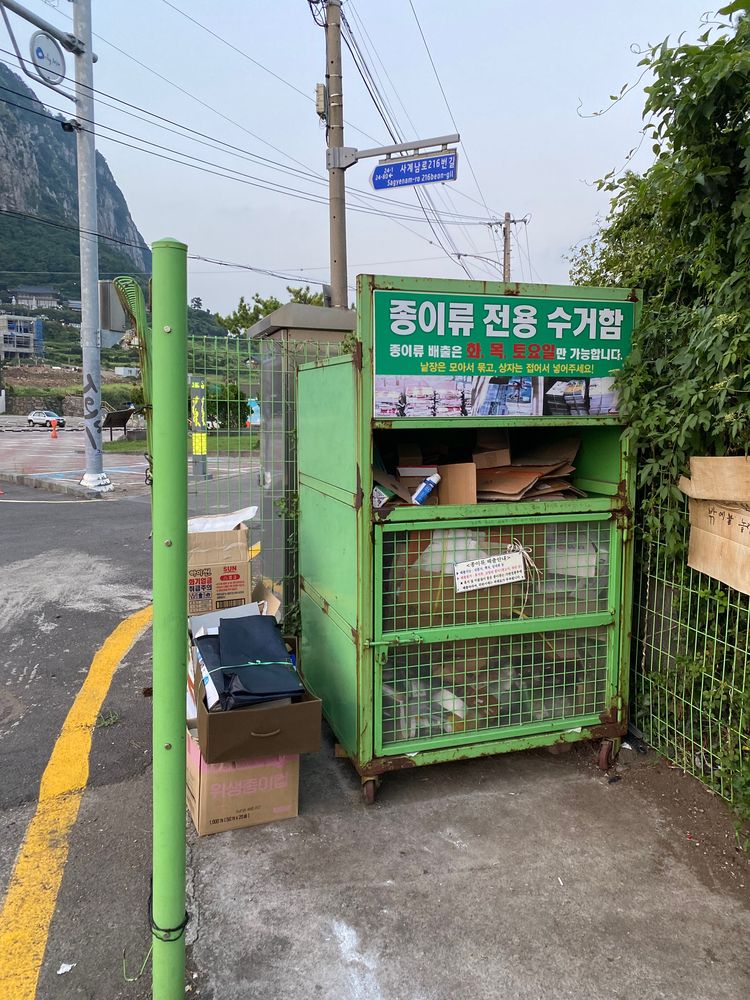
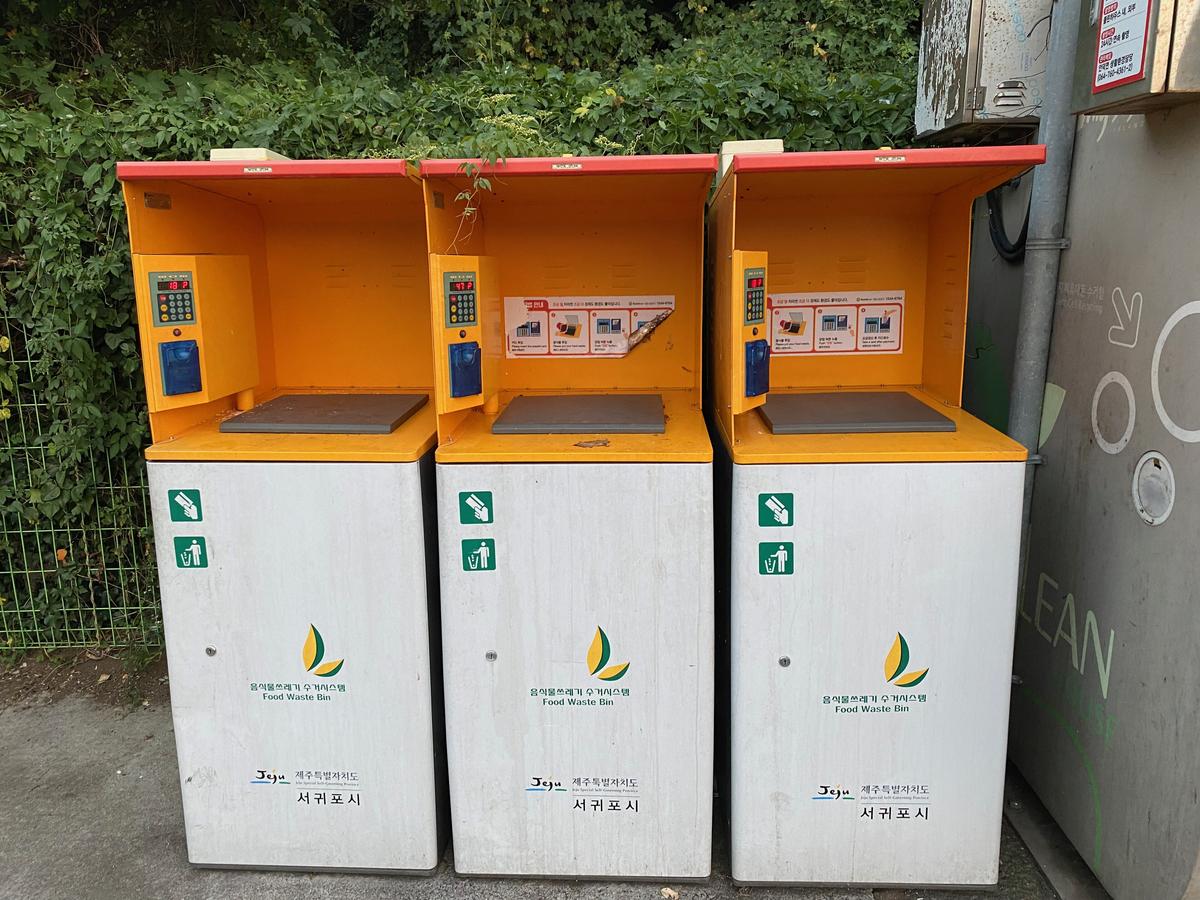
Nothing goes outside your door. You carry it to the neighborhood clean house (클린하우스) or to a staffed recycling help center (재활용도움센터). Clean houses are open from 15:00 to 04:00 the next morning, and food waste can go in at any hour.
| Every day | General waste (in the paid bag), food waste, styrofoam, glass bottles, cans |
|---|---|
| Set days only | Plastic, paper, plastic bags and other recycling, on the days posted at that clean house |
| Recycling help centers | Any day, during each center’s opening hours |
| Changes | Jeju is reviewing the set-day recycling system; go by the notice on site |
Fines
Putting household trash out wrong costs KRW 100,000 the first time. Mapo-gu lists the same KRW 100,000 for no paid bag, wrong day or time, food waste or recycling mixed into the bag, and an untied bag. The amounts come from a national schedule, so districts use the same figures.
| What you did | Fine |
|---|---|
| Dropping a cigarette butt, tissue or gum | KRW 50,000 |
| Household trash put out wrong (no paid bag, wrong day or time, mixed, bag not tied) | KRW 100,000 the first time, 200,000 the second, 300,000 from the third |
| Dumping trash in a plastic bag | KRW 200,000 |
| Legal maximum | KRW 1,000,000 |
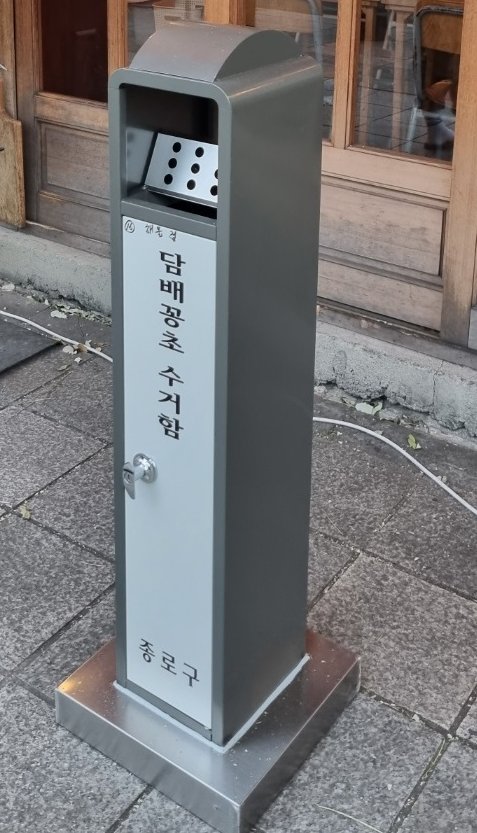
Why are there no trash cans in Korea?
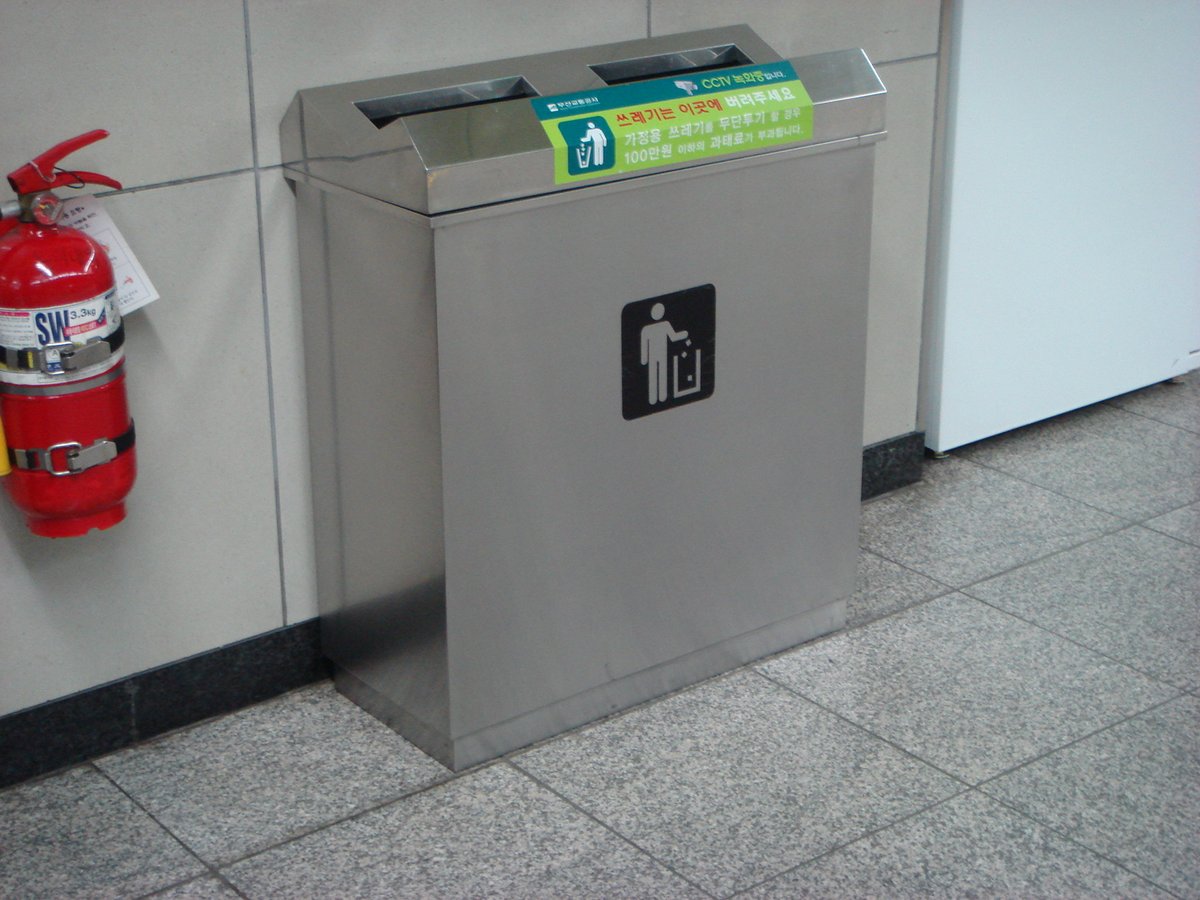
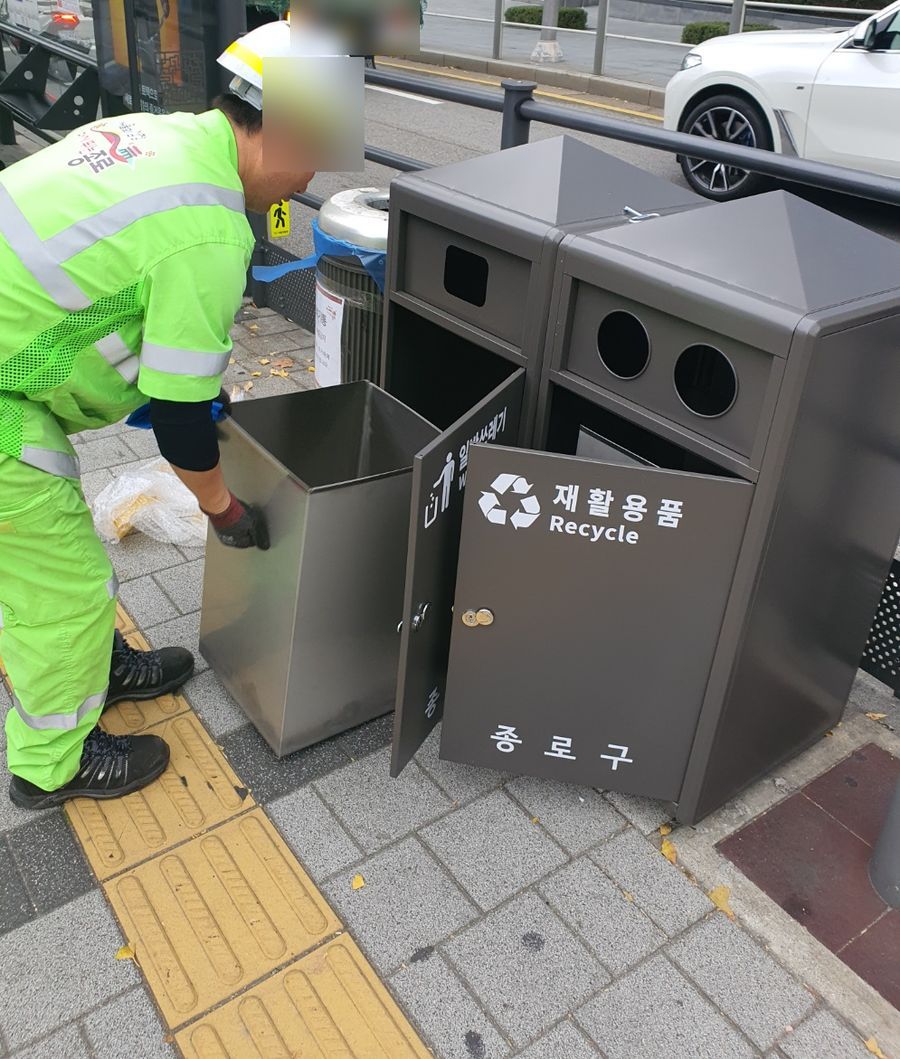
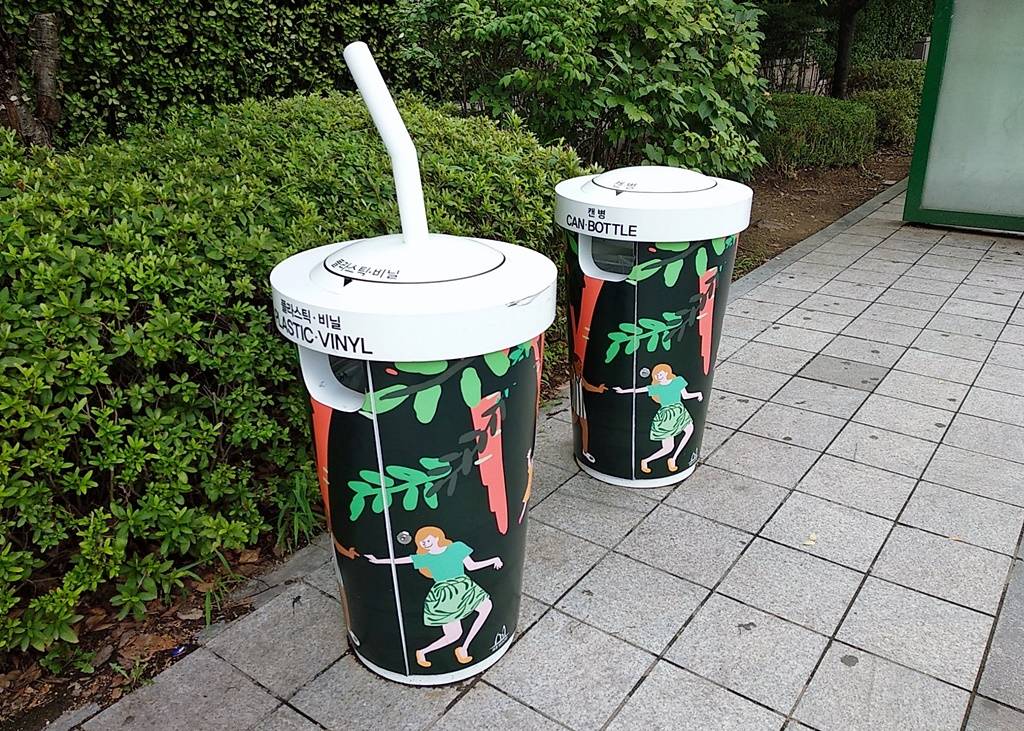
There are some, but few, and they are most often next to bus stops. If you cannot find one, carry your trash back to your room. According to the Seoul Metropolitan Government, after trash started being charged by the bag in 1995, people put household and shop trash in street bins to avoid paying, so districts took the bins away: Seoul went from 7,607 street bins in 1995 to 3,707 in 2007. From 2013 the city started funding districts to add bins again, mainly around bus stops, busy areas and tourist spots.
Those bins are for small things you are carrying, like a cup or a wrapper. Bringing a bag of trash from your room to a street or station bin is dumping, and that is where the fines above apply.
Your situation
If you check into a Hongdae Airbnb on a Friday night
Mapo-gu takes no trash on Friday or Saturday nights, so keep it inside with the bag tied. On the first evening, buy one 10- or 20-liter Mapo-gu bag at the nearest convenience store. Put it out on Sunday evening: from 18:00 between November and March, from 19:00 between April and October. Clear plastic bottles wait for Wednesday.
If you are in a hanok in Bukchon or Insadong
Jongno-gu assigns days by street address, so the house next door may be on the other schedule. Don’t copy the neighbors. Ask the host; if there is no answer, look up your address on Jongno-gu’s website. The hours are always 19:00 to 21:00, which is the shortest window of the districts in this guide.
If you check out of a Haeundae Airbnb on a Saturday morning
Haeundae-gu takes nothing on Friday or Saturday, so your last chance is Thursday between 18:00 and 21:00. Whatever builds up after that stays inside where the host tells you to leave it; don’t put it outside on your way out.
Common mistakes
- Using a supermarket or convenience store bag for trash. Only the district’s paid bag counts.
- Buying bags in Hongdae and using them in Bukchon. New district, new bag.
- Putting bones, shells or eggshells in food waste. All general waste.
- Putting trash out in the daytime. In Seoul and Busan it goes out in the evening.
- Going by the neighbors’ day. In Jongno-gu, the next address can be on a different schedule.
- Putting recycling in a black bag. Recycling goes in a clear bag so the contents show.
- Carrying a bag of room trash to a street or subway bin. That is dumping.
What I would do
On check-in day in an Airbnb, I would do two things before going out: find the trash section in the host’s notes, and buy one 10- or 20-liter bag for that district at the nearest convenience store. For four to seven days, that single bag usually covers it. Recycling goes in clear plastic bags from the supermarket, rinsed, on the district’s recycling days. If the trip moves to a second district, I would use up the first bag before leaving rather than carry it to the next place. In Jeju I would find the nearest clean house on day one and drop the trash after 15:00.
FAQ
- Q1: Do I have to separate my trash in a Korean hotel?
- No. Leave it in the room’s bin and let housekeeping deal with it. Sorting and putting trash out yourself is for Airbnbs, guesthouses and other stays with a kitchen and no room cleaning.
- Q2: Where do I buy trash bags in Korea, and how much are they?
- At a convenience store or supermarket near where you are staying, and it has to be that district’s bag. In Seoul’s Mapo-gu and Jongno-gu a 10-liter bag is ₩250 and a 20-liter bag is ₩490; in Busan’s Haeundae-gu a 20-liter bag was ₩850 as of the district’s February 2026 guide.
- Q3: Can I use a regular plastic bag for trash in Korea?
- No. General waste only gets collected in the district’s volume-based bag. Putting it out in any other bag counts as not using the official bag, and Mapo-gu fines that KRW 100,000.
- Q4: Are chicken bones food waste in Korea?
- No, bones go in general waste. So do shells, eggshells, tea bags, coffee grounds and big fruit pits. Only the leftover meat, rice and sauce go in food waste.
- Q5: What time do you put the trash out in Seoul?
- In the evening, on your district’s days only. Mapo-gu takes it from 18:00 or 19:00 to midnight depending on the month, Seongdong-gu from 20:00 to midnight, and Jongno-gu only from 19:00 to 21:00.
- Q6: Can I use a trash bag from another district?
- Not reliably. Seongdong-gu accepts one to three household bags bought elsewhere in Seoul, but each district sets its own rule. Buy a bag from the district you are sleeping in.
- Q7: Why are there no trash cans on the street in Korea?
- Districts removed most of them after paid trash bags started in 1995, because people dumped household trash in them. There are some, most often next to bus stops; if you cannot find one, carry it back to your room.
If it were me
In a hotel I would not think about any of this. In an Airbnb in Seoul or Busan, the two things that cost money are the wrong bag and the wrong night, so I would sort those out on the first evening and not worry about the rest. In Jeju, the clean house makes it the easiest of the three: no days to remember for general waste and food waste. On the street, I would not spend time hunting for a bin; whatever I am carrying goes in my bag and back to the room.
Official sources
- Mapo-gu: trash disposal guide (Korean; days, hours, bag prices, fines)
- Jongno-gu: look up collection days by address (Korean)
- Seongdong-gu: household waste (Korean; hours and bags from other districts)
- Haeundae-gu: household waste guide (Korean)
- Jeju Special Self-Governing Province waste management ordinance (Korean)
- Enforcement Decree of the Wastes Control Act: fine schedule (Korean)
- Seoul Metropolitan Government: street trash bins (Korean)
Prices and times follow the latest official announcement.
Read next
Verified
 Current
Do Korean Hotels Provide Toothbrushes? The 2026 50-Room Rule
Since March 29, 2024, Korean lodging businesses with 50 or more guest rooms and all public bathhouses, including jjimjilbang, may not give out disposable toothbrushes, toothpaste, razors, shampoo or conditioner for free; selling them is allowed. Slippers, towels and body wash are not covered, and hotels under 50 rooms, homestays and hanok stays are not bound by the rule.
Verified
 Current
Korea Drone Laws 2026: Can Tourists Fly, and Where?
Yes. Under 250 g needs no registration or license; 250 g to 2 kg needs the Class 4 online-course certificate. Within 9.3 km of an airport, in a no-fly zone, above 150 m and after sunset you need flight approval at any weight. Since September 17, 2026, flying into a no-fly zone without approval carries up to 1 year in prison or a KRW 10,000,000 criminal fine.
Verified
 Current
Does Uber Work in Korea? 2026 Guide to Paying and Airports
Yes. Use the Uber app and account you already have; no new sign-up. Every ride is a licensed taxi, mostly metered. Pay by card in the app, or choose in-person payment before requesting and pay cash or card at the end. Incheon, Gimpo, Gimhae and Jeju airport rides can be booked up to 90 days ahead, and reserved metered taxis still run the meter.