To rent a car in Jeju as a visitor, you need an International Driving Permit issued under the 1949 Geneva or 1968 Vienna Convention, valid for 1 year from the day you enter Korea, plus your home licence and passport. If your licence is from the US, UK, Australia, Canada, Singapore, Malaysia or the Philippines, a standard IDP from your country’s official issuer is what Korean law and the big Jeju rental companies ask for. The decision that actually costs money is the damage waiver. Since September 16, 2026, Jeju has capped what rental companies can charge for each of three waiver tiers, and the top one, which takes your excess to zero, costs at most ₩70,000 a day. A few terms used below: the “excess” is what you pay yourself after an accident (자기부담금); the “loss-of-use fee” is the rental income the company loses while the car is being repaired (휴차료); a “single-vehicle accident” is one where you hit nothing but the road furniture, like scraping a wall or a pole.
- Licence: Geneva 1949 or Vienna 1968 IDP, paper original, plus your home licence and passport. Valid 1 year from entry.
- No private “international licences” bought online. Get the IDP from your country’s official issuer before you leave.
- Age: usually 21+.
- Waiver: buy the full one. At most ₩70,000 a day, zero excess, single-vehicle accidents covered.
- Not covered even then: crashing while 20 km/h+ over the limit, through a red light, without your IDP, or with an unregistered driver.
- Pickup: no cars at the terminal; shuttles from outside Gate 5 to each company’s lot.
- Fines: camera fines go to the driver, and follow you after you return the car.
Contents
- Who this is for
- Can you drive in Korea on your licence?
- What to bring to the counter
- Age and driving experience
- Which damage waiver to buy
- What isn’t covered
- Booking ahead and cancellation
- Picking up at Jeju Airport
- Fuel
- Speeding and red-light fines
- Right on red, speed limits
- Child seats, snow, Udo
- Your situation
- From booking to drop-off
- Common mistakes
- FAQ
- What I would do
- Official sources
Who is this guide for?
Visitors who want to drive themselves around Jeju rather than plan around bus timetables.
- You hold a foreign licence and want to know exactly which permit Korea accepts.
- You’re looking at a booking page with standard, premium and full waivers and don’t know which to pick.
- You want to know what happens with speed cameras after you’ve flown home.
You can skip it if:
- You’re not driving. Buses go almost everywhere; start with Jeju Airport buses to Jungmun and Seogwipo and how to pay on Jeju buses.
- You only want to ride a shared e-scooter in Seoul; that has its own licence rules, in Korea e-scooter rules.
Can you drive in Korea on your licence?
Yes, with an IDP issued under the 1949 Geneva or 1968 Vienna Convention, for one year from the date you enter Korea. That’s Article 96 of the Road Traffic Act, which also recognizes IDPs under bilateral agreements. You may only drive the vehicle classes stamped on the permit. IDP holders can’t drive commercial vehicles, but the same article expressly allows renting a rental car.
| Your licence is from | Convention | Bring |
|---|---|---|
| United States | Geneva 1949 | IDP (1949 type) + US licence |
| United Kingdom | Geneva 1949 and Vienna 1968 | IDP + UK licence |
| Australia | Geneva 1949 | IDP + Australian licence |
| Canada | Geneva 1949 | IDP + Canadian licence |
| Singapore | Geneva 1949 | IDP + Singapore licence |
| Malaysia | Geneva 1949 | IDP + Malaysian licence |
| Philippines | Geneva 1949 and Vienna 1968 | IDP + Philippine licence |
| Anywhere else | Check your country on the UN’s Geneva and Vienna party lists, or ask the rental company before booking | |
The IDP is issued by the country that issued your licence, so you get it at home, before you fly. Get it from the official issuer: Lotte Rent-a-Car states that “an IDP issued by a private organization/company is not accepted,” which rules out the “international driver’s licenses” sold online. For US drivers, Lotte names AAA and AATA. Bring the paper original; Lotte says “photocopies, PDFs, or pictures are not accepted.”
The one-year clock starts on your entry date, and Lotte may ask for your passport or flight ticket to check it. The rental must also fall within the validity printed on the IDP itself. On the class stamps: Lotte accepts B, D or E for cars up to 9 seats and D for up to 12 seats; SK’s listing asks for “IDP B Level” for 9 seats or fewer.
What do you bring to the rental counter?
Passport, paper IDP, your home licence and a card in your name. Lotte’s document list doesn’t mention the home licence, but SK lists it as required and the IDP is only issued against it, so bring it.
| Lotte Rent-a-Car | SK Rent-a-Car (KKday listing) | |
|---|---|---|
| Passport | Yes | Yes, original |
| IDP | Paper original, Geneva or Vienna country | Yes |
| Home licence | Not in the document list | Required (“Domestic Driving Permit”) |
| Card | Debit or credit, no cash; in the name of the renter, driver or companion | Credit card in the same name as the passport |
| Other | A local address in Korea and a contact number | Voucher (booking number) |
How old do you have to be?
Korean law sets no minimum; companies set their own, and the big ones start at 21.
| Lotte | 21–79 on the pickup date; 26+ for the 15-seater |
|---|---|
| SK (KKday listing) | 21+ and at least 1 year of driving experience, for 9 seats or fewer |
| Additional drivers | Register them at pickup, same conditions; an unregistered driver isn’t covered |
On experience, Lotte’s English page says “Less than 1 year after the issuance is tolerated for international guests,” but that line sits under its Korean-licence condition. If your licence is under a year old, email Lotte and get a yes in writing before you book.
Which damage waiver should you buy?
The full waiver. It costs at most ₩70,000 a day and takes the excess, the loss-of-use fee and single-vehicle accidents off the table. The three tiers come from a Jeju provincial rule in force since September 16, 2026, which applies to companies with a head office or branch in Jeju; bookings made before that date at old rates follow the old rules.
| Standard | Premium | Full | |
|---|---|---|---|
| Your excess | up to ₩500,000, set by the company | up to ₩1,000,000, set by the company | None |
| Loss-of-use fee | up to 50% of the daily rental, per day | None | None |
| Car damage covered | up to ₩5,000,000 | up to ₩15,000,000 | In full |
| Single-vehicle accidents | Not covered | Covered | Covered |
| Price per day | ₩5,000 to ₩10,000 | over ₩10,000, up to ₩20,000 | over ₩20,000, up to ₩70,000 |
The standard waiver skips exactly the accident you’re most likely to have on unfamiliar roads in an unfamiliar car: backing into a stone wall or clipping a pole on a turn. That alone rules it out for me. The premium waiver covers those, but still leaves you exposed to an excess of up to ₩1,000,000, which is a lot of risk to save a few thousand won a day.
Companies can’t force you to buy a waiver and must explain it before you sign. Lotte Jeju makes the choice for you: foreign renters get one option, full cover (“Zero Excess”), which also waives loss of use. SK’s KKday listing says full collision damage waiver is included, “meaning zero liability for the customer.”
What isn’t covered even with full cover?
Some damage the company may exclude, some driving that’s never covered, and any accident you hide or flee.
| Damage the company may exclude | Tyres, wheels, battery; theft, a lost key, flooding, wrong fuel, interior soiling or smell; towing |
|---|---|
| Places it may exclude | Islands off Jeju the company restricts (Udo, for example), other provinces |
| Never covered: after an accident | Hiding, fleeing or lying about it |
| Never covered: the driver | Intent, no licence, drunk or drugged driving, an unregistered driver, sub-renting, racing |
| Never covered: an accident while | Running a red light or stop sign, crossing the center line, speeding 20 km/h or more over, illegal overtaking, a level-crossing violation, not yielding at a crosswalk, driving without your IDP, drunk, on the sidewalk |
The last row is the list of serious violations in Korea’s traffic-accident law. The two that catch visitors: being 20 km/h or more over the limit, and the IDP left at the hotel. Crash in either situation and even the full waiver doesn’t apply.
Should you book ahead, and how does cancellation work?
Yes, book before you fly: the cars sit at each company’s lot outside the airport, and you need to know whose shuttle to catch. Cancellation windows run from 24 hours to 4 days depending on who you book with, so read the cancellation box before you pay.
| Standard terms (when a company sets none) | Cancel 24 hours or more before pickup: deposit refunded; within 24 hours: deposit kept; 1 hour past pickup time with no contract signed: treated as cancelled |
|---|---|
| Lotte (official English FAQ) | More than 24 hours before: full refund; less than 24 hours: ₩3,000 fee; no-show (2 hours late, no notice): 90% refunded; no fee for cancellations caused by natural disasters in Jeju |
| SK on KKday | Page header: free cancellation up to 4 days in advance. Supplier terms on the same page: cancel within 72 hours, 20% of the rental; no-show, 30% |
Booking with Lotte directly is the simplest route: its English site states the licence rule, the waiver and the cancellation terms in one place. If you’d rather book SK through a platform, SK Rent-a-Car Jeju on KKday sells it in English with full collision damage waiver included and lists Geneva and Vienna countries as eligible. The page’s header and the supplier’s own terms disagree on cancellation (4 days free versus a 20% penalty inside 72 hours), so read the terms shown at checkout and plan around the stricter one.
Very cheap rates have a floor: Jeju companies can’t discount their filed daily rate by more than 60%, platform promotions included. Rentals over 10 days are exempt.
Where do you pick up the car at Jeju Airport?
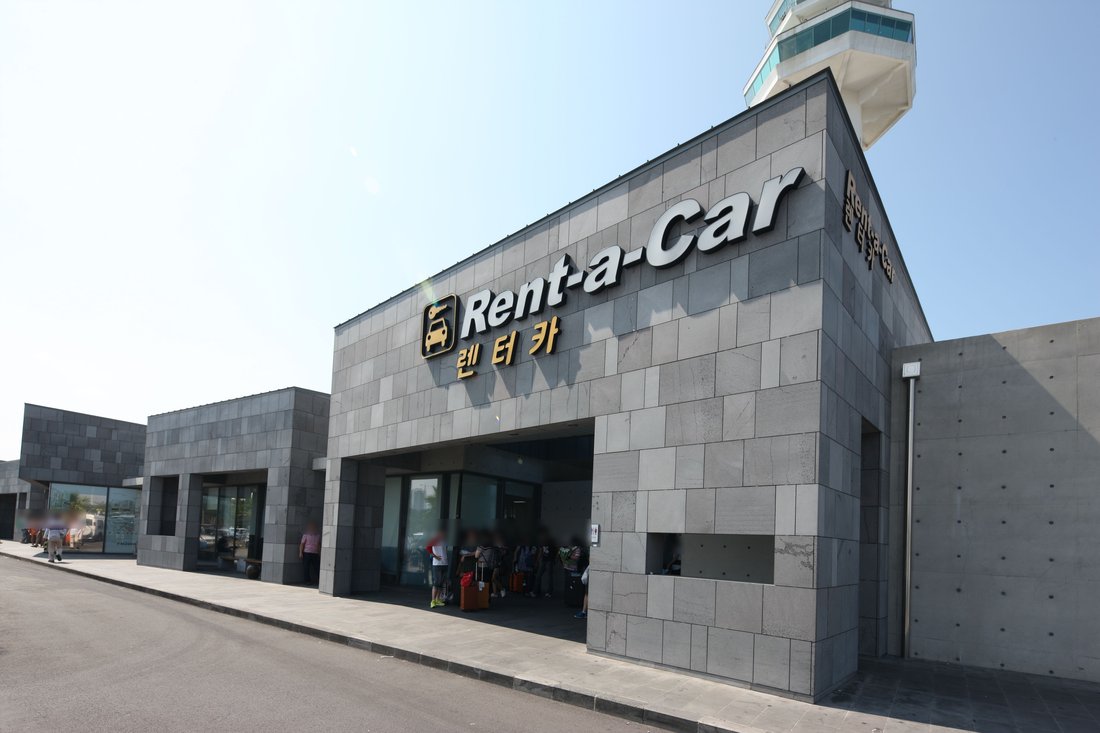
Not at the terminal: shuttle buses take you to each company’s lot. Walk out of Gate 5 on the 1st floor, cross the crosswalk, and follow the canopy signs to the Rent-a-car House (렌터카하우스), where each company has a numbered platform.
| Lotte | Desk near Gate 2 in the domestic arrivals hall. Shuttle from Rental Cars Shuttles, Zone 1, No. 4, 06:00–22:40 (every 7 minutes 07:30–19:30, every 10–15 minutes otherwise). Lot: Jeju Auto House, 92 Yonghae-ro, Jeju-si, 06:00–23:00 every day, +82-64-751-8000 |
|---|---|
| SK | Rent-a-car House, Zone 1, platform 2 |
Returning works the same way in reverse: drive back to the lot, then shuttle to the terminal, so leave extra time for the shuttle when you work back from your flight.
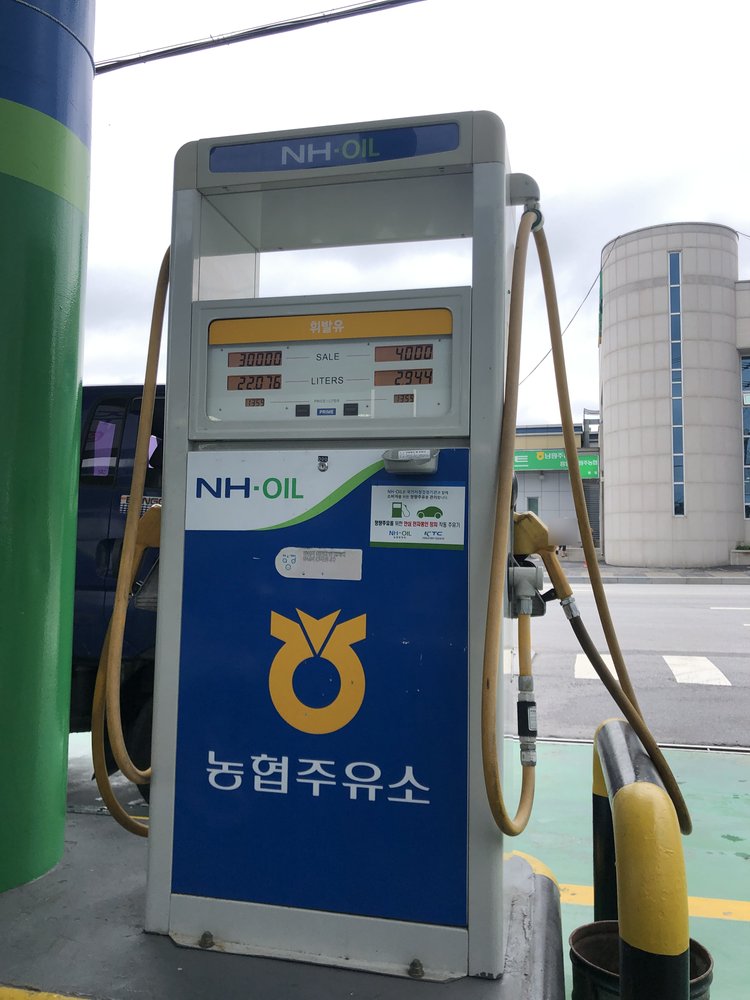
What fuel goes in, and do you return it full?
It depends on the company: Lotte is full-to-full, SK Jeju bills fuel by the kilometer. At pickup, ask two things: petrol, diesel or LPG; and is fuel full-to-full or billed by distance?
| Lotte | Full-to-full; any shortfall charged at the return branch’s rate; EVs needn’t come back charged; unlimited mileage |
|---|---|
| SK Jeju | Since April 1, 2025: fill up with the company fuel card in the car, then pay kilometers × rate at return. Filling up with your own card isn’t refunded |
| Wrong fuel | The company may refuse waiver cover |
How much are speeding and red-light fines, and who pays?
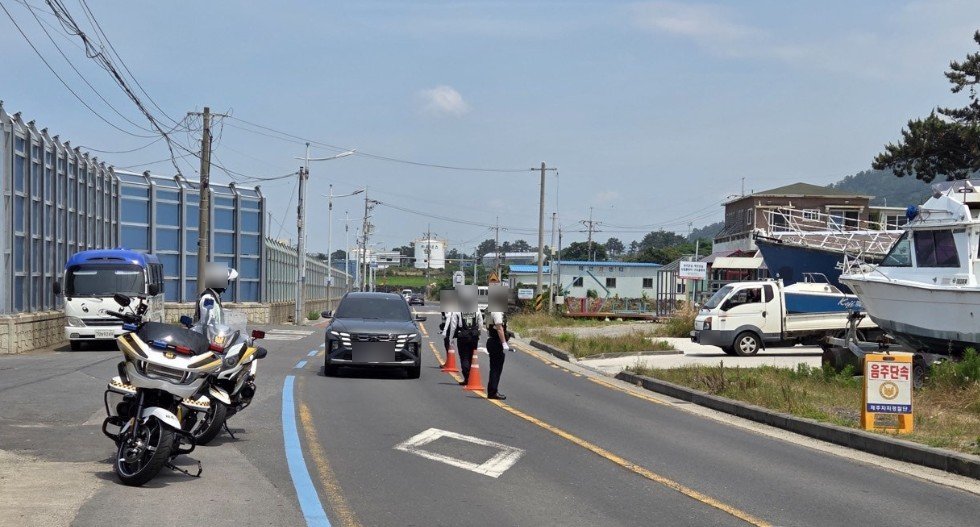
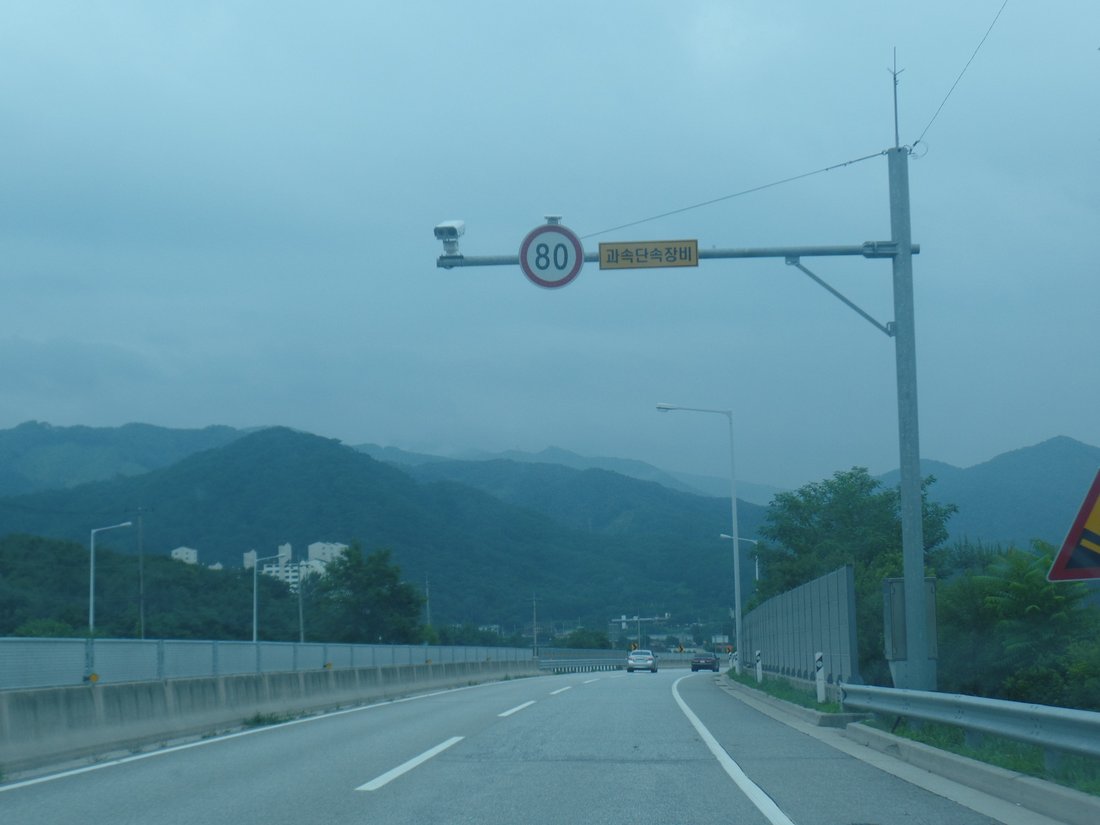
You do. Camera fines normally go to the vehicle’s owner, but not on a self-drive rental: Korean law sends them to the actual driver. These are the camera fines (과태료) for a passenger car:
| Violation | Normal road | Child protection zone, 08:00–20:00 |
|---|---|---|
| Up to 20 km/h over | ₩40,000 | ₩70,000 |
| 20–40 km/h over | ₩70,000 | ₩100,000 |
| 40–60 km/h over | ₩100,000 | ₩130,000 |
| More than 60 km/h over | ₩130,000 | ₩160,000 |
| Red light | ₩70,000 | ₩130,000 |
Under the standard rental terms, fines, penalties and parking fees from the rental period are yours even after you return the car. Lotte bills extra charges such as fines to your registered card after drop-off and may take payment details as a deposit for possible fines. The fine is the small problem, though: speeding 20 km/h or more over voids the waiver if you crash.
Can you turn right on red? What are the speed limits?
You can turn right on red, but only after stopping. Since January 22, 2023 you must stop at the line or crosswalk first, then turn without blocking traffic that has the green. If the right-turn arrow is red, you can’t turn at all.
| Urban roads | 50 km/h (60 where police designate) |
|---|---|
| Other roads | 60 km/h; 80 km/h with 2+ lanes each way |
| Wet road, snow under 2 cm | Limit minus 20% |
| Visibility under 100 m, ice, snow 2 cm+ | Limit minus 50% |
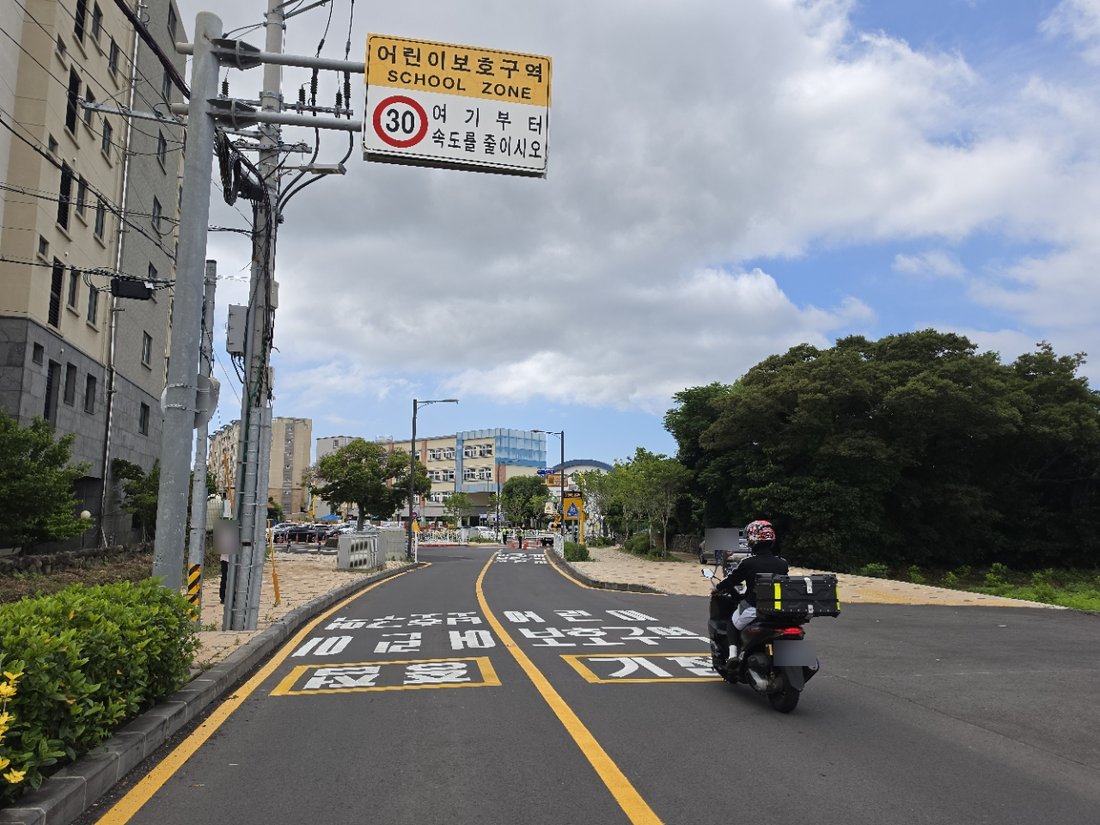
| Child protection zones | Can be 30 km/h; stop before any crosswalk without signals |
| Seat belts | Everyone; small children in a child seat |
These are the legal defaults; the signs on the road set the actual limit.
Child seats, snow and Udo
Child seats: children under 6 must use one. Lotte’s Jeju Auto House rents child seats and strollers; Korea’s child-seat rules for taxis and rentals are in kids’ transport in Korea.
Snow on the 1100 Road: whether you can drive up and where you can stop is in driving to 1100 Highland in snow. On ice or 2 cm+ of snow, the limit halves.
Udo: ask the rental company before you put the car on the ferry. Companies may exclude waiver cover on islands they restrict, so an accident there could be entirely yours. The ferry side is in taking a rental car to Udo.
Your situation
If you’re 30, have driven for 10 years, and it’s your first time in Korea
Take the full waiver and don’t think twice about the daily difference. If a partner will drive too, register both IDPs and licences at the counter. Spend the first hour around Jeju City getting used to stopping before right turns on red, then head east.
If you’re 23 and passed your test six months ago
Age is fine; experience is the problem. SK’s listing needs a year of driving for 9 seats or fewer, so it’s out this time. Lotte’s “tolerated for international guests” line sits under its Korean-licence condition, so email Lotte first and book only after a written yes.
If you land after 22:00
Lotte’s shuttle runs until 22:40 and Jeju Auto House closes at 23:00. Check that your company’s hours cover landing plus baggage; if not, pick up the next morning and take a bus or taxi the first night, as in late arrivals at Jeju Airport.
From booking to drop-off
- At home: get a Geneva or Vienna IDP from your official issuer; check its printed validity covers the rental.
- Book: check the eligibility box, choose the full waiver, note the cancellation deadline and how fuel is charged. Add a child seat if you need one.
- Land: out of Gate 5 on the 1st floor, follow the 렌터카하우스 signs, find your company’s platform. Lotte renters start at the desk by Gate 2.
- At the counter: passport, paper IDP, home licence, card. Register every driver. Ask which fuel and how it’s billed.
- Drive: IDP and licence on you at all times; stop before turning right on red; 30 km/h in school zones.
- Return: refuel or not as the contract says, drive to the lot, shuttle to the terminal.
Common mistakes
- Buying an “international driver’s license” online. Private-company permits aren’t accepted.
- Bringing a photo or PDF of the IDP. Paper original only.
- Leaving the home licence at home. SK requires it, and the IDP is tied to it.
- Not registering the second driver. An unregistered driver has no cover at all.
- Choosing the standard waiver and scraping a wall. Single-vehicle accidents aren’t in it.
- Assuming full cover means anything goes. Crashing 20 km/h+ over the limit or on a red light voids it.
- Filling up with your own card in an SK Jeju car. Fuel is billed by distance; your own fill-up isn’t refunded.
- Rolling through a right turn on red. Stop first.
FAQ
- Q1: Do I need an International Driving Permit to rent a car in Jeju?
- Yes. Korean law lets visitors drive on an IDP issued under the 1949 Geneva or 1968 Vienna Convention for one year from the day they enter Korea. Bring the paper original and your home licence.
- Q2: Can I use an IDP from AAA in Korea?
- Yes. The US is a party to the 1949 Geneva Convention, and Lotte Rent-a-Car names AAA and AATA as the accepted US issuers. Lotte doesn’t accept permits from private companies, such as the “international licences” sold online.
- Q3: How old do you have to be to rent a car in Jeju?
- Usually 21. Korean law sets no rental age; Lotte rents to drivers aged 21 to 79, and SK requires 21+ with a year’s driving experience for cars up to 9 seats.
- Q4: How much is full damage cover on a Jeju rental?
- Each company sets its price, but Jeju caps the full waiver at ₩70,000 a day. It removes the excess and the loss-of-use fee and covers single-vehicle accidents.
- Q5: How much is a speeding fine in Korea?
- For a passenger car caught on camera, ₩40,000 for up to 20 km/h over and ₩130,000 for more than 60 over; a red light is ₩70,000. Fines are higher in child protection zones from 08:00 to 20:00.
- Q6: Who pays a speed-camera fine on a rental car in Korea?
- The driver. Korean law sends camera fines on a self-drive rental to the actual driver, not the rental company, and fines stay yours after you return the car.
What I would do
For a first drive in Jeju, I’d book Lotte directly: its English site spells out the licence rule, it has a desk inside the airport, and foreign renters only get full cover, so there’s no tier to agonize over and cancellation is free up to 24 hours before. SK on KKday is worth a look if the price is better, as long as you take the stricter of its two cancellation lines as the real one. Whoever I booked with, I’d take the full waiver: at most ₩70,000 a day against an excess of up to ₩1,000,000 on the premium tier is an easy trade. And if driving on unfamiliar roads doesn’t appeal, I’d skip the car and start from the airport bus guide linked above.
Official sources
- Korea Legislation Research Institute: Road Traffic Act (English translation; Article 96 on international driving permits)
- UN Treaty Collection: 1949 Geneva Convention on Road Traffic, parties
- UN Treaty Collection: 1968 Vienna Convention on Road Traffic, parties
- Jeju rule on rental terms (Korean; waiver tiers, exclusions, discount cap)
- Lotte Rent-a-Car: rental information (English; age, documents, IDP)
- Lotte Rent-a-Car: Jeju Auto House (English; desk, shuttle, hours)
Prices and times follow the latest official announcement.
Read next
Verified
 Current
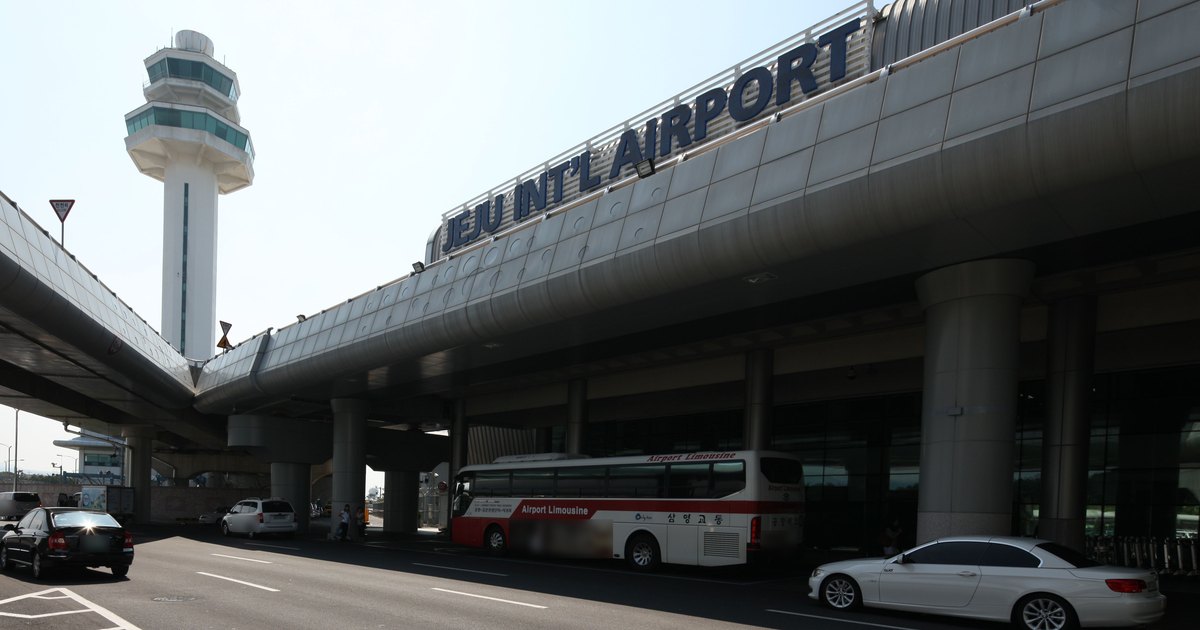
Jeju Airport to Seogwipo & Jungmun by Bus 2026: 600, 800
For Jungmun and Seogwipo KAL Hotel take the 600 or 601; for central Seogwipo the 800 or 801; for Seongsan Port the 111; the 182 express is cheapest. Last buses from the airport: 600 at 22:20, 800 at 20:15, 801 at 21:35, 800-1 at 23:00. None of the 800 family goes through Jungmun.
Verified
 Not announced
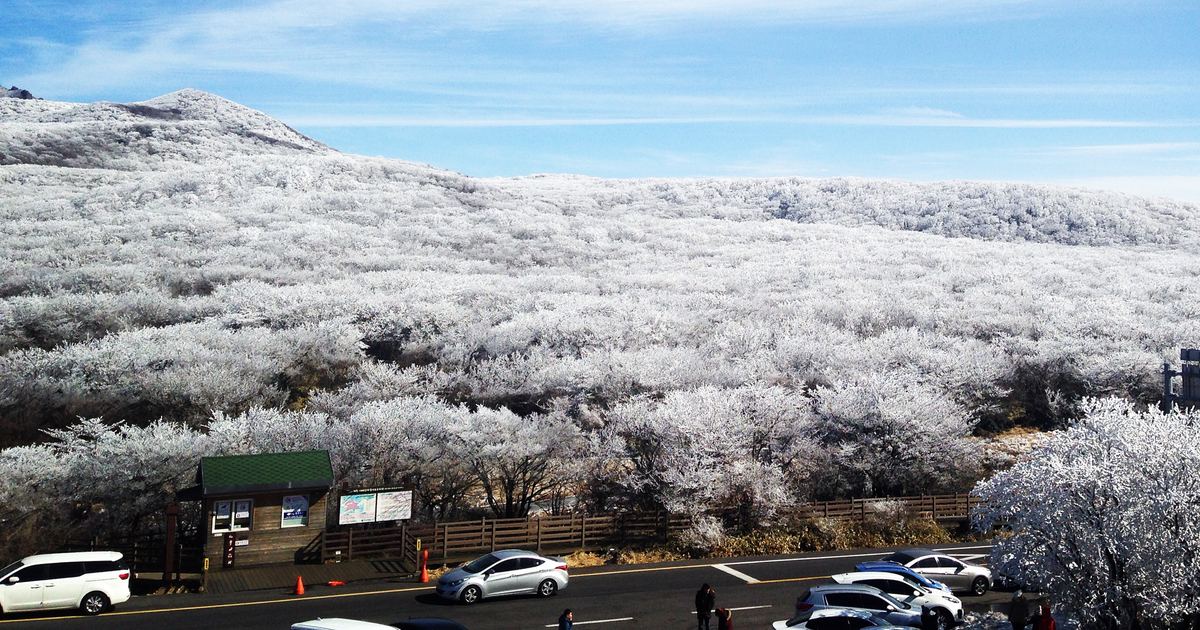
1100 Highland Jeju in Snow 2026–27: Buses and Road Closures
The 2026–27 winter snow buses (routes 1100 and 1100-1) have not been announced; last season ran December 13, 2025 to March 2, 2026. Route 240 passes 1100 Highland every day, but detours along Pyeonghwa-ro when the 1100 Road is closed to large vehicles. Check the Jeju police traffic control table (large-vehicle cell) and the Hallasan National Park 1100 Road camera before going.
Verified
 Current
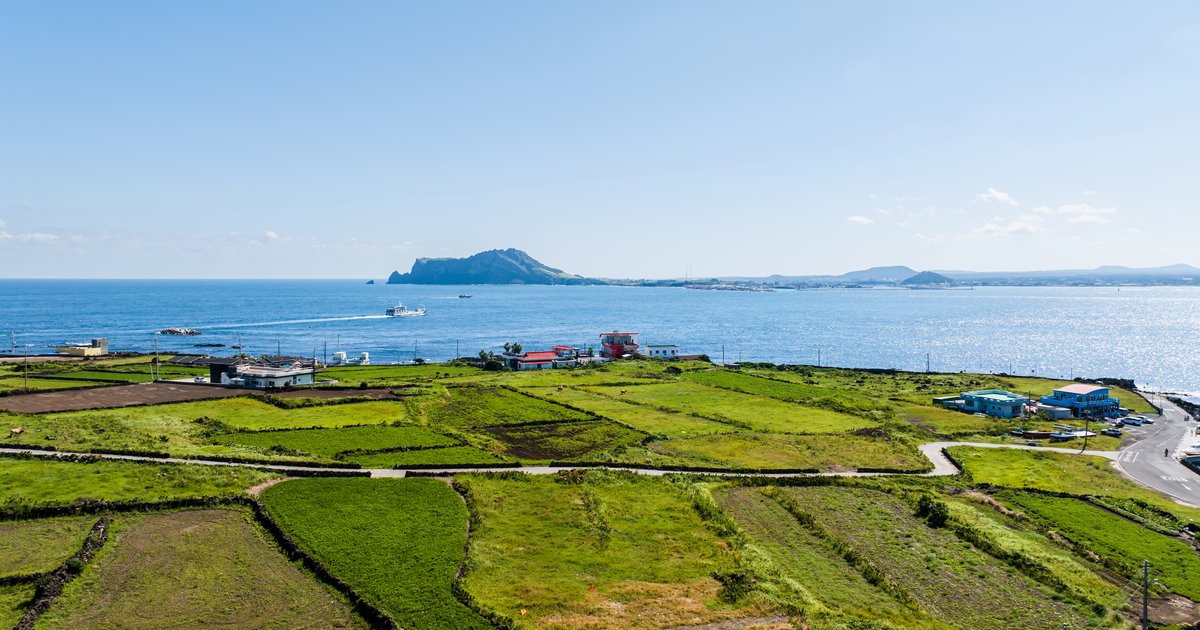
Udo Island Ferry 2026: Schedule, Last Ferry, Ticket Price
Ferries to Udo leave Seongsan Port about every 30 minutes from 08:00. The last boat is 17:00 November–February, 17:30 in March and October, 18:00 in April and September and 18:30 May–August, the same time in both directions. Bring your passport to buy a ticket and board. Rental cars not registered on Udo can’t go across until July 31, 2029, with exceptions; rental e-scooters and mopeds are banned on the island since March 19, 2026.