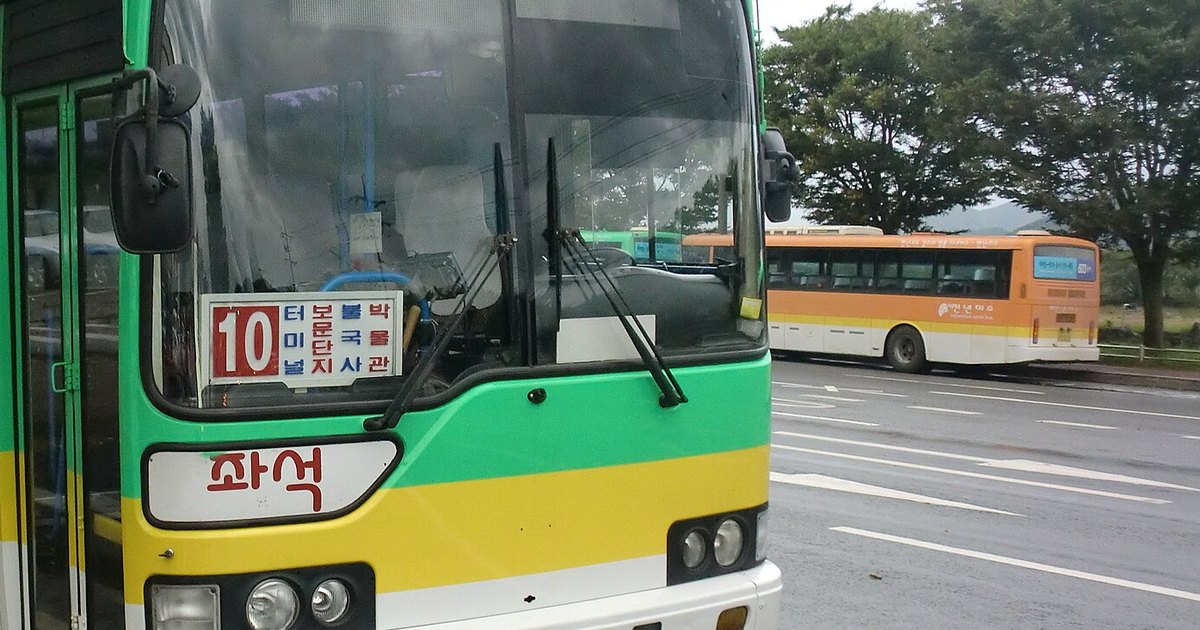
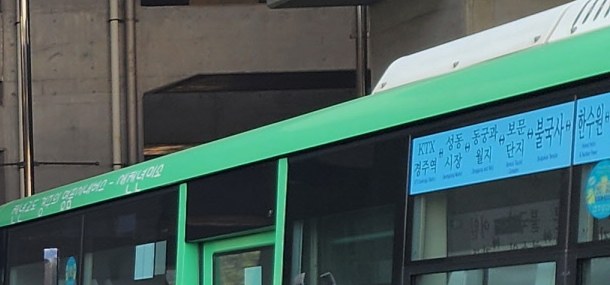
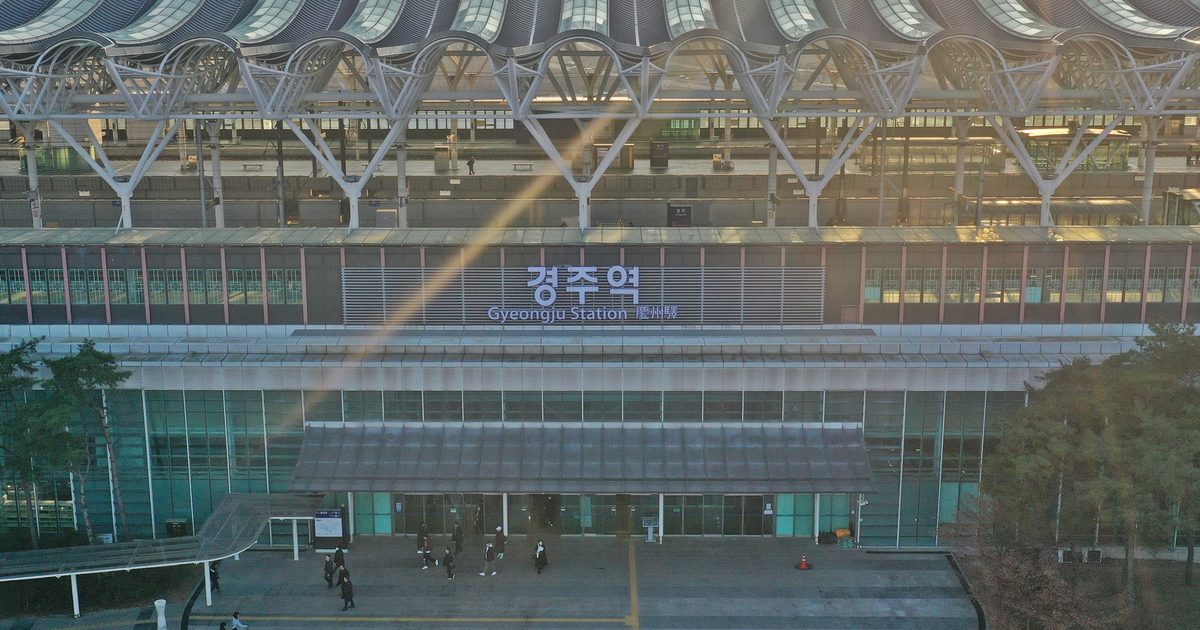
Buses 10 and 11, the two loop routes that link downtown Gyeongju with Bulguksa Temple, do not stop at Gyeongju’s KTX station at all. The KTX station (경주역, formerly Singyeongju) sits out in Geoncheon-eup, about 7 km from downtown; the old downtown Gyeongju Station has closed. Directions that say “take bus 10 or 11 from Gyeongju Station” refer to that old station. Off the KTX, take the 70 to the Intercity Bus Terminal and walk or change there, or take the 711 straight to Bulguksa. Every city bus costs the same, ₩1,500 in cash or ₩1,450 with a transit card, and T-money from Seoul or Busan works.
- KTX station to downtown: bus 70 (every 15–25 min), or 50 and 51.
- KTX station to Bulguksa: bus 711, roughly hourly; otherwise 70 to the terminal and change to the 11.
- Terminal to Bulguksa: go out on the 11, come back on the 10.
- Seokguram: bus 12 from Bulguksa; go up before 16:00.
- Fare: flat ₩1,500 cash, ₩1,450 by card, one free transfer within 30 minutes.
- Last buses from Bulguksa: 21:40 (10) and 22:05 (11) toward town.
Contents
- Who this is for
- Which Gyeongju Station?
- Buses from the KTX station
- From the bus terminal to the sights
- Bus 10 or 11 to Bulguksa
- Woljeong 1, 2 and 3
- Seokguram by bus 12
- Fares and transit cards
- Last buses and getting back at night
- Bomun Lake
- Luggage
- When a taxi is worth it
- Private car or day tour
- Your situation
- Common mistakes
- What I would do
- FAQ
- If it were me
- Official sources
Who this is for
Travelers seeing Gyeongju by city bus, especially those arriving by KTX.
- You’re arriving at Gyeongju Station by KTX and need the right bus.
- You want Daereungwon, Donggung Palace, Bulguksa and Seokguram without a car.
- You plan to stay for the night view at Donggung Palace and Wolji Pond and need a way back.
- You’re staying at Bomun Lake.
You can skip it if:
- You’ve booked a day tour from Busan; transport is included.
- You’re still deciding how to get from Busan to Gyeongju. Start with Busan to Gyeongju by KTX or bus.
Which “Gyeongju Station” am I at?
If you came by train, you’re at the KTX station in Geoncheon-eup, out of town. Buses 10 and 11 don’t stop there.
| KTX station | Gyeongju Station (경주역), 80 Gyeongjuyeok-ro, Geoncheon-eup |
|---|---|
| Bus stop name there | 경주역(KTX) |
| Old name | Singyeongju (신경주), renamed Gyeongju in December 2023; Seokguram’s site still uses the old name |
| Old downtown Gyeongju Station | Closed |
| KTX station to the bus terminal | About 7.2 km in a straight line |
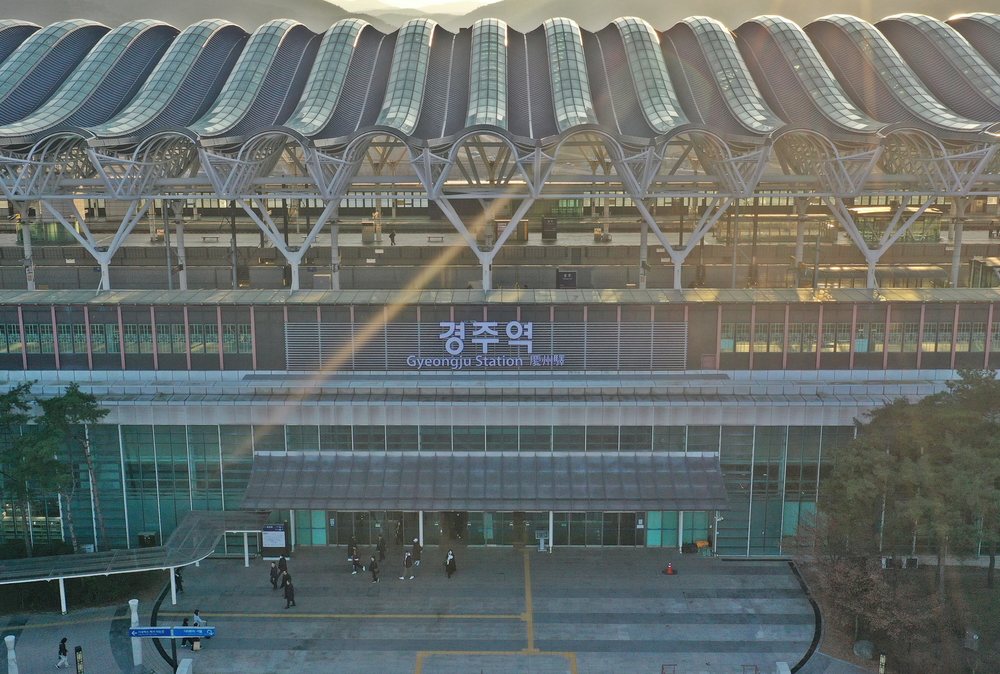
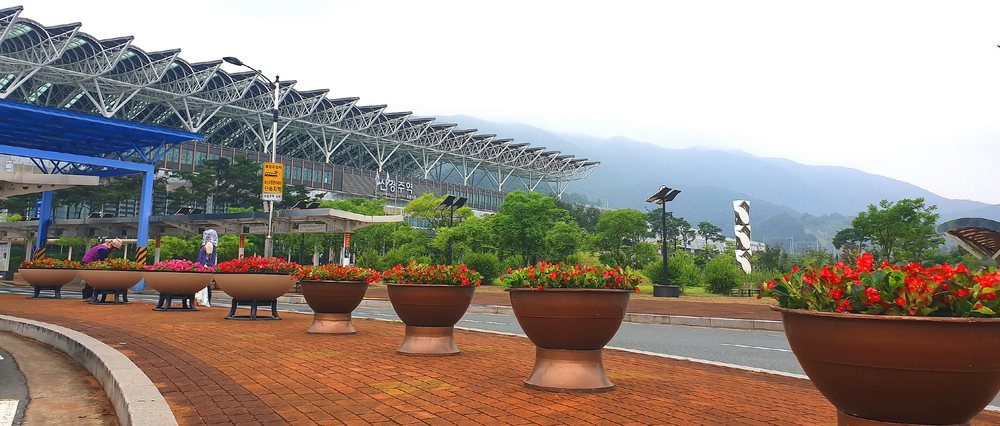
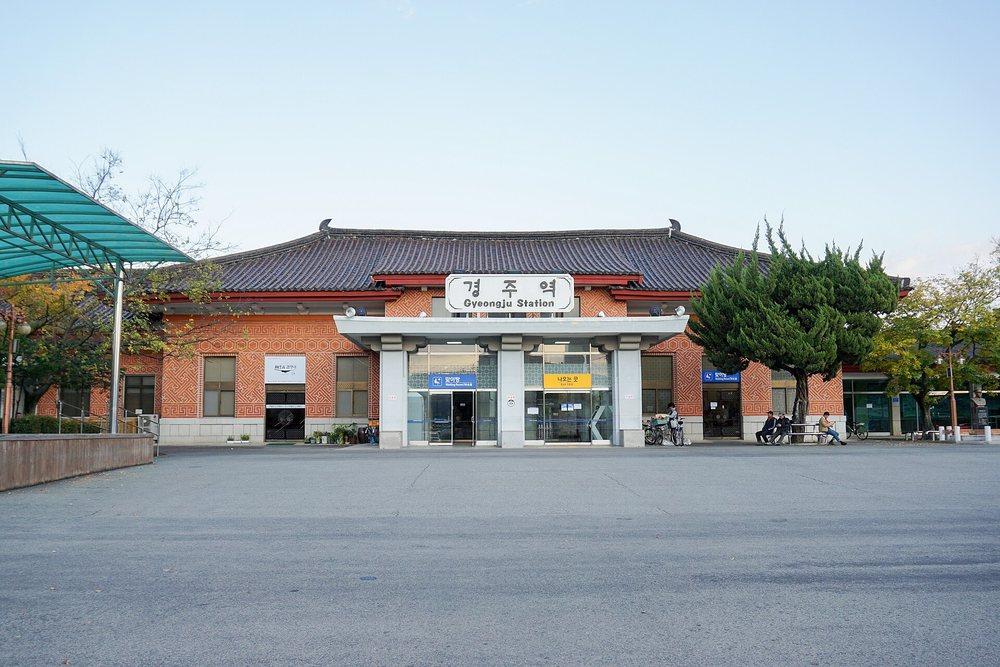
Which bus do I take from Gyeongju KTX Station?
For downtown, the 70: it runs most often. For Bulguksa, the 711 is direct but roughly hourly; if it isn’t due, take the 70 to the terminal and change to the 11.
| Bus | First–last from the station | Every | Goes to |
|---|---|---|---|
| 70 | 05:55–22:55 | 15–25 min (77 a day) | Bus terminal, Jungang Market |
| 50 | 07:30–22:55 | 20–30 min | Bus terminal, Jungang Market |
| 51 | 06:50–23:00 | 20–30 min | Bus terminal, Jungang Market |
| 60, 61 | 06:20–19:40 / 06:35–19:20 | 50–120 min (10 a day each) | Cheomseongdae / Cheonmachong stop direct (runs marked 천마총미경유 skip it) |
| 710 | 06:30–20:45 | 50–60 min (12 a day) | Terminal, Cheonmachong back gate, Donggung Palace, Bunhwangsa, Bomun |
| 711 | 07:05–20:20 | 60–70 min (10 a day) | Terminal, Donggung Palace, Gyeongju National Museum, Tongiljeon, Bulguksa |
| 700 | 07:50–14:50 | 4 a day | Via Bomun to Bulguksa, then on to Gampo |
| 1150 (limited stop) | 08:00–17:50 | 3 a day | Terminal, Hilton, Gyeongju World, Bulguksa, Yangnam |
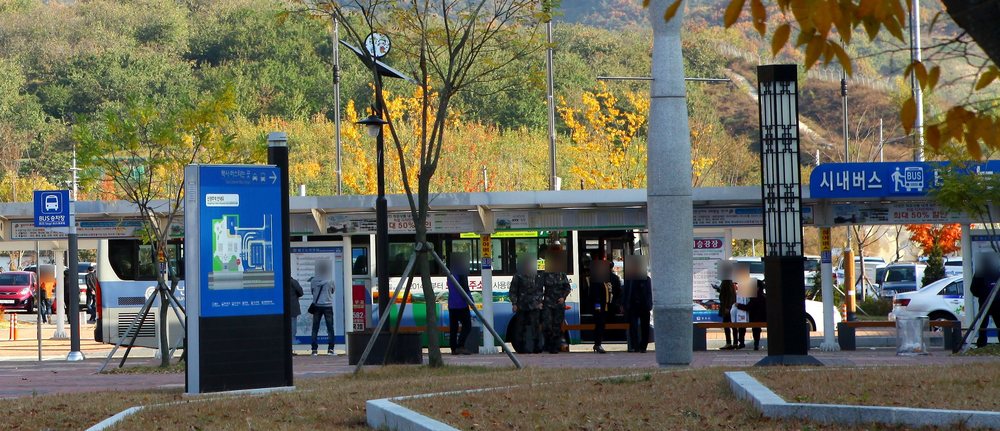
How do I get from the bus terminal to Daereungwon and Donggung Palace?
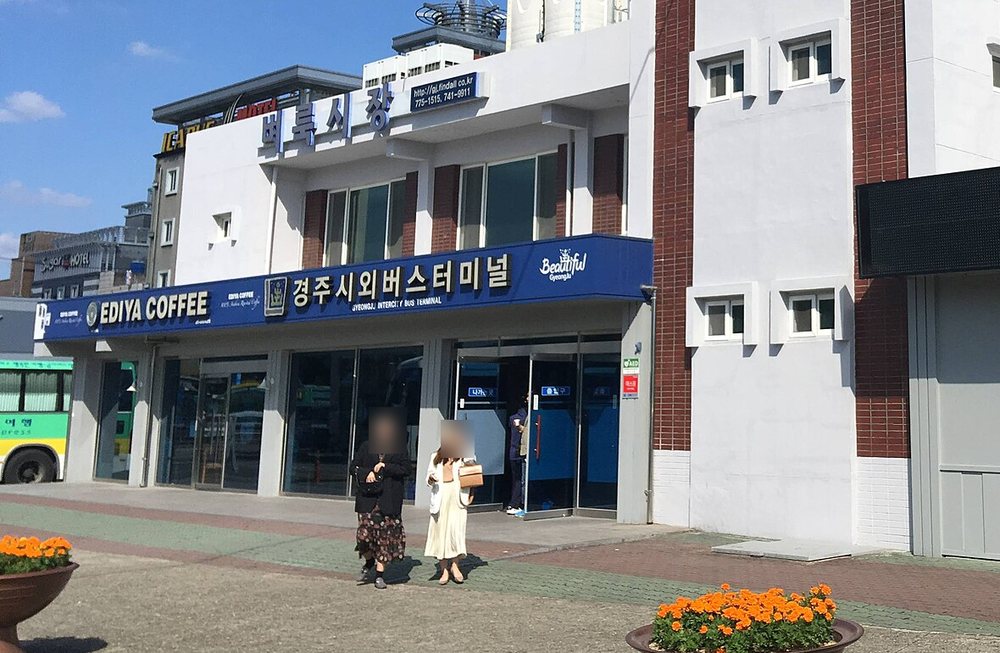
Walk to Daereungwon, about 1.1 km. For Donggung Palace and Wolji Pond, take the 11, 710, 711 or Woljeong 2. The stop is called 고속버스.시외버스터미널 on both sides of the road; for Daereungwon and Bulguksa, use the side with stop ID 352001289.
| To | Bus | Get off at |
|---|---|---|
| Daereungwon, Cheomseongdae Observatory | 10, 11, 710, 711 | 월성동행정복지센터 (Wolseong-dong Community Center), then 5–7 min on foot |
| Donggung Palace and Wolji Pond | 11, 710, 711, Woljeong 2 (bus 10 doesn’t pass it on the way out) | 동궁과월지, or walk 8–10 min from 월성동행정복지센터 |
| Bulguksa Temple | 10, 11, 711, 700, 1150 | 불국사 |
| Bomun Lake | 10, 710, 700 | 경상북도 문화관광공사 |
Daereungwon itself is free; Cheonmachong, the tomb you can walk into inside it, is ₩3,000. Donggung Palace and Wolji Pond is ₩3,000. Cheomseongdae, Bulguksa and Seokguram are free.
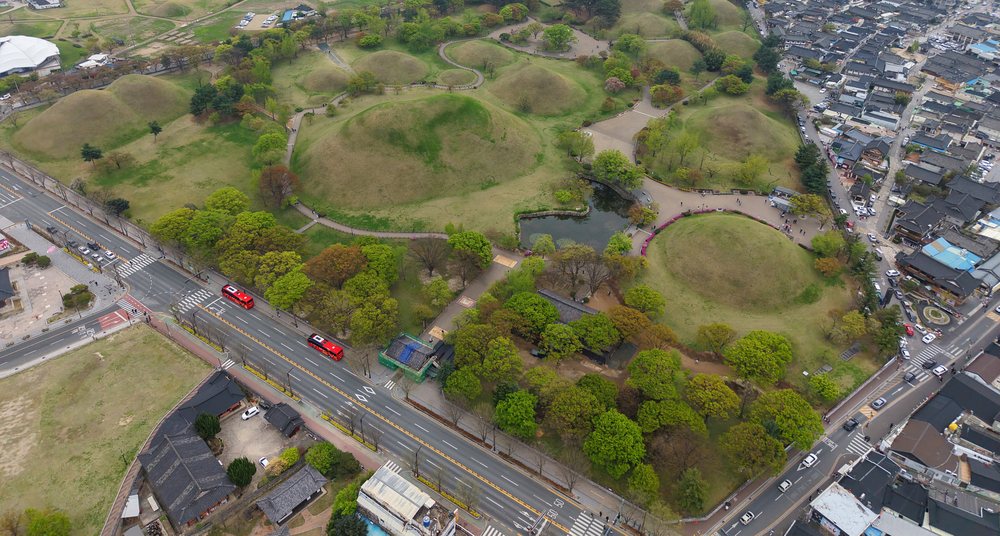
Bus 10 or 11: which goes to Bulguksa faster?
Go out on the 11, come back on the 10. Both are the same loop in opposite directions, starting and ending at the Hwangnidan-gil public parking lot. The 11 reaches Bulguksa by the shorter side; the 10 goes round via Bomun first.
| Bus 10 | Bus 11 | |
|---|---|---|
| Order from the terminal | Wolseong-dong, Bunhwangsa, Bomun, Gyeongju World, Bulguksa, Tongiljeon, Museum, Donggung Palace, back to the terminal | Wolseong-dong, Donggung Palace, Museum, Tongiljeon, Bulguksa, Gyeongju World, Bomun, Bunhwangsa, back to the terminal |
| Terminal to Bulguksa | 33 stops | 29 stops |
| First–last from the parking lot | 06:00–21:10 | 06:15–21:30 |
| Last from Bulguksa toward town | 21:40 | 22:05 |
| Frequency | Every 20–50 min, 28 a day | Every 20–40 min, 28 a day |
From the terminal to Bulguksa on the 11, allow at least about 40 minutes, more in traffic. Some 11 runs start from Yonggang (marked 용강출발 or 정보고경유) and skip the terminal, so at other stops check the sign. The city’s live bus system no longer has a 10-1.
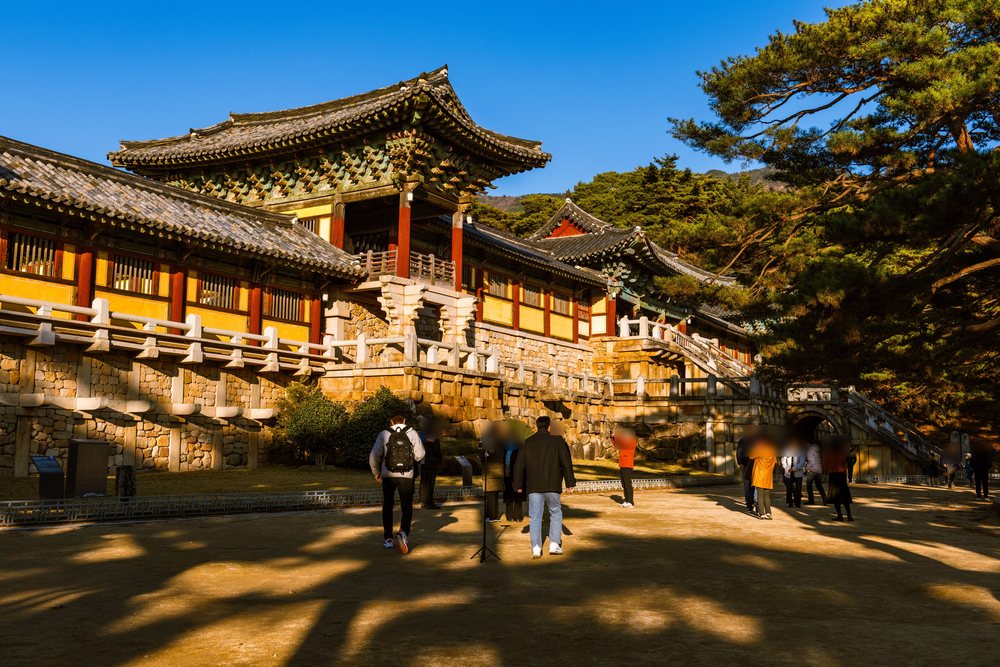
What are the Woljeong 1, 2 and 3 buses?
Three loop routes added in 2026 around Gyochon, the museum and Donggung Palace, at the normal city bus fare. All start at the Hwangnidan-gil public parking lot. The route names on the bus are in Korean: 월정 (Woljeong).
| Route | First–last | Per day | Loop |
|---|---|---|---|
| Woljeong 1 | 08:30–22:00 | 13 | Gyochon, Woljeonggyo Bridge, Museum, Donggung Palace, Wolseong-dong, Seongdong Market, Jungang Market, bus terminal |
| Woljeong 2 | 08:10–21:30 | 13 | Bus terminal, Jungang Market, Wolseong-dong, Donggung Palace, Museum, Woljeonggyo, Gyochon |
| Woljeong 3 | 10:00–20:00 | 20 | Gyochon, Woljeonggyo, Museum, Donggung Palace, Cheomseongdae, Cheonmachong (not the terminal) |
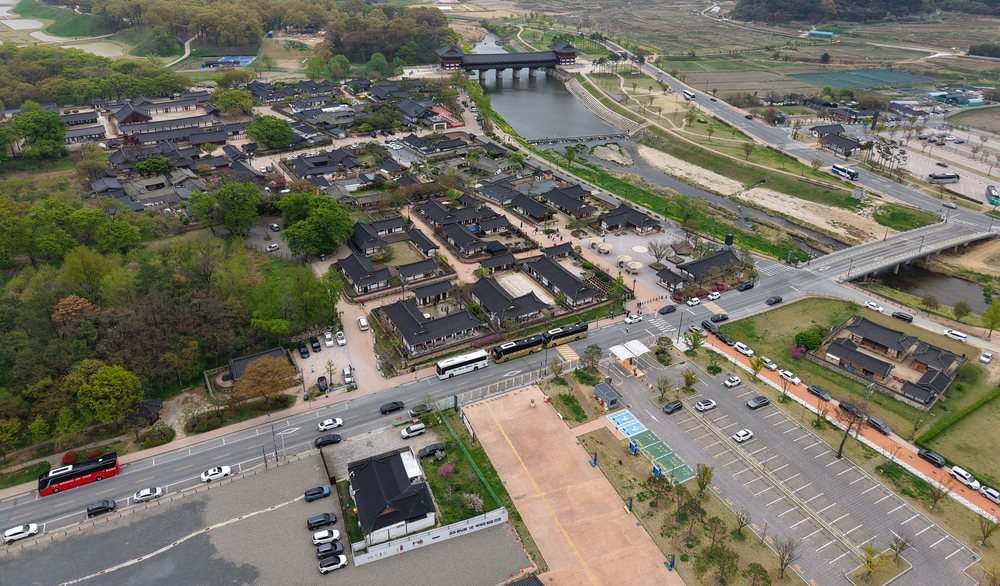
How do I get up to Seokguram Grotto, and by when?
Bus 12 from Bulguksa, and go up before 16:00. It’s one vehicle making 10 trips a day, and the sources disagree on the last run up, so don’t plan around a fixed last bus. Do Seokguram first and Bulguksa after.
| Route | Bus 12: 불국사 → 불국사매표소 → 석굴암주차장 |
|---|---|
| First up from Bulguksa | 08:40 |
| Down | Hourly on the hour, per Seokguram’s site |
| Parking lot to the grotto | About 10 min on foot |
| Opens | 09:00 daily |
| Last entry (Bulguksa and Seokguram) | Nov–Jan 17:00; Feb and Oct 17:30; Mar–Sep 18:00 |
| Weather | May close under heavy rain, typhoon or heavy snow warnings |
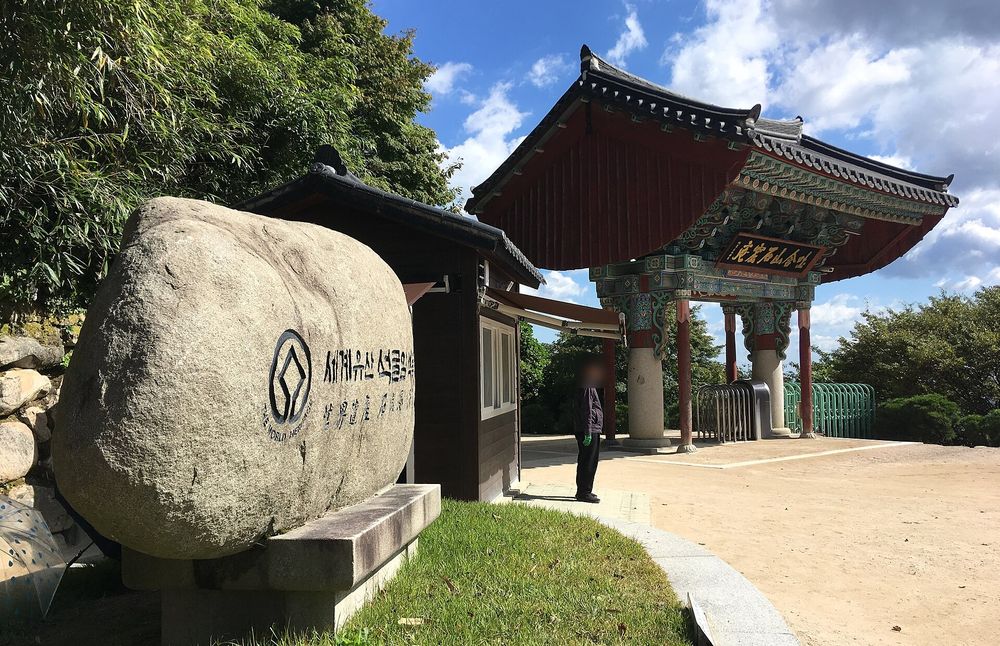
How much is the bus, and can I use T-money?
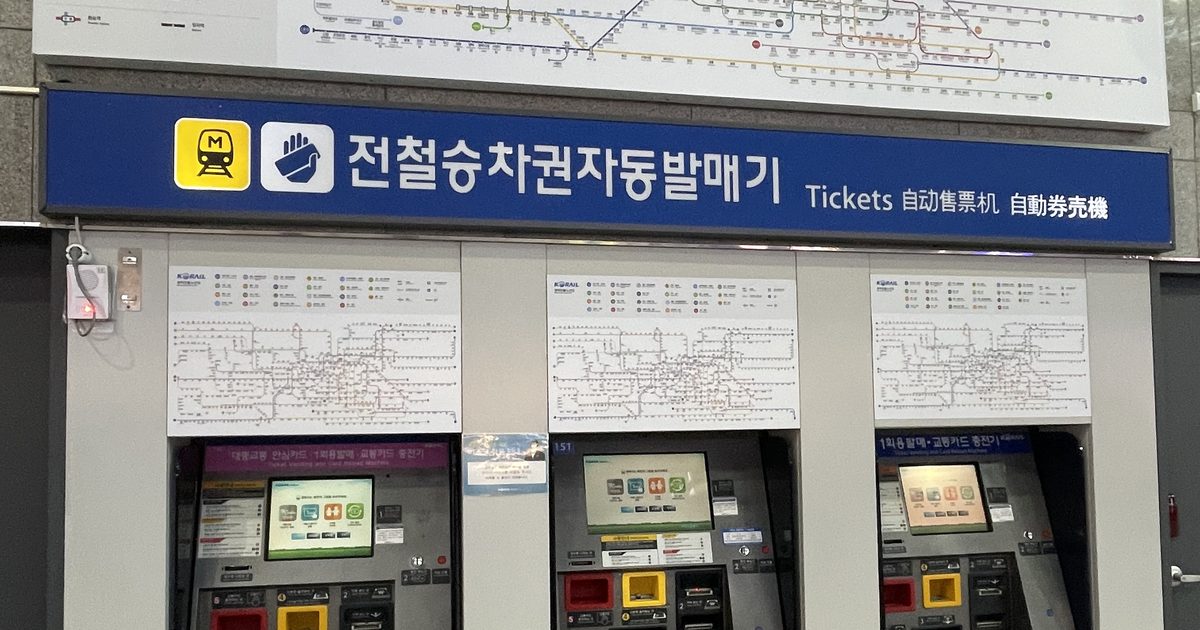
A flat fare citywide: ₩1,500 in cash, ₩1,450 with a transit card. T-money bought in Seoul or Busan works. Since July 1, 2025, Bulguksa and Bomun cost the same as a downtown hop.
| Adult | Cash ₩1,500; card ₩1,450 |
|---|---|
| Youth / child, cash | ₩1,200 / ₩800 |
| Youth / child, card | Free, but only on a child or youth transit card registered with the child’s birth date (ages 6–18) |
| Cards accepted | T-money, Cashbee, MyBi and other Korean transit cards |
| Transfer | Tap off, board the next bus within 30 min: 1 free transfer, any bus type, not the same route; cash doesn’t count |
| One card, several people | Allowed; tell the driver how many before you tap. Only 1 person gets the transfer discount |
Don’t assume a visiting child rides free: the free fare depends on the card being registered as a child or youth card, so carry coins as a fallback. With four people on one card, three pay again at every transfer; I’d give everyone their own card. Buying and topping up T-money is covered in how to top up T-money.
When do the buses stop? How do I get back after the Donggung Palace night view?
From Bulguksa toward town, the last buses are 21:40 (10) and 22:05 (11). Donggung Palace stops selling tickets at 21:30, and the buses back to the terminal leave from the Wolseong-dong-bound side of the 동궁과월지 stop.
| Direction | Last bus |
|---|---|
| Bulguksa → town, bus 10 | 21:40 |
| Bulguksa → town, bus 11 | 22:05 |
| Woljeong 1 from the parking lot | 22:00 |
| Bomun (Gyeongju World) → KTX station, 710 | 21:25 |
| Bulguk → KTX station, 711 | 21:20 |
| KTX station → town | 51 at 23:00; 50 and 70 at 22:55 |
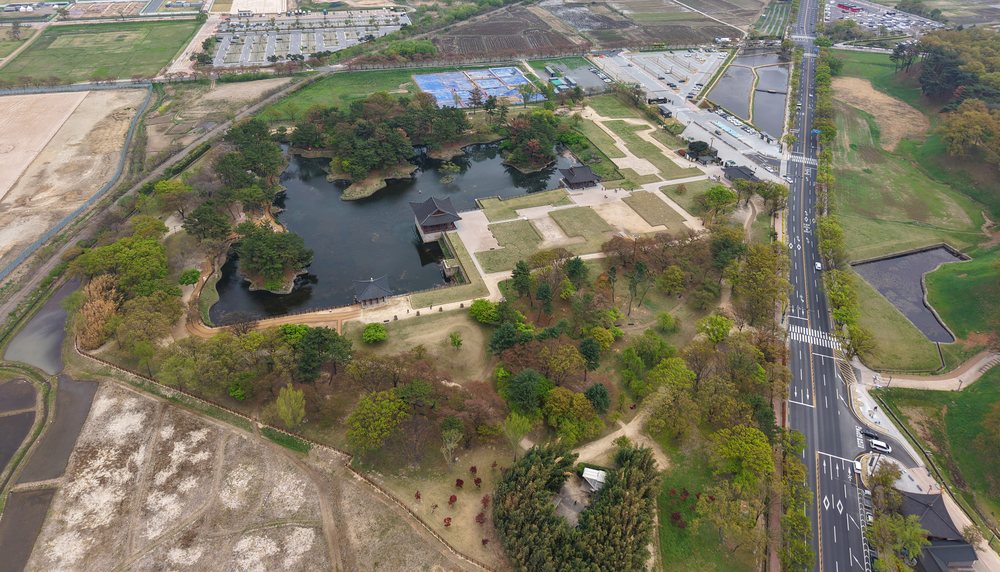
Donggung Palace and Wolji Pond is open 09:00–22:00, with tickets and entry ending at 21:30. To get back to the terminal, wait at the 동궁과월지 stop on the Wolseong-dong-bound side (stop ID 352001242) for the return runs of the 10, 710 and 711, or Woljeong 1; the stop with the same name across the road goes the other way. I’d go in early and leave by 21:30, or just call a taxi.
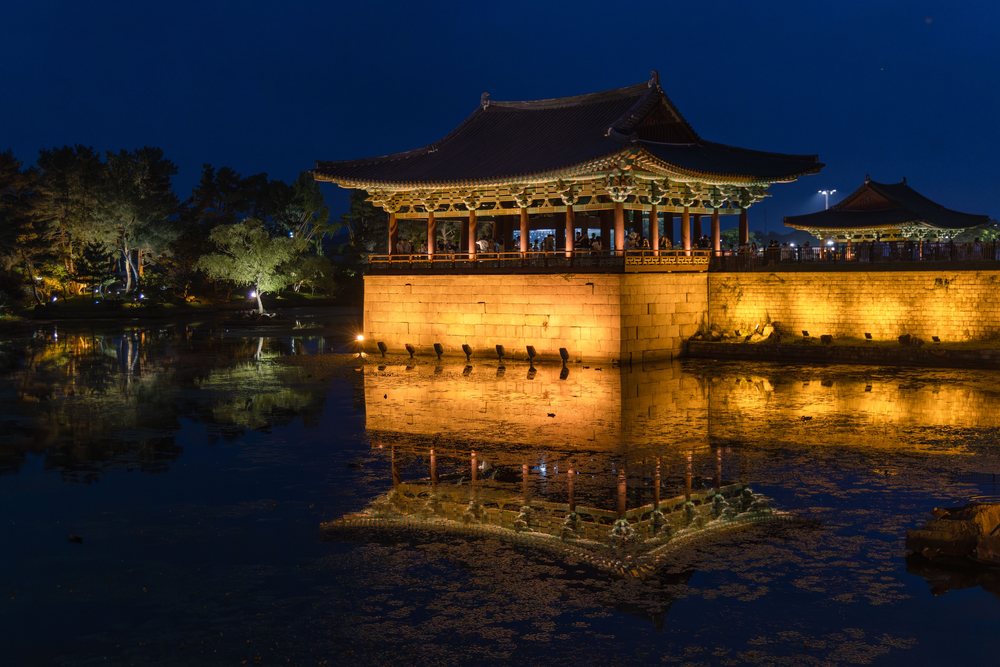
How do I get to Bomun Lake?
From the bus terminal, take the 10, 710 or 700; from the KTX station, the 710 or 700. The 11 also gets there, but only after going round via Bulguksa.
| Get off at | 경상북도 문화관광공사; the big hotels have their own stops |
|---|---|
| Inside the resort | Free autonomous shuttle, June 25, 2026 to February 20, 2027, Tuesday to Sunday, 7 loops a day (HICO, Donggungwon, Rawon, Gyeongju World) |
In spring, check the date of the Gyeongju Cherry Blossom Marathon before booking a Bomun hotel; the course runs through the area.
Where can I leave luggage in Gyeongju?
At the KTX station (lockers or ZIMCARRY), the bus terminal, a storage shop next to the terminal, or free at Gyeongju National Museum.
| Where | Price and hours |
|---|---|
| KTX station lockers | ₩1,000–2,500 for 2 hours, extra after |
| ZIMCARRY at the KTX station | Suitcase ₩5,000, bag ₩3,000; delivery available |
| Bus terminal storage | 06:00–21:00, ₩2,000–5,000 |
| 짐보따리, 693 Taejong-ro (next to the terminal) | Storage 09:00–20:00, ₩3,000–5,000; delivery ₩10,000–16,000, plus ₩2,000 to Bomun, Bulguk or the KTX station |
| Gyeongju National Museum | Free |
The terminal storage closes at 21:00, before Donggung Palace stops selling tickets. If you’ll stay for the night view, collect your bags first or use a place that delivers.
When is a taxi worth it in Gyeongju?
For two or more people with suitcases between the KTX station and town, and for any leg where a bus runs only once an hour and you’re short on time.
| Base fare | ₩4,500 for the first 1.7 km (from February 1, 2026) |
|---|---|
| Meter | ₩100 per 128 m; ₩100 per 30 seconds below 15 km/h |
| Late-night surcharge | 23:00–04:00 |
| Rough cost, distance only | 10 km about ₩11,000; 15 km about ₩14,900; 20 km about ₩18,800 |
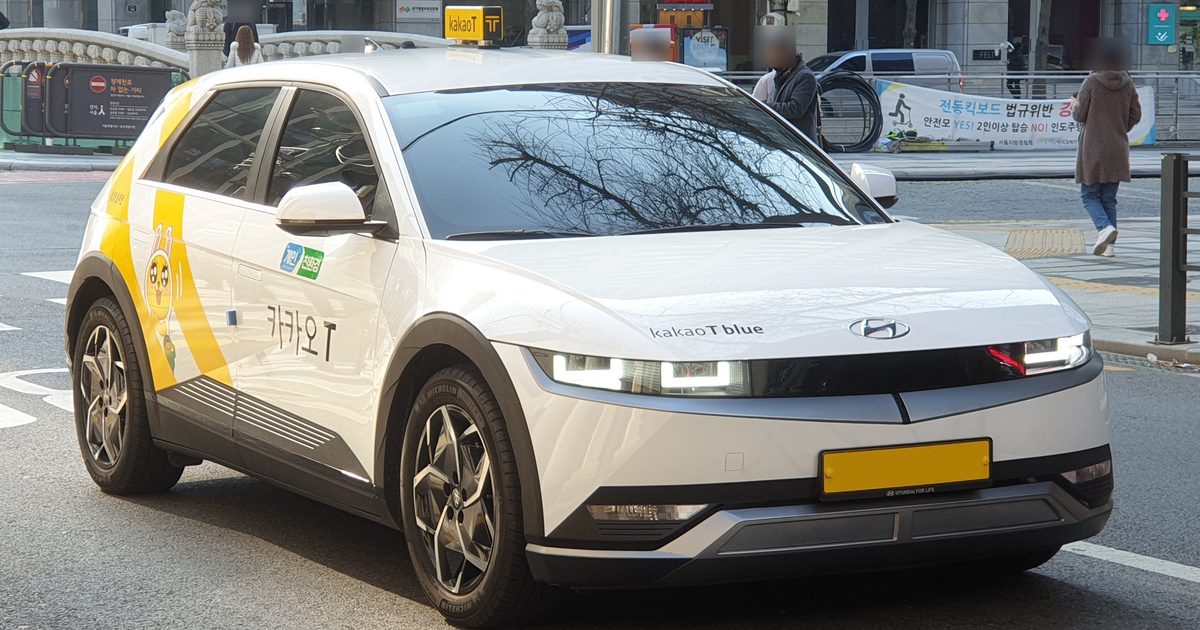
| Booking | Kakao T works; Gyeongju has 1,065 taxis and its own 경주콜 |
Four people from the KTX station to town pay ₩5,800 by bus card against roughly ₩11,000 by taxi, and the taxi comes with no wait and room for bags. The other times I’d take one: getting down from Bulguksa to make a train, beating Seokguram’s last entry, and after the night view. Paying with a foreign card is covered in Kakao T with a foreign card, and fares across Korea in Korean taxi fares.
Can I skip the buses with a private car or a day tour?
Yes. A private taxi tour from Gyeongju suits a group of four doing Bulguksa, Seokguram and Donggung Palace in a day; a day tour from Busan suits one or two people coming for the day. Seokguram is only in some packages, so check the package and date before you book.
- Gyeongju private taxi tour on KKday: sedan for 1–4 or van for 1–6, free pickup at the KTX station or a Gyeongju hotel, and a 9-hour package from Busan. The listing warns that drivers may not be fluent in foreign languages; an English-speaking driver costs extra.
- Gyeongju private taxi tour on Klook: pick “Gyeongju City Tour” or the night tour; sedan, van or minibus for 3 to 9 hours. Same note on English-speaking drivers.
- Gyeongju UNESCO World Heritage day tour from Busan on Klook: from October to March, Seokguram is in package B-2 only.
Your situation
If you arrive by KTX and want Bulguksa and Seokguram the same day
Leave bags at the KTX station. If a 711 is due, ride it straight to Bulguksa; if not, take the 70 to the terminal and the 11 from there. At Bulguksa, take bus 12 up to Seokguram first, then walk Bulguksa on the way back down. The last 711 back to the KTX station leaves the Bulguk area at 21:20; with a train to catch earlier, take a taxi.
If you’re staying near the bus terminal and want the Donggung Palace night view
Spend the day at Daereungwon and Cheomseongdae on foot, then walk or take the 11, 710 or 711 to Donggung Palace in the early evening. Go in early, and afterwards wait on the Wolseong-dong-bound side for the 10 or Woljeong 1; if nothing comes, it’s a short taxi ride.
If you’re staying at Bomun Lake
From the KTX station the 710 goes direct, but only 12 times a day, every 50–60 minutes; if the times don’t fit, take a taxi. The next day, take the 11 or 710 into town (the 11 doesn’t go via Bulguksa in that direction), or the 10 to Bulguksa.
Common mistakes
- Waiting for the 10 or 11 at the KTX station. Neither stops there.
- Following directions written for the old downtown station. It’s closed; trains stop out of town.
- Taking the 10 from the terminal to Donggung Palace. It doesn’t pass on the way out; take the 11.
- Waiting for a 10-1. The city’s live system only has the 10.
- Reaching Bulguksa mid-afternoon and then heading to Seokguram. Bus 12 runs about hourly, and winter last entry is 17:00.
- Not tapping off. Without the tap-off, there’s no free transfer within 30 minutes.
- Four people sharing one card across transfers. Three of them pay again each time.
- Standing at the stop with the same name on the wrong side. At the terminal and at Donggung Palace, the two sides go opposite ways.
- Leaving bags at the terminal before the night view. Storage there closes at 21:00.
What I would do
Two days and one night, staying near the bus terminal, where the 70, 50 and 51 to the KTX station and the 10, 11, 710 and 711 to the sights all meet.
| When | Plan |
|---|---|
| Day 1, afternoon | KTX to Gyeongju Station, bus 70 to the terminal, bags to the hotel |
| Day 1, late afternoon | Walk to Daereungwon, Cheonmachong and Cheomseongdae |
| Day 1, evening | Donggung Palace and Wolji Pond; back on the 10 or Woljeong 1 |
| Day 2, morning | Bus 11 to Bulguksa, bus 12 up to Seokguram, back down to Bulguksa |
| Day 2, afternoon | Bus 10 back to town past the National Museum, collect bags, bus 70 to the KTX station |
I’d leave Bomun out entirely on a two-day trip. One thread through the main sights keeps the two days unhurried.
FAQ
- Q1: Does bus 10 or 11 stop at Gyeongju KTX Station?
- No. Neither route stops at the KTX station. From there, take the 70, 50 or 51 to the Intercity Bus Terminal and change, or take the 711 straight to Bulguksa.
- Q2: How do I get from Gyeongju Station to downtown Gyeongju?
- Take bus 70, which runs every 15–25 minutes from 05:55 to 22:55. It goes to the bus terminal and Jungang Market; the 50 and 51 cover the same stretch less often.
- Q3: Which bus goes to Bulguksa Temple?
- From the KTX station, the 711 goes direct, about once an hour. From the bus terminal, take the 11 out and the 10 back. The 11 reaches Bulguksa by the shorter side of the loop.
- Q4: How do I get to Seokguram Grotto by bus?
- Take bus 12 from Bulguksa; it runs 10 times a day with one vehicle. Head up before 16:00, since last entry is 17:00 from November to January.
- Q5: How much is the bus in Gyeongju?
- ₩1,500 in cash or ₩1,450 with a transit card, for adults, anywhere in the city. Bulguksa and Bomun cost the same as downtown.
- Q6: Can I use T-money on Gyeongju buses?
- Yes. T-money, Cashbee and other Korean transit cards work, including one bought in Seoul or Busan. Tap off when you get off to get the free transfer.
- Q7: What time is the last bus from Bulguksa?
- Toward town, 21:40 on bus 10 and 22:05 on bus 11. Toward the KTX station, the last 711 from the Bulguk area leaves at 21:20.
If it were me
Traveling light as one or two people, I’d do it all by bus, one T-money each, starting with the 70 off the KTX. Four people with suitcases, I’d take a taxi for the two legs to and from the KTX station and use buses in between, and on the Bulguksa and Seokguram day I’d consider a private taxi tour. With only one day and coming from Busan, I wouldn’t squeeze in Seokguram; Bulguksa plus downtown is enough. With kids, I’d carry coins, because the free fare depends on a registered card.
Official sources
- Gyeongju transport information center: bus fares and transfers (Korean)
- Gyeongju LIVE BUS (Korean; routes and stops)
- Seokguram: getting there (Korean)
- Bulguksa: opening hours (Korean)
- Gyeongju City: admission fees (Korean)
- Gyeongju City: taxi fare notice, February 2026 (Korean)
Prices and times follow the latest official announcement.
Read next
Verified
 Current
Busan to Gyeongju 2026: KTX or Bus, Times, Fares, Last Train
Every train stops at Gyeongju Station in Geoncheon-eup, out of town; only the bus goes downtown. The KTX from Busan Station takes 28–36 minutes, ₩10,100 in standard class. The intercity bus from Busan Dongbu Bus Terminal at Nopo takes about 1 hour, ₩8,400 for adults, 49 a day. The Donghae Line metro doesn’t reach Gyeongju.
Verified
 Current
Can You Top Up T-money With a Credit Card? 2026 Answer
Physical T-money cards top up with cash only. Since March 17, 2026, new machines on Seoul Lines 1–8 accept foreign cards, but only for the Climate Card and single tickets. On iPhone, MobileTmoney tops up via Apple Pay with Mastercard, Amex, UnionPay or JCB, not Visa; WOWPASS fills its T-money balance in the app.
Verified
 Current
Can Foreigners Use Kakao T Taxi? Foreign Cards and Cash 2026
Kakao T accepts Visa, Mastercard, JCB and AMEX cards issued outside Korea if the name matches your account, though some issuers still block them; Kakao Pay takes Korean cards only. Without a card, request a Regular taxi, choose to pay the driver, and pay by card or cash at the end. Blue Partners and Booster calls need an in-app card. k.ride calls the same cars but adds 10% to the fare and takes no cash. The iPhone app needs iOS 17.0 or later.