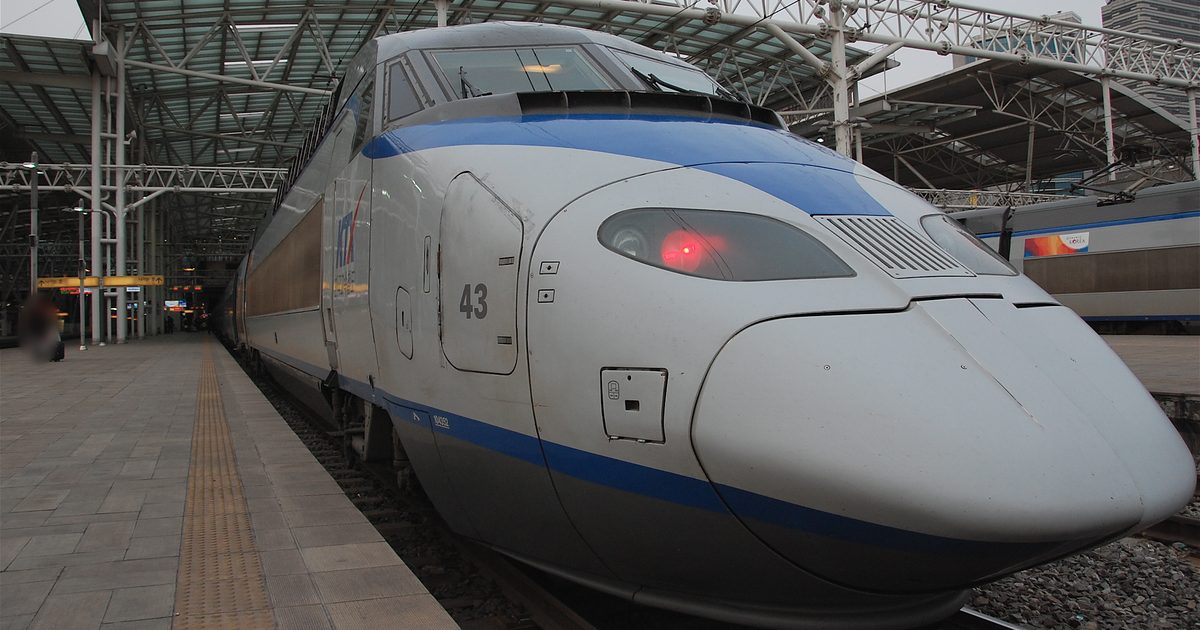
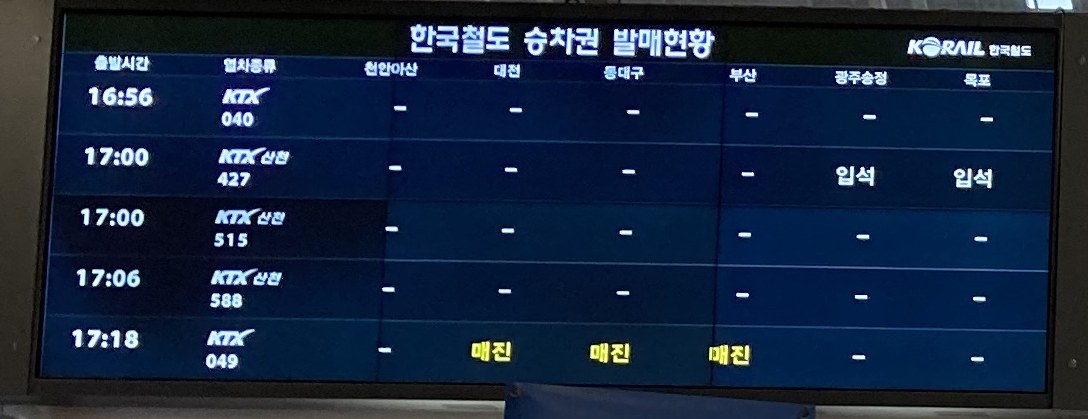
A KTX standing ticket is not a cheaper ticket you can book ahead. It goes on sale only after every seat on your section of the train is sold, it’s 15% off the seat fare, and KORAIL’s rules send you to the station ticket window to buy one. Non-reserved seats, the other “no seat number” option, run only on some weekday commuter trains, never on weekends. So when the train you want shows sold out, a standing ticket is the last thing to try, not the first. Change the time, try Suseo, look at first class, then the bus. And boarding without a ticket now costs a penalty equal to the full fare, on top of the fare. KORAIL’s English site calls both options “Standing / Non-reserved Seat”; on Korean screens they’re 입석 (standing) and 자유석 (non-reserved).
- Non-reserved seats: weekdays only, some commuter-hour trains, 5% off. None on weekends.
- Standing tickets: only once your section is sold out, 15% off, sold at the station window.
- Sold out? Other times and dates, then Suseo, then first class, then the bus. Standing last.
- No ticket on board: a penalty of 1× the base fare on top of the fare; Seoul to Busan comes to about ₩108,800.
- KORAIL PASS: if seats are sold out, you may board standing with the pass and your passport.
- SRT: now KTX-Sancheon under KORAIL, same rules. There’s no second operator to switch to.
Contents
Who this is for
Travelers who opened KTX booking and found their train sold out, or heard “just buy a standing ticket.”
- The train you want shows sold out and you need a plan.
- You want to know whether standing or non-reserved tickets can go into your itinerary.
- You hold a KORAIL PASS and couldn’t reserve a seat.
- You’re crossing the country around a holiday weekend.
You can skip it if:
- Your travel date isn’t on sale yet. See when your KTX date goes on sale.
- You already have a seat and only need to know about big suitcases; see KTX luggage rules.
Standing and non-reserved at a glance
Two different tickets with no seat number; neither one is a plan you can rely on.
| Non-reserved seat (자유석) | Standing ticket (입석) | |
|---|---|---|
| When it exists | Some commuter-hour trains, Mon–Fri (not public holidays) | After every seat on your section sells out |
| Weekends | None | Possible, once sold out |
| Price | Seat fare less 5% | Seat fare less 15% |
| Where you ride | A designated car, first come, first seated | The car printed on the ticket |
| Not allowed | Refund by phone, reissue if lost, transfer | Refund by phone, reissue if lost, transfer |
Does the KTX have non-reserved seats?
Yes, but not on weekends, and only on some commuter-hour trains on weekdays. From September 1, 2026, 207 trains carry non-reserved cars: KTX (including KTX-Sancheon and KTX-Eum), ITX-Saemaeul and others. You sit anywhere free in the designated car. It’s still a ticket you buy; holding a different ticket doesn’t let you sit in that car.
Seoul to Busan non-reserved saves about ₩2,700 on a seat. For that, I wouldn’t aim for a commuter-hour train; on a first KTX trip I’d buy a regular seat. If you do want one, KORAIL doesn’t say where KTX non-reserved tickets are sold, so I’d buy at a station window, which is the safest bet.
During holidays it may not exist at all. KORAIL’s 2026 Chuseok presale notice listed non-reserved seats among the services suspended for the holiday.
When can you buy a KTX standing ticket?
Only after every seat on the section you want is sold, and only with your agreement to stand. The test is your section, not the whole train: a train can be sold out from Seoul to Busan but still have seats to a nearer city.
How much cheaper are standing and non-reserved tickets?
Standing is 15% off the regular seat fare; non-reserved is 5% off. Seoul to Busan standing saves about ₩8,200, and you stand the whole way.
| Adult, from Sept 1, 2026 | Seat | Non-reserved (about) | Standing (about) | First class |
|---|---|---|---|---|
| Seoul – Busan | ₩54,400 | ₩51,700 | ₩46,200 | ₩78,900 |
| Suseo – Busan | ₩52,900 | ₩50,300 | ₩45,000 | ₩76,700 |
| Seoul – Dongdaegu | ₩39,000 | ₩37,100 | ₩33,200 | ₩56,600 |
| Seoul – Gyeongju | ₩44,500 | ₩42,300 | ₩37,800 | ₩64,500 |
| Seoul – Daejeon | ₩21,600 | ₩20,500 | ₩18,400 | ₩31,300 |
Seat and first-class fares are KORAIL’s; the non-reserved and standing columns are my math at 95% and 85%, rounded to the nearest 100 won. The booking screen shows the exact fare, and the same pair of stations can price differently by route.
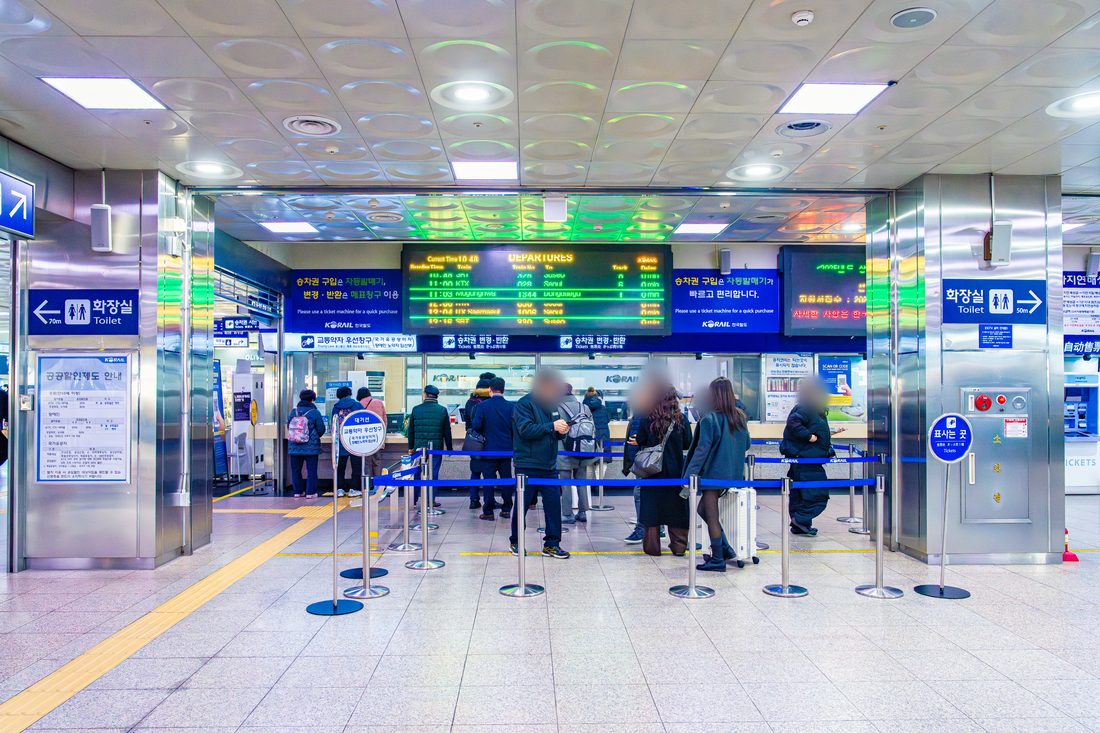
The KTX is sold out. What should I do?
Work down this list in order; the standing ticket comes last because it’s the only option with no guarantee.
| Order | What to do | What it costs you |
|---|---|---|
| 1 | Change the time or the date | Time |
| 2 | Search Seoul and Suseo together as departure stations (same KORAIL system) | Suseo is on the Gangnam side |
| 3 | Check first class | Seoul – Busan ₩24,500 more |
| 4 | Take the bus | About 2 hours longer |
| 5 | Ask at a station window for a standing ticket | You stand, and nothing is guaranteed |
1. Another time or date
Page backward and forward through the same search; it only costs time. If your plans have slack, look at the trains on either side before changing anything else, and as soon as you see a seat, book it: on KORAIL’s English site or the KORAIL+ app, or on Klook’s Korea train booking page, where you pick the stations and date yourself.
2. Suseo instead of Seoul Station
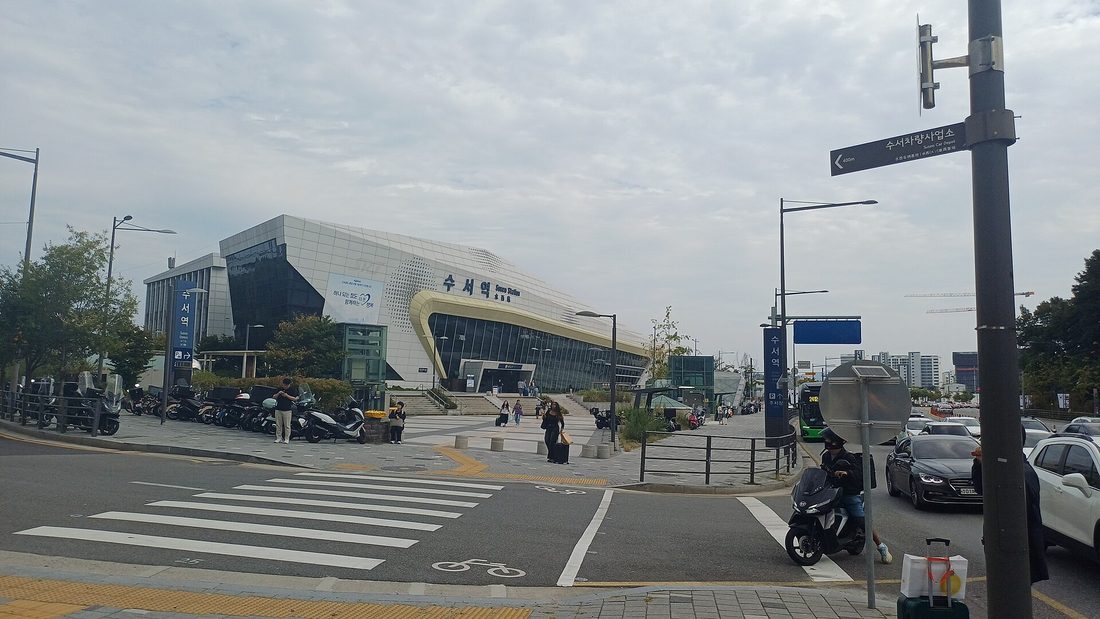
Since September 1, 2026, the trains that used to be SRT run as KTX-Sancheon under KORAIL, so Suseo departures show up in the same search. Suseo is in southeast Seoul, which suits you if you’re staying around Gangnam. More on the merger in what happened to the SRT.
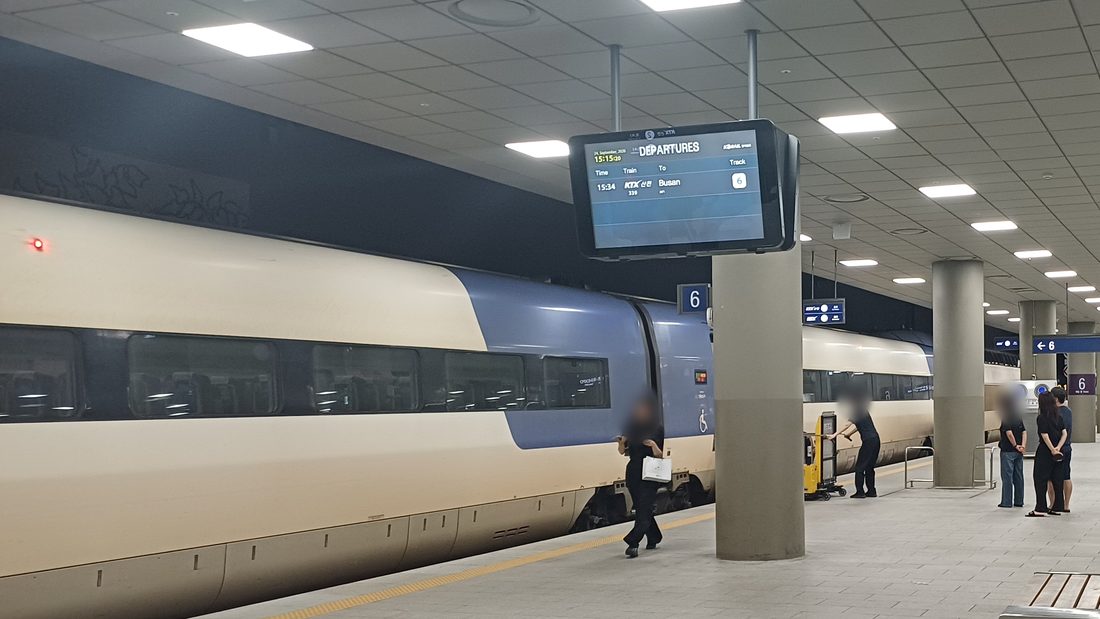
3. First class
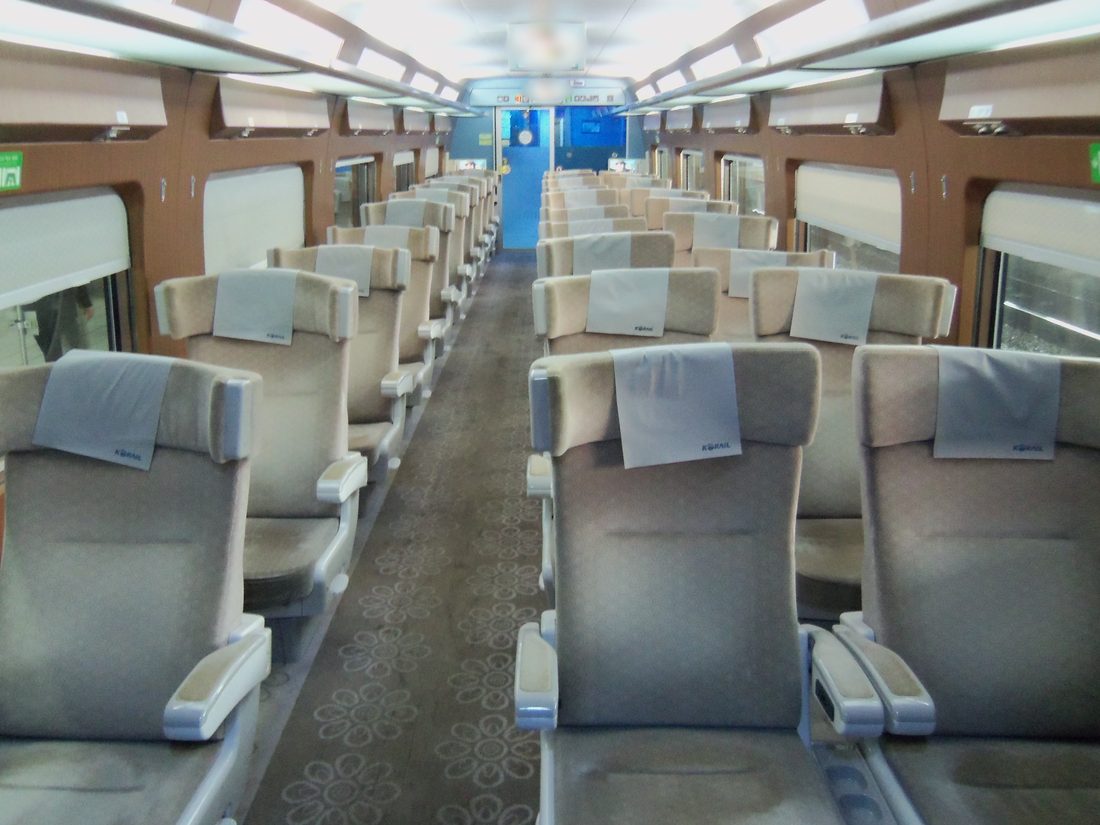
When standard is gone, check first class before anything slower. Seoul to Busan first class is ₩78,900, ₩24,500 more than a standard seat. I’d pay it before I’d stand.
4. The bus
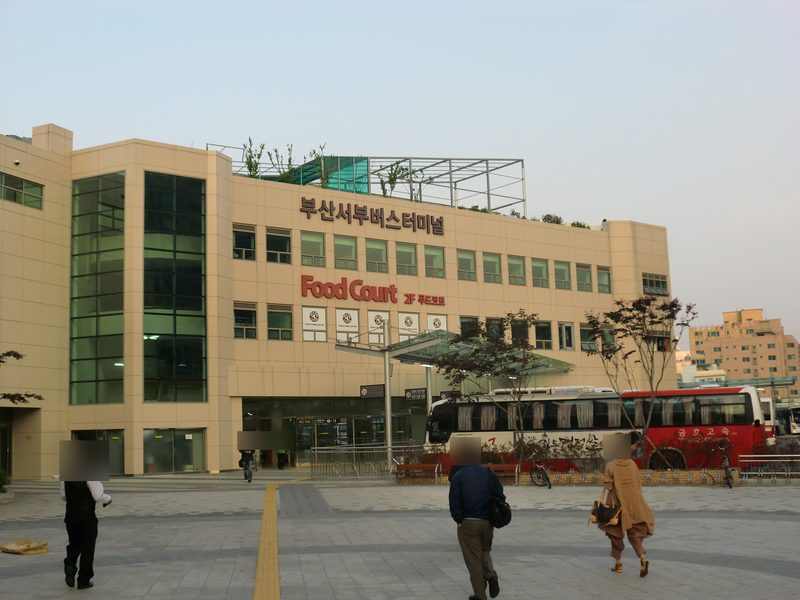
As of early November 2026, the intercity bus from Seoul Nambu Terminal to Busan Seobu (Sasang) ran premium 28-seat coaches at ₩30,000 for adults, about 4 hours 30–40 minutes. That’s about two hours longer than the KTX, but it’s a guaranteed seat. Terminals and how to book are in booking Korean buses.

5. A standing ticket at the station
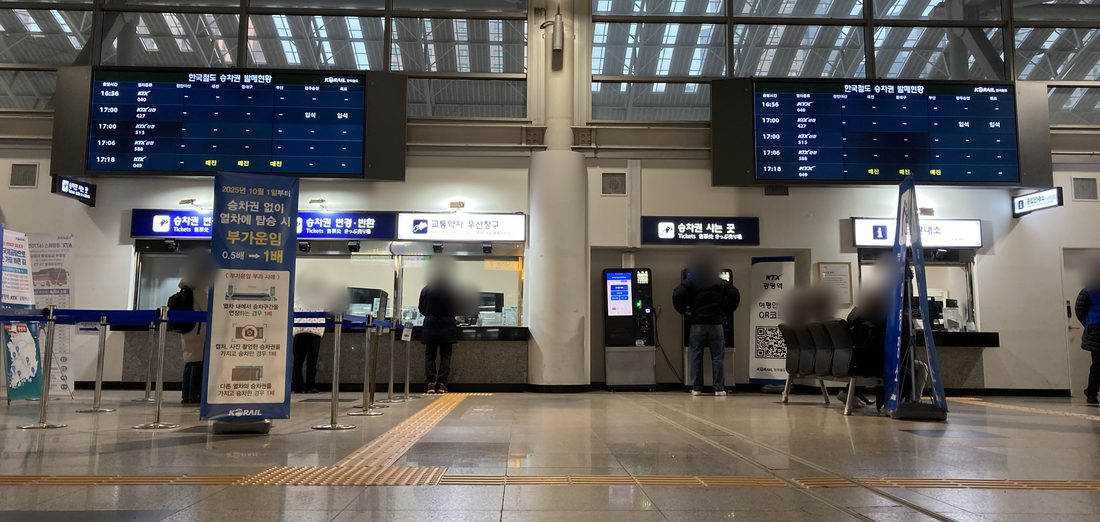
Only now. Go to a ticket window and ask; whether one is available depends on the train and your section on the day.
Where do I buy a KTX standing ticket? Can I buy one online in English?
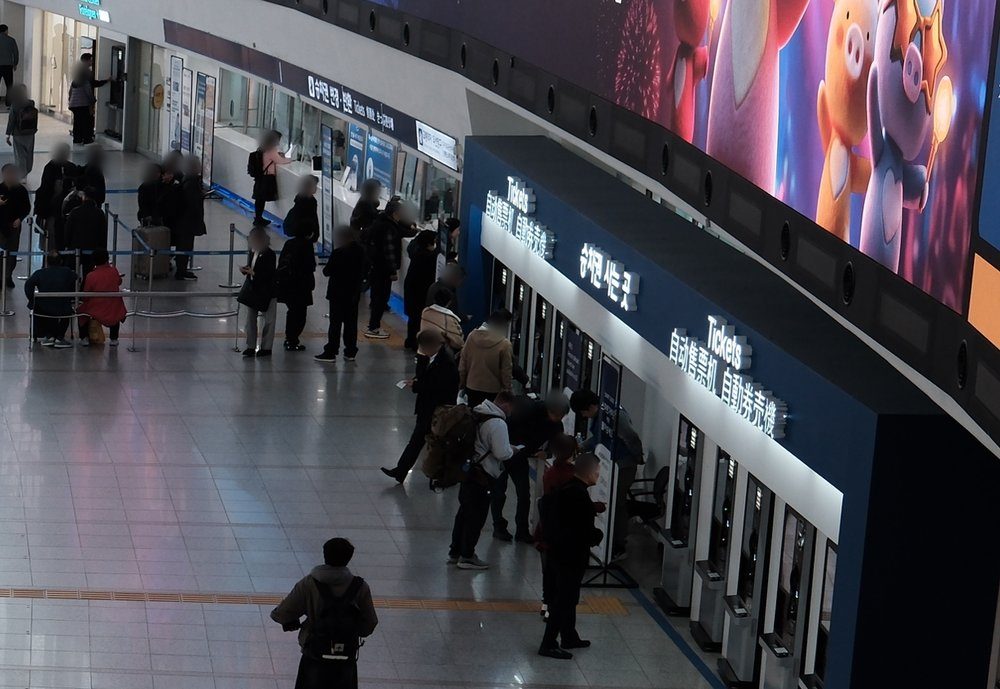
KORAIL’s rules name the station ticket window for sold-out trains. KORAIL doesn’t say one way or the other whether its English site or app sells KTX standing tickets, so plan on the window. A standing ticket bought at a window has to be refunded at a window too.
Where do I stand, and can I take an empty seat?
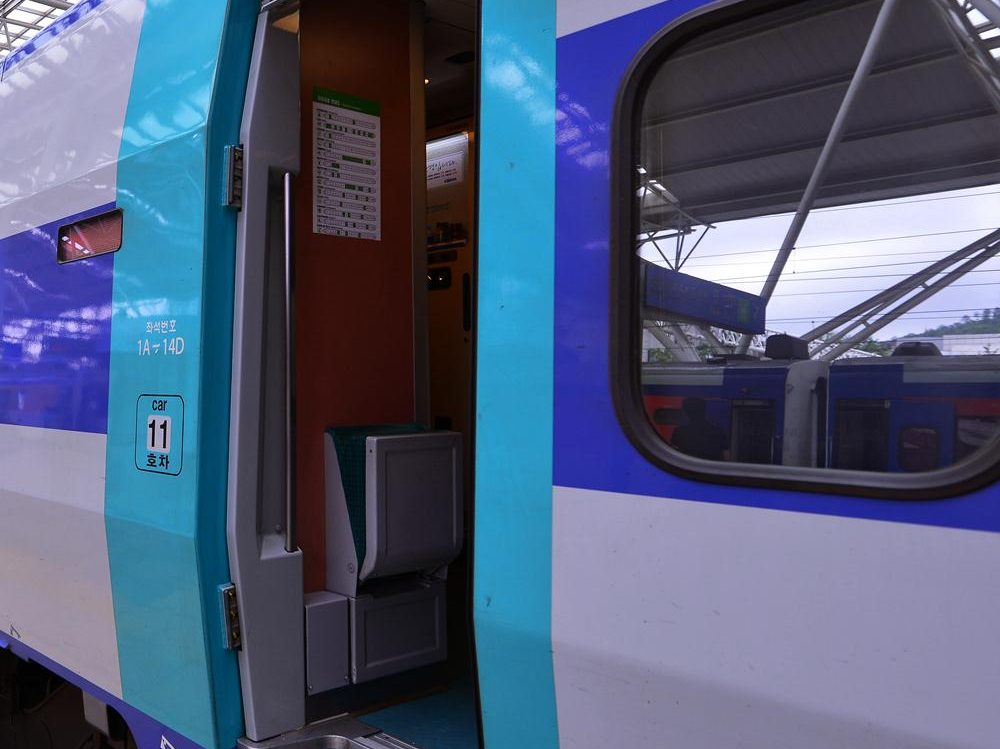
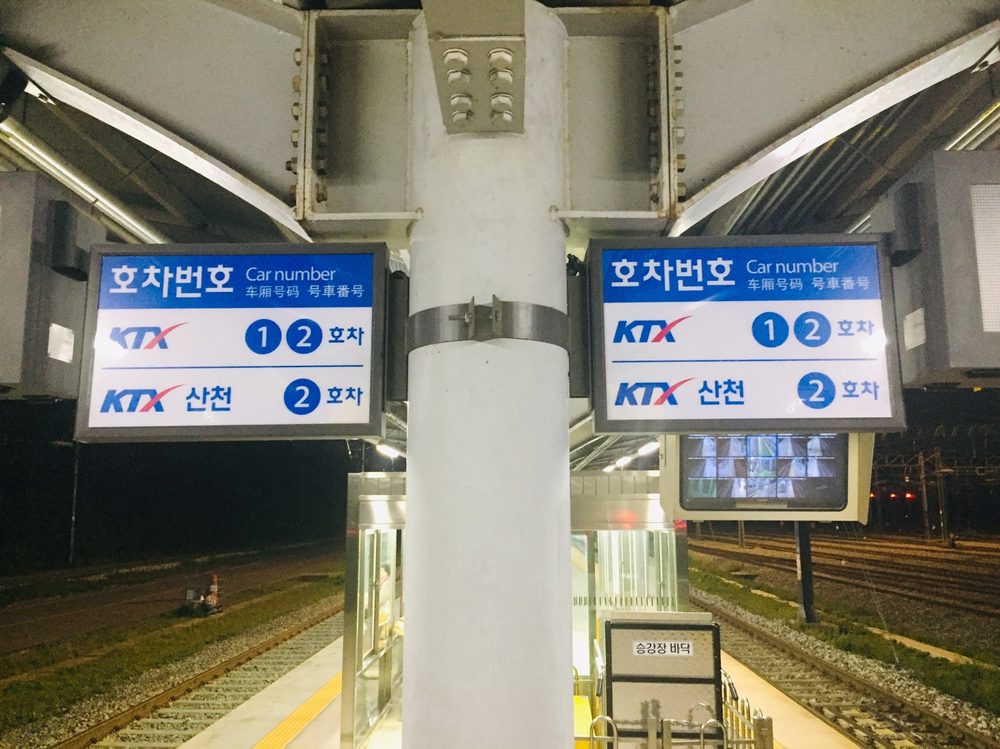
Stand in the car printed on your ticket, out of the aisle; don’t just sit in an empty seat. Standing and non-reserved passengers can switch to a seat once using the seat change function in the KORAIL+ app, even after the train leaves. Without the app, ask the train crew.
Keep big bags out of the aisle too; where they can go is in what to do when the KTX luggage area is full.
I have a KORAIL PASS but no seat. Can I board?
Yes, standing, but only if seats are sold out. KORAIL’s English pass page puts it this way: “If seats are sold out, please board the train on a standing seat with a valid KORAIL PASS and passport.” If seats are still available, reserve one first.
| Who can buy it | Non-Korean nationals only |
|---|---|
| Seat reservations | Open 2 months before departure; up to 2 tickets per person per day |
| Seats sold out | Board standing with a valid pass and your passport |
| First class | Pass holders pay 50% of the first-class price for the route |
| Not covered | SRT, Seoul-area commuter lines, temporary tourist trains |
Remember the half-price first class on a sold-out day: it’s a seat when standard is gone. If you’re still deciding on a pass, Klook sells the KORAIL PASS, and so does KKday; compare the cancellation terms on each page. How far ahead pass holders can reserve, and how, is in reserving seats with a KORAIL PASS.
What happens if I board without a ticket?
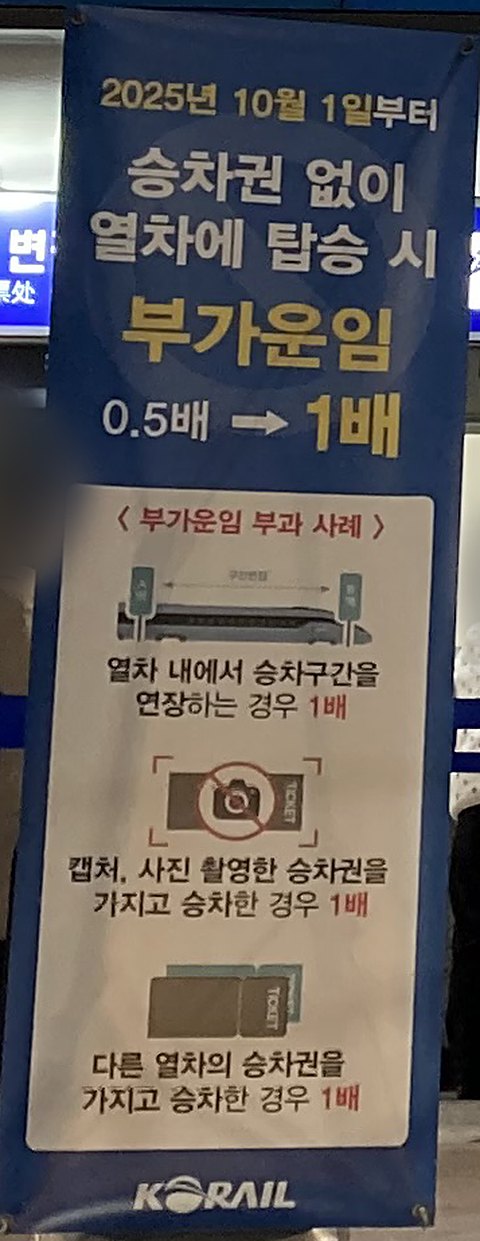
You pay the fare plus a penalty fare (부가운임) equal to the full base fare. Seoul to Busan comes to about ₩108,800. “Buy a ticket for the next train and stand on the sold-out one” is listed by name in KORAIL’s penalty rules.
| No time to buy, boarded anyway | 1× base fare |
|---|---|
| Sold out, so bought a different train’s ticket and boarded this one | 1× base fare |
| A screenshot, photo or payment record as a ticket | 1× base fare |
| Boarded first, then bought a ticket to the next station on your phone | 1× base fare |
| Avoiding or refusing a ticket check | 2× base fare |
| Using a discount ticket you’re not eligible for | 10× base fare |
Can I join a waitlist for a sold-out KTX?
KORAIL has one, but I’d skip it on a short trip. Requests close 2 days before departure, you need a KORAIL membership, and the form asks for an 11-digit mobile number, which in practice means a Korean phone. Whether an overseas number works hasn’t been confirmed.
Your situation
If your Saturday Seoul to Busan train is sold out
There are no non-reserved seats on weekends, so don’t look for them. Search Seoul and Suseo across the morning and afternoon, then check first class. If nothing works, book the bus from Seoul Nambu and accept the extra two hours. I’d only walk to a station window for a standing ticket if I had to be in Busan on that exact train.
If you have a KORAIL PASS and the train you want is full
Look at first class before standing: at 50% of the first-class price, it’s a seat. If first class is gone too, board standing with the pass and your passport, in the car you’re told, and try the seat change in the KORAIL+ app once the train is moving.
If you’re standing and see an empty seat
Don’t sit down on your own. Use seat change in the KORAIL+ app (once, even after departure), or ask the crew when they come through.
Common mistakes
- Planning a trip around a standing ticket. It exists only once your section sells out, and nothing guarantees one.
- Looking for non-reserved seats on a weekend. There are none.
- Counting on non-reserved seats over a holiday. They were suspended over Chuseok 2026.
- Buying the next train’s ticket and boarding the sold-out one. That’s a named case in the penalty rules: 1× the fare on top.
- Showing a screenshot as your ticket. Also 1× the fare.
- Standing with a KORAIL PASS when seats were available. The standing rule applies only when seats are sold out.
- Looking for SRT as a separate option. Since September 2026 those trains are KTX-Sancheon and follow the same rules.
FAQ
- Q1: Can I buy a KTX standing ticket in advance?
- No. Standing tickets go on sale only after every seat on your section of the train is sold, and KORAIL’s rules point you to the station ticket window for sold-out trains. Treat it as a fallback on the day, not something to plan around.
- Q2: How much cheaper is a KTX standing ticket?
- 15% off the regular seat fare. Seoul to Busan is ₩54,400 for a seat, so a standing ticket is about ₩46,200, and you stand for the whole ride.
- Q3: Does the KTX have non-reserved seats on weekends?
- No. Non-reserved seats run only on some commuter-hour trains, Monday to Friday, excluding public holidays.
- Q4: What should I do if the KTX is sold out?
- Try other times and dates first, then Suseo as a departure station, then first class, then the bus. Asking for a standing ticket at the station comes last. The order and costs are in the sold-out section above.
- Q5: Can I get on the KTX without a ticket and pay on board?
- You can, but it costs a penalty fare equal to the full base fare on top of the ticket. Seoul to Busan comes to about ₩108,800. Boarding a sold-out train with a ticket for a different train is charged the same way.
- Q6: Can I board a sold-out KTX with a KORAIL PASS?
- Yes, standing, if seats are sold out. KORAIL’s pass rules say to board on a standing seat with a valid pass and your passport. If seats are still available, reserve one first.
- Q7: Can I sit in an empty seat with a standing ticket?
- Not just by sitting down. Standing and non-reserved passengers can switch to a seat once with the seat change function in the KORAIL+ app, even after departure, or ask the train crew.
If it were me
I’d never plan around a standing or non-reserved ticket. I’d book a seat the morning sales open, and if my train were gone, I’d go: nearby times, then Suseo, then first class, then the bus, with the standing ticket as a last resort on the day. With a KORAIL PASS, I’d reserve seats as early as I could and treat the half-price first class as my backup. And I’d never board without a ticket hoping to sort it out on the train; the penalty doubles the cost.
Official sources
- KORAIL notice: trains with non-reserved seats (Korean; the 207 trains, from September 1, 2026)
- KORAIL penalty fare rules (Korean)
- KORAIL PASS information (English)
- KORAIL (English) (booking)
Prices and times follow the latest official announcement.
Read next
Verified
 Changed
How Far in Advance Can You Book KTX? 2 Months Since Oct 2026
KTX tickets go on sale at 07:00 Korea time two months before the travel date (month minus 2, same day). The window changed from one month to two on October 1, 2026. KORAIL PASS start dates can now be set up to 62 days after purchase, so pass holders can reserve at the two-month mark too.
Verified
 Current
Seoul to Busan 2026: KTX, Ex-SRT, Bus or Flight Compared
The KTX is quickest: most trains take about 2 hours 40 minutes, with 55 to 68 a day from Seoul Station to Busan. SRT merged into KTX on September 1, 2026 (now KTX-Sancheon), so Seoul Station and Suseo trains are booked in the same KORAIL system. Four KTX-Eum trains a day stop at Sinhaeundae; Yongsan has no trains to Busan.
Verified
 Current
KTX Luggage Rules 2026: Two Pieces, Where Suitcases Go
KORAIL trains, including the KTX, allow up to two pieces of luggage per passenger that don’t occupy a seat or block the aisle, stored between cars or on the overhead rack, and you must carry them yourself. The KTX rules set no size or weight limit; 32 kg and 158 cm are the Seoul-area commuter-train rule. Since July 1, 2026, e-scooters, e-bikes and lithium batteries over 160 Wh are banned; power banks are fine.