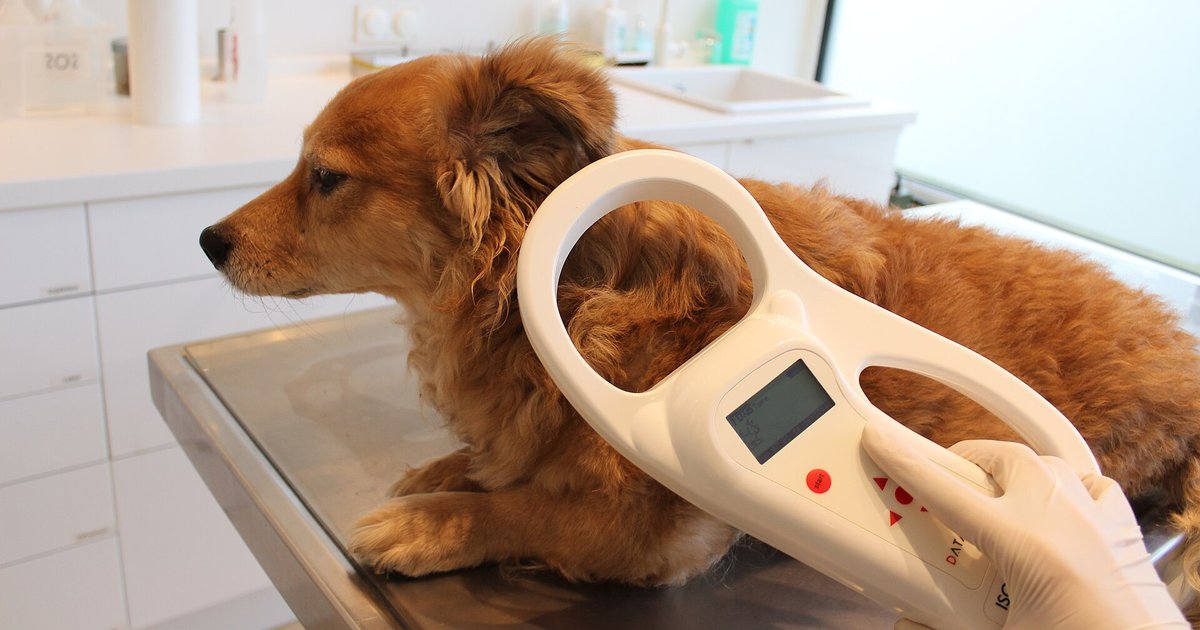
Korea has no fixed quarantine for dogs and cats. With an ISO microchip, a rabies titer result of at least 0.5 IU/ml where required, and a health certificate from your own government, your pet walks out of Incheon with you the same day. Whether a one-week trip with a pet is worth it is decided by the flight home, and that depends on your country. Back to the US with a dog: a form and a microchip. Back to the UK: a blood test taken at least 3 months before you re-enter. Back to Singapore or Australia: quarantine on arrival. The Korean agency is the Animal and Plant Quarantine Agency (APQA, 농림축산검역본부); the “titer test” is the rabies neutralizing antibody test (FAVN or RFFIT).
- Korea needs: ISO microchip, titer of 0.5 IU/ml or more (blood drawn within 24 months before arrival), and a health certificate issued by your government.
- No titer needed from Korea’s rabies-free list, which includes the UK, Ireland, Australia, New Zealand, Singapore, Japan, Hong Kong, Hawaii and Guam, or for pets under 90 days old.
- Titer needed from the US mainland, Canada, Malaysia and the Philippines.
- Papers in order: released the same day.
- Before flying home: get an APQA export health certificate, ₩10,000 each; book first if your country needs prior approval.
- Going home: easiest to the US (dogs); a 3-month wait after the blood test for the UK; quarantine for Australia and Singapore.
Contents
- Who this is for
- Key facts
- What Korea requires
- Does your pet need a titer test?
- Extra certificate from Australia or Malaysia
- Paperwork from your own country
- Arriving at Incheon
- Bringing your pet home again
- Before you leave Korea
- Cabin or hold on Korean Air
- Your situation
- Common mistakes
- What I would do
- FAQ
- If it were me
- Official sources
Who this is for
Travelers who want to take their own dog or cat to Korea and bring it home again.
- You’re flying from the US, UK, Australia, Singapore, Canada or Southeast Asia and want to know if a titer test is needed.
- You want to know whether a short trip with your pet is realistic once the return leg is counted.
You can skip it, or leave the pet home, if:
- You’re going for a week from the UK, Australia or Singapore and haven’t started the paperwork. The return rules take months or end in quarantine.
- You’re bringing 10 or more animals. That needs an advance notification to APQA and isn’t covered here.
Pet entry to Korea at a glance
Entry rules are the same for every nationality; only the titer exemption and a few extra certificates depend on where you fly from.
| Applies to | Dogs and cats, same rules |
|---|---|
| Microchip | All ages; ISO 11784/11785. Other types need your own reader |
| Rabies titer | Pets 90 days or older: 0.5 IU/ml or more, blood drawn within 24 months before arrival, FAVN or RFFIT |
| Titer exempt | Under 90 days old, or from Korea’s rabies-free countries and regions |
| Health certificate | Issued by your country’s government, showing microchip number, titer result where needed and date of birth |
| Advance notice | Not needed for 9 animals or fewer |
| Papers in order | Released the same day |
| Entering without quarantine | Fine of up to ₩3,000,000 |
| Export certificate when leaving | ₩10,000 per certificate, from APQA |
What does Korea require for a dog or cat?
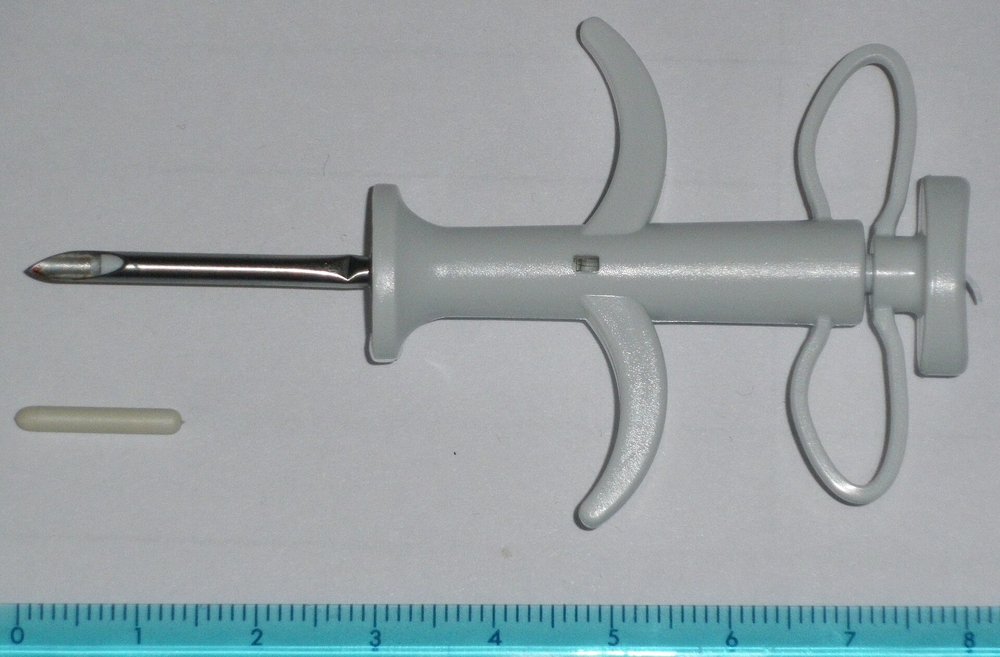
Three things: an ISO microchip, a rabies titer result where required, and a health certificate from your country’s government. Korea doesn’t have a fixed quarantine. Papers in order means you walk out with your pet the same day.
Every dog and cat needs the chip, whatever its age; Korea reads ISO 11784/11785, so bring your own reader for any other type. The titer has to be tested by an internationally recognized lab or your country’s government. The certificate must state the microchip number, the titer result where required, and the date of birth.
Does my pet need a rabies titer test for Korea?
From the US mainland, Canada, Malaysia or the Philippines, yes. From the UK, Ireland, Australia, New Zealand, Singapore, Japan, Hong Kong, Hawaii or Guam, no. Korea waives the titer for pets from the countries and regions on its rabies-free list, and for any pet under 90 days old. The microchip and the government health certificate are still required.
| On Korea’s rabies-free list (titer not needed) | Australia, New Zealand, United Kingdom, Ireland, Singapore, Japan, Hong Kong, Hawaii, Guam |
|---|---|
| Not on the list (titer needed) | US mainland, Canada, Malaysia, Philippines |
| List version | Dated April 4, 2023; a country is dropped automatically when it reports rabies to WOAH |
Because the list can change without notice, check APQA’s rabies-free page again before you fly. Even if Korea waives the titer, your own country may want one for the trip back; see bringing your pet home again.
Do pets from Australia or Malaysia need an extra certificate?
Yes: cats from Australia, and dogs and cats from Malaysia, need a Hendra and Nipah certificate, or quarantine in Korea is extended by 21 days.
| Who | Cats from Australia; dogs and cats from Malaysia |
|---|---|
| What it must show | No Hendra or Nipah cases in the country or state of departure, or a negative test within 14 days before departure plus 60 days kept in a place free of both |
| Without it | Quarantine extended by 21 days |
What paperwork do I need from my own country?
A health certificate issued or endorsed by your country’s veterinary authority. From the US, that means a USDA-accredited vet’s certificate endorsed by USDA APHIS within 30 days of export.
| Microchip | ISO-compliant |
|---|---|
| Rabies vaccine | Current, given before arrival in Korea |
| Titer | 0.5 IU/ml or higher (pets 90 days and under exempt) |
| Certificate | International Health Certificate from a USDA-accredited vet, endorsed by USDA APHIS within 30 days of export; dog and cat certificates can be endorsed digitally |
From other countries, the principle is the same: your country’s veterinary authority has to issue or endorse the health certificate. Ask them for their Korea export requirements well before you book flights.
What happens when I land at Incheon with a pet?
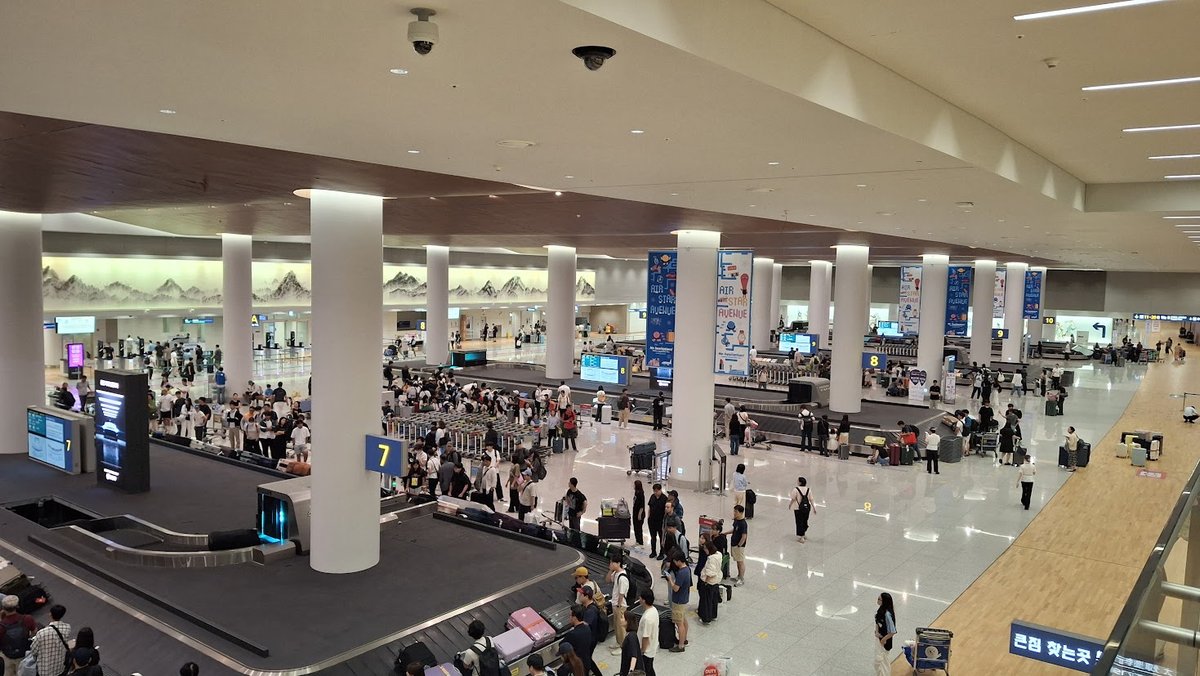
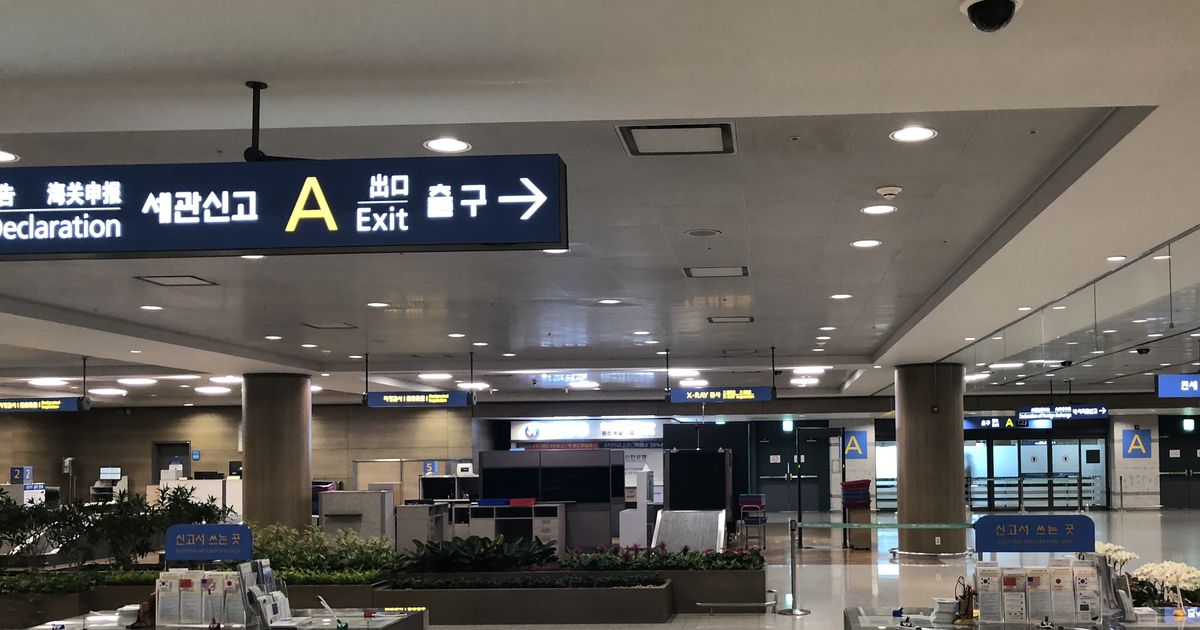
Declare the animal on the customs form, find the animal quarantine desk at baggage claim, and hand over the certificate before you go through customs.
- On the plane, tick the animals box on the customs declaration form. It’s the same form and the same box logic as food; see how to declare at a Korean airport. The arrival card is a separate form, covered in Korea’s e-Arrival Card.
- At baggage claim, find the animal quarantine desk. Terminal 1: in front of carousels 4, 11, 12 and 19. Terminal 2: in front of carousels 1, 13 and 20.
- Give your certificate to the animal quarantine officer before the customs check.
| Papers in order | Released the same day |
|---|---|
| No health certificate | Sent back to the departure country at your cost |
| Microchip or titer doesn’t match | Held in a quarantine facility until fixed, at your cost; APQA says the extension averages about 10 days and can be longer |
| Titer blood drawn over 24 months ago | Doesn’t count |
| Entering without quarantine | Fine of up to ₩3,000,000 |
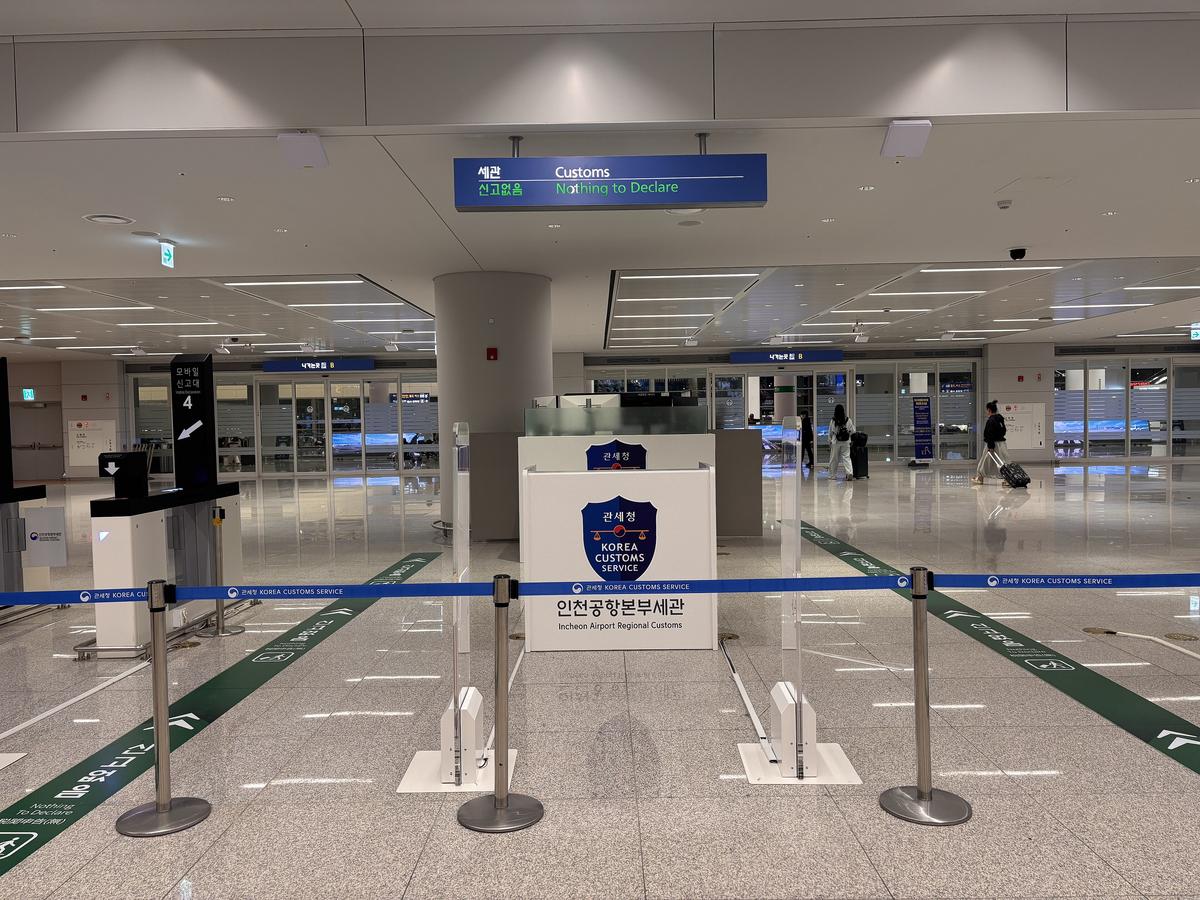
Which terminal your airline uses is in Incheon Airport terminals by airline.
Can I bring my pet home after a trip to Korea?
Yes, but this is the step that decides whether the trip works. For a dog going back to the US it’s simple; for the UK the blood test has to be done 3 months before you return; Australia and Singapore put the pet into quarantine. Korea only issues the certificate your country asks for. Ask your own veterinary authority first.
| Returning to | How it classifies South Korea | What that means |
|---|---|---|
| United States (dogs) | Not on the CDC’s high-risk list (updated April 15, 2026) | A dog that has only been in low-risk countries for the past 6 months needs a CDC Dog Import Form receipt, a microchip a universal scanner can read, to be at least 6 months old on entry, and to look healthy |
| United States (cats) | Check the CDC’s pet import pages | |
| Great Britain | Not a listed country | Rabies blood test at least 30 days after vaccination, 0.5 IU/ml or more, and a 3-month wait from the blood sample date before entering GB; travel on a Great Britain pet health certificate. In practice, do the blood test before you leave |
| Australia | Group 3 (dogs and cats) | Import permit and mandatory post-entry quarantine at Mickleham. Vaccinated, titer tested at ACDP (0.5 IU/ml or more) and kept current before leaving Australia: possibly 10 days. Not prepared before leaving: 180 days in an approved country before return. Allow at least 6 months; trips under 45 days may qualify for short-stay conditions |
| Singapore | Schedule III | At least 30 days’ quarantine on arrival. The titer blood sample must be taken at least 90 days, and no more than 12 months, before export. Returning pets follow the same rules as a first import |
| Canada | Not on CFIA’s rabies-free list | Check CFIA’s pet import tool for the conditions |
| Malaysia, Philippines | Check your country’s veterinary authority before you leave | |
For Australia, mention the trip length when you apply for the import permit if you’ll be away less than 45 days; some testing and treatment may be waived.
What do I need to do in Korea before flying home?
Get an animal health certificate from APQA, ₩10,000 per certificate, and hand it over when you arrive home. Take your pet and the documents your home country requires (vaccination record, health certificate and so on) to an APQA office at the airport or port. The officer checks the paperwork, examines the animal and issues the certificate.
| Where | APQA office at the airport or port |
|---|---|
| Bring | Your pet and the documents your country requires |
| Fee | ₩10,000 per certificate |
| Countries needing prior approval | APQA names the US, Australia, New Zealand, Japan, Singapore, Hong Kong and others; book a date and office first |
| Booking | APQA’s pet export inspection booking system (수출반려동물 검역예약 시스템), login page in Korean |
The booking system is at eminwon.apqa.go.kr. Because the pet has to be there in person, set aside part of a day in Korea for this rather than leaving it to the morning of your flight.
Can my pet fly in the cabin to Korea?
On Korean Air, small pets can; the rules below are Korean Air’s. Check any other airline directly.
| Cabin | 8 weeks or older, 7 kg or less including the carrier, carrier within 32×45×19 cm |
|---|---|
| Hold | 16 weeks or older, 45 kg or less including the carrier |
| Confirmation | Korean Air confirms whether it can carry the pet 48 hours before an international departure; without approval it won’t accept the pet at the airport |
| Snub-nosed dogs and cats | Not in the hold; cabin only if they meet the conditions |

Your situation
If you’re flying from the US with a dog for a week
Check the rabies vaccine is current, get the titer test done and the result back, then have a USDA-accredited vet write the International Health Certificate and get it endorsed by APHIS within 30 days of departure. Before flying home, book the APQA export inspection, get the certificate, and file the CDC Dog Import Form. This is the one combination where a one-week trip is realistic.
If you’re flying from the UK
Korea won’t ask for a titer, but Great Britain will on the way back, with a 3-month wait from the blood sample date. Have the blood test done in the UK at least 3 months before your return date, so the clock has run by the time you fly home.
If you’re flying from Australia or Singapore
Korea is easy, but your pet goes into quarantine on return: at least 30 days in Singapore; in Australia possibly 10 days at Mickleham if everything was prepared before leaving. Start with your home authority’s rules, since Australia suggests at least 6 months for the whole process.
If you’re flying from Canada, Malaysia or the Philippines
Korea needs the titer test from all three, and Malaysian dogs and cats also need the Hendra and Nipah certificate. For the return leg, ask your own veterinary authority before you book.
Common mistakes
- Thinking Korea is the hard part. Korea releases the pet the same day; the return leg is where the time and quarantine are.
- Using a titer result that’s too old. Korea only accepts blood drawn within 24 months before arrival.
- A health certificate from a private vet only. Korea wants it issued by your country’s government; from the US, that means APHIS endorsement within 30 days.
- Leaving the export certificate to the day of the flight. It needs the pet in person and, for many countries, a booking.
What I would do
A one-week trip from the US mainland with a small dog in the cabin:
| When | Step |
|---|---|
| As early as possible | Confirm the ISO microchip and current rabies vaccine; draw blood for the titer test |
| Once the titer result is in | Book the flight on Korean Air and request cabin carriage for the dog |
| Within 30 days of departure | USDA-accredited vet writes the International Health Certificate; APHIS endorses it |
| 48 hours before departure | Korean Air confirms the dog can fly |
| On arrival | Customs form with the animals box ticked; certificate to the animal quarantine desk at baggage claim |
| Early in the trip | Book the APQA export inspection |
| Before flying home | Visit the APQA office with the dog, get the export certificate; file the CDC Dog Import Form |
The titer test goes first because everything else waits on its result. I’d book the APQA visit at the start of the trip so the export certificate isn’t squeezed into the last morning.
FAQ
- Q1: Do dogs have to quarantine in South Korea?
- Not if the papers are in order: the pet is released the same day. With no health certificate it is sent back at your cost; if the microchip or titer doesn’t match, it stays in a quarantine facility until fixed, about 10 days on average according to APQA.
- Q2: Does my dog need a rabies titer test to enter Korea from the US?
- Yes, from the US mainland. Korea wants a neutralizing antibody result of at least 0.5 IU/ml from blood drawn within 24 months before arrival. Hawaii and Guam are on Korea’s rabies-free list and are exempt.
- Q3: Can I bring my cat to Korea?
- Yes, on the same rules as dogs. Cats flying from Australia also need a Hendra and Nipah certificate, or quarantine is extended by 21 days.
- Q4: Do I need a titer test to bring my dog to Korea from the UK or Singapore?
- Not for Korea: both are on Korea’s rabies-free list. Your pet still needs the microchip and a government-issued health certificate. Getting back into the UK or Singapore afterwards is a separate set of rules.
- Q5: Can my dog fly in the cabin to Korea?
- On Korean Air, yes, if it is at least 8 weeks old and weighs 7 kg or less with the carrier. The carrier must fit 32×45×19 cm, and Korean Air confirms acceptance 48 hours before an international departure.
- Q6: What do I need to leave Korea with my pet?
- An animal health certificate from APQA, ₩10,000 per certificate. Bring your pet and the documents your home country requires to an APQA office at the airport or port. Countries that need prior approval, including the US, Australia and Singapore, require a booking first.
- Q7: Can I bring my dog back to the US after a trip to Korea?
- Yes, and it’s the simplest return of the countries covered here. South Korea isn’t on the CDC’s high-risk list, so a dog that has only been in low-risk countries for 6 months needs a CDC Dog Import Form receipt, a microchip, to be at least 6 months old and to look healthy.
If it were me
For a one-week trip I’d only bring a dog from the US: Korea releases it the same day, and the way home is a form and a microchip. From the UK I’d bring a pet only if the blood test was already done more than 3 months before the return date. From Singapore or Australia I wouldn’t bring one for a short holiday at all, because the pet ends up in quarantine on the way back. On any route I’d fly Korean Air for a small dog or cat so it rides in the cabin, and book the APQA export inspection on the first day in Korea.
Official sources
- APQA: importing dogs and cats (English)
- APQA: entering and leaving Korea with a dog or cat (Korean)
- APQA: rabies-free countries and regions (Korean, attached list)
- USDA APHIS: pet travel from the US to Korea
- CDC: dogs from rabies-free or low-risk countries
- GOV.UK: bringing your pet dog, cat or ferret to Great Britain
- DAFF: cats and dogs returning to Australia
- AVS Singapore: importing dogs and cats
- CFIA: bringing pets into Canada
- Korean Air (special services: traveling with pets)
Rules, fees and times follow the latest official announcement.
Read next
Verified
 Current
Can You Bring Meat to Korea? 2026 Jerky Rules and Fines
Treat all meat and meat products as a no: even from a country on Korea’s import list they need a quarantine certificate from that government. Undeclared, the first fine is ₩1,000,000; pork made in a country on APQA’s African swine fever list (September 21, 2026 version, which includes the Philippines, Malaysia, Spain, Italy and Germany) starts at ₩5,000,000. Declared items are destroyed or sent back, with no fine.
Verified
 Current
Incheon Airport Terminal 1 or 2? Airline List for 2026–27
Terminal 2 has 14 passenger airlines: Korean Air, Asiana, Jin Air, Air Busan, Air Seoul, Delta, Virgin Atlantic, Air France, KLM, Aeromexico, China Airlines, Garuda Indonesia, SAS and Xiamen Air. The other 71 use Terminal 1. On a codeshare, go to the terminal of the airline that operates the flight.
Verified
 Current
Korea e-Arrival Card 2026: Who Needs It and How to Fill It
Every foreigner entering Korea without a valid K-ETA files an arrival card, electronic or paper. That includes US, UK, Australian, Canadian and Singaporean travelers under the K-ETA exemption to December 31, 2026. The e-Arrival Card is free at www.e-arrivalcard.go.kr, opens 3 days before arrival (KST) and expires 72 hours after submission.