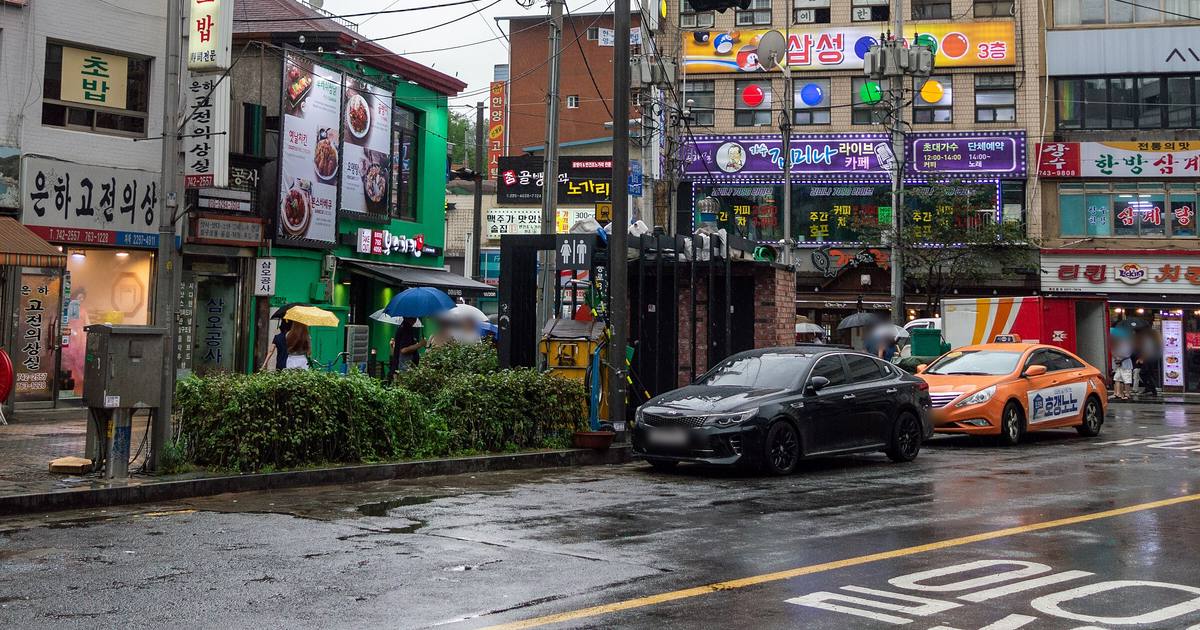
Korea’s monsoon moves from south to north. On the 1991–2020 averages it starts June 19 in Jeju, June 23 in the southern region around Busan and June 25 in the central region around Seoul, lasts about a month, and ends in late July. Inside those 31–32 days, rain falls on about 17–18, so “a month of nonstop rain” isn’t what happens. The catch is that nobody can tell you the 2027 dates yet: the Korea Meteorological Administration (KMA) doesn’t forecast the start of the monsoon, and real years drift a week or two from the average. Right after the monsoon come the busiest weeks of typhoon season. Koreans call the monsoon jangma (장마), and you’ll see that word in forecasts and news.
- Average start: Jeju June 19, Busan June 23, Seoul June 25; average end July 20, July 24, July 26.
- Not rain every day: about half the days of the monsoon are wet, though a year like 2020 ran 54 days in Seoul.
- 2027 dates won’t be announced in advance. The final dates come out after the summer; plan with the averages.
- Early and mid-June are the safest: from 2020 to 2026, Seoul and Busan never started before June 19.
- Typhoon season is July to September, peaking in August, with 3.4 typhoons a year affecting Korea on average.
- Typhoon forecast? Don’t cancel your flight yourself; wait for the airline.
Contents
- Who this is for
- Monsoon dates for Seoul, Busan and Jeju
- Actual dates, 2020–2026
- When the 2027 dates are known
- Does it rain every day?
- Is June a good time to visit?
- Typhoon season
- Which weather warnings matter
- Typhoon forecast and your flight
- Your situation
- Common mistakes
- What I would do
- FAQ
- If it were me
- Official sources
Who this is for
Anyone choosing dates for a Korea trip between June and September.
- You can pick your week and want to know which weeks are least likely to be rainy.
- You’ve seen “monsoon June 25 – July 26” online and want to know whether that’s a forecast.
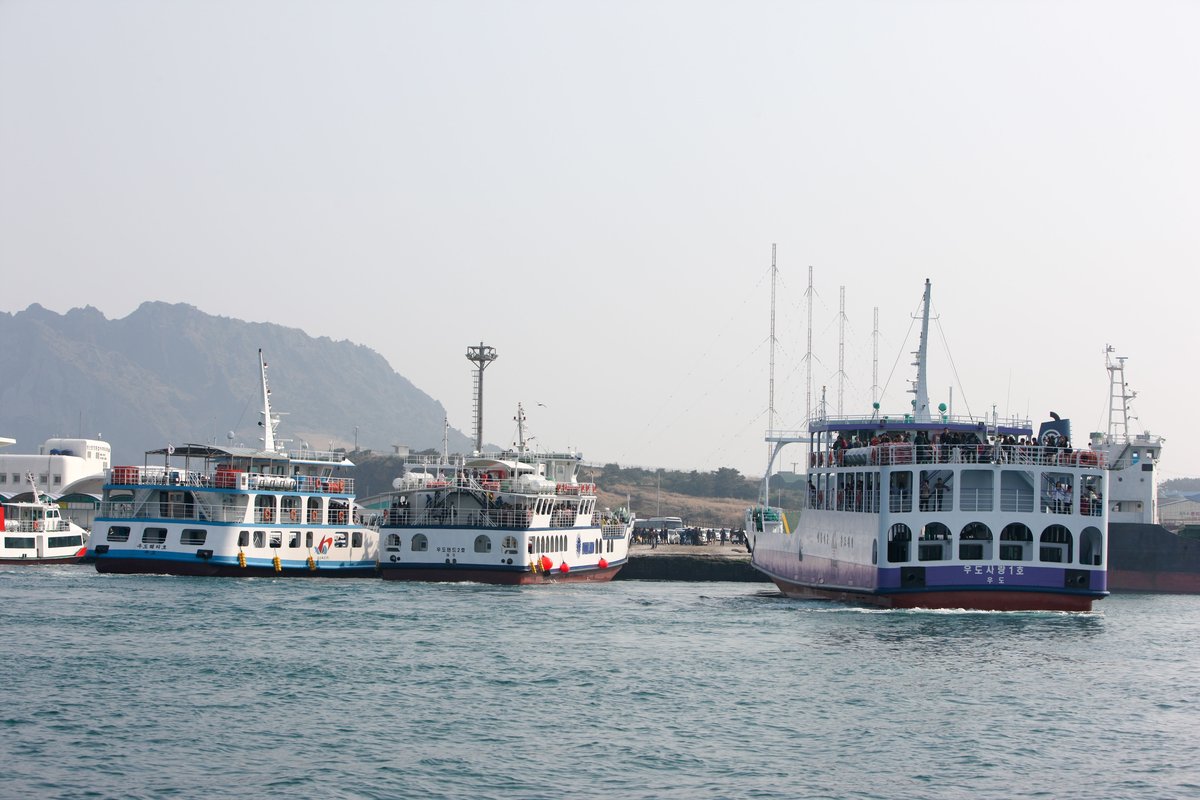
- Your plans include a ferry, an island or a long hike that bad weather would cancel.
You can skip it if:
- Your dates are fixed and you only need the forecast for next week. Go straight to the KMA’s forecast pages listed at the end.
- You’re travelling from October to May. The monsoon is over by then, and typhoons are rare.
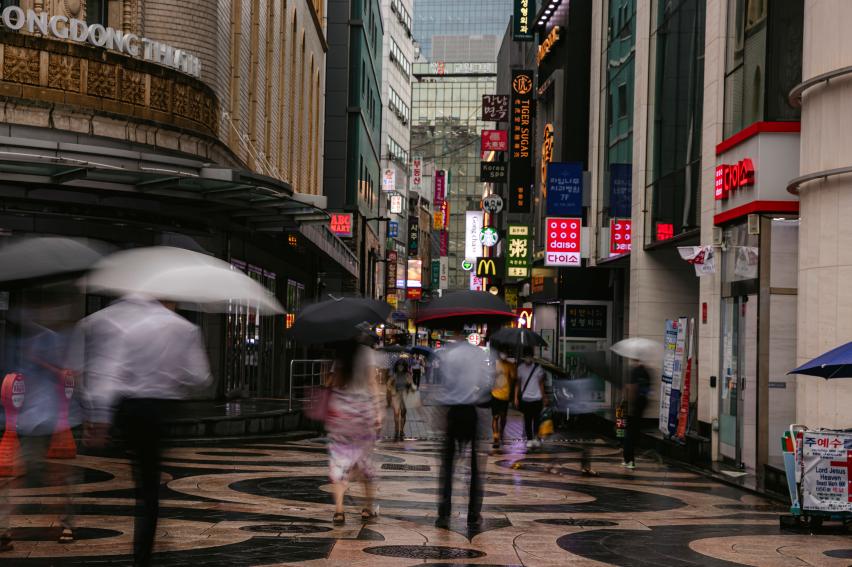
When is monsoon season in Seoul, Busan and Jeju?
Jeju first, Seoul last: on the averages, Jeju starts June 19 and Seoul June 25, six days apart. These are the KMA’s 1991–2020 normals, a 30-year average. When you see “monsoon June 25 – July 26” online, that’s the central-region average, not a forecast for any particular year.
| Region | Average start | Average end | Length | Days with rain | Average rainfall |
|---|---|---|---|---|---|
| Central (incl. Seoul) | June 25 | July 26 | 31.5 days | 17.7 days | 378.3 mm |
| Southern (incl. Busan) | June 23 | July 24 | 31.4 days | 17 days | 341.1 mm |
| Jeju | June 19 | July 20 | 32.4 days | 17.5 days | 348.7 mm |
The KMA splits the country into three monsoon regions. Seoul sits in the central region, Busan in the southern one, and Jeju is its own region.
Does the monsoon start on time every year?
No. In the last seven years the start has moved by up to about two weeks from the average, and the length has ranged from 13 to 54 days. These are the KMA’s final dates, published after each summer.
| Year | Central (Seoul) | Southern (Busan) | Jeju |
|---|---|---|---|
| 2026 | Jul 1 – Jul 26 (26 days) | Jun 30 – Jul 25 (26 days) | Jun 30 – Jul 19 (20 days) |
| 2025 | Jun 19 – Jul 20 (32 days) | Jun 19 – Jul 1 (13 days) | Jun 12 – Jun 26 (15 days) |
| 2024 | Jun 29 – Jul 27 (29 days) | Jun 22 – Jul 27 (36 days) | Jun 19 – Jul 27 (39 days) |
| 2023 | Jun 26 – Jul 26 (31 days) | Jun 25 – Jul 26 (32 days) | Jun 25 – Jul 25 (31 days) |
| 2022 | Jun 23 – Jul 25 (33 days) | Jun 23 – Jul 25 (33 days) | Jun 21 – Jul 24 (34 days) |
| 2021 | Jul 3 – Jul 19 (17 days) | Jul 3 – Jul 19 (17 days) | Jul 3 – Jul 19 (17 days) |
| 2020 | Jun 24 – Aug 16 (54 days) | Jun 24 – Jul 31 (38 days) | Jun 10 – Jul 28 (49 days) |
2026 started late everywhere: 6 days after the average in the central region, 7 in the south and 11 in Jeju. The north and south can also behave very differently in the same year. In 2025 the southern monsoon was over by July 1 while Seoul’s ran to July 20.
When will the 2027 monsoon dates be known?
Not before it starts. The KMA doesn’t forecast the start or end date of the monsoon in advance. At the time, it says the monsoon has begun or ended; the official dates come only after the summer is analysed.
| Start and end forecast in advance? | No |
|---|---|
| When the final dates come out | In the KMA’s summer climate report after the season (in 2026, September 3) |
| What to check before you leave | The KMA’s Medium-Range Forecasts and typhoon information, about a week ahead |
Use the averages to choose your week, then check the KMA’s English Medium-Range Forecasts page the week before you fly.
Does it rain every day during the monsoon?
No. On average, about half the days of the monsoon have rain. The averages run 31–32 days, with rain on 17.7 days in the central region, 17 in the south and 17.5 in Jeju. The figures are averages across each region’s weather stations, which is why they have decimals.
| Average monsoon | 31–32 days; rain on 17–18 of them |
|---|---|
| 2026 | Rain on 16.1 days in the central region, 10.3 in the south, 6.8 in Jeju |
| Longest | 2020: 54 days in the central region |
| Shortest | 2025: 13 days in the south; in 2021 all three regions had 17 days |
So a week in July will very likely include rain, but not necessarily every day of it. Plans that need one dry day, such as a ferry or a long hike, are the ones to keep flexible.
Is June a good time to visit Korea?
Early and mid-June, yes. From the last week of June to late July, almost every recent year has been in the monsoon. From 2020 to 2026, the only years the monsoon started on or before June 18 were 2020 and 2025, and only in Jeju. Seoul and Busan never started earlier than June 19.
| Up to June 18 | Outside the monsoon in Seoul and Busan in all seven years; Jeju had started in 2020 and 2025 |
|---|---|
| June 19–24 | Some years have started, some haven’t |
| Last week of June to late July | Inside the monsoon in almost every year |
| After late July | Monsoon usually over, but typhoon season is at its busiest |
If your dates are flexible and a ferry or island is part of the plan, I’d put that part before mid-June.
When is typhoon season in Korea, and how many hit?
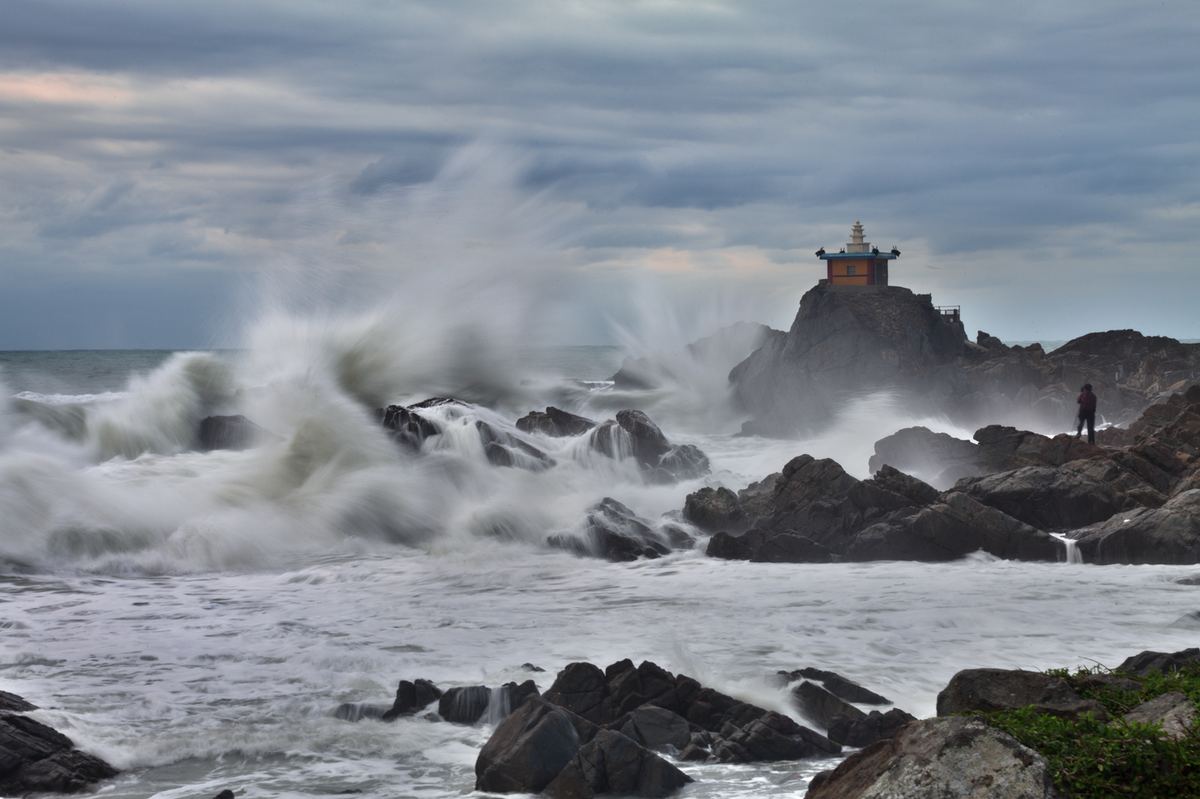
July to September, with August the busiest; on average 3.4 typhoons a year affect Korea. The table counts typhoons by the month they formed, using the KMA’s 1991–2020 averages; one that forms at the end of a month reaches Korea in the next.
| Month formed | Formed in the NW Pacific | Of which affected Korea |
|---|---|---|
| June | 1.7 | 0.3 |
| July | 3.7 | 1 |
| August | 5.6 | 1.2 |
| September | 5.1 | 0.8 |
| October | 3.5 | 0.1 |
| Whole year | 25.1 | 3.4 |
The monsoon ends in late July, and the busiest typhoon weeks follow straight after. Years vary a lot: 7 typhoons affected Korea in 2019, 5 in 2022, 1 in 2023 and 2 in 2024. In 2026, as of mid-November, 32 had formed in the Northwest Pacific and 2 had affected Korea, one formed in May and one in October, so those months aren’t zero either.
Which Korean weather warnings should I watch?
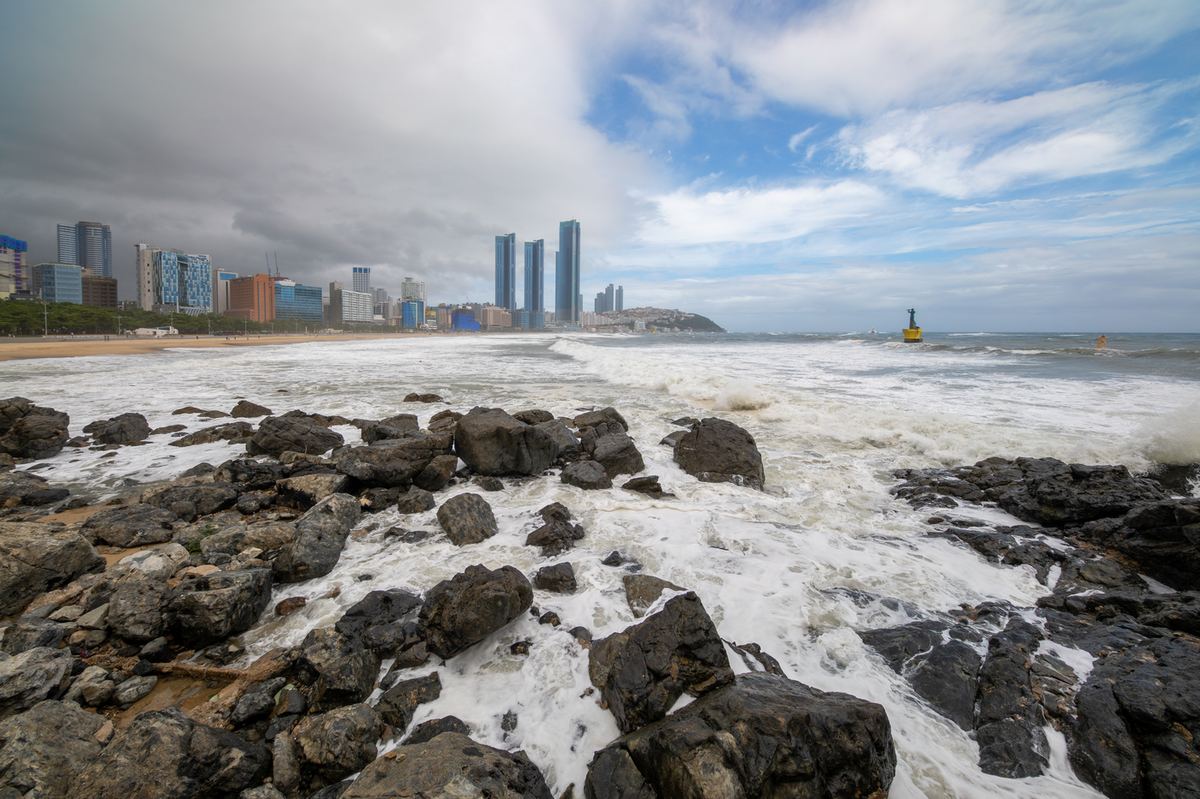
Treat a warning (경보) as the signal to change that day’s plans; if you’re taking a boat, watch the wind-wave line, because the sea can be rough while the city is merely cloudy. The KMA issues two levels: an advisory (주의보) and a warning (경보). The thresholds:
| Type | Advisory (주의보) | Warning (경보) |
|---|---|---|
| Heavy rain (호우) | 60 mm in 3 hours or 110 mm in 12 hours expected | 90 mm in 3 hours or 180 mm in 12 hours expected |
| Wind waves (풍랑), at sea | Wind of 14 m/s for 3+ hours, or significant wave height of 3 m | Wind of 21 m/s for 3+ hours, or significant wave height of 5 m |
| Typhoon (태풍) | Wind, waves, rain or storm surge from a typhoon reaching advisory level | Reaching warning level, or 200 mm+ total rain expected |
Advisory and warning are the usual English renderings; Korean apps and alerts show the Korean words in brackets above.
A typhoon is forecast. What should I do about my flight?
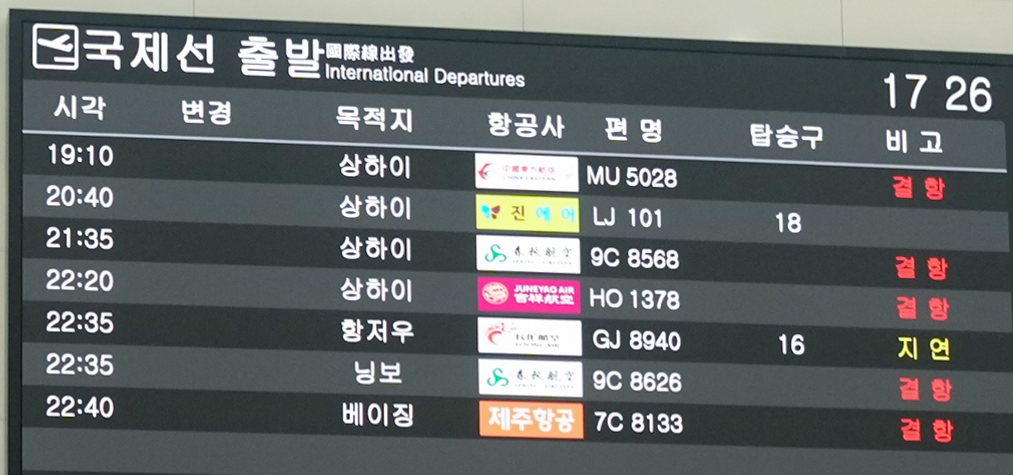
Don’t cancel it yourself yet. If the airline confirms a cancellation, its rebooking and refund rules for cancelled flights apply. If you cancel as soon as a forecast appears, it usually counts as a voluntary refund under your fare’s normal rules. Each airline and fare type is different, so read your airline’s own page, and watch your flight’s status rather than the headlines.
Your situation
If you can choose any week in June
Go in the first half. Up to June 18, Seoul and Busan were outside the monsoon in all of 2020–2026. Put anything weather-dependent, like an island day or a long hike, in that stretch.
If your trip is fixed for July
Expect rain on about half the days, not all of them. Keep one or two indoor days you can swap in, decide each morning from the KMA forecast, and put a ferry or island day early in the trip so there’s room to move it. If your trip runs into early August, keep an eye on typhoon information as well.
If a typhoon is forecast for your travel dates
Check the KMA’s typhoon track prediction for where and when it’s expected, and watch your airline’s flight status. Don’t cancel flights yourself on the forecast alone. Drop boat trips on any day with a wind-wave warning, and on a heavy-rain or typhoon warning day keep plans close to your hotel.
Common mistakes
- Treating “June 25 – July 26” as this year’s forecast. It’s the 30-year average for the central region.
- Waiting for the 2027 monsoon forecast. The KMA doesn’t issue one; use the averages.
- Assuming a month of nonstop rain. About half the monsoon days are wet on average.
- Assuming Jeju and Seoul follow the same dates. Jeju starts about six days earlier on average, and in single years the gap can be much bigger.
- Relaxing once the monsoon ends. August is the peak typhoon month.
- Judging a ferry day by the sky over the city. Check the wind-wave alerts for the sea.
- Cancelling a flight the moment a typhoon is forecast. Wait for the airline’s decision.
What I would do
With a free choice of dates, I’d book a Seoul trip for the first half of June and keep anything that depends on the sea or a clear day for the earliest part. If the trip had to be in July, I’d plan the days in pairs, one outdoor and one indoor option for each, and choose each morning from the KMA forecast rather than locking in an order weeks ahead. A week before flying, I’d check the KMA’s Medium-Range Forecasts and typhoon pages. If a typhoon showed up, I’d hold my flight, watch its status and move any boat trip off the warning days. For a trip that starts or ends at Incheon, checking which terminal your airline uses is worth doing before a weather day too, so you’re at the right desk if you have to rebook.
FAQ
- Q1: When is monsoon season in Korea?
- Late June to late July. On the 1991–2020 averages it runs June 19 – July 20 in Jeju, June 23 – July 24 in the south including Busan, and June 25 – July 26 in the central region including Seoul. Real years shift by a week or two either way.
- Q2: When will the 2027 monsoon season start in Korea?
- Nobody knows yet; the Korea Meteorological Administration doesn’t forecast the start date in advance. It announces that the monsoon has begun, and the final dates come out after the summer. Plan with the averages and check the KMA forecast a week before you leave.
- Q3: Does it rain every day during the Korean monsoon?
- No. The average monsoon lasts 31–32 days, and rain falls on about 17.7 of them in the central region, 17 in the south and 17.5 in Jeju, roughly half.
- Q4: Is June a good time to visit Korea?
- Early and mid-June, yes; from the last week of June it’s monsoon almost every year. From 2020 to 2026, the monsoon started before June 18 only in Jeju in 2020 and 2025; the earliest start in Seoul or Busan was June 19.
- Q5: When is typhoon season in Korea?
- July to September, peaking in August. On average 3.4 typhoons a year affect Korea, almost all forming in those three months.
- Q6: A typhoon is forecast for my trip. Should I cancel my flight?
- Not yet. If the airline cancels, its own rebooking and refund rules apply; if you cancel first, it usually counts as a voluntary refund. Check your airline’s page for its rules.
If it were me
If I could pick, I’d go in early or mid-June: in every year from 2020 to 2026 still outside the monsoon in Seoul and Busan. Late June through July I’d only choose for a city trip with plenty of indoor options, not for islands or hikes. August I’d treat as typhoon month and keep the itinerary loose. Whatever the month, I wouldn’t trust any 2027 date I read before the season starts; the averages are the best guide there is until the KMA says the monsoon has begun.
Official sources
- Korea Meteorological Administration (English)
- KMA: Medium-Range Forecasts
- KMA: Typhoon Track Prediction
- KMA Open Data Portal: monsoon (장마) averages and yearly dates (Korean)
- KMA Weather Nuri: typhoon statistics (Korean)
- KMA: advisory and warning criteria (Korean)
Prices and times follow the latest official announcement.
Read next
Verified
 Current
Seoul First Snow 2026: Nov 8, and the Best Month for Snow
Seoul’s first snow of 2026 fell on November 8, 12 days ahead of the November 20 average; it was sleet and snow pellets and nothing settled. January is the best bet: five days give about a 64% chance of a snowy day and 46% of snow on the ground.
Verified
 Current
Incheon Airport Terminal 1 or 2? Airline List for 2026–27
Terminal 2 has 14 passenger airlines: Korean Air, Asiana, Jin Air, Air Busan, Air Seoul, Delta, Virgin Atlantic, Air France, KLM, Aeromexico, China Airlines, Garuda Indonesia, SAS and Xiamen Air. The other 71 use Terminal 1. On a codeshare, go to the terminal of the airline that operates the flight.
Verified
 Current
Korea Public Holidays 2027: Dates and 8 Palace Closure Days
Korea’s 2027 public holidays are officially set: Seollal February 6–9 (including an alternative holiday on the 9th) and Chuseok September 14–16, with 10 long weekends of three days or more. Labor Day (May 1) and Constitution Day (July 17) have been public holidays since 2026.