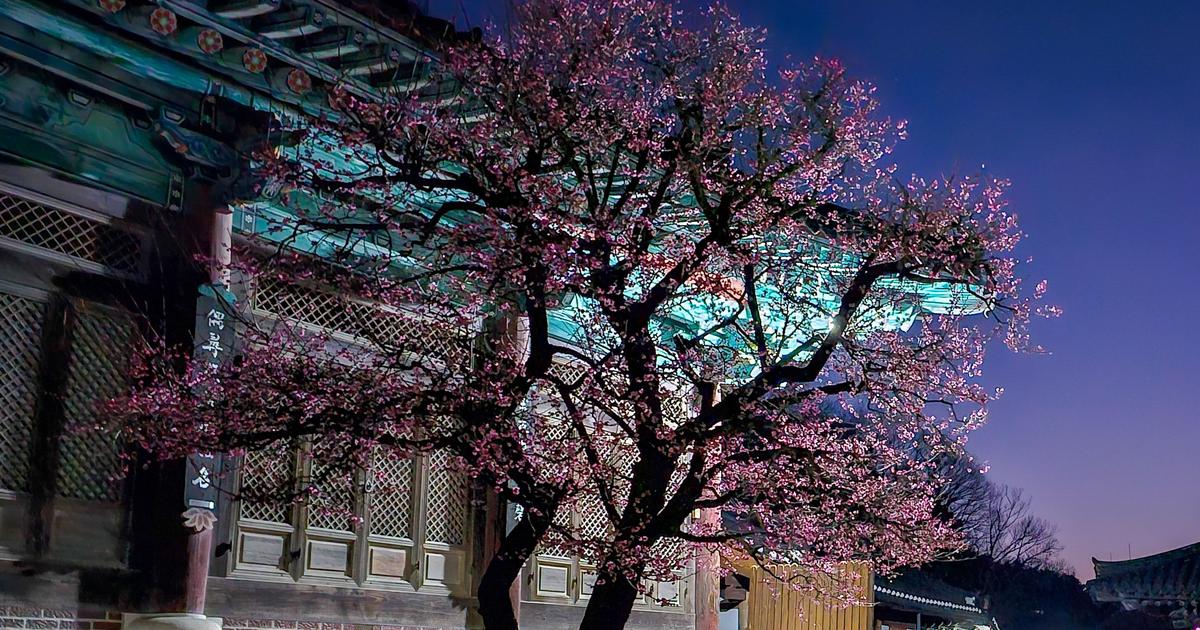
The old red plum in front of Yeonggak Hall at Tongdosa Temple opened its first flower on January 10 in 2023, and not until March 5 in 2025. The same tree, nearly two months apart. There’s no official forecast for 2027, so instead of a date this guide gives you the past records, where to check the bloom the week before you go, which bus to take from Busan, and what time to walk in so you see more blossom than people. Three names to know: Jajangmae (자장매), the famous tree; 통도사, Tongdosa on maps and bus signs; and 신평, Sinpyeong, the bus terminal at the temple’s doorstep.
- No 2027 forecast exists. In 2021–2026 the main tree reached 80% between mid-February and early March, and years differ by more than a month.
- Check Yangsan City’s blog the week before; field posts start in late February.
- Free entry, gates open 06:30. Weekends are busy before 08:00.
- From Busan: Line 1 to Myeongnyun, then Yangsan bus 12 to Sinpyeong, ₩1,650 by card.
- Avoid February 27 – March 1, 2027, a long weekend that may hit peak bloom.
- Day tours stop for about an hour in the afternoon. I’d go by bus in the morning.
Contents
- When the plums bloom
- Who this is for
- Tongdosa key facts
- Where the trees are
- How to check the bloom
- Which week, which days to avoid
- Getting there from Busan
- From the bus to the trees
- Museum and Geumgang Gyedan
- Day tours
- Wondong or Gwangyang instead
- Your situation
- Common mistakes
- What I would do
- FAQ
- If it were me
- Official sources
When do Tongdosa’s plum blossoms bloom in 2027?
Nobody has published a forecast, so the past records are the best guide. Neither Yangsan City nor the national tourism organization issues bloom dates for Tongdosa. What exists are the city’s own field posts from the temple each year:
| Year | What the city recorded |
|---|---|
| 2027 | No forecast; first posts usually come in late February |
| 2026 | 80%+ on February 18; full bloom by the weekend of March 7–8 |
| 2025 | First flowers only on March 5; still looked closed from a distance on March 7 |
| 2024 | About 80% in early March |
| 2023 | First flower January 10; many open up close by January 24; about 50% on February 13 |
| 2021 | Already blooming on February 28 |
Two things stand out. The 80% records fall between mid-February and early March, which is the likeliest window for 2027. And one year tells you little about the next: 2026 was about a month ahead of 2025. If I had to book flights now, I’d aim for the last week of February into the first week of March. That’s the back half of the window, late enough for a slow year like 2025, and in an early year the later trees described below may still be in flower.
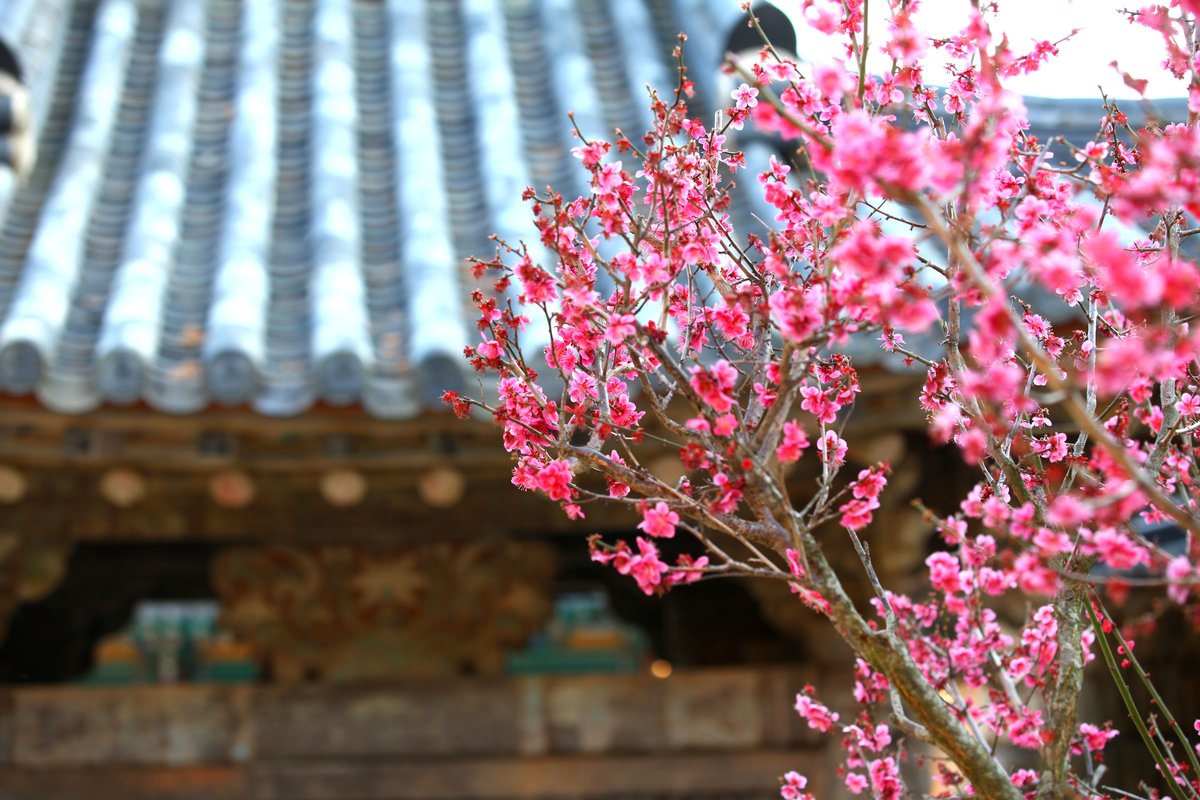
Who is this guide for?
Anyone in Busan between mid-February and mid-March willing to give half a day to an old temple and its plum trees.
It suits you if:
- You fly in and out of Busan and want a half-day trip outside the city.
- You’re heading south from Seoul by KTX and could stop near Ulsan on the way.
- You like old temple buildings with blossom, and don’t mind an early start.
You can skip it if:
- Your trip is in late March or later. The plums are usually over; it’s cherry blossom time, so see Busan’s cherry blossom dates.
- You want a big plum orchard. Tongdosa has a few old trees between the halls; see Wondong and Gwangyang.
- You can only go in the afternoon and hate crowds.
Tongdosa key facts
Free, open 06:30–17:30 every day of the year. The temple is in Yangsan, South Gyeongsang Province, reachable from Busan by city bus.
| Entry | Free |
|---|---|
| Hours | 06:30–17:30, open all year |
| The trees | Past Cheonwangmun gate on the right; the star is Jajangmae in front of Yeonggak Hall |
| 2027 bloom | No forecast; 80% in mid-February to early March in past years |
| From Busan | Line 1 to Myeongnyun then Yangsan bus 12, or Line 1 to Nopo then an intercity bus; both to Tongdosa Sinpyeong Bus Terminal |
| Bus 12 fare (adult) | Card ₩1,650, cash ₩1,700 |
| Best time | 06:30 at opening; weekends are busy before 08:00 |
| Driving | The lot outside the main gate is free; lots 1 and 2 in front of Iljumun charge |
| Phone | +82-55-382-7182 |
Where are the plum trees in the temple?
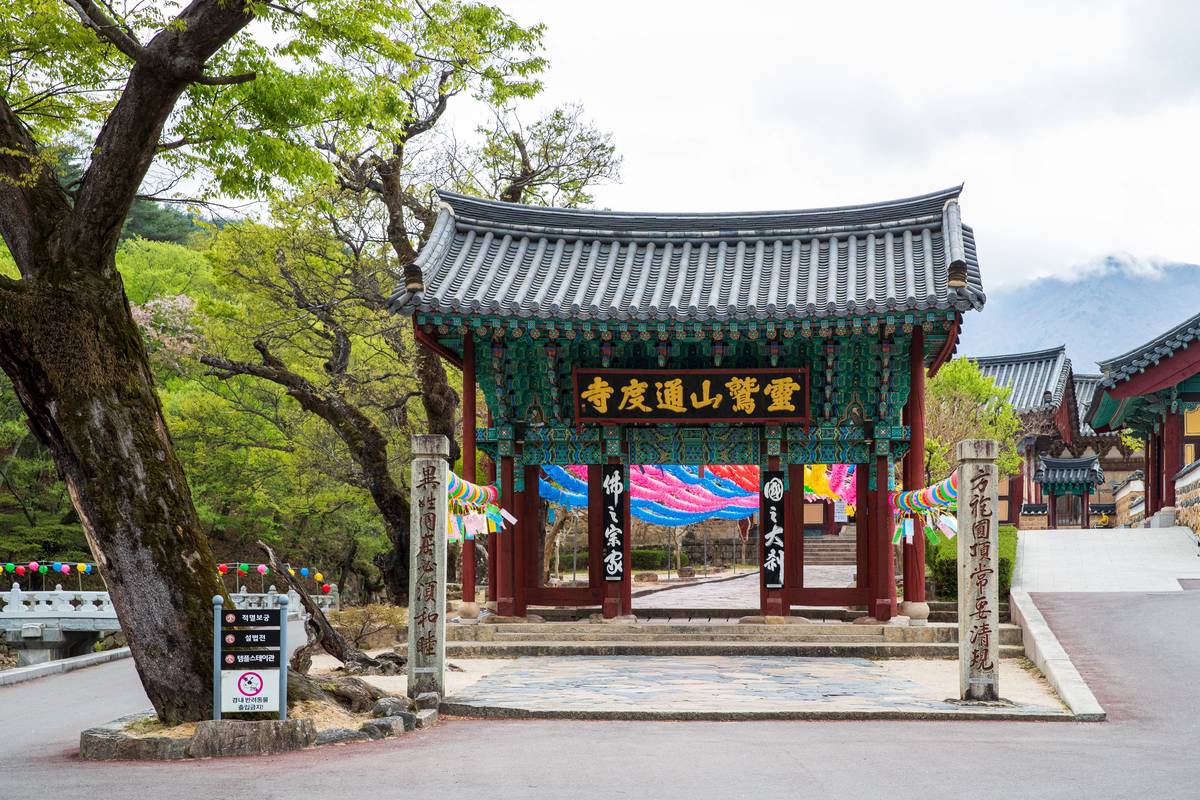
In four spots, met in order as you walk in; the later ones bloom later. Jajangmae isn’t the first tree you see.
| Where | What |
|---|---|
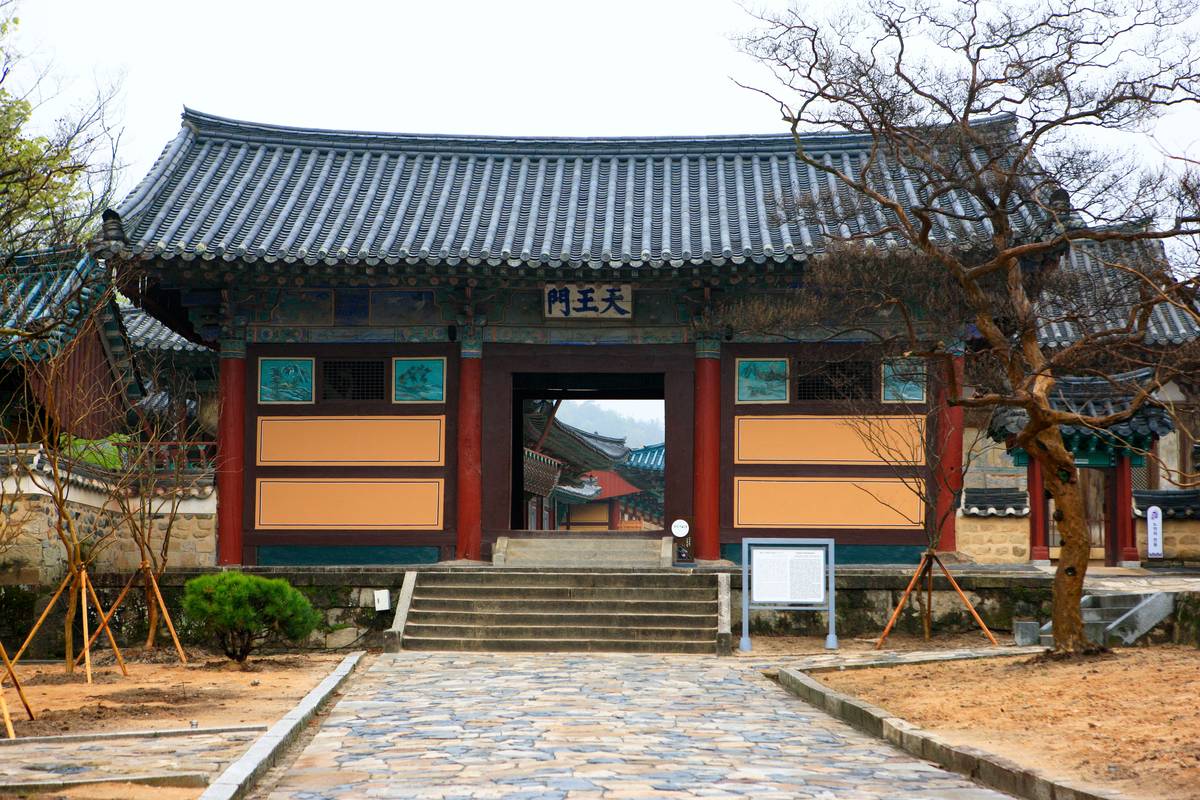
| Past Iljumun and Cheonwangmun, on the right (between Cheonwangmun and Geungnakjeon) | One red and one white plum, the first you’ll see |
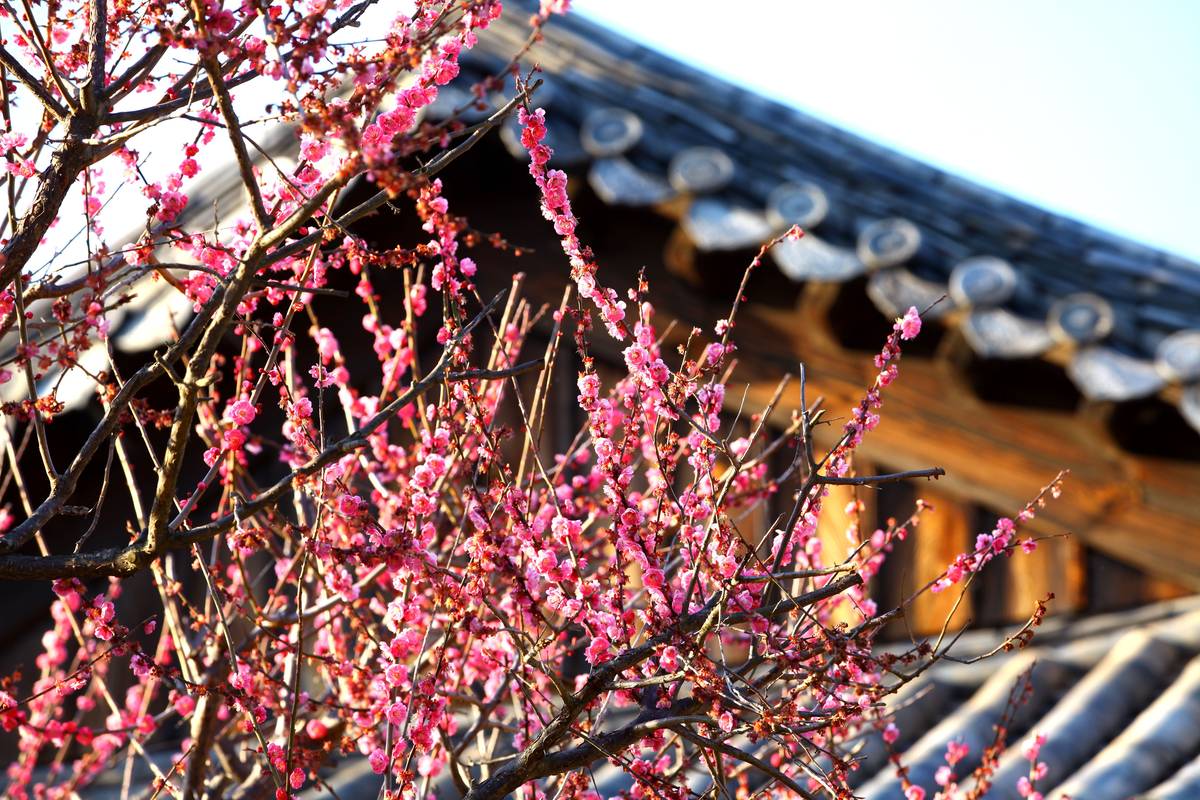
| In front of Yeonggak Hall (영각) | Jajangmae, about 370 years old, named after Master Jajang, who founded the temple |
| Behind Geungnakbojeon | Two trees, later than Jajangmae |
| In front of the Tongdosa Museum (near Iljumun) | A weeping plum, later again |
That order helps with timing. In an early year Jajangmae may be past its best while the trees behind Geungnakbojeon and at the museum are still going; in a late year, focus on Yeonggak Hall, because the others may not have opened.
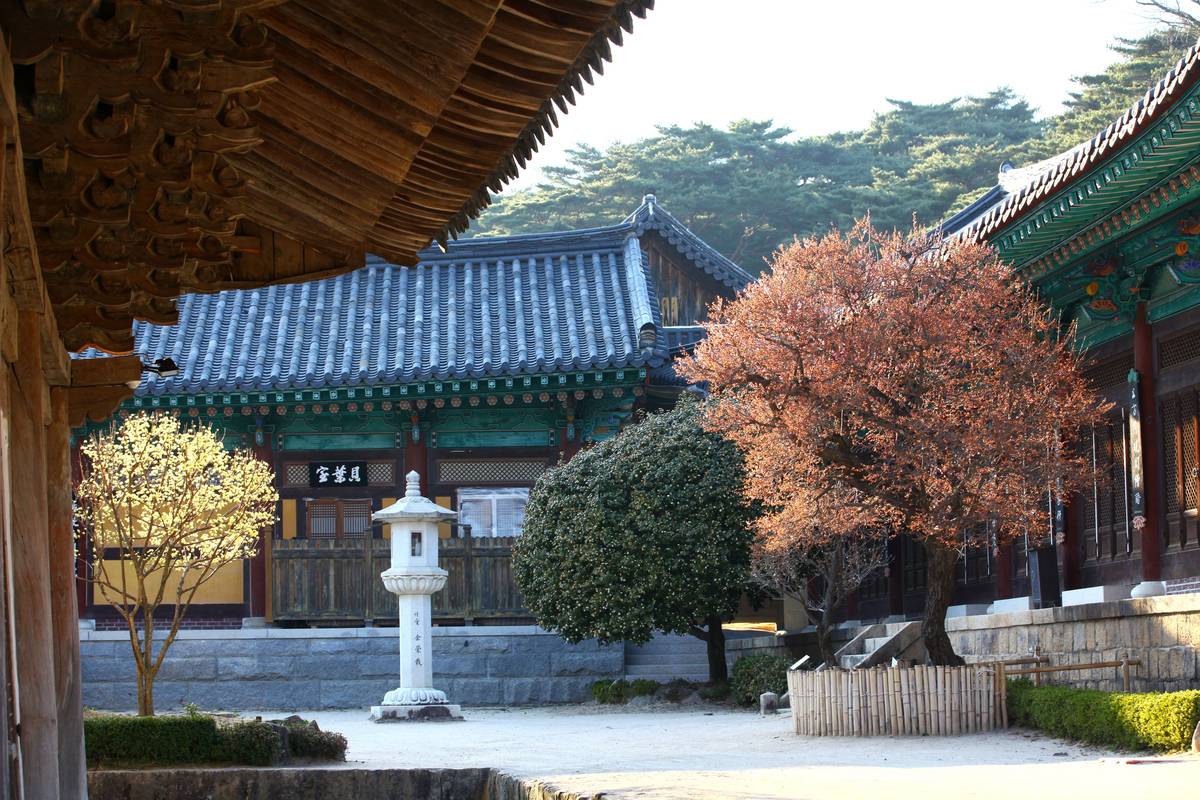
How do I check whether the plums are out?
Read Yangsan City’s official Naver blog the week before, and again two days before. It’s the closest thing to an official bloom report, and each post says how far open the trees were on the day of the visit.
- Open blog.naver.com/eyangsancity.
- Search the blog for 통도사 홍매화 (Tongdosa red plum) or 자장매 개화 (Jajangmae bloom). The posts sit in the travel column 구석구석 양산여행.
- Open the newest one and run it through your browser’s translator. Look for the visit date and the percentage after 개화 (bloom). 만개 means full bloom; “80프로” or “80%” means 80%.
Once a post reports 80% or more, it’s time to go.
Which week should I go, and which days should I avoid?
A weekday in bloom week, away from the two Korean long weekends. Both land in plum season in 2027.
| Dates | What | Effect |
|---|---|---|
| Feb 6 (Sat) – Feb 8 (Mon), substitute holiday Feb 9 (Tue) | Seollal (Lunar New Year) | The museum is closed |
| Feb 27 (Sat) – Mar 1 (Mon) | Long weekend; March 1 is Independence Movement Day | May coincide with peak bloom |
| From Mar 2 (Tue) | Ordinary weekdays again | If the bloom is still on, far fewer people |
Even an ordinary weekend is busy before 08:00, so the advice is to be there when the gates open at 06:30. My order of preference: a bloom-week weekday at opening, then a weekday before noon, and only then a weekend at opening. If your trip is stuck on the March 1 weekend, use it to travel and go on Tuesday, March 2: one day later, without the holiday crowd. For what’s open over Seollal, see what’s open in Korea over Lunar New Year 2027.
How do I get to Tongdosa from Busan?
I’d take Yangsan city bus 12 from Myeongnyun Station: frequent, clear first and last times, and you pay by transit card. The other option is an intercity bus from Busan Bus Terminal at Nopo. Both stop at Tongdosa Sinpyeong Bus Terminal (통도사신평터미널).
| Yangsan city bus 12 | Intercity bus | |
|---|---|---|
| Board at | Busan Metro Line 1 Myeongnyun Station | Busan Metro Line 1 Nopo Station (Busan Bus Terminal) |
| Which bus | 12, via Oncheonjang and Pusan Nat’l Univ. | Bound for 신평(통도사), Sinpyeong |
| Frequency | 44 a day on weekdays, 38 on weekends and holidays | About every 20 minutes |
| First and last | From Myeongnyun 05:10–22:10; from Sinpyeong 05:20–21:40 | Check at the terminal |
| Adult fare | Card ₩1,650, cash ₩1,700 | Check at the terminal |
From Seomyeon, Nampo or Haeundae, ride the subway to Line 1 first. The last bus 12 back from Sinpyeong is at 21:40, so there’s no rush in the evening. Yangsan City doesn’t publish the journey time on bus 12; check it in a map app the night before and work back from 06:30.
Coming from Seoul by KTX, the other way in is KTX Ulsan Station, where Yangsan bus 13 runs to the same Sinpyeong terminal. Booking those trains is covered in when KTX tickets go on sale.
How do I walk from the bus to the plum trees?
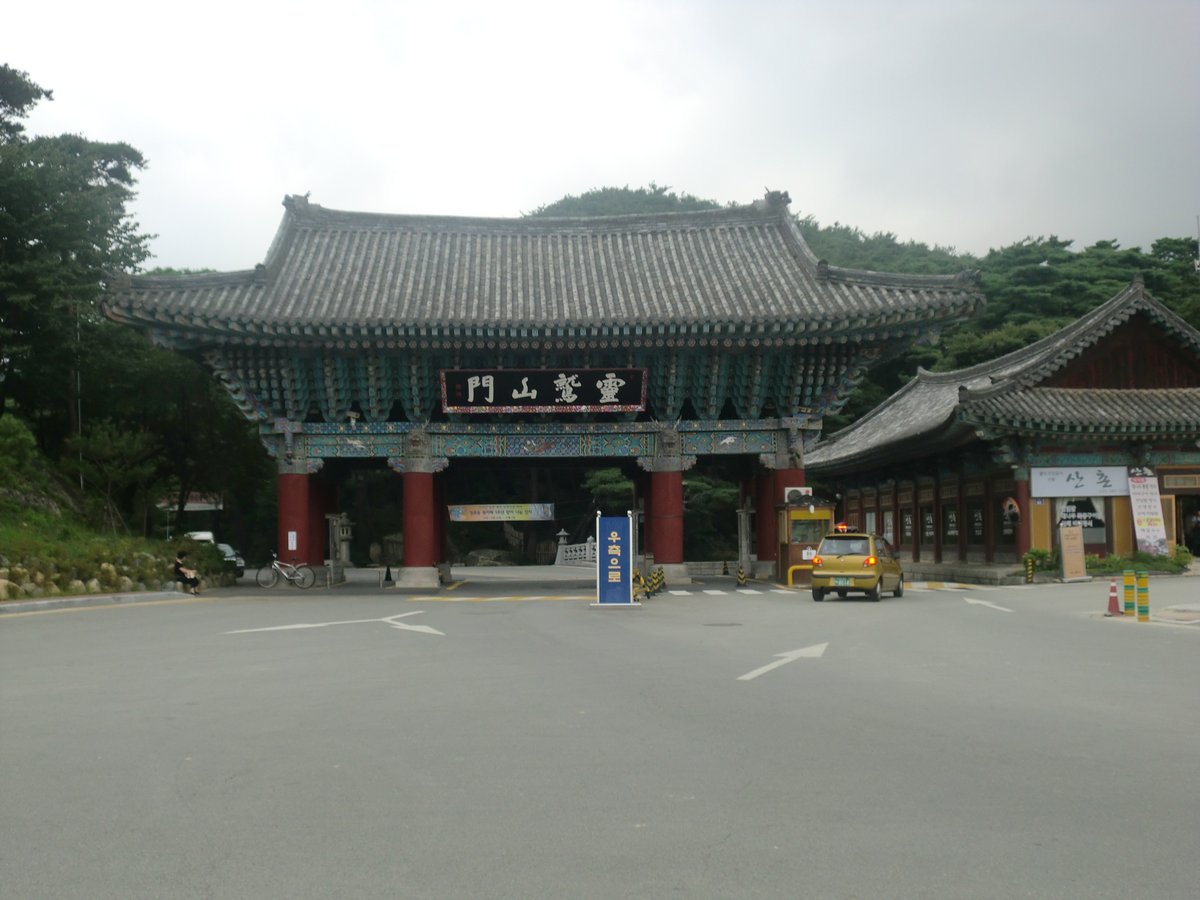
Through the mountain gate and along a 1 km pine path to Iljumun, then through Cheonwangmun; the first plums are on your right.
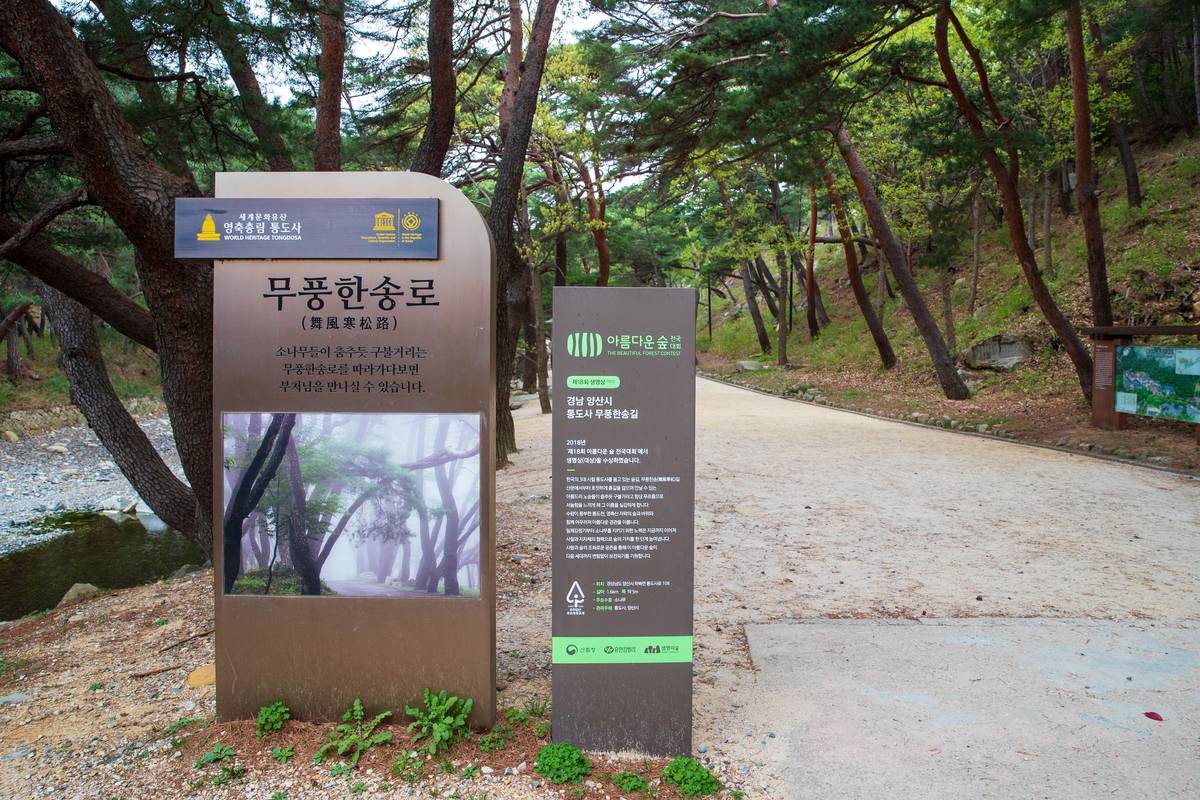
- Pass the mountain gate (영축산문) and Mupunggyo Bridge; the pine path, Mupung Hansong-gil (무풍한송길), starts there.
- Walk about 1 km under pines 100 to 200 years old. The forest won the grand prize at Korea’s national Beautiful Forest contest in 2018.
- At Iljumun, the museum and its weeping plum are close by.
- Through Cheonwangmun, the first red and white plums are on the right.
- Carry on to Yeonggak Hall for Jajangmae, then behind Geungnakbojeon for two more trees.
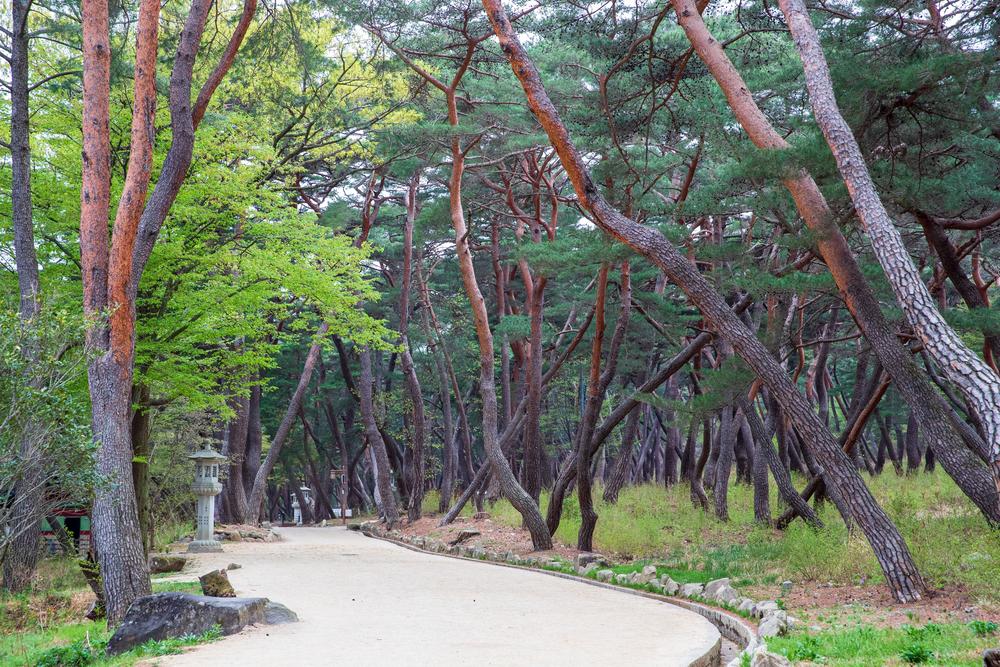
Walk the path briskly on the way in to beat the crowd to Jajangmae, and slowly on the way out. If you drive, I’d park in the free lot outside the main gate and walk this path rather than drive through to the paid lots by Iljumun; fees there went up in 2026, so check the board on site.
Are the Tongdosa Museum and Geumgang Gyedan open?
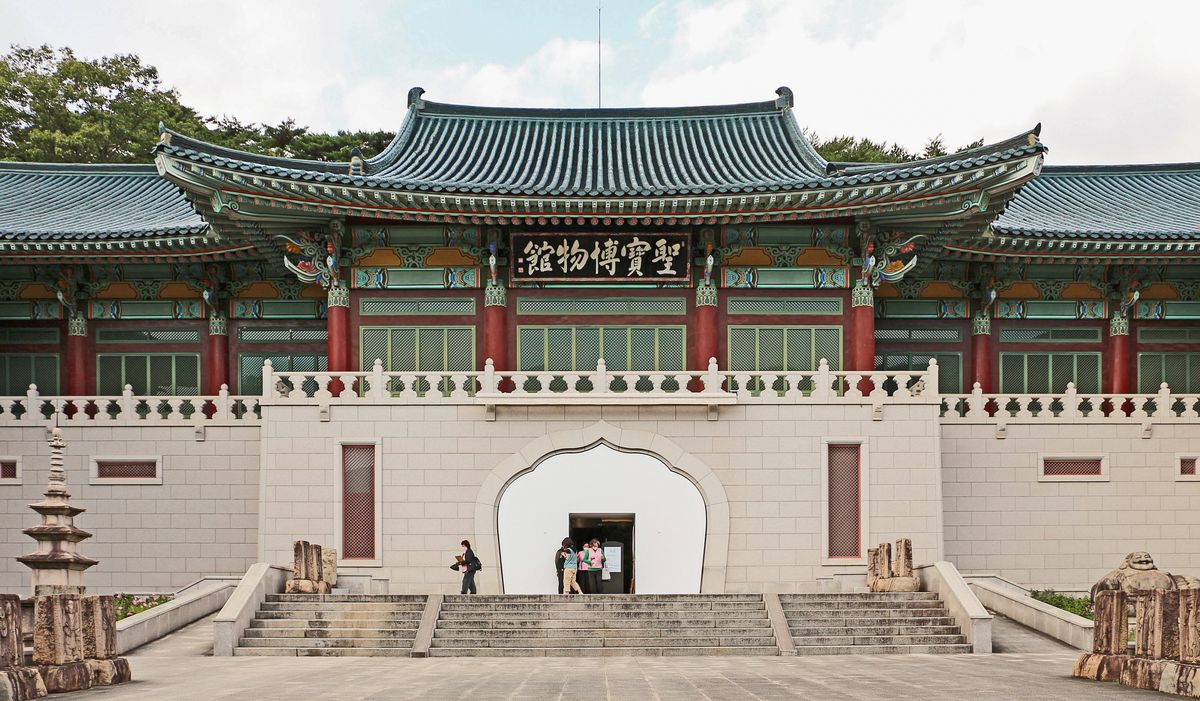
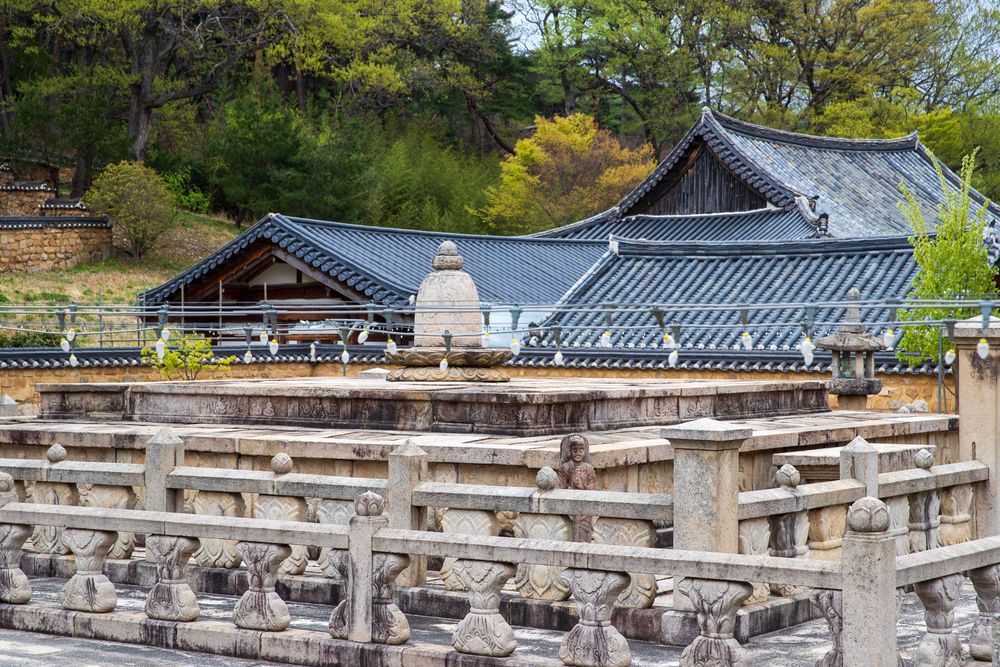
The museum is closed on Mondays; Geumgang Gyedan opens only on certain lunar days, 11:00–14:00. Check both against your date.
| Tongdosa Museum (성보박물관) | Geumgang Gyedan (금강계단) | |
|---|---|---|
| February 2027 | 09:30–16:30, last entry 16:00 | Feb 7–9, Feb 21, Feb 24 |
| March 2027 | 09:30–17:00, last entry 16:30 | Mar 2, Mar 8–10, Mar 22, Mar 25, Mar 31 |
| Hours | As above | 11:00–14:00; closed in rain |
| Closed | Mondays, January 1, Seollal and Chuseok holidays | All other days |
Two 2027 dates matter. March 1 is a Monday, so the museum is shut on the last day of the long weekend. March 2 is the opposite: museum open and Geumgang Gyedan open, a rare weekday when you get both. After an early visit to the trees, the museum opens at 09:30, which fills the gap until Geumgang Gyedan opens at 11:00.
Is there a day tour to Tongdosa from Busan?
Yes, a few, but each gives the temple about an hour, mostly in the afternoon. That’s the opposite of the be-there-at-opening advice. A tour suits you if you also want Ulsan the same day and don’t mind crowds.
| Tour | What matters for plums |
|---|---|
| Klook: Ulsan Coastal Cruise & Tongdosa Temple Full-Day Tour | English-speaking staff; Tongdosa from 14:30 |
| KKday: Ulsan Whale Cruise & Yangsan Tongdosa Day Tour from Busan (listed as “Tongdongsa”) | English; minimum 10 people; the cruise may be swapped for a nearby museum if numbers are short |
| Klook: Beomeosa & Tongdosa Temple One-day Architecture & Cultural Tour | English among four guide languages; groups of 10–20; dates open only December 9–26, 2026 so far; its itinerary’s “Jajangam Hermitage” is not the Jajangmae tree |
None of the platforms shows February or March 2027 departures yet, so check the date calendar before you book. If a tour is your choice, compare these two: Klook Ulsan and Tongdosa day tour and KKday Ulsan cruise and Tongdosa day tour.
Should I go to Wondong or Gwangyang instead?
Tongdosa for old trees around old halls; Wondong or Gwangyang for bigger plum areas. If your dates are late, Wondong is the safer bet.
| Tongdosa | Wondong, Yangsan (원동) | |
|---|---|---|
| What you see | A few old trees between temple halls | A plum area with its own festival |
| Bloom | 80% in mid-February to early March in past years | On average early to mid-March, later than Tongdosa |
| Festival | None | 2026: March 7–8; 2027 not announced |
| From Busan | Bus 12 or intercity bus | Mugunghwa or ITX-Saemaeul train to Wondong Station |
Both are in Yangsan and bloom one after the other. With fixed dates you can choose once the season shows its hand: early year, Wondong; late year, Tongdosa. Gwangyang is the other big plum area in the south.
Your situation
If you’re staying in Busan and have one morning
Check bus 12’s journey time the night before. Take the subway to Myeongnyun, change to the 12, and arrive around the 06:30 opening. See the trees in order, Cheonwangmun, Yeonggak Hall, behind Geungnakbojeon, walk the pine path back, and be in Busan by lunch.
If your dates are fixed and the bloom is off
Too early: start at Cheonwangmun and Yeonggak Hall, then try the later trees behind Geungnakbojeon and at the museum; if those are still in bud, make the pine path and the halls the point of the visit. Too late: in early to mid-March, go to Wondong instead.
If you’re coming down from Seoul by KTX
Get off at KTX Ulsan, take Yangsan bus 13 to Sinpyeong, then after the temple take bus 12 to Myeongnyun and Line 1 into Busan. With heavy luggage, though, I’d go to Busan first, drop the bags, and do Tongdosa from Myeongnyun the next morning.
Common mistakes
- Taking bus 2100 or 2300. These run from Busan to Ulsan and don’t pass Tongdosa.
- Booking on last year’s dates. 2026 was about a month earlier than 2025.
- Stopping at the first tree past Cheonwangmun. Jajangmae is further in, at Yeonggak Hall.
- Mixing up Jajangam and Jajangmae. A tour that lists Jajangam Hermitage is going to a hermitage on the mountain, not the tree.
- Trusting an “open 24 hours” listing. Korea Tourism Organization’s English page says so; its Chinese page and Yangsan City’s posts say 06:30–17:30. Go by 06:30–17:30.
- Planning the museum for March 1. It’s a Monday; closed.
- Waiting in the rain for Geumgang Gyedan. It doesn’t open in rain.
- Arriving in the afternoon. Weekends are busy from early morning and only get worse.
What I would do
A weekday in bloom week, through the gate at 06:30, back in Busan by noon. One aim: see Jajangmae before the crowd.
- A week out: read Yangsan City’s newest post; at 80% or more, fix the next weekday. Check again two days before.
- The night before: look up the bus 12 journey time from Myeongnyun and pick the bus that gets you to Sinpyeong for 06:30.
- Around 06:30: walk from Sinpyeong through the mountain gate, pine path at a brisk pace, first plums past Cheonwangmun.
- Then: Jajangmae at Yeonggak Hall, and the two trees behind Geungnakbojeon.
- After 09:30: if it isn’t a Monday, the museum and its weeping plum on the way out.
- Back: the pine path slowly, bus 12 to Myeongnyun. On a Geumgang Gyedan day with dry weather, I’d stay until 11:00 first.
FAQ
- Q1: When do Tongdosa’s plum blossoms bloom in 2027?
- There’s no official forecast. In past records the main tree was 80% open somewhere between mid-February and early March, and first flowers ranged from January 10 (2023) to March 5 (2025). Check Yangsan City’s blog the week before; see how to check the bloom.
- Q2: Does Tongdosa Temple charge an entrance fee? What are the hours?
- No fee. The temple is open 06:30–17:30 all year. The Tongdosa Museum inside is closed on Mondays.
- Q3: How do I get to Tongdosa from Busan?
- Take Busan Metro Line 1 to Myeongnyun, then Yangsan city bus 12 to Tongdosa Sinpyeong Bus Terminal. The adult card fare is ₩1,650 and the first bus leaves at 05:10. Intercity buses from Busan Bus Terminal at Nopo also go there, about every 20 minutes.
- Q4: Is Jajangmae the same as Jajangam Hermitage?
- No. Jajangmae is the roughly 370-year-old plum tree in front of Yeonggak Hall in the main temple; Jajangam is a separate hermitage on the mountain. A tour that lists Jajangam won’t necessarily show you the tree.
- Q5: Will Tongdosa be crowded over the March 1 long weekend?
- Yes, and it may land on peak bloom. February 27 to March 1, 2027 is a three-day weekend, and ordinary weekends are already busy before 08:00. Go on a weekday if you can, or at the 06:30 opening if you can’t.
- Q6: Can I see the plum blossoms on a day tour from Busan?
- Yes, but tours give the temple about an hour, mostly in the afternoon. For the quietest visit, take the bus yourself in the morning. See day tours.
- Q7: When is Buddha’s Birthday in 2027?
- Thursday, May 13, 2027, a public holiday in Korea. Seoul’s lantern parade is covered in the Lotus Lantern Festival 2027 guide.
If it were me
Staying in Busan with a free morning in late February or early March: bus 12 from Myeongnyun, at the gate for 06:30 on a weekday, and back before lunch. I wouldn’t take a tour for this; an hour in the afternoon is the worst slot for both light and crowds.
With flights already fixed and no idea how the season will run: I’d decide a week out from the city’s post, and if Tongdosa is over, switch to Wondong in early March.
Only free over the March 1 weekend: I’d move the visit to Tuesday, March 2, when both the museum and Geumgang Gyedan are open.
Official sources
- Yangsan City official Naver blog (Korean; yearly plum field posts)
- Yangsan City: bus and taxi fares (Korean)
- Korea Tourism Organization, English site (search “Tongdosa Temple”; ignore the “Open 24 hr” line)
Prices and times follow the latest official announcement.
Read next
Verified
 Not announced
Busan Cherry Blossom 2027: Forecast, Peak Dates, Where to Go
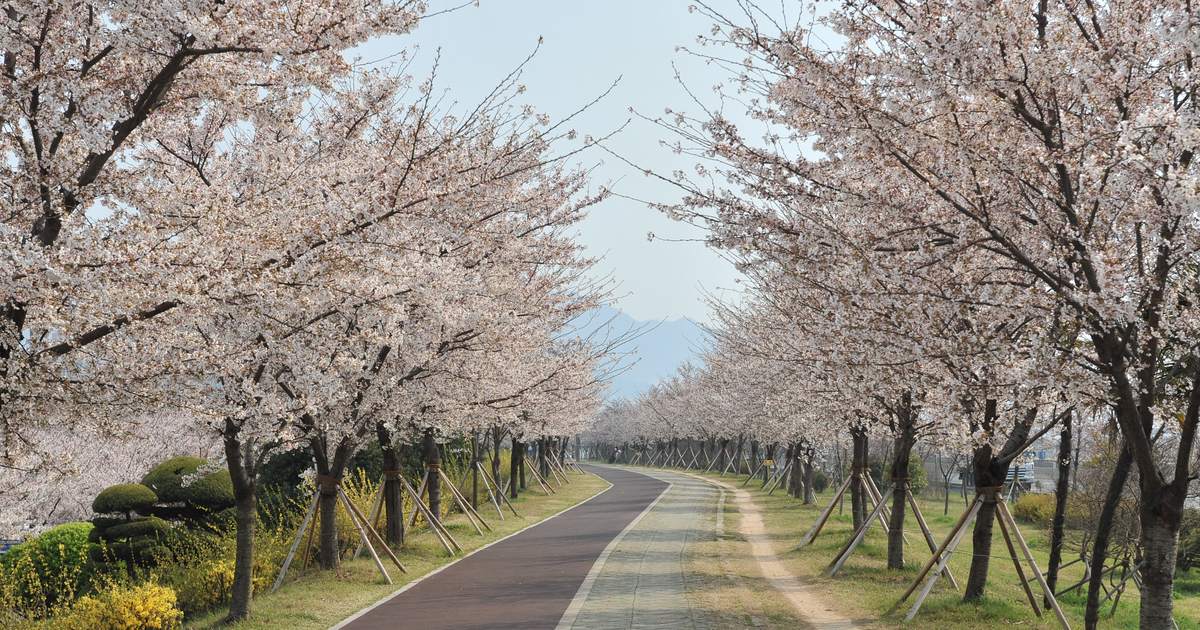
No 2027 Busan cherry blossom forecast yet. In 2017–2026, Busan’s official tree reached full bloom between March 26 and April 3; a March 28 – April 3 trip had full bloom in 8 of 10 years. 2027 festival dates are not announced (all started April 3 in 2026).
Verified
 Current
Lotus Lantern Festival 2027: Seoul Parade Date, Route, Seats
The 2027 Lotus Lantern Parade starts at 7 p.m. on Saturday, May 8, from Heunginjimun along Jongno to Jogye-sa Temple, five days before Buddha’s Birthday (Thursday, May 13). On Sunday, May 9, street events run in front of Jogye-sa from 11 a.m., with the Yeondeungnori procession from Insa-dong 7–9 p.m. Watching from the street needs no ticket.
Verified
 Not announced
Is Seoul Open During Lunar New Year 2027? Seollal, Feb 6–9
Seollal 2027 runs February 6–9; Namdaemun and department store closing lists are not out yet. On the last two years' pattern, Namdaemun buildings may be closed any day from February 4 to 11, so go by February 3 or after February 12. Department stores and restaurants usually close only one or two days.