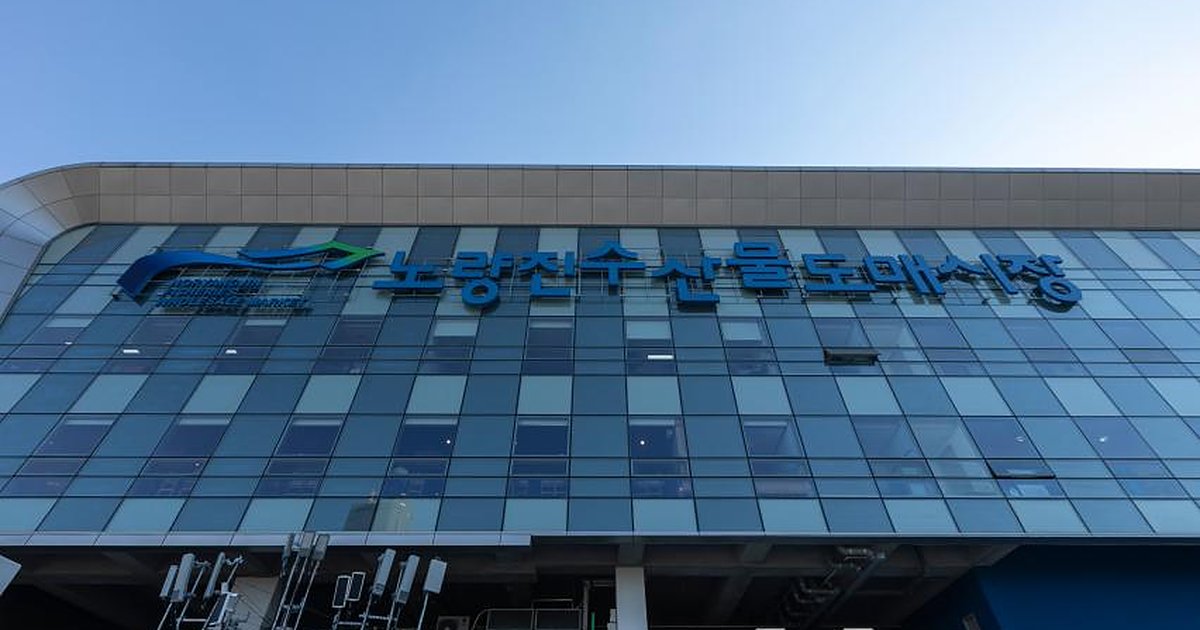
Noryangjin Fish Market’s retail stalls are open every day of the year, but there’s no single opening time: the market lists hours by stall category. Most categories trade until 22:00, salted seafood (jeotgal) stops at 19:00 and the high-class live-fish stalls run 24 hours. Any evening before about 20:00 works for dinner. The Sunday and holiday closures you may have read about apply to the early-morning wholesale auction, not to the stalls. Since March 2026 the market has also run a Wednesday discount at participating stalls, so check this week’s notice if you can choose your day. Getting there is simple: Line 9 to Noryangjin Station, Exit 7, straight on through the underpass. The rest is knowing how “buy downstairs, eat upstairs” works and asking three questions before anyone picks up a knife. Two Korean words come up constantly: hoe sikdang (회식당) is an upstairs raw-fish restaurant, and sangcharimbi (상차림비) is the per-person table-setting fee it charges.
- Hours: stalls open year-round; most categories until 22:00, salted seafood until 19:00, high-class 24 hours.
- When to go: an evening; be seated upstairs by about 20:00. Restaurants set their own hours.
- Which day: any day; Wednesday if the participating-stall discount is still running that week.
- Sundays and holidays: the auction closes, the stalls don’t.
- Getting there: Noryangjin Station, Line 9, Exit 7, straight through the underpass.
- Before you buy: price per kg, total after weighing, upstairs fee per person.
- If something’s wrong: return it within 24 hours, untouched; +82-2-2254-8144.
Contents
Who this is for
Travelers who’ve decided on a seafood dinner in Seoul and are working out the day, the time and how not to overpay.
- You’re flexible and want to know which day is cheaper.
- You’ll be in Seoul on a Sunday or over Lunar New Year and aren’t sure it’s open.
- You’ll pick seafood downstairs and eat upstairs for the first time, without Korean.
- You want king crab and need to know how to ask the price.
You can skip it if:
- You want the best or cheapest stall. This covers how to buy, not which stall.
- You want a going rate for king crab. There’s no official price; this gives you the questions, not a number.
Noryangjin Fish Market at a glance
A wholesale market that also sells retail: auctions before dawn, stalls for everyone else the rest of the day. Search 노량진수산시장 in a map app.
| Name | Noryangjin Fisheries Wholesale Market (노량진수산물도매시장) |
|---|---|
| Address | 674 Nodeul-ro, Dongjak-gu, Seoul |
| Retail stalls | Open year-round |
| Auction closed | Sundays, January 1, Lunar New Year and Chuseok (3 days each) |
| Subway | Noryangjin Station, Line 9, Exit 7, straight through the underpass |
| Floors | 1F stalls; 2F raw-fish restaurants, dried seafood, live octopus, salted seafood, information desk; 5F raw-fish restaurants |
| Parking | 3F, 4F, B1, B2; stalls and restaurants hand out 1,000-won parking vouchers |
| Complaints | Market Hygiene Management Dept., +82-2-2254-8144 |
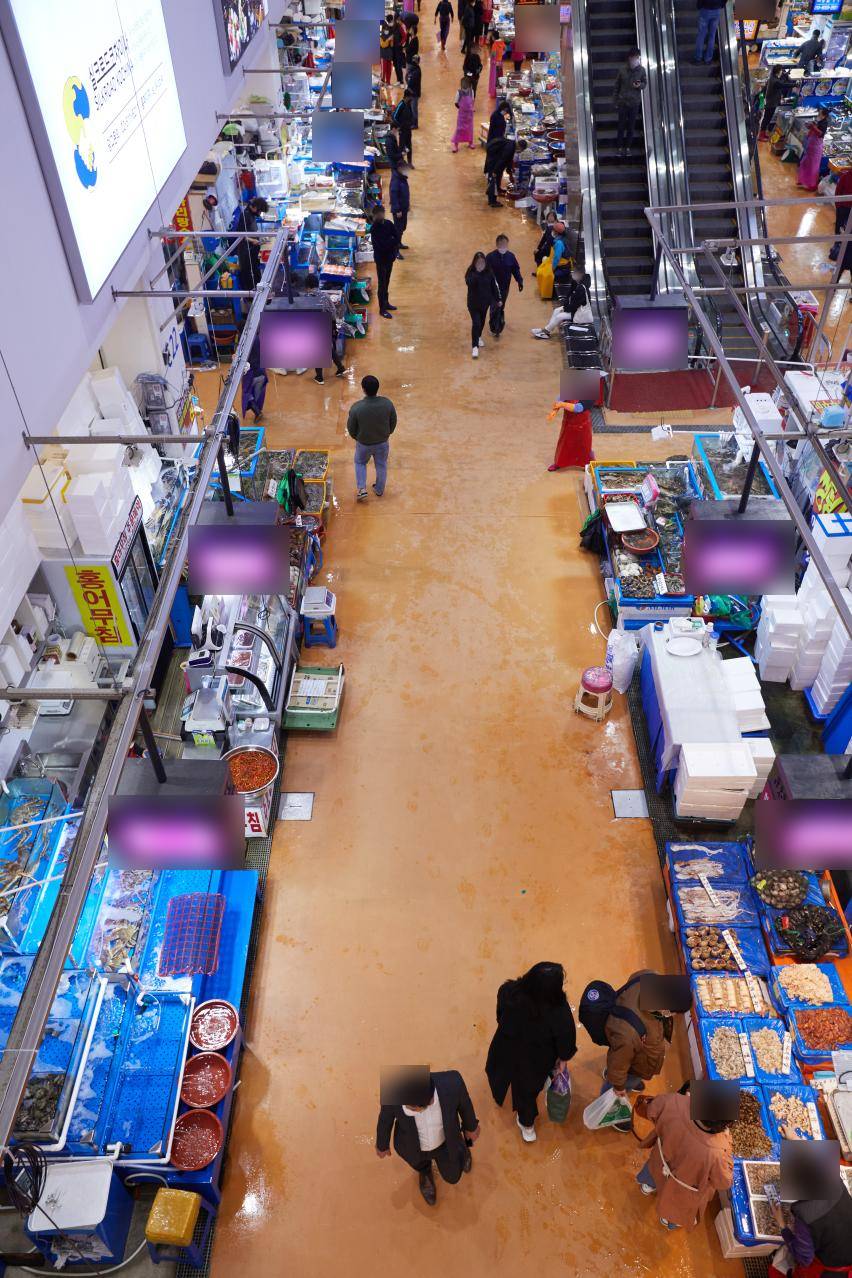
What are the opening hours?
It depends on the stall category: most trade until 22:00, salted seafood until 19:00, and high-class stalls around the clock. These are the market’s own selling hours, with its English category labels.
| Category | Selling hours |
|---|---|
| High-class (premium live fish) | 00:00–24:00 |
| General | 01:30–22:00 |
| Frozen | 03:30–22:00 |
| Shellfish | 01:00–22:00 |
| Salted seafood (jeotgal) | 03:00–19:00 |
| Upstairs restaurants | Set by each restaurant; not on the market’s timetable |
Two things matter for a visitor. Arrive before 22:00 and the live fish and shellfish are still on sale. If you want salted seafood to take back to the hotel, buy it before 19:00. The market doesn’t map the categories to floors or zones, so just look at what each stall is selling.
The restaurant line is the one that decides your arrival time. I’d aim to be seated by 20:00, which leaves time to choose, have it prepared and get upstairs well inside the 22:00 cutoff.
The overnight times are when the wholesale auctions start (general 00:00, shellfish 01:00, high-class fresh fish 01:30, high-class live fish and frozen 03:00). They’re for traders, not retail.
Is it open on Sundays and holidays?
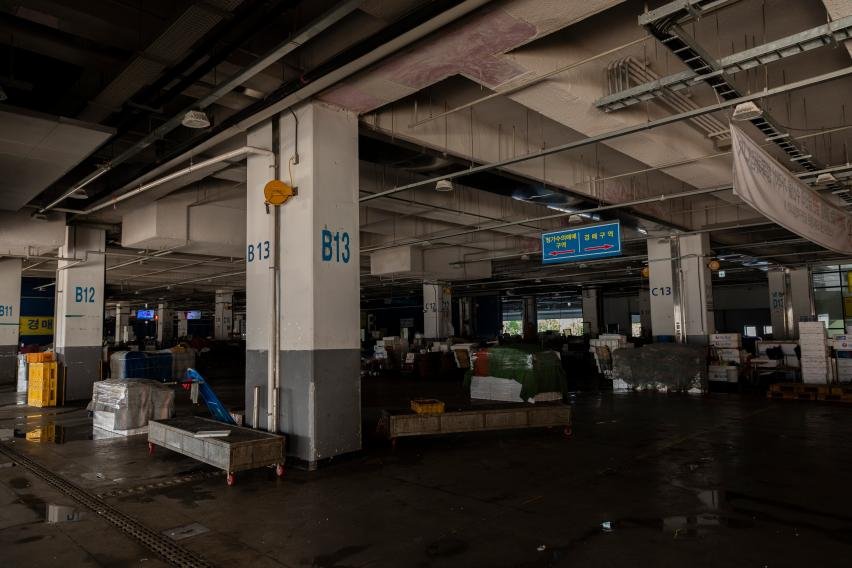
Yes. The retail stalls are open year-round; the closures on Sundays, January 1, Lunar New Year and Chuseok are for the auction. A Sunday evening is as good as any other.
If you’ve seen “closed on holidays” listed for the whole market, go by the market’s own table, which separates the two: retail open year-round, auction closed on those days. Before each holiday the market posts an auction-closure notice (경매 휴무 안내) that also says whether stalls and restaurants are trading.
| Holiday | Auction | Stalls and restaurants |
|---|---|---|
| Lunar New Year 2026 | Closed February 17–20 | Normal business |
| Chuseok 2026 | Closed September 25–28 | Normal business |
| Lunar New Year 2027 | Not announced yet; the 2026 notice came out around February 13 | — |
“Normal business” is the market speaking for itself as a whole; any one stall can still take the day off. Over the holidays most stalls open, but the one you picked online may not. What else in Seoul is open over the 2027 holiday is in what’s open in Korea over Lunar New Year 2027.
Is there a cheaper day to go?
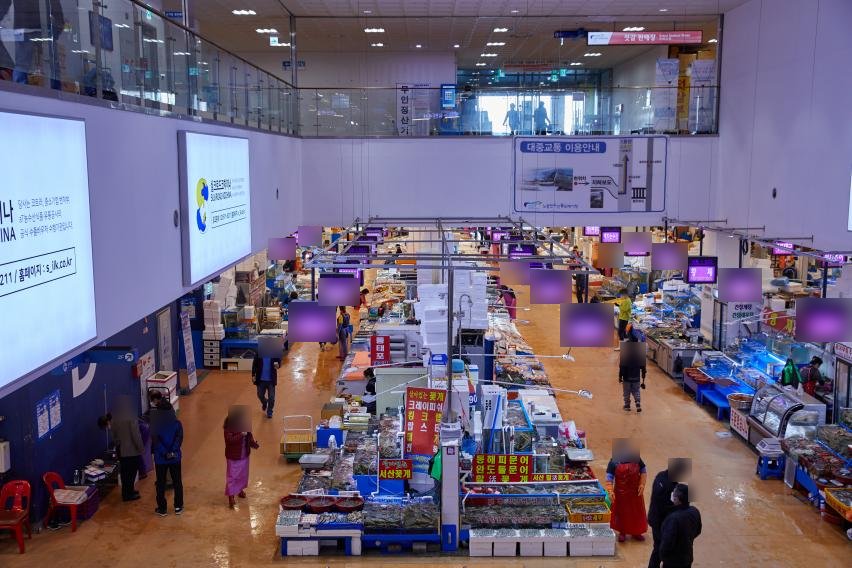
Wednesday, if the discount is still running. Since March 2026 the market has run a Wednesday discount at participating stalls; check the market’s notice board for this week’s items before you go. If I could choose, I’d put Noryangjin on a Wednesday evening.
| Name | Noryangjin Susan Day (노량진수산Day) |
|---|---|
| Day | Wednesdays |
| Discount | 20–30% off Korean-origin seafood at participating stalls |
| Lead items | Flatfish (gwangeo, 광어), abalone (jeonbok, 전복), sea squirt (meongge, 멍게) |
| Voucher | One upstairs table-setting fee for one person (with a canned drink) per small flatfish sashimi, 1 kg of abalone or 3 kg of sea squirt |
| Stalls | Recruited: 25 flatfish-sashimi stalls and 15 abalone and sea squirt stalls, not the whole market |
| Runs | From the March 2026 recruitment, until further notice |
Three limits. Only participating stalls discount, so look for the event sign or ask whether they’re in 수산데이 (Susan Day). Only the listed items count; king crab and lobster aren’t among them. And each voucher covers one person’s table fee, so two people need two qualifying purchases for two vouchers. The items and prices change from week to week, which is why the notice board is the place to check.
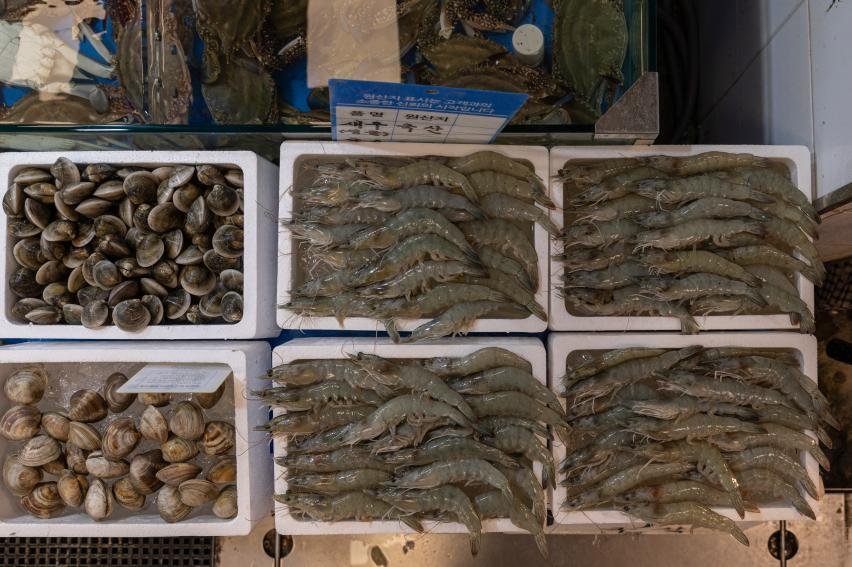
How do I get there from the subway?
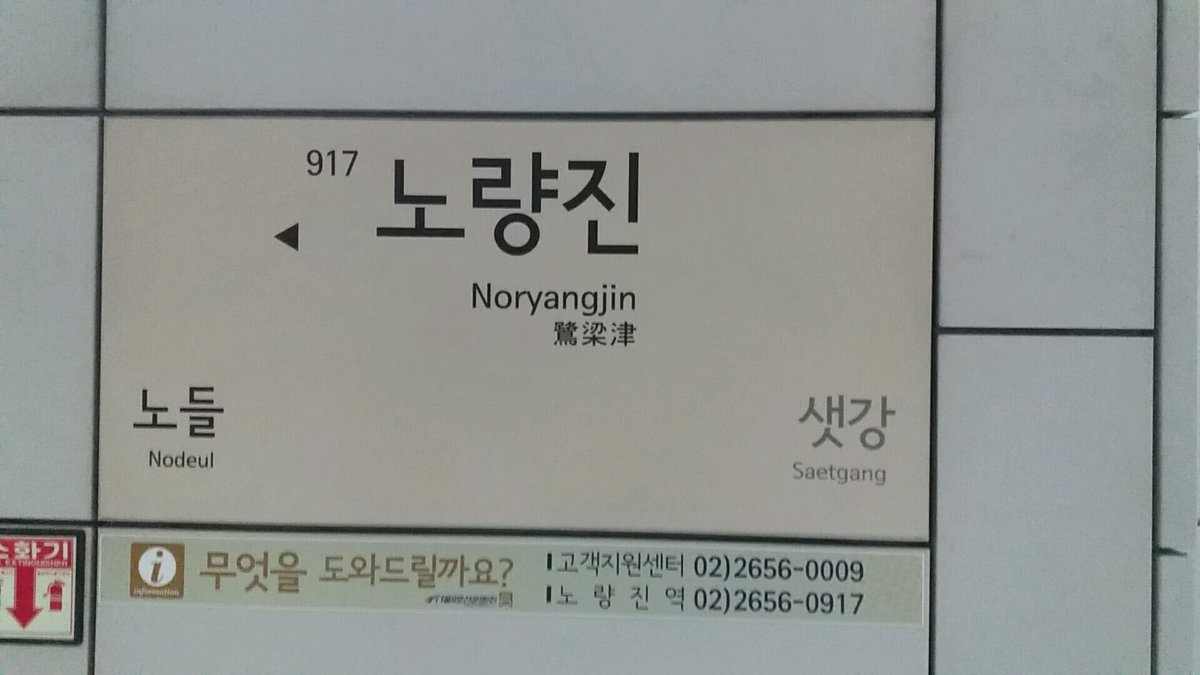
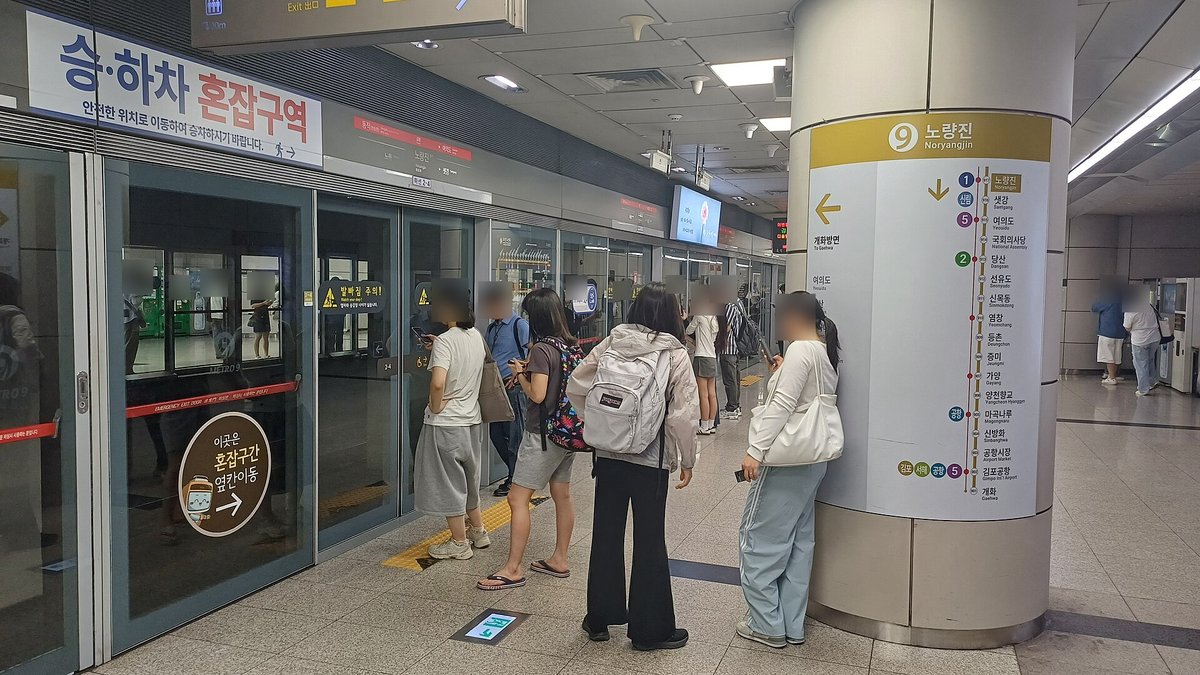
Noryangjin Station, Line 9, Exit 7: walk straight and through the underpass to the market entrance. On Line 1, don’t leave from the Line 1 side; take the in-station transfer passage to the Line 9 side and use Exit 7.
| Line 9 | Exit 7 → straight on → underpass → market entrance |
|---|---|
| Line 1 | In-station transfer passage to the Line 9 side, then Exit 7 |
| Bus | “Noryangjin Fish Market, CTS” stop, then the underpass |
| Car | Parking on 3F, 4F, B1 and B2 |
If you’ve seen Exit 9 recommended, go by Exit 7. That’s the exit in the market’s own directions and the meeting point for the guided tours; on the Line 9 exit list, Exit 9 is the one for Sayuksin Park. Finishing dinner after 21:00? Check the last train home first: how to look up Seoul’s last trains.
How does “buy downstairs, eat upstairs” work?
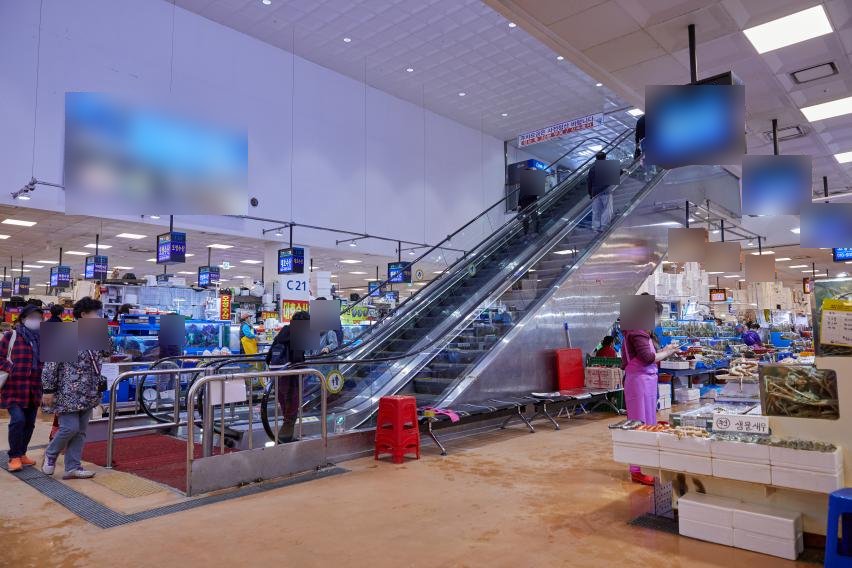
Choose and pay at a first-floor stall, have it prepared there, then take it up to a raw-fish restaurant on 2F or 5F, which charges a per-person table-setting fee. You pay the stall for the seafood and the restaurant for the table and side dishes, separately.
| Floor | What’s there |
|---|---|
| 1F | Shellfish, live fish, frozen and fresh fish stalls |
| 2F | Raw-fish restaurants (hoe sikdang), dried seafood, groceries, live octopus, salted seafood; information desk |
| 5F | Raw-fish restaurants |
Four steps: choose on 1F, weigh and pay, let the stall prepare it (sliced as sashimi or packed), and carry it upstairs to any restaurant. The market doesn’t publish which restaurant charges what; each sets its own fee. If you’re lost on 2F, there’s an information desk in the hall, and the dried and salted seafood on the same floor makes for an easy souvenir stop after dinner.
What should I ask before I buy?
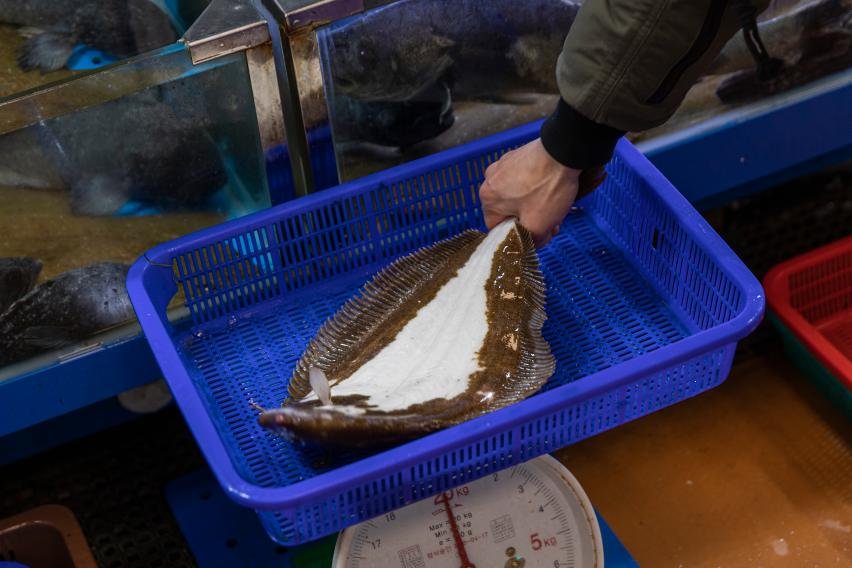
Three things: the price per kg, the total after weighing, and the upstairs fee per person (and whether stew or steaming costs extra). Ask the first two at the stall and the third before you sit down upstairs. The fee isn’t published and varies by restaurant.
- At the stall, ask the unit price: per kg or per piece, before the stallholder picks anything out.
- After weighing, ask the total: get the full amount and agree to it before any preparation.
- Look before the knife goes in: make sure it’s the one you chose.
- Upstairs, ask the fee per person: sangcharimbi is charged per head.
- Ask about cooking extras: whether a stew from the leftover bones or steamed shellfish is included, before you sit.
Save the questions in a translation app and show the screen; it’s faster than typing at the counter. If you have Wednesday vouchers, show them before you sit and ask whether that restaurant accepts them. Of the three, the total after weighing is the one I’d never skip: however clear the unit price, the scale decides the bill, and once the fish is cut it’s hard to undo. The same questions work at Busan’s fish market; see how to buy at Jagalchi Market.
Can I return bad seafood?
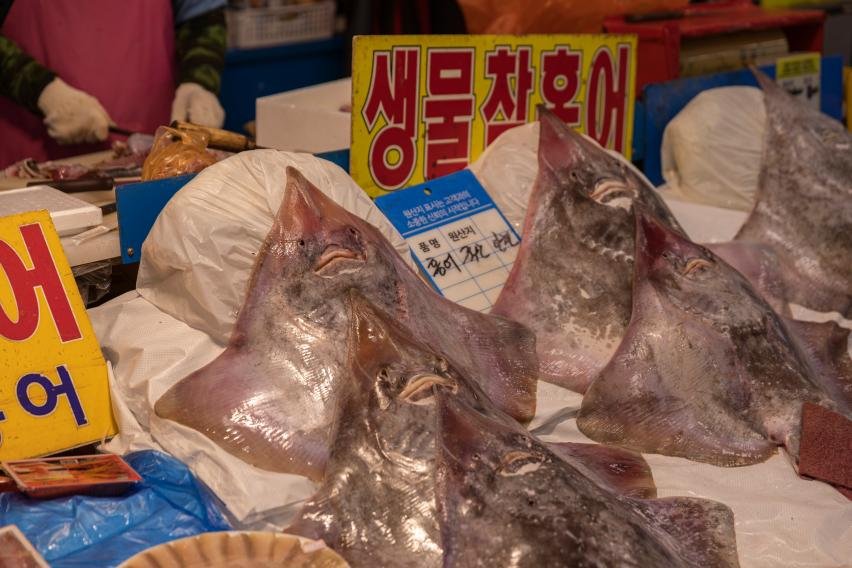
Yes. The market has run a consumer recall scheme since 2002: bring the item back within 24 hours, in its original state, for an exchange or a full or partial refund. It covers seafood bought retail from stalls inside the market when the origin or species isn’t what you were told, or it isn’t fresh.
| Covers | Retail purchases from stalls inside the market; wrong origin or species, or not fresh |
|---|---|
| Deadline | Within 24 hours |
| Condition | Item in its original state |
| Not covered | Partly eaten; single fish bought at the auction leftovers area or the basement live-fish storage |
| Remedy | Exchange, full or partial refund |
| Contact | Market Hygiene Management Dept., +82-2-2254-8144 |
The scheme helps less if you eat upstairs: once part of it is eaten, it no longer qualifies. Your real protection is the look before cutting and the total after weighing. Where the scheme earns its keep is with abalone, shellfish or salted seafood taken back to the hotel and found wrong when opened. The market also penalizes stalls for overcharging, pushy selling and similar unfair dealing; if a stall is pressing you, move to the next one.
Can I pay by card?
Many stalls take cards, but carry some cash. A September 2026 market event notice listed its participating stalls as taking card or cash; that’s not a promise for every stall. Ask “카드 돼요?” (kadeu dwaeyo, “do you take cards?”) before you choose, and move on or pay cash if not. The restaurant upstairs is a separate business, so ask again there.
How is king crab priced?
There’s no official retail price for king crab, and it isn’t part of the Wednesday discount. Use the same three questions: price per kg, total after weighing, and whether steaming upstairs costs extra. King crab is heavy and expensive, so a few hundred grams on the scale moves the total a lot; get the number before you agree. The dinner tour below also excludes crab and lobster, so if king crab is the point, buy it yourself.
I don’t speak Korean. Is there a guided option?
Yes, booking platforms sell English-guided market tours, but you don’t need one: the market itself needs no booking. A tour is for anyone who’d rather not negotiate prices and fees at all. Both meet at Noryangjin Station, Exit 7.
| Tour | What’s included | Check before booking |
|---|---|---|
| Noryangjin Fish Market tour with seafood dinner on KKday | 17:00 session, English guide; seafood, cooking fee and guide included | No crab or lobster; no reviews on the page yet; free cancellation up to 3 days before |
| Noryangjin Fish Market walking tour with a guide on KKday | English guide; sashimi, live octopus and soup | Minimum 2 people; the page gives conflicting times and says no bookings on weekends and holidays while listing weekend dates, so confirm your date and time on the product page |
For an actual dinner, I’d look at the first: the cooking fee is in the price, so there’s nothing to negotiate upstairs. The second is fine if you’re two or more and the operator confirms your date.
Your situation
If your trip includes a Wednesday
Check the market’s notice board that week. If the discount is on, go Wednesday evening, arrive around 18:00, find a stall with the Susan Day sign and buy a small flatfish sashimi per person; each comes with a voucher for one person’s table fee upstairs. Anything else you want, buy at other stalls with the three questions.
If you’re in Seoul on a Sunday or over Lunar New Year
Go as normal. In 2026 the stalls and restaurants traded over both Lunar New Year and Chuseok, and Sundays only close the auction. With so much else shut over the holiday, Noryangjin makes a good dinner fallback; just don’t count on one particular stall.
If you’re in Yeouido the same day
Yeouido is two stops from Noryangjin on Line 9. Spend the afternoon at the 63 Building for the river view, then ride over for dinner; getting there is covered in how to get to the 63 Building.
Common mistakes
- Thinking it’s closed on Sundays. The auction closes; the stalls don’t.
- Expecting the whole market to discount on Wednesday. Participating stalls and listed items only, and only while the program runs.
- Treating 22:00 as dinner time. That’s the stall cutoff; restaurants set their own hours. Sit down by 20:00.
- Asking the price after the fish is cut. Unit price, total and upstairs fee all come first.
- Trying to return food you’ve started eating. Only untouched items qualify.
- Buying salted seafood late. Jeotgal stalls stop at 19:00.
- Assuming every stall takes cards. Ask first and carry cash.
- Leaving by Exit 9. Use Line 9 Exit 7.
What I would do
One focus: a sashimi dinner for two, on a Wednesday if the discount is running that week, any evening otherwise.
| Time | Plan |
|---|---|
| The day before | Check the market notice board for this week’s Wednesday items |
| 17:30 | Line 9 to Noryangjin, Exit 7, straight through the underpass |
| 17:45 | On a discount Wednesday, two small flatfish sashimi at a participating stall (two vouchers); otherwise any stall, with the three questions |
| 18:15 | Shellfish or abalone from another stall: unit price, then total after weighing |
| 18:30 | Up to 2F or 5F; before sitting, ask the per-person fee, cooking extras and whether vouchers are accepted |
| Before 20:00 | Done; buy any salted seafood on 2F before 19:00, then Line 9 home |
FAQ
- Q1: What are Noryangjin Fish Market’s opening hours?
- There’s no single time; the market lists hours by stall category. General 01:30–22:00, shellfish 01:00–22:00, frozen 03:30–22:00, salted seafood 03:00–19:00 and high-class 24 hours. Upstairs restaurants set their own hours.
- Q2: Is Noryangjin Fish Market open on Sundays?
- Yes, the retail stalls are open year-round. What closes on Sundays is the early-morning wholesale auction, which has nothing to do with buying seafood for dinner.
- Q3: Which subway exit is closest to Noryangjin Fish Market?
- Noryangjin Station, Line 9, Exit 7: walk straight and through the underpass. If you arrive on Line 1, use the in-station transfer passage to the Line 9 side and leave by Exit 7.
- Q4: How does buying downstairs and eating upstairs work?
- Buy and have the seafood prepared at a 1F stall, then carry it up to a restaurant on 2F or 5F, which charges a per-person table-setting fee. The fee isn’t published, so ask before you sit down.
- Q5: Is there a discount day at Noryangjin?
- Since March 2026 the market has run a Wednesday discount at participating stalls, 20–30% off Korean-origin seafood such as flatfish and abalone. Not every stall takes part; check the market’s notice board for this week’s items before you go.
- Q6: Can I return bad seafood bought at Noryangjin?
- Yes, within 24 hours, with the item in its original state. It covers the wrong origin or species, or seafood that isn’t fresh; partly eaten food isn’t accepted. Call the Market Hygiene Management Dept. at +82-2-2254-8144.
- Q7: Is Noryangjin Fish Market open during Lunar New Year?
- In 2026 the stalls and restaurants traded as normal over Lunar New Year and Chuseok; only the auction closed. The 2027 notice isn’t out yet, and individual stalls may still take days off.
If it were me
With a Wednesday on the trip and the discount still listed, I’d put Noryangjin on that evening: discounted flatfish and the table fee covered make it the best deal for two. Otherwise I’d go any evening, Sundays and holidays included. For king crab, I’d get the total on the first floor and switch to flatfish and abalone if it was more than I wanted to pay. Only if I really didn’t want to ask a single price would I book the dinner tour, accepting no crab.
Official sources
- Noryangjin Fisheries Wholesale Market: hours (Korean) (selling and auction hours, closures)
- Noryangjin Fisheries Wholesale Market: facilities (Korean) (floors)
- Noryangjin Fisheries Wholesale Market: directions (Korean)
- Noryangjin Susan Day: items and participating stalls (Korean) (this week’s Wednesday items)
- Consumer recall scheme (Korean) (conditions and contact)
Prices and times follow the latest official announcement.
Read next
Verified
 Current
Jagalchi Market Hours 2026–27: Which Tuesdays It’s Closed
Jagalchi Market closes on the 1st, 3rd and 5th Tuesdays, and Shindonga Fish Market next door on the 2nd and 4th. In December 2026, go to Shindonga on Dec 1, 15 and 29 and to Jagalchi on Dec 8 and 22. Local news reported the Jagalchi building shut Nov 9–11 over a management dispute; check the day before.
Verified
 Current
Gwangjang Market Hours 2026–27: Open Sunday? Food Alley to 23:00
General shops are open Monday to Saturday 09:00–18:00 and the vintage clothing arcade (구제상가) Monday to Saturday 10:00–19:00, both closed on Sundays; the Food Alley (먹자골목) opens every day 09:00–23:00, all year. Jongno 5-ga Station (Line 1) Exit 8 is closest. No ticket or booking.
Verified
 Changed
63 Building Observatory 2026: 63 SkyPicnic Tickets and Hours
The observatory reopened as 63 SkyPicnic on June 4, 2026. Daily 10:00–22:00, ticket sales 09:50–21:30; one ticket covers the 60F indoor deck and the 63F outdoor rooftop, which can close in bad weather. Suitcases, strollers and wheelchairs can’t go in. Centre Pompidou Hanwha sells its own tickets; there is no longer an aquarium.